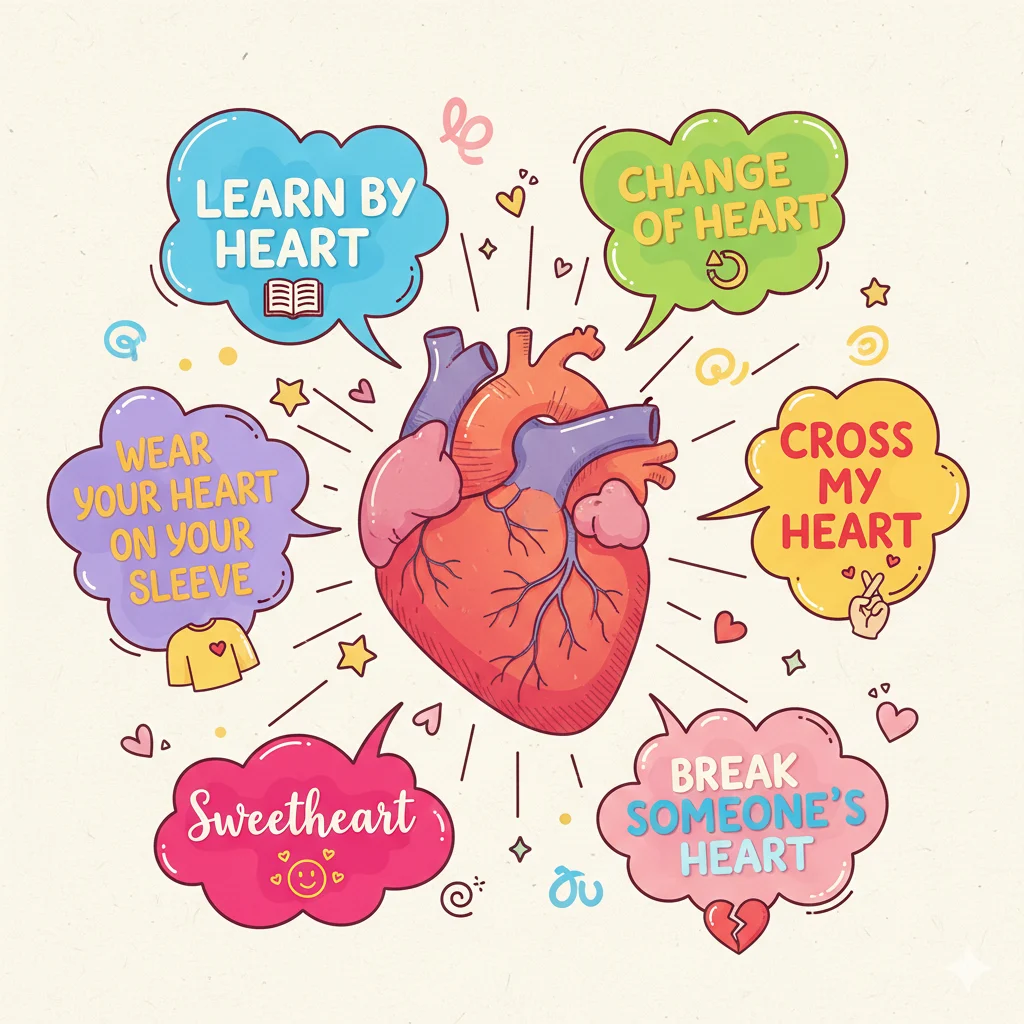
We don’t just feel with our hearts; we speak with them. Idioms with the word “heart” are the pulse of emotional English, letting us express courage, love, sadness, and sincerity in ways literal words often can’t. When you tell a friend a secret from the bottom of your heart, you’re doing more than sharing—you’re connecting on a deeper, more human level. These phrases are the key to sounding not just fluent, but truly natural and heartfelt. Let’s dive into the 20 most famous and useful heart idioms, unpack their meanings, and see how to weave them into your everyday conversations.
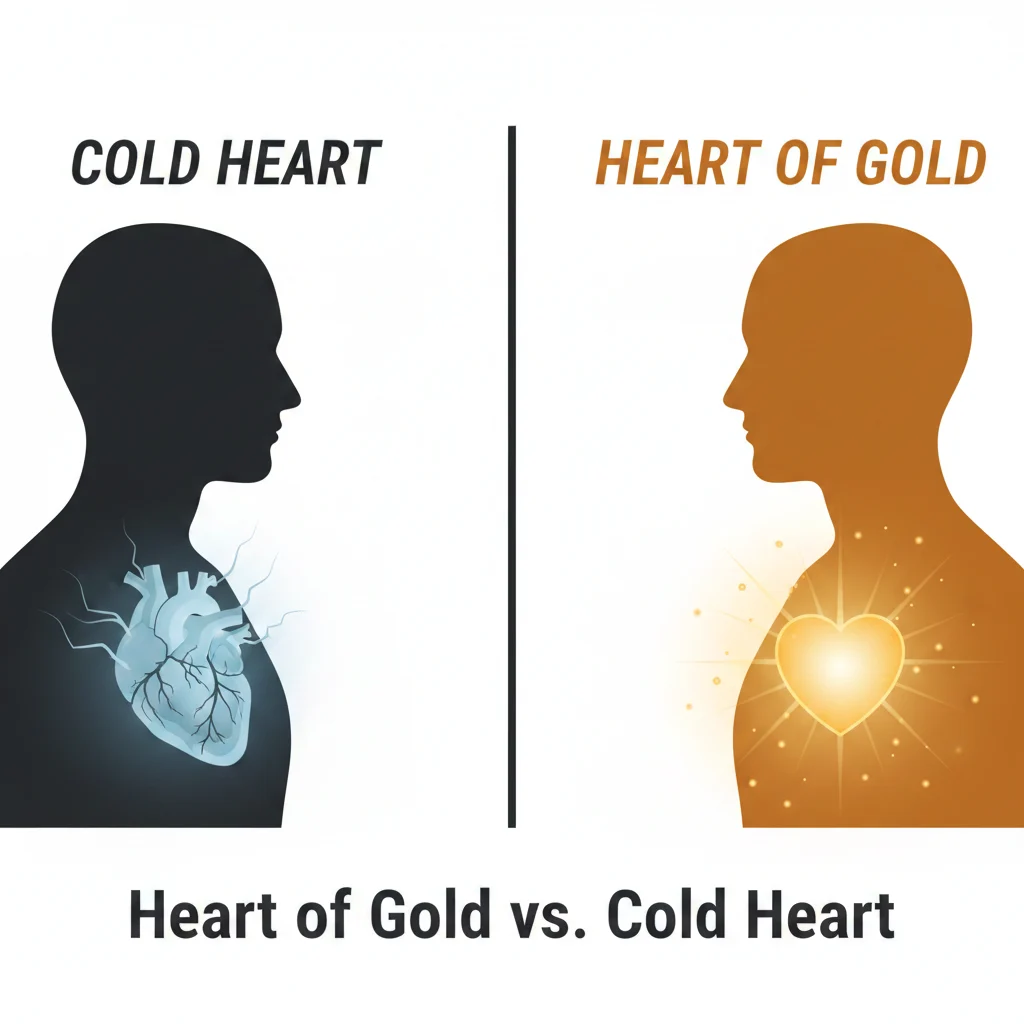
Learn by Heart
Word-by-word meaning: To memorize something using your heart.
Idiomatic/figurative meaning: To memorize something perfectly, so you can recall it without thinking.
Example sentence: “The actor had to learn all his lines by heart for the play.”
Common error: Saying “learn by memory” instead of the correct idiom.
Usage note: Often used for poems, speeches, lyrics, or important information.
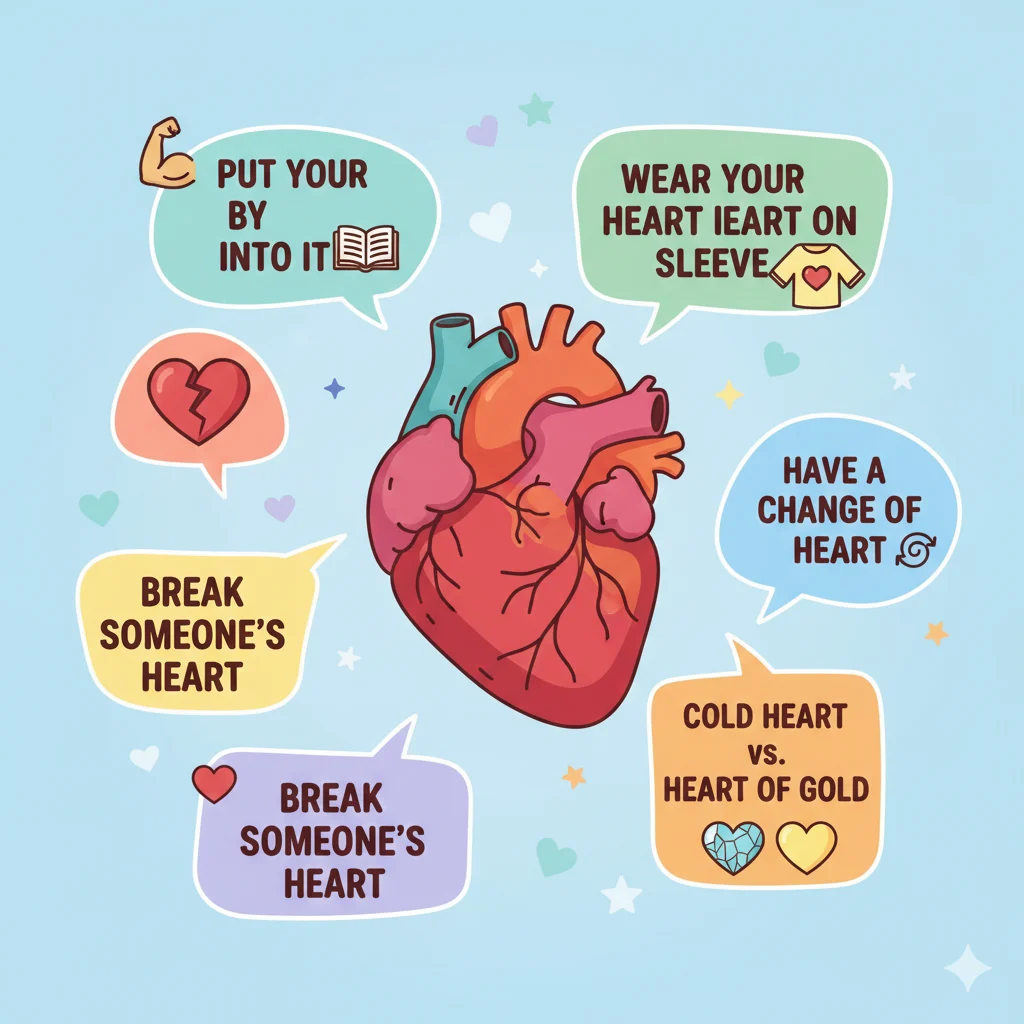
Break Someone’s Heart
Word-by-word meaning: To physically damage a person’s heart.
Idiomatic/figurative meaning: To cause someone extreme emotional pain, usually through disappointment or the end of a relationship.
Example sentence: “It broke her heart to see the old tree being cut down.”
Common error: Using it for minor disappointments. This idiom is for deep, profound sadness.
Usage note: Can be used passively: “He was heartbroken after the news.”
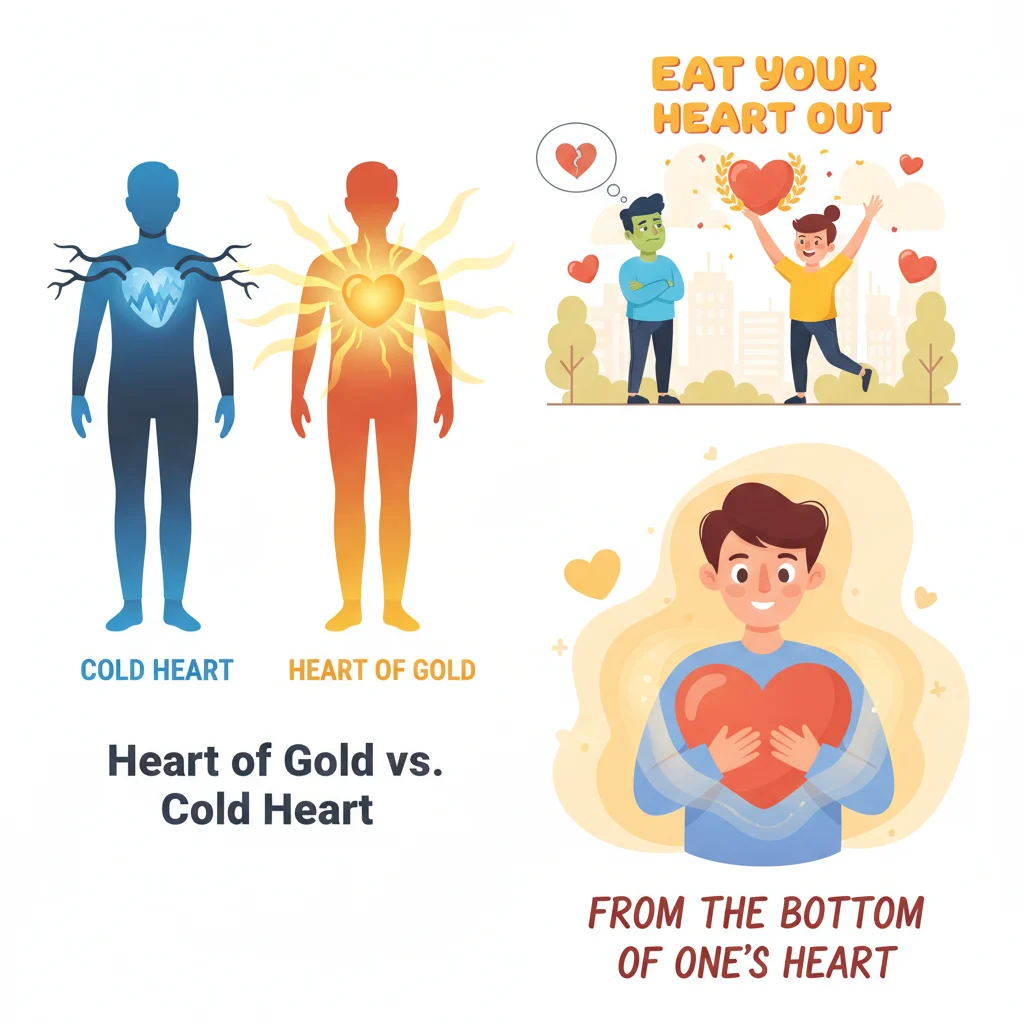
From the Bottom of One’s Heart
Word-by-word meaning: From the lowest part of the heart.
Idiomatic/figurative meaning: With utmost sincerity and deep, genuine feeling.
Example sentence: “I want to thank you from the bottom of my heart for your kindness.”
Common error: Forgetting the “of” (e.g., “from the bottom my heart” is incorrect).
Usage note: Almost always used for positive expressions of gratitude, love, or apology.
Have a Change of Heart
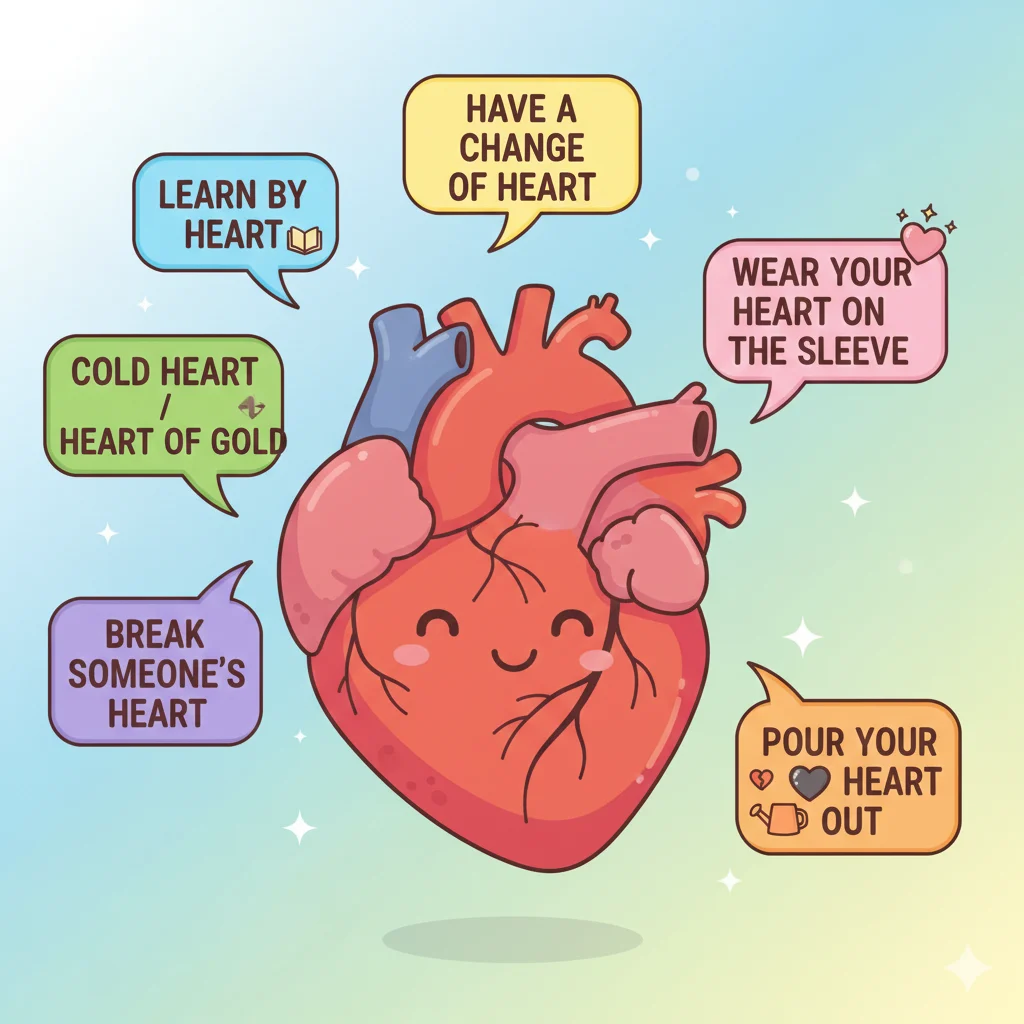
Word-by-word meaning: To exchange one’s physical heart.
Idiomatic/figurative meaning: To change one’s opinion or feelings about something.
Example sentence: “She was against moving, but after visiting the city, she had a change of heart.”
Common error: Confusing it with “change your mind.” While similar, “change of heart” implies a deeper, more emotional shift.
Usage note: Often used when someone becomes more sympathetic or forgiving.
Have a Heart of Gold
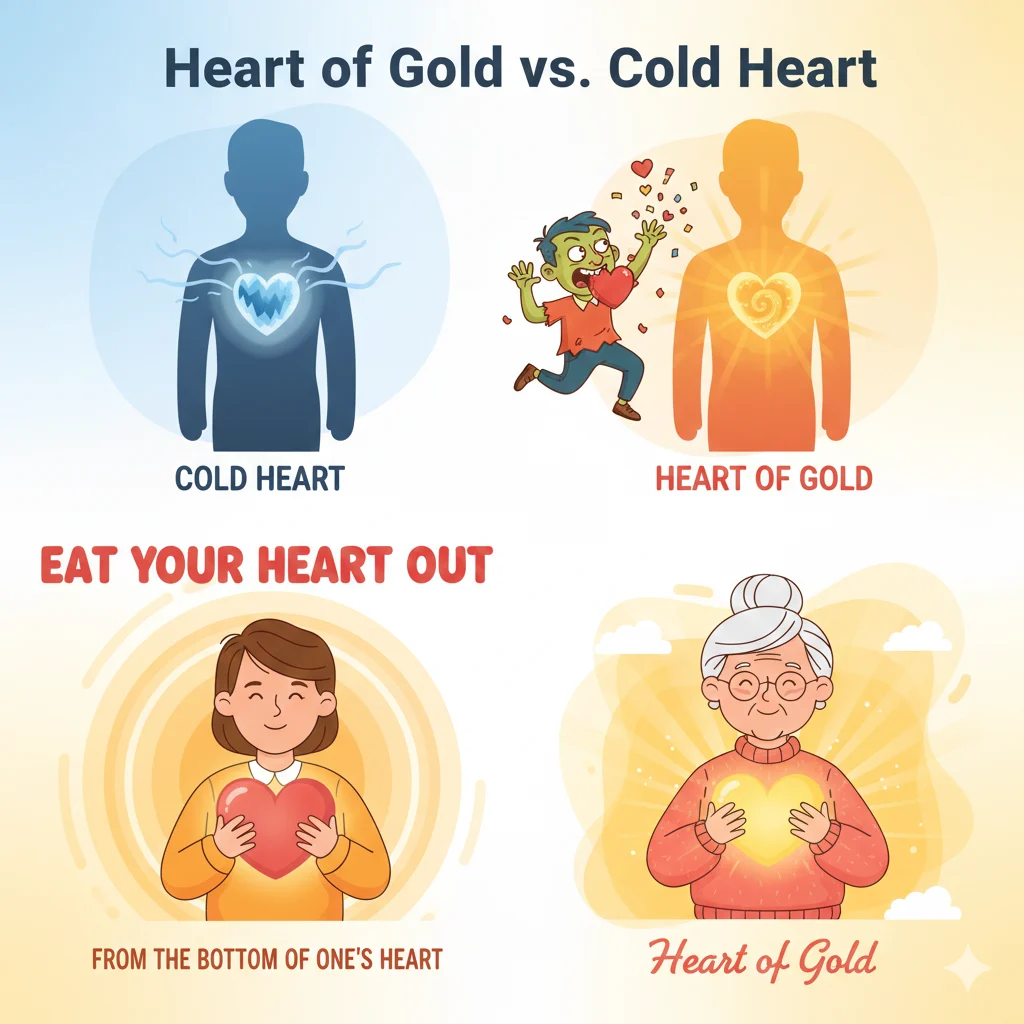
Word-by-word meaning: To possess a heart made of gold metal.
Idiomatic/figurative meaning: To be a very kind, generous, and good-natured person.
Example sentence: “My grandfather may seem gruff, but he truly has a heart of gold.”
Common error: Using it to describe someone who is simply rich. It’s about character, not wealth.
Usage note: A high compliment used to describe someone’s fundamental nature.
Take Heart
Word-by-word meaning: To physically take a heart.
Idiomatic/figurative meaning: To feel encouraged or to have one’s spirits lifted.
Example sentence: “Take heart! The worst of the storm is over, and help is on the way.”
Common error: Saying “take to heart” (which means to take something seriously).
Usage note: Often used as an imperative to cheer someone up: “Take heart, you’ll do better next time.”
Lose Heart
Word-by-word meaning: To misplace one’s physical heart.
Idiomatic/figurative meaning: To become discouraged or to give up hope.
Example sentence: “Don’t lose heart after one setback; keep trying!”
Common error: Using it interchangeably with “lose your mind” (which means to go crazy).
Usage note: The opposite of “take heart.”
Wear One’s Heart on One’s Sleeve
Word-by-word meaning: To literally attach one’s heart to one’s clothing.
Idiomatic/figurative meaning: To openly show one’s emotions, making them easy for others to see.
Example sentence: “As an artist, she wears her heart on her sleeve, and her paintings are full of raw emotion.”
Common error: Getting the preposition wrong (e.g., “on one’s shirt”).
Usage note: Can be both a strength (authenticity) and a weakness (vulnerability).
Cross My Heart (and Hope to Die)
Word-by-word meaning: To make the sign of a cross over one’s heart.
Idiomatic/figurative meaning: A promise said to emphasize that you are telling the truth or will definitely do something.
Example sentence: “Cross my heart, I didn’t eat the last cookie!”
Common error: Using it in very formal contexts. It’s conversational and slightly childlike.
Usage note: Often used by children, but adults use it for lighthearted, serious promises.
Heart Skips a Beat
Word-by-word meaning: The heart misses one physical beat.
Idiomatic/figurative meaning: To feel a sudden surge of excitement, fear, or surprise.
Example sentence: “My heart skipped a beat when I saw my old friend’s name pop up on my phone.”
Common error: Saying “heart jumped a beat.” The standard phrase is “skipped.”
Usage note: Used for both positive (seeing a crush) and negative (frightening) surprises.
Young at Heart
Word-by-word meaning: Having a youthful physical heart.
Idiomatic/figurative meaning: Thinking and feeling like a young person, regardless of actual age.
Example sentence: “My grandparents are 80 but young at heart—they just started taking salsa lessons!”
Common error: Using it to describe someone who is physically young. It’s specifically for older people with a youthful spirit.
Usage note: A very complimentary phrase.
Eat Your Heart Out!
Word-by-word meaning: To consume your own heart.
Idiomatic/figurative meaning: An exclamation of boastful triumph, meaning “be jealous!” or “this is better than anything you can do!”
Example sentence: (After cooking an amazing meal) “Eat your heart out, Gordon Ramsay!”
Common error: Using it to express sympathy (which is the opposite of its meaning).
Usage note: Informal and playful, often used humorously.
Set Your Heart On Something
Word-by-word meaning: To place your heart on an object.
Idiomatic/figurative meaning: To want something very much; to be determined to get or achieve it.
Example sentence: “She’s set her heart on studying abroad in Japan next year.”
Common error: Saying “put your heart on” instead of “set your heart on.”
Usage note: Often followed by a gerund or noun: “set his heart on winning.”
Heart Goes Out To Someone
Word-by-word meaning: One’s heart travels to another person.
Idiomatic/figurative meaning: To feel deep sympathy or compassion for someone.
Example sentence: “Our hearts go out to the families affected by the flood.”
Common error: Using it in casual situations. It’s for genuine, often serious, empathy.
Usage note: Commonly used in formal speeches, condolences, or news reports.
Have Your Heart in the Right Place
Word-by-word meaning: Your heart is anatomically correct.
Idiomatic/figurative meaning: To have good and sincere intentions, even if the results aren’t perfect.
Example sentence: “His gift was a bit odd, but his heart was in the right place.”
Common error: Confusing it with “have a heart of gold.” This idiom excuses awkward or failed actions based on good intent.
Usage note: Often used to defend someone’s well-meaning mistake.
Pour Your Heart Out
Word-by-word meaning: To empty the contents of your heart.
Idiomatic/figurative meaning: To express your deepest feelings and thoughts openly and emotionally.
Example sentence: “Over coffee, she poured her heart out about her struggles at work.”
Common error: Saying “spill your heart out.” The correct verb is “pour.”
Usage note: Implies a long, emotional, and trusting conversation.
Heart is in Your Mouth
Word-by-word meaning: Your heart is physically in your oral cavity.
Idiomatic/figurative meaning: To feel extremely nervous, anxious, or frightened.
Example sentence: “As I waited for the interview to start, my heart was in my mouth.”
Common error: Mixing it with “butterflies in your stomach” (which is excitement/nerves). This idiom is for acute fear or dread.
Usage note: Describes a momentary, intense feeling of suspense.
Know by Heart
Word-by-word meaning: To know something using your heart.
Idiomatic/figurative meaning: To have something memorized completely. (Very similar to “learn by heart,” but emphasizes the state of knowing.)
Example sentence: “I’ve read that poem so many times, I know it by heart.”
Common error: Interchanging “learn” and “know” carelessly. “Learn” is the process; “know” is the result.
Usage note: You learn something by heart so that you eventually know it by heart.
After One’s Own Heart
Word-by-word meaning: Following one’s personal heart.
Idiomatic/figurative meaning: Someone who shares your tastes, opinions, or values.
Example sentence: “Ah, a fellow chocolate lover! You are a woman after my own heart.”
Common error: Saying “after my own mind.” The idiom always uses “heart.”
Usage note: A warm, old-fashioned compliment expressing deep affinity.
Heart-to-Heart (Talk/Conversation)
Word-by-word meaning: Heart communicating directly to heart.
Idiomatic/figurative meaning: A sincere and intimate conversation where personal feelings are discussed honestly.
Example sentence: “The manager had a heart-to-heart with the team to clear the air.”
Common error: Using it to describe any casual chat. It implies depth and privacy.
Usage note: Often used as a noun: “We need to have a heart-to-heart.”
FAQ: Your Heart Idiom Questions Answered
Q1: What’s the difference between “learn by heart” and “know by heart”?
A: Great question! “Learn by heart” focuses on the process of memorization (“I need to learn this speech by heart”). “Know by heart” describes the result—the state of having it memorized (“I know all the lyrics by heart”). They’re two sides of the same coin.
Q2: Is “break a leg” related to heart idioms?
A: No, “break a leg” is a different category of idiom used to wish someone good luck (especially in theater). It doesn’t relate to emotional expression like heart idioms do.
Q3: Can I use “heart of gold” to describe a kind action?
A: It’s better used to describe a person’s character, not a single action. You’d say, “She has a heart of gold,” not “That donation was a heart of gold.” For an action, try “a heartfelt gesture.”
Q4: Are these idioms formal or informal?
A: Most are standard and acceptable in everyday conversation, work emails, and even some writing. A few, like “Eat your heart out!” or “Cross my heart,” are decidedly informal and playful.
Q5: How can I practice these idioms effectively?
A: Don’t just memorize the list! Try this: Pick two idioms a week. Write them in a journal with a short story about your life using them. Tell a language partner, “This week, my heart was in my mouth when…” This context-based practice makes them stick.
Conclusion
Mastering idioms with the word “heart” does more than boost your vocabulary—it unlocks a new dimension of emotional expression in English. You move from simply conveying information to sharing experience, building deeper connections with every conversation. So, don’t just learn them by heart; weave them into your daily chats, messages, and thoughts. Take heart in your learning journey, and soon you’ll be speaking English not just correctly, but from the heart.
Your challenge this week: Listen for these phrases in movies, songs, or podcasts. Then, try using one—just one—in a real conversation or social media post. You’ve got this

“Elizabeth Bowen shares timeless idioms and language wisdom on LearnIdom.com, making learning phrases fun, easy, and unforgettable.”