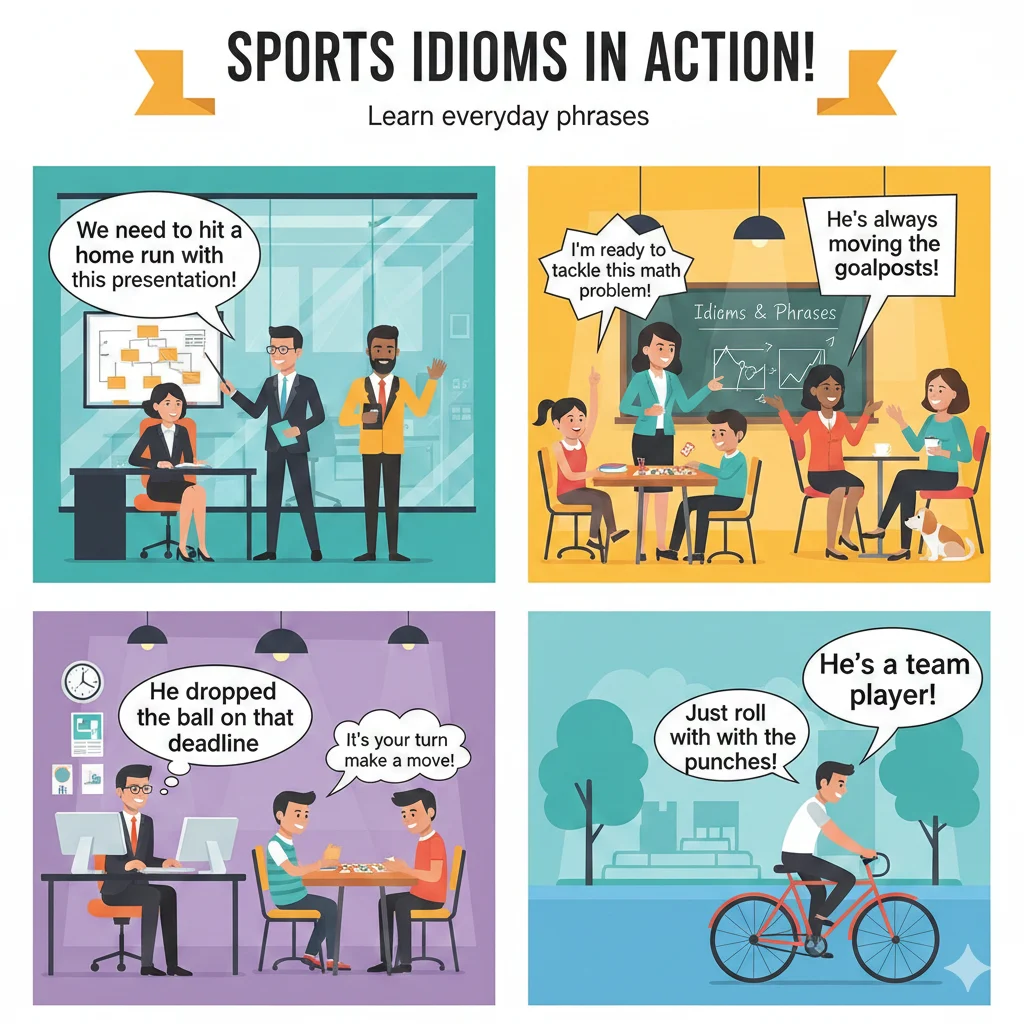
Sports are not just about games, goals, and trophies—they’ve also shaped the way we speak English. If you’ve ever heard someone say “step up to the plate” or “the ball is in your court,” you’ve already encountered idioms of sports in daily conversation.
These expressions are used far beyond stadiums, especially in workplaces, schools, and everyday life.I still remember my first office meeting where my manager said, “We’re in the final stretch now.” No one was running—but everyone understood the pressure! That’s the magic of sports idioms.
In this guide, you’ll learn 20 of the most famous idioms of sports, broken down in a simple, learner-friendly way. Each idiom includes meanings, examples, common mistakes, and usage tips so you can use them confidently and naturally.
The Ball Is in Your Court
Word-by-word Meaning
Ball = game object
Court = playing area
Idiomatic Meaning
It’s your turn to take action or make a decision.
Example Sentences
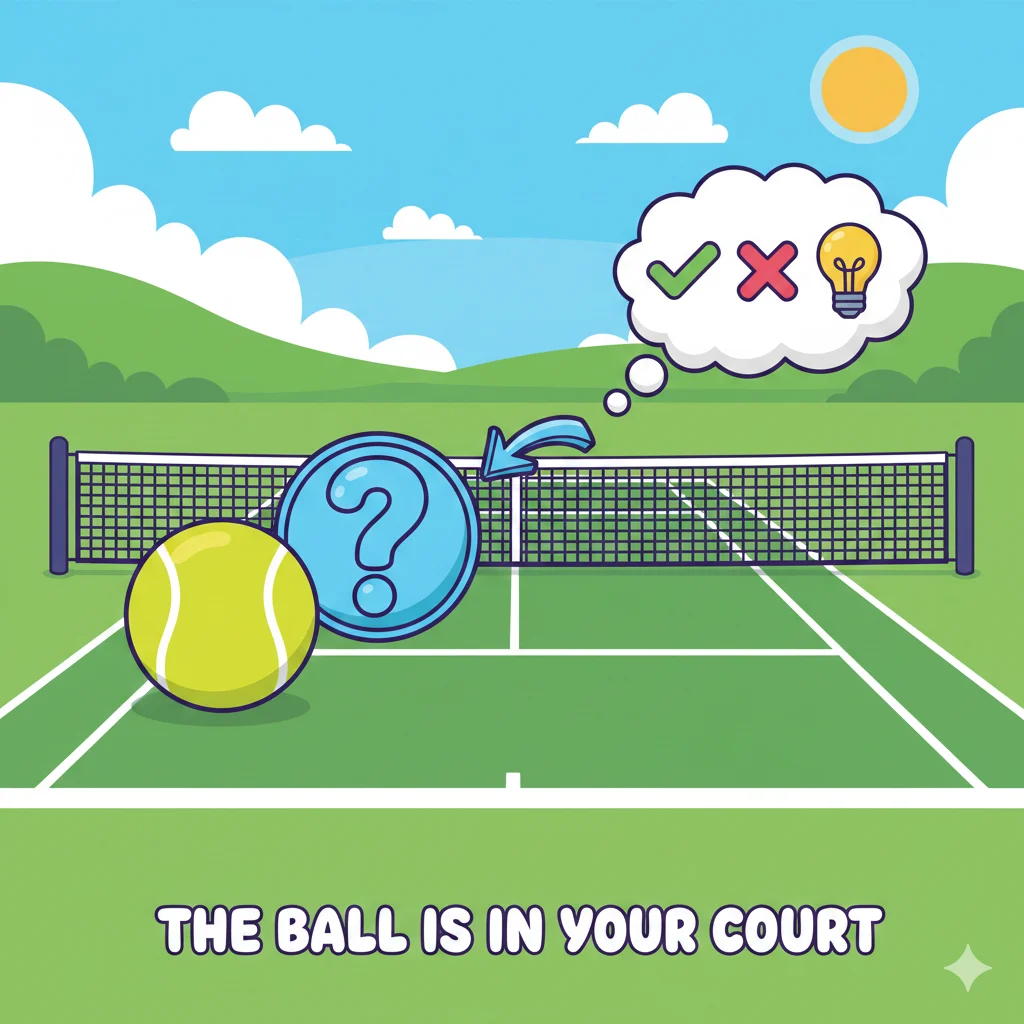
- I’ve sent the proposal; now the ball is in your court.
- She apologized, so the ball is in his court now.
Common Error
❌ Using it for past actions
✅ Use it for present responsibility
Usage Note
Often used in professional or decision-making contexts.
Step Up to the Plate
Word-by-word Meaning
Plate = baseball base
Idiomatic Meaning
To take responsibility or face a challenge bravely.
Example Sentences

- When the team was struggling, she stepped up to the plate.
- It’s time to step up to the plate and lead.
Common Error
❌ Confusing with physical movement
✅ It’s metaphorical, not literal
Usage Note
Common in leadership and teamwork situations.
Hit the Ground Running
Word-by-word Meaning
Hit = start
Running = moving fast
Idiomatic Meaning
To start something energetically and successfully.
Example Sentences

- He hit the ground running on his first day at work.
- The project team hit the ground running.
Common Error
❌ Using for slow beginnings
Usage Note
Perfect for jobs, projects, or new phases.
A Level Playing Field
Word-by-word Meaning
Level = equal
Playing field = sports ground
Idiomatic Meaning
A fair situation where everyone has equal chances.
Example Sentences
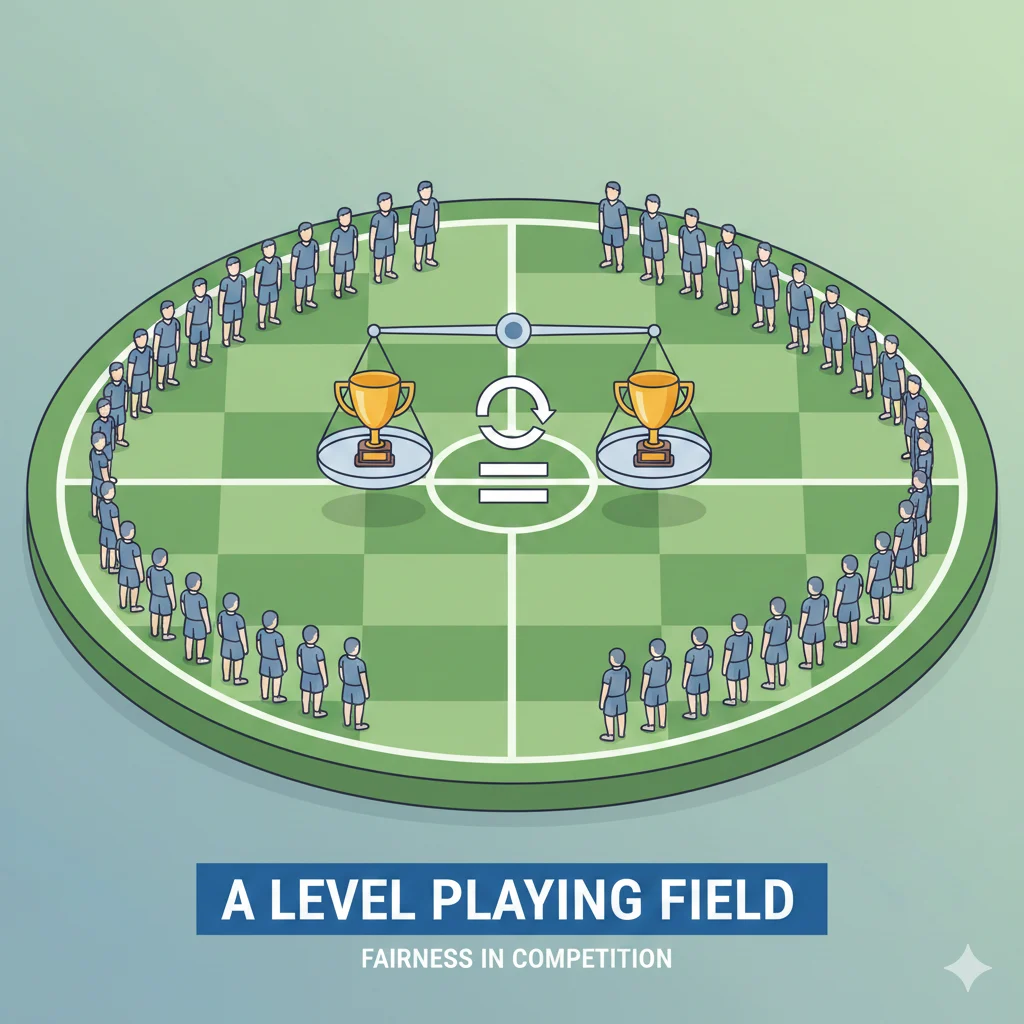
- Rules were changed to create a level playing field.
- Education helps make a level playing field.
Common Error
❌ Using for personal effort instead of fairness
Usage Note
Often used in education, business, and politics.
Keep Your Eye on the Ball
Word-by-word Meaning
Eye = focus
Ball = target
Idiomatic Meaning
Stay focused on your goal.
Example Sentences
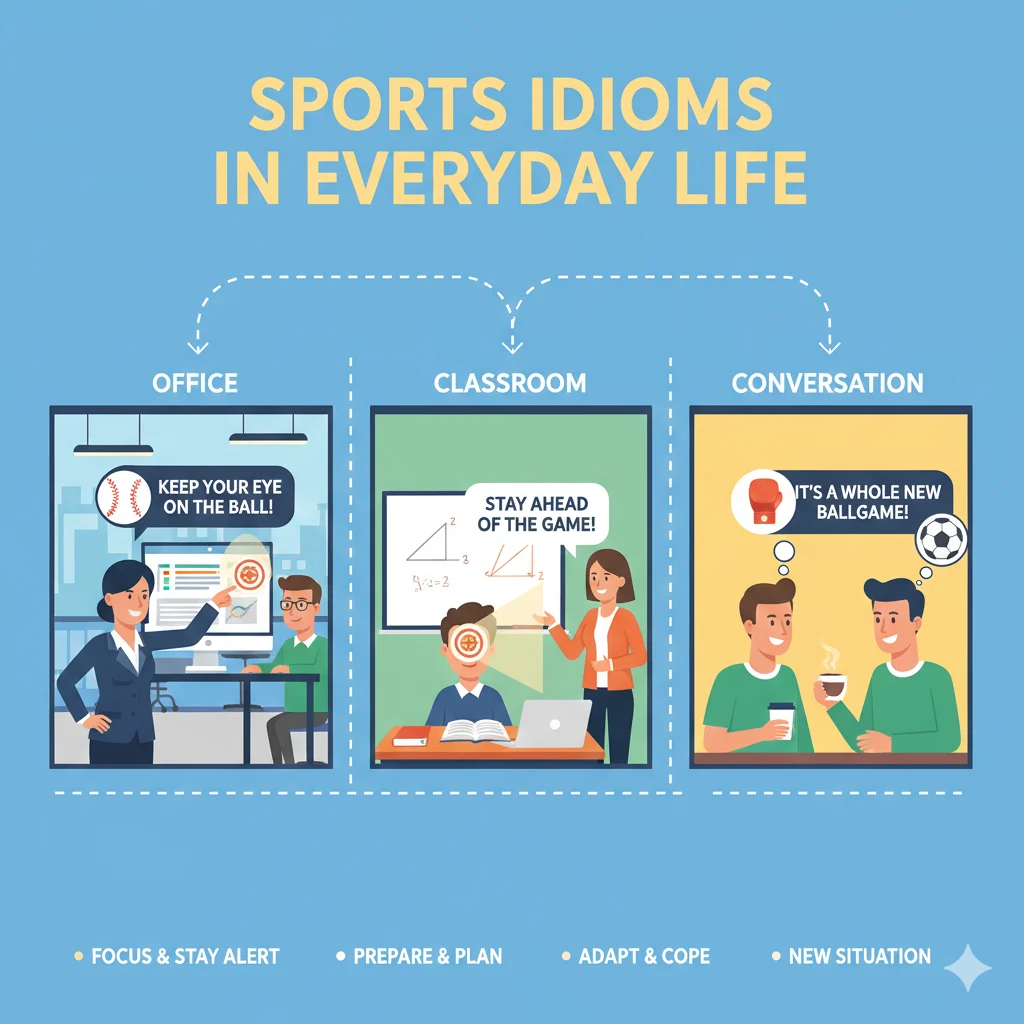
- Keep your eye on the ball during exams.
- He lost the deal because he didn’t keep his eye on the ball.
Common Error
❌ Using for physical eyesight only
Usage Note
Great for advice and motivation.
On the Home Stretch
Word-by-word Meaning
Home = finish
Stretch = last part of a race
Idiomatic / Figurative Meaning
Kisi kaam ke bilkul aakhri stage mein hona.
Example Sentences
- We are on the home stretch of our final exams.
- The project is difficult, but we’re on the home stretch now.
Common Error
❌ Using it at the beginning of a task
✅ Use only when something is almost finished
Usage Note
Positive idiom—motivation aur relief show karta hai.
Throw in the Towel
Word-by-word Meaning
Towel = boxing ka signal of surrender
Idiomatic Meaning
Haar maan lena, give up kar dena.
Example Sentences
- Don’t throw in the towel just because it’s hard.
- He almost threw in the towel, but then tried again.
Common Error
❌ Using it for temporary breaks
✅ It means permanent quitting
Usage Note
Negative ya emotional situations mein use hota hai.
Below the Belt
Word-by-word Meaning
Belt ke neeche (boxing mein illegal hit)
Idiomatic Meaning
Unfair, rude, ya unethical behavior.
Example Sentences
- Making fun of her accent was below the belt.
- That comment was really below the belt.
Common Error
❌ Using for physical violence only
✅ Mostly used for words or actions
Usage Note
Strong idiom—carefully use karein.
Call the Shots
Word-by-word Meaning
Shots = actions or decisions
Idiomatic Meaning
Control mein hona, decisions lena.
Example Sentences
- In this company, the manager calls the shots.
- She likes to call the shots in group work.
Common Error
❌ Using for advice
✅ It means final authority
Usage Note
Leadership aur power ke liye use hota hai.
Game Plan
Word-by-word Meaning
Game = match
Plan = strategy
Idiomatic Meaning
Kisi kaam ko karne ki strategy.
Example Sentences
- What’s our game plan for the presentation?
- We need a new game plan to succeed.
Common Error
❌ Thinking it’s only for sports
✅ Widely used in business & life
Usage Note
Neutral and very common idiom.
Get the Ball Rolling
Word-by-word Meaning
Ball = activity
Rolling = start hona
Idiomatic Meaning
Kisi kaam ki shuruaat karna.
Example Sentences
- Let’s get the ball rolling on this project.
- A small meeting helped get the ball rolling.
Common Error
❌ Using for finishing work
✅ Only for starting
Usage Note
Meetings aur projects ke liye perfect idiom.
Out of Left Field
Word-by-word Meaning
Left field = baseball ka unexpected area
Idiomatic Meaning
Unexpected, surprising cheez.
Example Sentences
- His question came out of left field.
- That idea was totally out of left field.
Common Error
❌ Using for planned things
✅ Always unexpected situations
Usage Note
Casual aur conversational idiom.
Full Court Press
Word-by-word Meaning
Basketball ki aggressive strategy
Idiomatic Meaning
Maximum effort ya pressure lagana.
Example Sentences
- The company is making a full court press to increase sales.
- She went full court press before exams.
Common Error
❌ Using for slow effort
✅ Means all-out effort
Usage Note
Formal aur informal dono mein use hota hai.
Back to Square One
Word-by-word Meaning
Square one = starting point
Idiomatic Meaning
Dobara bilkul shuru se start karna.
Example Sentences
- The plan failed, so we’re back to square one.
- Losing data took us back to square one.
Common Error
❌ Using for small setbacks
✅ Use when everything resets
Usage Note
Often frustration express karta hai.
Jump the Gun
Word-by-word Meaning
Gun = race ka starting signal
Idiomatic Meaning
Jaldi ya bina sochay action lena.
Example Sentences
- Don’t jump the gun before confirmation.
- He jumped the gun and apologized too early.
Common Error
❌ Using for delays
✅ Means acting too early
Usage Note
Advice aur warnings mein use hota hai.
Par for the Course
Word-by-word Meaning
Par = golf ka standard score
Idiomatic Meaning
Normal ya expected situation.
Example Sentences
- Mistakes are par for the course when learning.
- Long hours are par for the course here.
Common Error
❌ Using for rare events
✅ Use for common things
Usage Note
Calm aur accepting tone deta hai.
Down to the Wire
Word-by-word Meaning
Wire = finish line indicator
Idiomatic Meaning
Bilkul last moment tak chalna.
Example Sentences
- The match went down to the wire.
- The decision came down to the wire.
Common Error
❌ Using for early endings
✅ Only for last-minute situations
Usage Note
Excitement aur tension show karta hai.
Heavy Hitter
Word-by-word Meaning
Strong player jo big hits karta hai
Idiomatic Meaning
Powerful ya influential person.
Example Sentences
- She’s a heavy hitter in the tech industry.
- They invited heavy hitters to the meeting.
Common Error
❌ Using for physical strength
✅ Mostly for influence or success
Usage Note
Business aur media mein common.
In the Same League
Word-by-word Meaning
League = competition level
Idiomatic Meaning
Same level of skill ya ability.
Example Sentences
- He’s not in the same league as her.
- That phone isn’t in the same league as this one.
Common Error
❌ Using for teamwork
✅ Used for comparison
Usage Note
Comparative idiom hai.
Move the Goalposts
Word-by-word Meaning
Goalposts = target position
Idiomatic Meaning
Rules ya targets ko unfair tareeke se badalna.
Example Sentences
- They keep moving the goalposts.
- Changing rules now is moving the goalposts.
Common Error
❌ Using for improvement
✅ It’s always unfair change
Usage Note
Negative idiom—complaints mein use hota hai.
FAQs About Idioms of Sports
Q1: Why are idioms of sports so common in English?
Because sports influence culture, teamwork, and competition.
Q2: Can I use sports idioms in formal writing?
Yes, but sparingly and appropriately.
Q3: Are sports idioms used globally?
Mostly in English-speaking cultures, but many are widely understood.
Q4: How can I learn idioms faster?
Use them in sentences, conversations, and journaling.
Conclusion
Mastering idioms of sports can instantly make your English sound more natural, confident, and fluent. Start by choosing 3–5 idioms and using them in daily conversations or writing. With practice, these expressions will feel as natural as cheering for your favorite team. Keep practicing—and keep your eye on the ball!

“Elizabeth Bowen shares timeless idioms and language wisdom on LearnIdom.com, making learning phrases fun, easy, and unforgettable.”