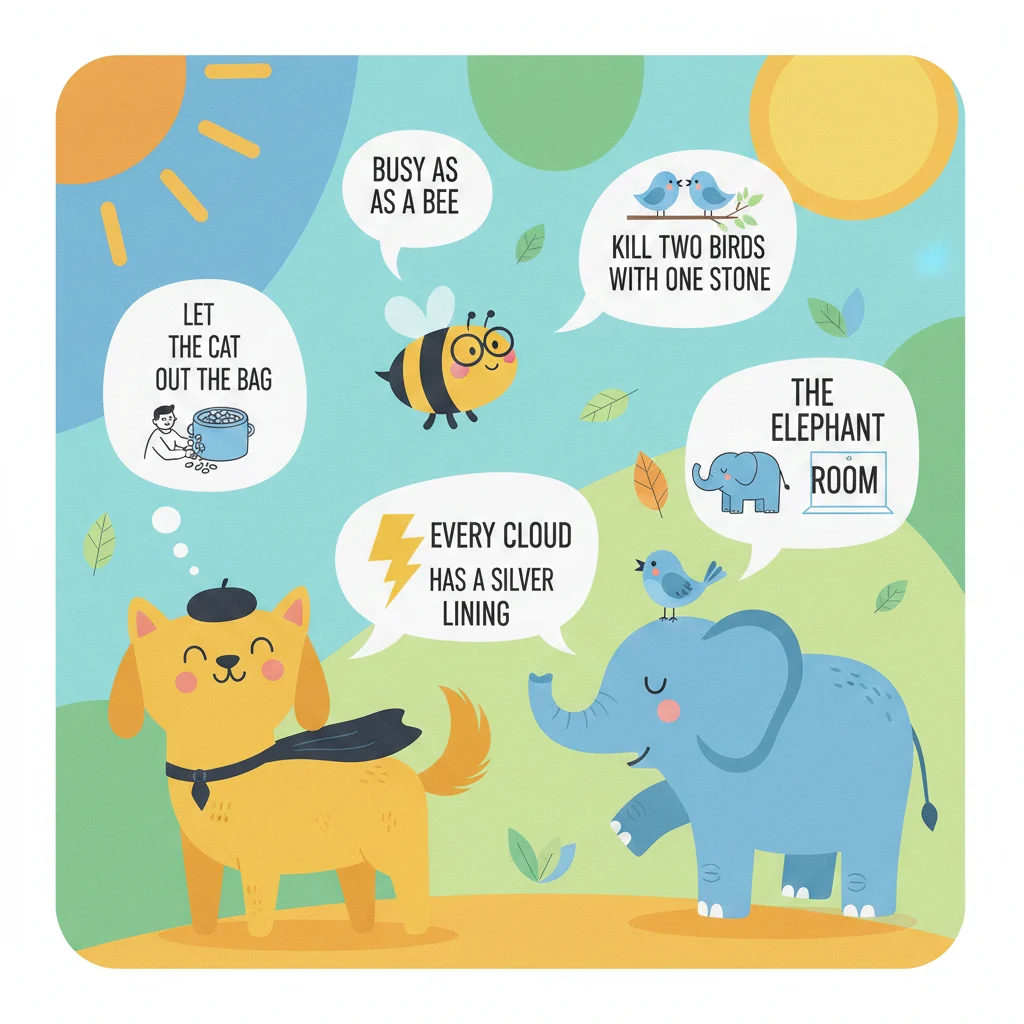
Idioms of animals are everywhere in everyday English. If you’ve ever felt as busy as a bee or let the cat out of the bag, you’ve already used one! These colorful expressions make English more vivid, natural, and fun—especially for learners.
In this guide, we’ll explore 20 of the most famous animal idioms, break them down clearly, and show you how to use them confidently in real life.
🐶 Let the cat out of the bag
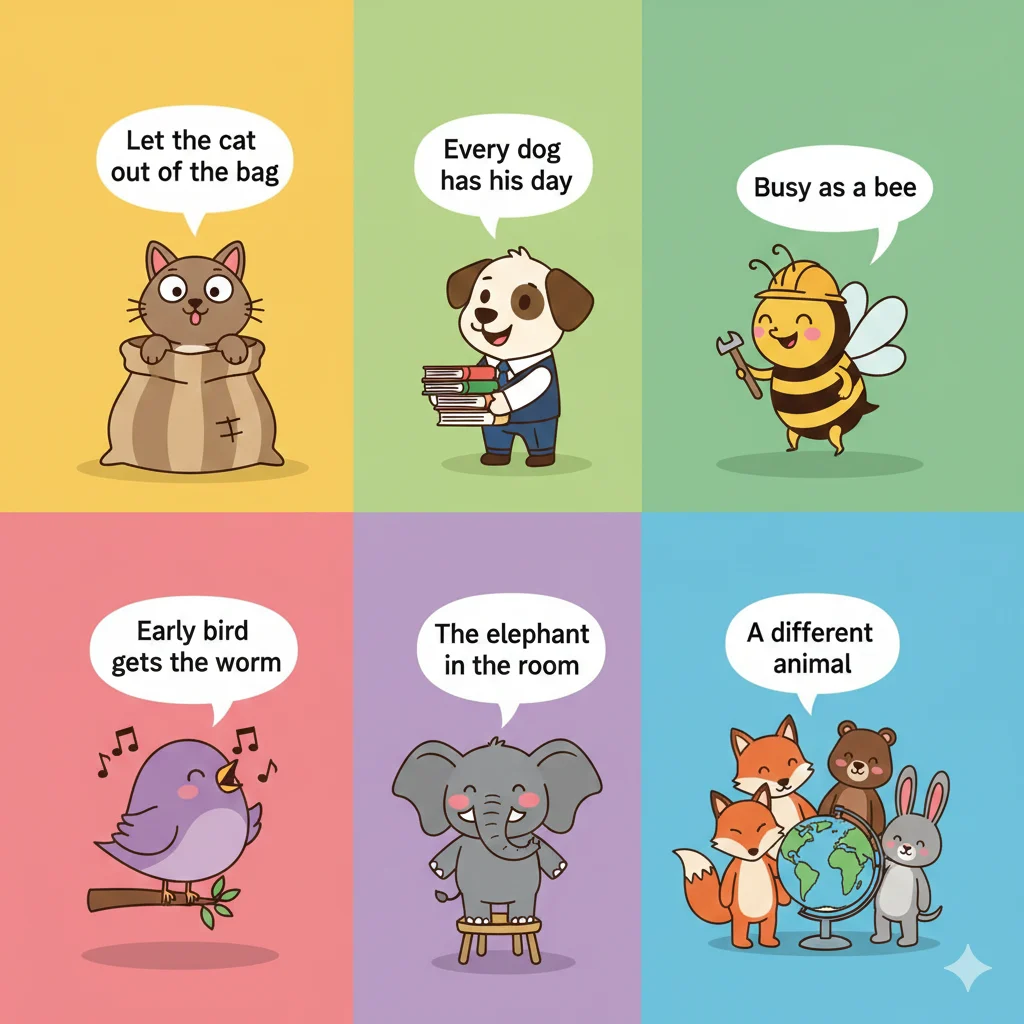
Word-by-word meaning: Release a cat from a bag
Idiomatic meaning: Reveal a secret accidentally
Example sentence: I didn’t mean to tell her about the party—I let the cat out of the bag.
Common error: Using it for intentional announcements
Usage note: Usually refers to secrets revealed by mistake
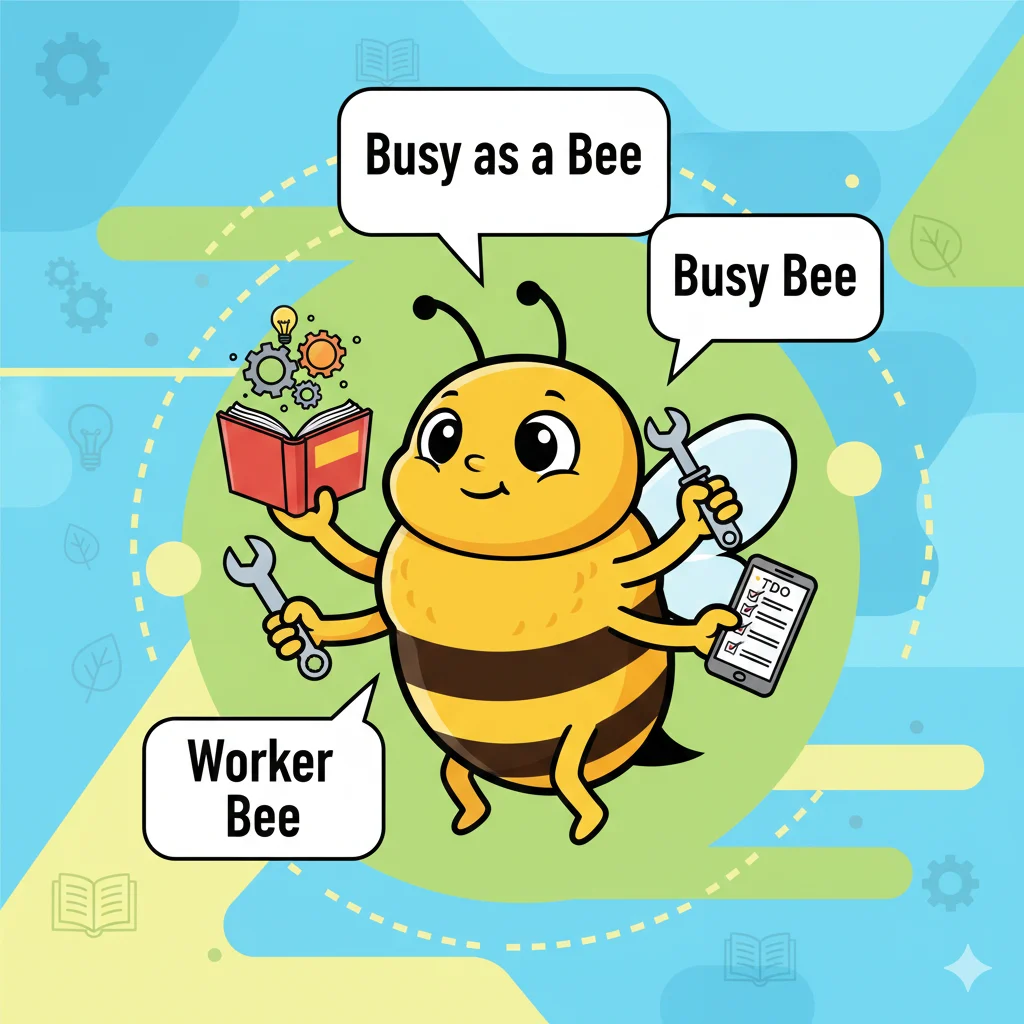
🐝 As busy as a bee

Word-by-word meaning: Working like a bee
Idiomatic meaning: Very busy and active
Example sentence: I’ve been as busy as a bee preparing for exams.
Common error: Saying “busy like a bee”
Usage note: Often used positively
210+ Popular Hiking Idioms Explained with Easy Meaning ✨ 2025
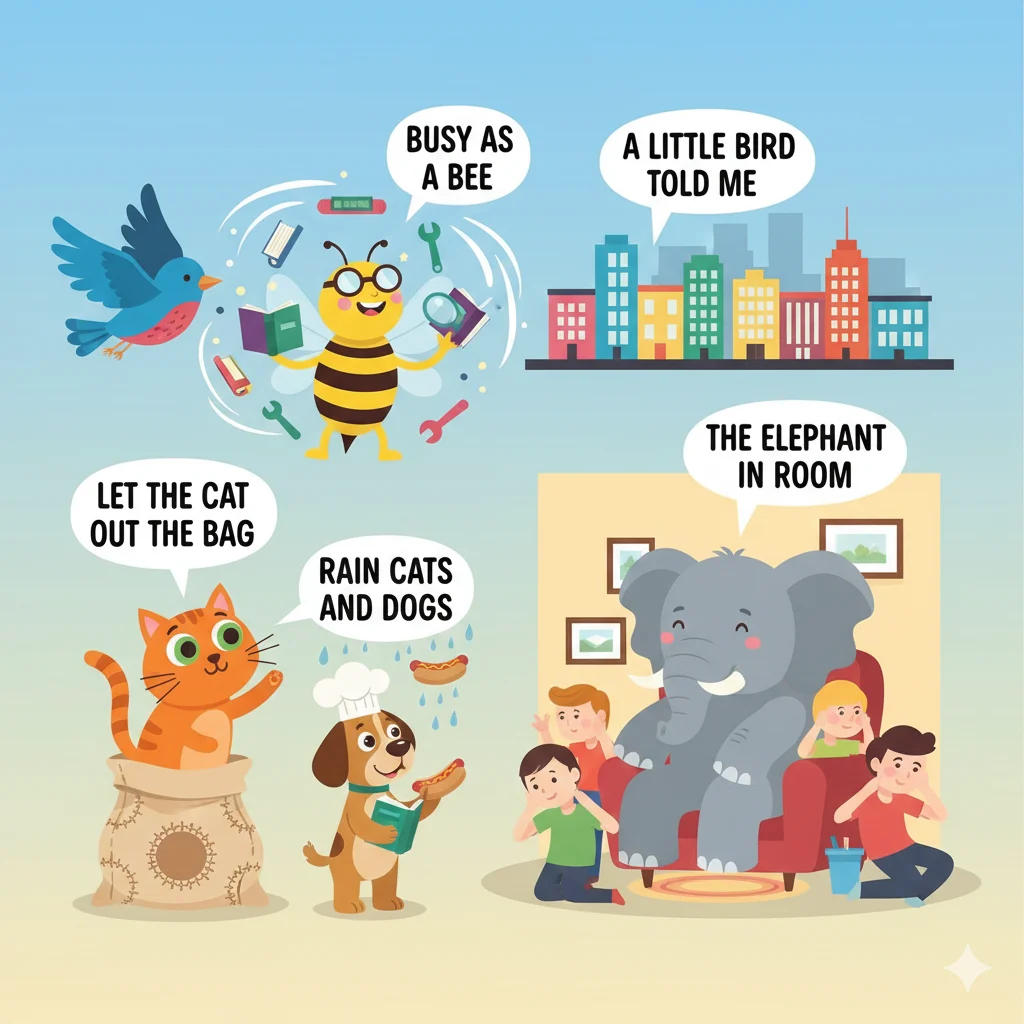
🐘 An elephant in the room
Word-by-word meaning: A large elephant inside a room
Idiomatic meaning: An obvious problem everyone ignores
Example sentence: His absence was the elephant in the room.
Common error: Using it for small issues
Usage note: Great for social or workplace situations
🐦 A bird’s-eye view
Word-by-word meaning: View from a flying bird
Idiomatic meaning: A general overview
Example sentence: The chart gives a bird’s-eye view of the project.
Common error: Confusing with detailed analysis
Usage note: Common in presentations and writing
🐺 A wolf in sheep’s clothing
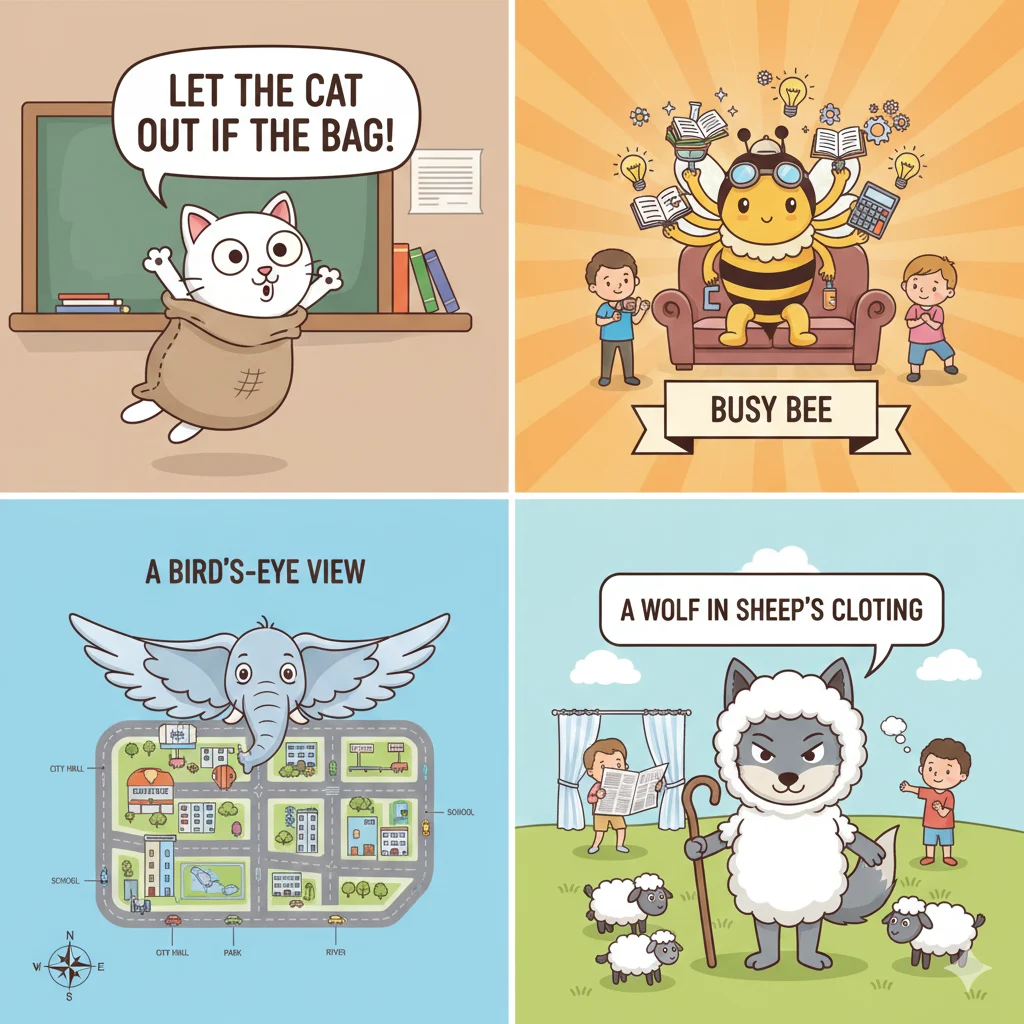
Word-by-word meaning: A wolf dressed as a sheep
Idiomatic meaning: A dangerous person pretending to be harmless
Example sentence: Be careful—he’s a wolf in sheep’s clothing.
Common error: Using it for honest people
Usage note: Often used as a warning
🐢 As slow as a snail
Word-by-word meaning: Moving like a snail
Idiomatic meaning: Extremely slow
Example sentence: The internet today is as slow as a snail.
Common error: Mixing animals (e.g., turtle instead of snail)
Usage note: Informal and humorous
🐕 Every dog has its day
Word-by-word meaning: Each dog gets one special day
Idiomatic meaning: Everyone gets a chance for success
Example sentence: Don’t worry—every dog has its day.
Common error: Using it for daily routines
Usage note: Encouraging expression
🐱 Curiosity killed the cat
Word-by-word meaning: Curiosity caused a cat’s death
Idiomatic meaning: Too much curiosity can cause trouble
Example sentence: I shouldn’t ask—curiosity killed the cat.
Common error: Using it to discourage all curiosity
Usage note: Often playful, not serious
🐍 A snake in the grass
Word-by-word meaning: A hidden snake
Idiomatic meaning: A secretly dangerous or dishonest person
Example sentence: He seemed friendly, but he was a snake in the grass.
Common error: Using it for open enemies
Usage note: Implies betrayal
🐎 Hold your horses
Word-by-word meaning: Stop your horses
Idiomatic meaning: Be patient; slow down
Example sentence: Hold your horses! We’re not ready yet.
Common error: Using it in very formal writing
Usage note: Common in spoken English
🐔 Chicken out
Word-by-word meaning: Act like a chicken
Idiomatic meaning: Decide not to do something because of fear
Example sentence: He chickened out before the speech.
Common error: Saying “chicken off”
Usage note: Informal
🐟 A big fish in a small pond
Word-by-word meaning: Large fish in a small pond
Idiomatic meaning: Important person in a small group
Example sentence: He was a big fish in a small pond at his old school.
Common error: Mixing up pond and ocean
Usage note: Often used for comparison
🐐 Get someone’s goat
Word-by-word meaning: Take someone’s goat
Idiomatic meaning: Annoy someone
Example sentence: His jokes really get my goat.
Common error: Using it literally
Usage note: Very informal
🐦 Kill two birds with one stone
Word-by-word meaning: Hit two birds with one stone
Idiomatic meaning: Achieve two goals with one action
Example sentence: I’ll exercise while commuting—kill two birds with one stone.
Common error: Changing word order
Usage note: Widely used
🐖 When pigs fly
Word-by-word meaning: Pigs flying in the sky
Idiomatic meaning: Something that will never happen
Example sentence: He’ll clean his room when pigs fly.
Common error: Using it for possible events
Usage note: Humorous sarcasm
🐕 Dog-eat-dog world
Word-by-word meaning: Dogs eating other dogs
Idiomatic meaning: Highly competitive environment
Example sentence: Business can be a dog-eat-dog world.
Common error: Saying “dog-eats-dog”
Usage note: Neutral to negative tone
🐈 Like herding cats
Word-by-word meaning: Trying to control cats
Idiomatic meaning: Managing something chaotic
Example sentence: Teaching that class is like herding cats.
Common error: Using it for calm situations
Usage note: Informal humor
🐜 Have ants in your pants
Word-by-word meaning: Ants inside pants
Idiomatic meaning: Be restless or impatient
Example sentence: He has ants in his pants waiting for the trip.
Common error: Using it for nervousness only
Usage note: Often about excitement
🐑 Follow like sheep
Word-by-word meaning: Sheep following others
Idiomatic meaning: Follow blindly without thinking
Example sentence: Don’t follow like sheep—think for yourself.
Common error: Forgetting the negative meaning
Usage note: Critical expression
🐓 Rule the roost
Word-by-word meaning: Control where chickens rest
Idiomatic meaning: Be in charge
Example sentence: She rules the roost at home.
Common error: Using it for shared leadership
Usage note: Informal but common
Frequently Asked Questions (FAQs)
Why are idioms of animals so common in English?
Animals are familiar and symbolic, making idioms easy to remember and visualize.
Are animal idioms used in formal English?
Some are, but many are informal. Always consider the context.
How can I learn idioms faster?
Use them in sentences, relate them to real-life situations, and practice regularly.
Do animal idioms translate well into other languages?
Not always. Many have culture-specific meanings.
Conclusion
Mastering idioms of animals can instantly make your English sound more natural and confident. Try using one or two idioms in conversations this week—or write a short story using your favorites. The more you practice, the easier they become!

“Iris Murdoch explores the beauty of language and idioms on LearnIdom.com, making learning phrases engaging, memorable, and fun for everyone.”