Nature has always inspired language, giving rise to countless expressions that describe our experiences, emotions, and observations. Idioms about nature are a fascinating way to enrich your English and communicate more vividly.
Whether you’re describing a calm situation, a sudden change, or a challenging moment, nature idioms add color to your speech. For example, saying someone is “weathering the storm” immediately conveys resilience without long explanations.
Similarly, phrases like “a drop in the ocean” or “branch out” make your language dynamic and relatable.
In this article, we explore 20 idioms about nature, explaining their literal meanings, figurative sense, common usage mistakes, and real-life examples.
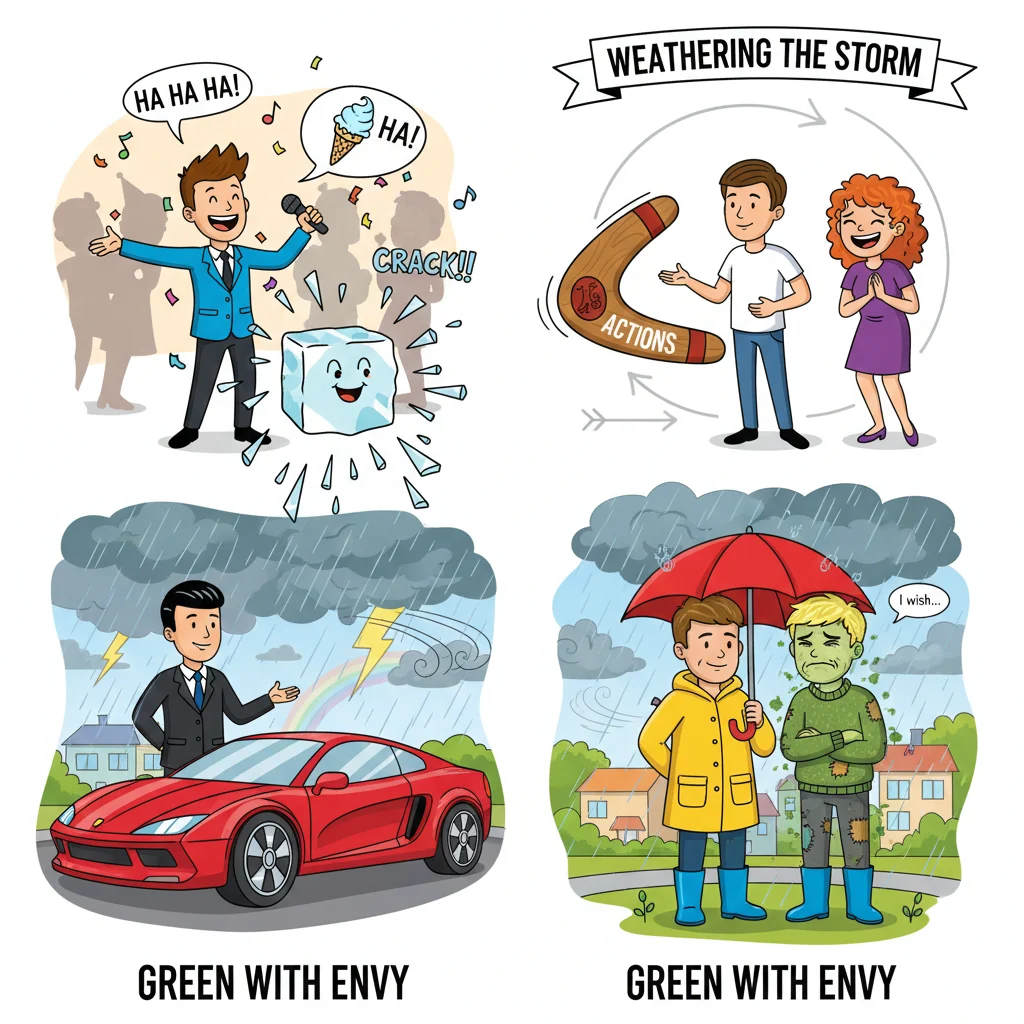
Weathering the Storm
Word-by-Word Meaning
“Weathering” = surviving; “storm” = a violent weather event.
Idiomatic/Figurative Meaning
To endure a difficult or challenging situation.
Example Sentences
- She’s weathering the storm at work after the company restructure.
- The team weathered the storm of criticism and kept going.
Common Error
Avoid using it for literal storms; it’s idiomatic.
Usage Note
Can be used for personal, professional, or emotional challenges.
A Drop in the Ocean

Word-by-Word Meaning
“Drop” = small amount; “ocean” = huge body of water.
Idiomatic/Figurative Meaning
Something insignificant compared to the whole.
Example Sentences
- Donating $5 may feel like a drop in the ocean, but every contribution counts.
Common Error
Do not confuse with literal water quantities.
Usage Note
Commonly used in fundraising, effort, or resource contexts.
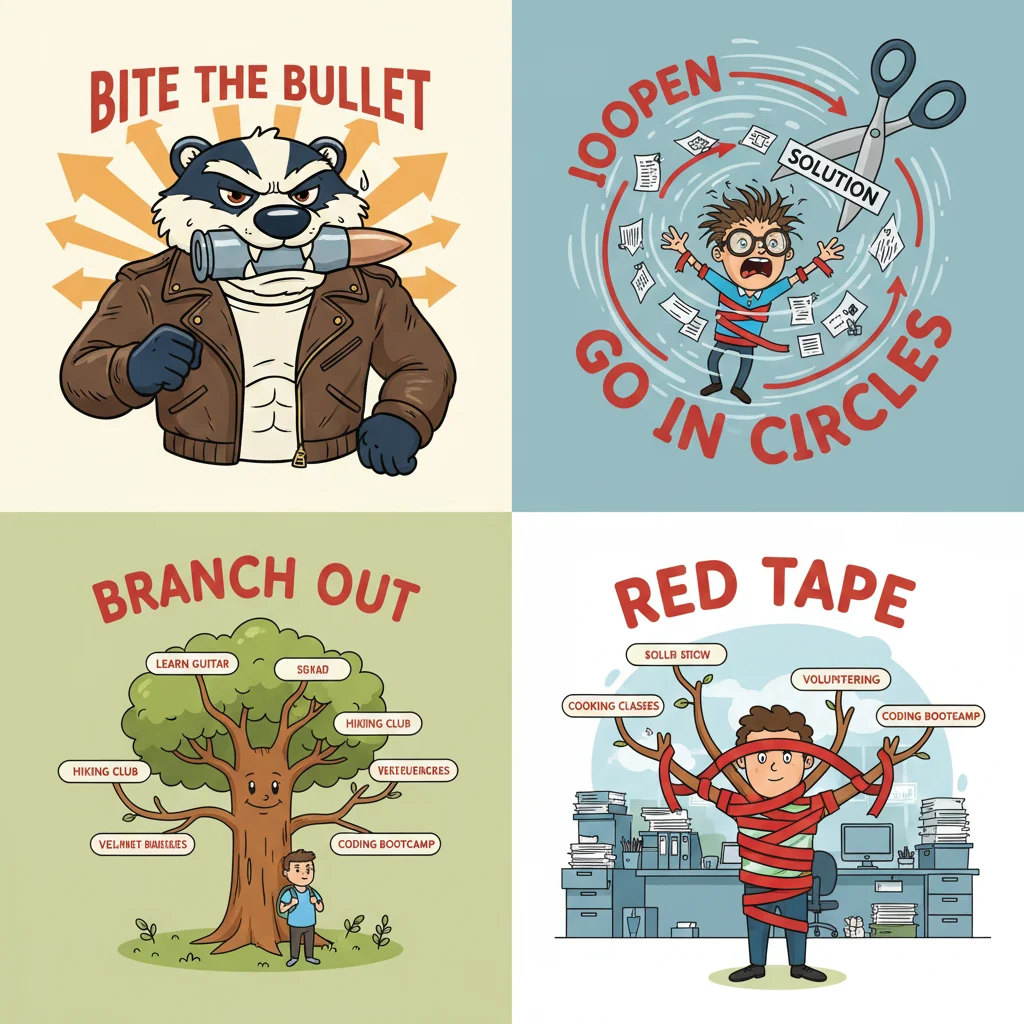
Branch Out
Word-by-Word Meaning
“Branch” = part of a tree; “out” = away from the center.
Idiomatic/Figurative Meaning
To expand activities or interests into new areas.
Example Sentences
- She decided to branch out into digital marketing.
Common Error
Not about literal trees or branches.
Usage Note
Often used for business or personal growth.
Hit the Hay
Word-by-Word Meaning
“Hit” = go to; “hay” = dried grass used for bedding.
Idiomatic/Figurative Meaning
To go to bed or sleep.
Example Sentences
- After the long hike, I was ready to hit the hay.
Common Error
Not for farming or literal haybales.
Usage Note
Informal; commonly used in casual conversation.
Beat Around the Bush

Word-by-Word Meaning
“Beat” = strike; “bush” = a small shrub.
Idiomatic/Figurative Meaning
To avoid directly addressing the main point.
Example Sentences
- Stop beating around the bush and tell me the truth!
Common Error
Do not use for literal gardening.
Usage Note
Common in conversations where someone avoids a topic.
Make Hay While the Sun Shines
Word-by-Word Meaning
“Make hay” = prepare dried grass; “while the sun shines” = during favorable conditions.
Idiomatic/Figurative Meaning
Take advantage of an opportunity while it lasts.
Example Sentences
- You should make hay while the sun shines and apply for that internship now.
Common Error
Not literal farming advice; always figurative.
Usage Note
Used for motivation or advice about seizing opportunities.
Go with the Flow
Word-by-Word Meaning
“Go” = move; “flow” = movement of water.
Idiomatic/Figurative Meaning
To accept a situation without resistance.
Example Sentences
- Life is unpredictable; sometimes you just have to go with the flow.
Common Error
Not literally floating in water.
Usage Note
Common in casual conversation about flexibility or attitude.
Under the Weather
Word-by-Word Meaning
“Under” = below; “weather” = conditions like rain or wind.
Idiomatic/Figurative Meaning
Feeling ill or unwell.
Example Sentences
- I’m feeling under the weather today, so I’ll skip the gym.
Common Error
Do not use for literal weather conditions.
Usage Note
Very common in informal English for health.
Out of the Woods
Word-by-Word Meaning
“Out” = away from; “woods” = forest.
Idiomatic/Figurative Meaning
Free from danger or difficulty.
Example Sentences
- The patient is out of the woods after the surgery.
Common Error
Avoid using for literal woods.
Usage Note
Used in health, crises, or problems.
Take a Leaf Out of Someone’s Book
Word-by-Word Meaning
“Leaf” = page of a book; “someone’s book” = their personal guide.
Idiomatic/Figurative Meaning
To imitate or learn from someone’s example.
Example Sentences
- She decided to take a leaf out of her mentor’s book and start planning daily.
Common Error
Not literal book or leaves.
Usage Note
Formal or informal; suitable in advice context.
FAQs About Nature Idioms (Expanded)
Q1: Are nature idioms easy to use in daily conversation?
A1: Yes! They’re very relatable and make your speech more vivid.
Q2: Can they be used in writing?
A2: Yes, especially in storytelling, blogs, or informal writing.
Q3: How can I remember them quickly?
A3: Visualize the literal meaning first, then connect it to the figurative sense.
Q4: Are these idioms understood worldwide?
A4: Most are common in English-speaking countries, but check regional variations.
Q5: Can I create my own nature idioms?
A5: Absolutely! Just ensure your audience can understand the figurative meaning.
Conclusion
Nature idioms enrich your English with vivid imagery and emotion. By practicing these 20 expressions daily, you’ll speak more fluently and naturally. Try incorporating at least one idiom in conversation each day—your language will become colorful, engaging, and memorable. Start today, and let nature inspire your words!

“Rose Macaulay shares the charm of idioms on LearnIdom.com, making language learning delightful, insightful, and full of wit for every reader.”