Learning a language isn’t just about grammar and vocabulary—it’s about understanding how people really speak. That’s where Italian idioms come in. If you’ve ever heard an Italian say something that made no sense word-by-word but sounded incredibly expressive, chances are it was an idiom.
I remember my first time in Rome when someone told me “In bocca al lupo!”—I panicked before realizing they were just wishing me good luck.Italian idioms add color, humor, and authenticity to your conversations. They help you sound natural, understand movies and songs, and connect better with native speakers.
In this guide, you’ll discover the 20 most famous Italian idioms, each explained clearly with meanings, examples, common mistakes, and usage tips. Whether you’re a beginner or an advanced learner, these expressions will take your Italian to the next level—one idiom at a time 🇮🇹.
In bocca al lupo
Word-by-word meaning
In the mouth of the wolf
Idiomatic meaning
Good luck
Example sentences

- Domani ho un esame. — In bocca al lupo!
Common error
Saying “grazie” instead of the traditional response
Usage note
The correct reply is “Crepi!” or “Crepi il lupo!”
Fare una bella figura
Word-by-word meaning
To make a beautiful figure
Idiomatic meaning
To make a good impression
Example sentences

- Con quel vestito hai fatto una bella figura.
Common error
Using it only for appearance
Usage note
It also refers to manners and behavior.
Avere le mani bucate
Word-by-word meaning
To have holes in your hands
Idiomatic meaning
To spend money carelessly
Example sentences
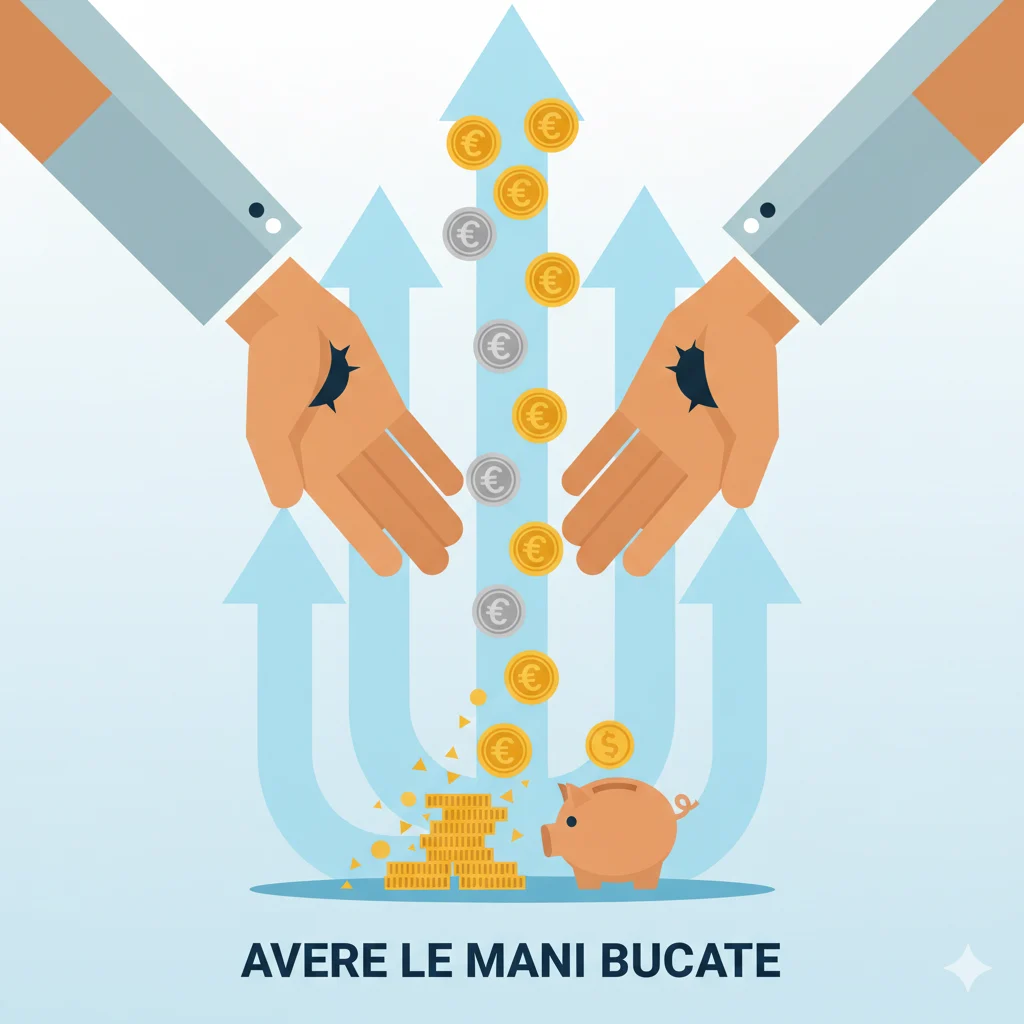
- Marco ha le mani bucate: spende tutto subito.
Common error
Confusing it with being poor
Usage note
It refers to spending habits, not income.
Non tutte le ciambelle riescono col buco
Word-by-word meaning
Not all donuts come out with a hole
Idiomatic meaning
Not everything succeeds
Example sentences

- Il progetto non è perfetto, ma non tutte le ciambelle riescono col buco.
Common error
Using it only for cooking
Usage note
Very common in daily conversation.
Avere la botte piena e la moglie ubriaca
Word-by-word meaning
To have a full barrel and a drunk wife
Idiomatic meaning
To want everything at once
Example sentences

- Vuole risparmiare e viaggiare sempre: impossibile!
Common error
Using it in formal writing
Usage note
Mostly informal and humorous.
Rompere il ghiaccio
Word-by-word meaning
To break the ice
Idiomatic meaning
To start a conversation
Example sentences
- Una battuta ha rotto il ghiaccio.
Common error
Overusing in formal contexts
Usage note
Same meaning as English.
Essere al settimo cielo
Word-by-word meaning
To be in the seventh sky
Idiomatic meaning
To be extremely happy
Example sentences
- Quando ha vinto, era al settimo cielo.
Common error
Mixing with physical location
Usage note
Used for strong emotions.
Fare orecchie da mercante
Word-by-word meaning
To make merchant ears
Idiomatic meaning
To pretend not to hear
Example sentences
- Fa sempre orecchie da mercante.
Common error
Using it literally
Usage note
Often implies intentional ignoring.
Avere un diavolo per capello
Word-by-word meaning
To have a devil per hair
Idiomatic meaning
To be very angry
Example sentences
- Oggi ha un diavolo per capello.
Common error
Using for mild annoyance
Usage note
Means intense anger.
Piove sul bagnato
Word-by-word meaning
It rains on the wet
Idiomatic meaning
Misfortune adds to misfortune
Example sentences
- Ha perso il lavoro e poi si è ammalato.
Common error
Confusing with weather talk
Usage note
Often used sympathetically.
Tirare l’acqua al proprio mulino
Word-by-word meaning
To pull water to one’s own mill
Idiomatic meaning
To act in one’s own interest
Example sentences
- Luca tira sempre l’acqua al proprio mulino nelle riunioni.
Common error
Assuming it’s about helping someone
Usage note
Used when someone favors themselves over others.
Mettere troppa carne al fuoco
Word-by-word meaning
To put too much meat on the fire
Idiomatic meaning
To take on too many tasks at once
Example sentences
- Non puoi fare tutto insieme, stai mettendo troppa carne al fuoco.
Common error
Using literally
Usage note
Warns against overcommitting.
Avere la testa fra le nuvole
Word-by-word meaning
To have the head among the clouds
Idiomatic meaning
To be daydreaming or distracted
Example sentences
- Marco ha sempre la testa fra le nuvole in classe.
Common error
Confusing with being forgetful
Usage note
Refers to absent-mindedness, not intelligence.
Chi dorme non piglia pesci
Word-by-word meaning
Who sleeps doesn’t catch fish
Idiomatic meaning
You have to take action to succeed
Example sentences
- Se non ti alzi presto, chi dorme non piglia pesci.
Common error
Literal translation to English
Usage note
Used as friendly advice or proverb.
Prendere due piccioni con una fava
Word-by-word meaning
To catch two pigeons with one bean
Idiomatic meaning
To achieve two things at once
Example sentences
- Con una sola telefonata ho risolto tutto, ho preso due piccioni con una fava.
Common error
Confusing with wasting time
Usage note
Similar to “killing two birds with one stone” in English.
Essere come il prezzemolo
Word-by-word meaning
To be like parsley
Idiomatic meaning
To appear everywhere
Example sentences
- Paolo è come il prezzemolo, lo trovo sempre ovunque!
Common error
Thinking it’s positive
Usage note
Neutral or slightly humorous; refers to omnipresence.
Fare il passo più lungo della gamba
Word-by-word meaning
To take a step longer than the leg
Idiomatic meaning
To overestimate oneself or take on too much
Example sentences
- Ha comprato una macchina che non può permettersi: ha fatto il passo più lungo della gamba.
Common error
Using literally
Usage note
Commonly used for financial or personal overreach.
Avere le braccine corte
Word-by-word meaning
To have short arms
Idiomatic meaning
To be stingy or unwilling to give
Example sentences
- Non presta mai soldi, ha le braccine corte.
Common error
Thinking it refers to physical arms
Usage note
Always figurative, mostly informal.
Non vedere l’ora
Word-by-word meaning
To not see the hour
Idiomatic meaning
To be very eager or excited
Example sentences
- Non vedo l’ora di partire per le vacanze!
Common error
Used in wrong tenses
Usage note
Always followed by an infinitive verb.
Casca a fagiolo
Word-by-word meaning
It falls on the bean
Idiomatic meaning
Something happens at the perfect time
Example sentences
- La tua idea casca a fagiolo, proprio quello che ci serviva!
Common error
Literal translation
Usage note
Used to describe perfect timing or fit.
Frequently Asked Questions about Italian Idioms
1. Why are Italian idioms important for learners?
They help you sound natural and understand real conversations.
2. Are Italian idioms used in formal situations?
Most are informal, but some appear in writing and media.
3. How many Italian idioms should I learn at once?
Start with 5–10 and practice them actively.
4. Do Italian idioms change by region?
Yes, some expressions are regional, especially slang.
Conclusion
Mastering Italian idioms is one of the fastest ways to sound fluent and confident. Don’t try to memorize all 20 at once—pick a few, use them in sentences, and listen for them in movies or conversations. The more you practice, the more natural they’ll feel. 🇮🇹
In bocca al lupo with your Italian learning journey!

“Iris Murdoch explores the beauty of language and idioms on LearnIdom.com, making learning phrases engaging, memorable, and fun for everyone.”