Learning a new language feels exciting—until native speakers start using expressions that make no literal sense at all. That’s exactly where Russian idioms come in. If you’ve ever translated a Russian sentence word-by-word and still felt confused, you’re not alone. Idioms are a huge part of everyday Russian conversation, movies, books, and even social media.
Think about English phrases like “break the ice”—Russians do the same, just with very different images. Understanding Russian idioms helps you sound more natural, avoid misunderstandings, and truly connect with native speakers.
I still remember the first time I heard an idiom in Russia and everyone laughed—except me. Once I learned these expressions, conversations suddenly felt warmer and more human.
In this guide, you’ll explore the 20 most famous Russian idioms, explained simply with meanings, examples, and common mistakes learners make.
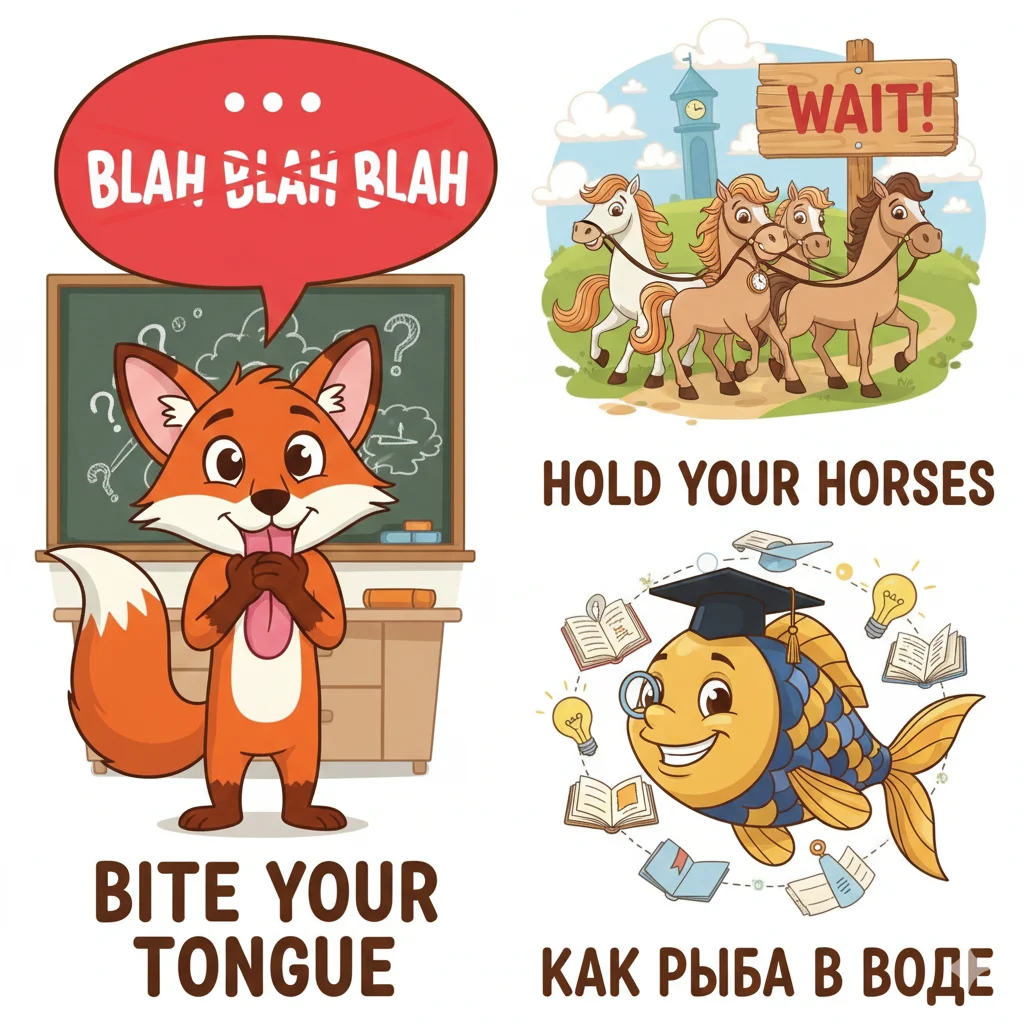
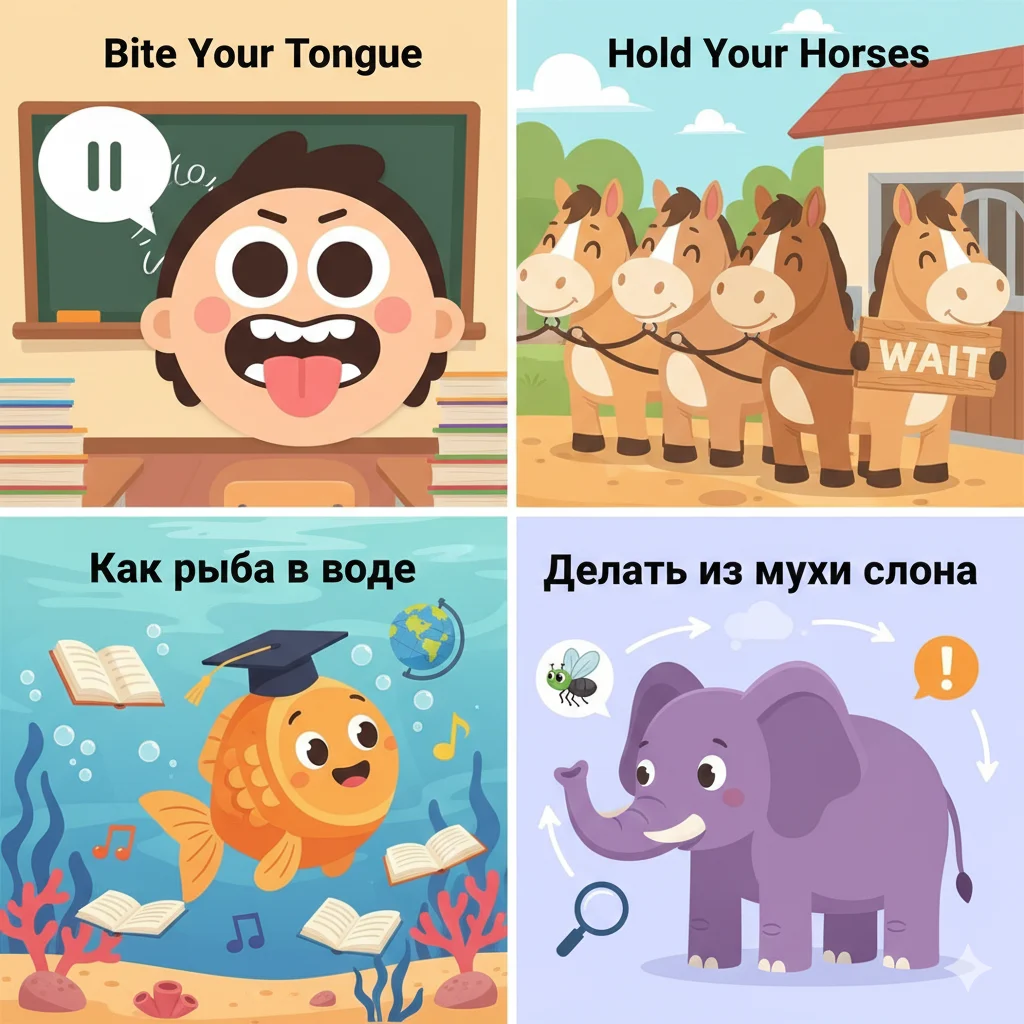
Как рыба в воде (Like a fish in water)
Word-by-word meaning
Like a fish in water
Idiomatic meaning
To feel completely comfortable or confident
Example sentences
- Он в программировании как рыба в воде.
(He’s completely comfortable with programming.)
Common error
Using it for physical swimming only.
Usage note
Used for skills, environments, or social situations.
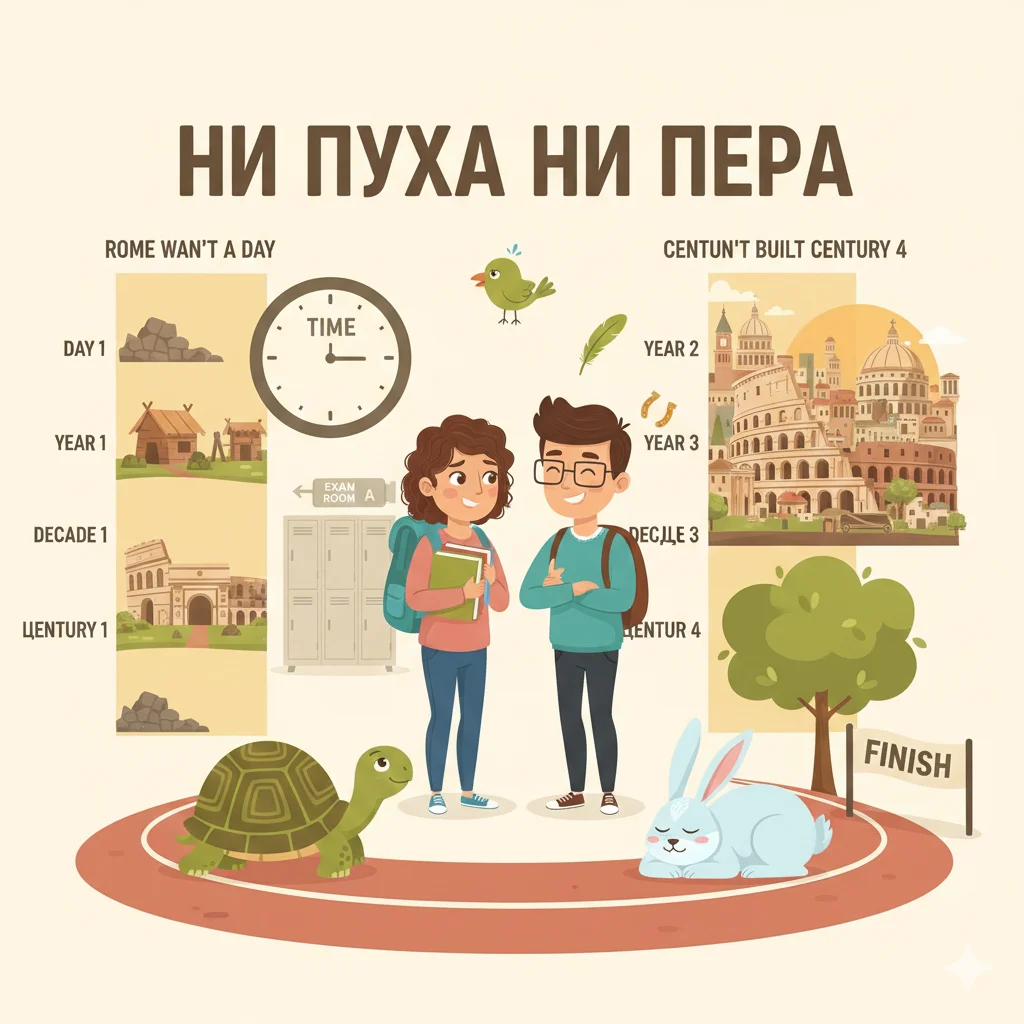
Ни пуха ни пера (Neither fluff nor feather)
Word-by-word meaning
Neither fluff nor feather
Idiomatic meaning
Good luck!
Example sentences
- — Экзамен завтра. — Ни пуха ни пера!
Common error
Replying “thank you”
Usage note
The correct reply is “К чёрту!” (To hell!)
Вешать лапшу на уши (To hang noodles on ears)
Word-by-word meaning
Hang noodles on someone’s ears
Idiomatic meaning
To deceive or lie
Example sentences
- Он опять вешает мне лапшу на уши.

Common error
Using it for jokes only.
Usage note
Implies intentional deception.
Делать из мухи слона (Make an elephant out of a fly)
Word-by-word meaning
Turn a fly into an elephant
Idiomatic meaning
To exaggerate
Example sentences
- Не делай из мухи слона!
Common error
Confusing it with “lying”
Usage note
Used when overreacting emotionally.
После дождичка в четверг (After the little rain on Thursday)
Word-by-word meaning
After rain on Thursday
Idiomatic meaning
Never or unlikely to happen

Example sentences
- Он вернёт деньги после дождичка в четверг.
Common error
Using it for future plans seriously.
Usage note
Carries sarcasm.
Заруби себе на носу (Chop it on your nose)
Word-by-word meaning
Carve it on your nose
Idiomatic meaning
Remember it well
Example sentences
- Заруби себе на носу: опаздывать нельзя.
Common error
Assuming violence
Usage note
“Нос” historically meant a note stick.
Сидеть сложа руки (Sit with folded hands)
Word-by-word meaning
Sit with hands folded
Idiomatic meaning
Do nothing
Example sentences
- Нельзя сидеть сложа руки.
Common error
Using it for resting.
Usage note
Implies laziness or inaction.
Как снег на голову (Like snow on the head)
Word-by-word meaning
Snow on the head
Idiomatic meaning
Suddenly, unexpectedly
Example sentences
- Он приехал как снег на голову.
Common error
Using it for planned events.
Usage note
Often negative surprise.
Держать язык за зубами (Keep your tongue behind your teeth)
Word-by-word meaning
Hold tongue behind teeth
Idiomatic meaning
Keep a secret
Example sentences
- Держи язык за зубами!
Common error
Using for speech clarity.
Usage note
Strong informal warning.
Бить баклуши (Beat wooden blanks)
Word-by-word meaning
Hit wooden pieces
Idiomatic meaning
Waste time / be lazy
Example sentences
- Он целый день бьёт баклуши.
Common error
Confusing with working hard.
Usage note
Colloquial, mildly critical.
Как две капли воды (Like two drops of water)
Word-by-word meaning
Two drops of water
Idiomatic meaning
Exactly alike
Example sentences
- Они похожи как две капли воды.
Common error
Using for similar opinions.
Usage note
Mostly for people or objects.
На седьмом небе (On seventh heaven)
Word-by-word meaning
Seventh heaven
Idiomatic meaning
Extremely happy
Example sentences
- Она была на седьмом небе от счастья.
Common error
Using it sarcastically unintentionally.
Usage note
Positive emotional state.
Кот наплакал (The cat cried)
Word-by-word meaning
Cat cried
Idiomatic meaning
Very little amount
Example sentences
- Денег у меня кот наплакал.
Common error
Using for sadness.
Usage note
Informal and expressive.
Яблоку негде упасть (No place for an apple to fall)
Word-by-word meaning
Apple can’t fall
Idiomatic meaning
Extremely crowded
Example sentences
- В автобусе яблоку негде упасть.
Common error
Using for clutter, not people.
Usage note
Describes physical crowding.
С гулькин нос (As small as a sparrow’s nose)
Word-by-word meaning
Sparrow’s nose
Idiomatic meaning
Very little
Example sentences
- Зарплата с гулькин нос.
Common error
Mixing with “кот наплакал”
Usage note
More sarcastic tone.
Не в своей тарелке (Not in your own plate)
Word-by-word meaning
Not in one’s plate
Idiomatic meaning
Feel uncomfortable
Example sentences
- Я сегодня не в своей тарелке.
Common error
Using for illness only.
Usage note
Emotional discomfort.
Водить за нос (Lead by the nose)
Word-by-word meaning
Pull by the nose
Idiomatic meaning
Manipulate or deceive
Example sentences
- Он водит всех за нос.
Common error
Using playfully.
Usage note
Negative intention implied.
Сесть в лужу (Sit in a puddle)
Word-by-word meaning
Sit in a puddle
Idiomatic meaning
Embarrass oneself
Example sentences
- Он сел в лужу с этим вопросом.
Common error
Using for accidents.
Usage note
Public embarrassment.
Гол как сокол (Naked as a falcon)
Word-by-word meaning
Bare like a falcon
Idiomatic meaning
Completely broke
Example sentences
- После поездки я гол как сокол.
Common error
Interpreting literally.
Usage note
Financial context only.
Работа не волк (Work is not a wolf)
Word-by-word meaning
Work is not a wolf
Idiomatic meaning
Work won’t run away
Example sentences
- Отдохнём, работа не волк.
Common error
Using in formal writing.
Usage note
Very colloquial, humorous.
FAQs About Russian Idioms
Q1: Are Russian idioms used in daily conversation?
Yes, native speakers use them constantly in informal speech.
Q2: Should beginners learn idioms early?
Start with common ones—context makes learning easier.
Q3: Can idioms be translated word-for-word?
No, that often causes confusion or mistakes.
Q4: Are idioms formal Russian?
Most are informal or conversational.
Q5: How can I practice Russian idioms?
Watch Russian shows, read dialogues, and try using one idiom per day.
Conclusion
Mastering Russian idioms is one of the fastest ways to sound natural and confident in real conversations. You don’t need to memorize all 20 at once—start small, notice how natives use them, and practice in context. Each idiom you learn unlocks cultural meaning, humor, and emotional depth that textbooks often miss. Pick three idioms today and try using them this week—you’ll be surprised how quickly your Russian feels more alive.

“L.P. Hartley brings classic idioms to life on LearnIdom.com, helping readers explore language with wit, clarity, and timeless insight.”