Idioms for working are common English expressions that describe jobs, effort, teamwork, and work-related situations in a symbolic way. Popular examples include “burn the midnight oil” (to work late), “pull your weight” (to do your share of work), and “hit the ground running” (to start a task energetically).
These idioms are widely used in conversations, emails, professional meetings, and media to make communication more vivid and engaging. Many English learners struggle with work idioms because their meanings are not literal, which can cause confusion. Learning these idioms helps you sound more fluent, express effort and productivity naturally, and understand native speakers better.
Whether you are a student, professional, or content creator, mastering idioms for working boosts vocabulary, improves workplace communication, and makes your English sound confident and expressive in any situation.
Burn the Midnight Oil
Word-by-Word Meaning: Staying up late to work.
Idiomatic/Figurative Meaning: Working late into the night, often to meet a deadline.
Example Sentences:

- I had to burn the midnight oil to finish my project.
Common Error: Avoid saying “I burnt the midnight oil yesterday” in formal writing; prefer “I stayed up late working.”
Usage Note: Often used in academic and professional contexts.
Hit the Ground Running
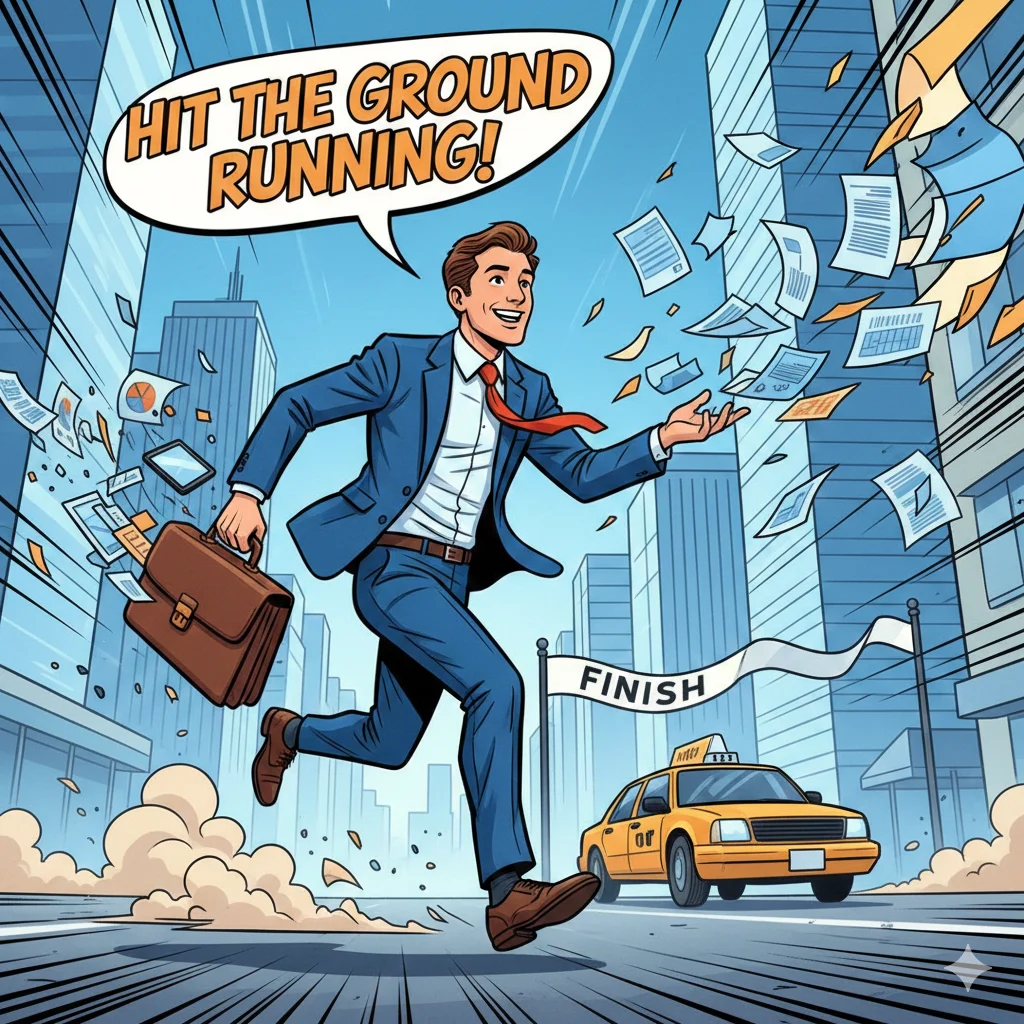
Word-by-Word Meaning: Start running immediately.
Idiomatic/Figurative Meaning: Begin a task or job energetically and effectively.
Example Sentences:
- She hit the ground running on her first day at the new company.
Common Error: Don’t confuse with literally running; it’s figurative.
Usage Note: Great for job interviews and new projects.
Pull Your Weight
Word-by-Word Meaning: Carry your own part of the load.
Idiomatic/Figurative Meaning: Do your fair share of work.
Example Sentences:

- Everyone on the team must pull their weight for the project to succeed.
Common Error: Don’t use “carry your weight” instead; it has a different nuance.
Usage Note: Common in teamwork settings.
Keep Your Nose to the Grindstone
Word-by-Word Meaning: Keep your nose near a grinding tool.
Idiomatic/Figurative Meaning: Work hard and consistently.
Example Sentences:
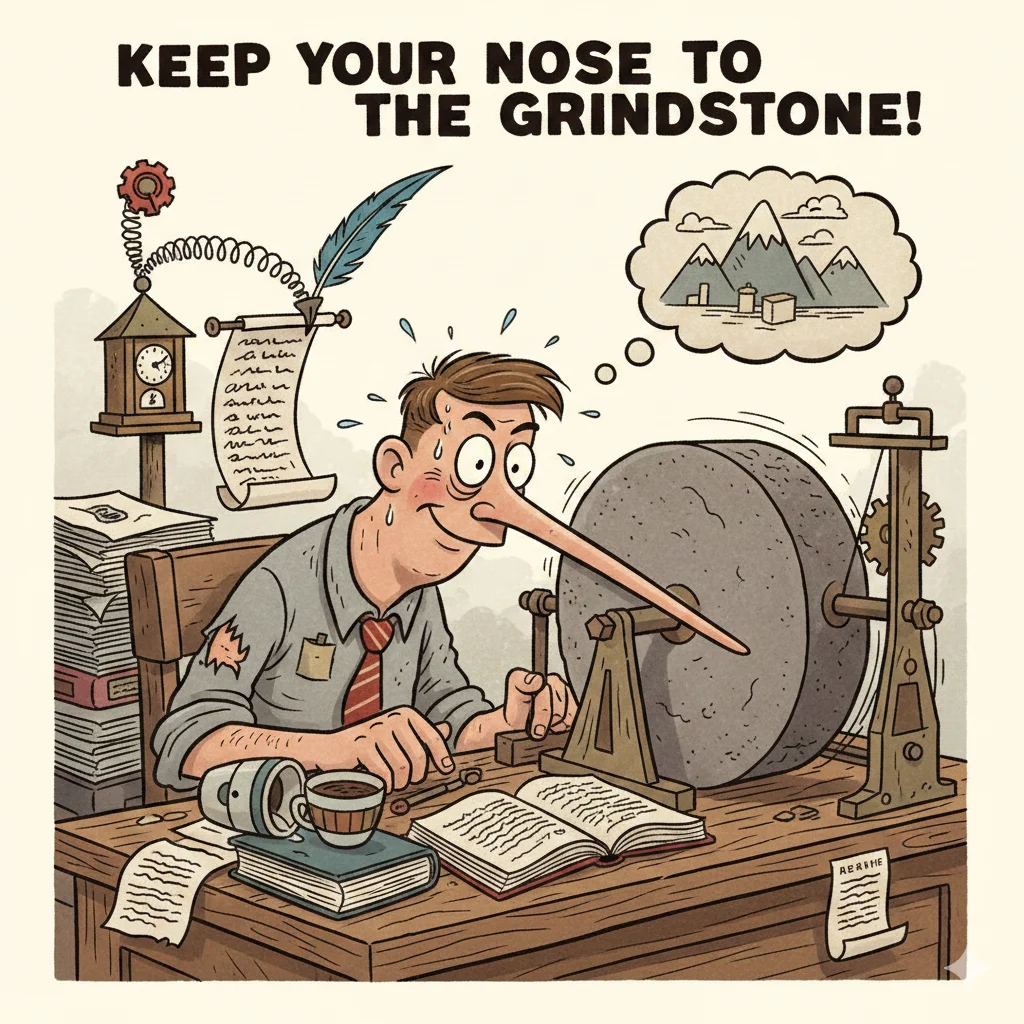
- If you keep your nose to the grindstone, you’ll finish the report on time.
Common Error: Avoid using it when suggesting laziness.
Usage Note: Formal and idiomatic; emphasizes focus and diligence.
On the Back Burner
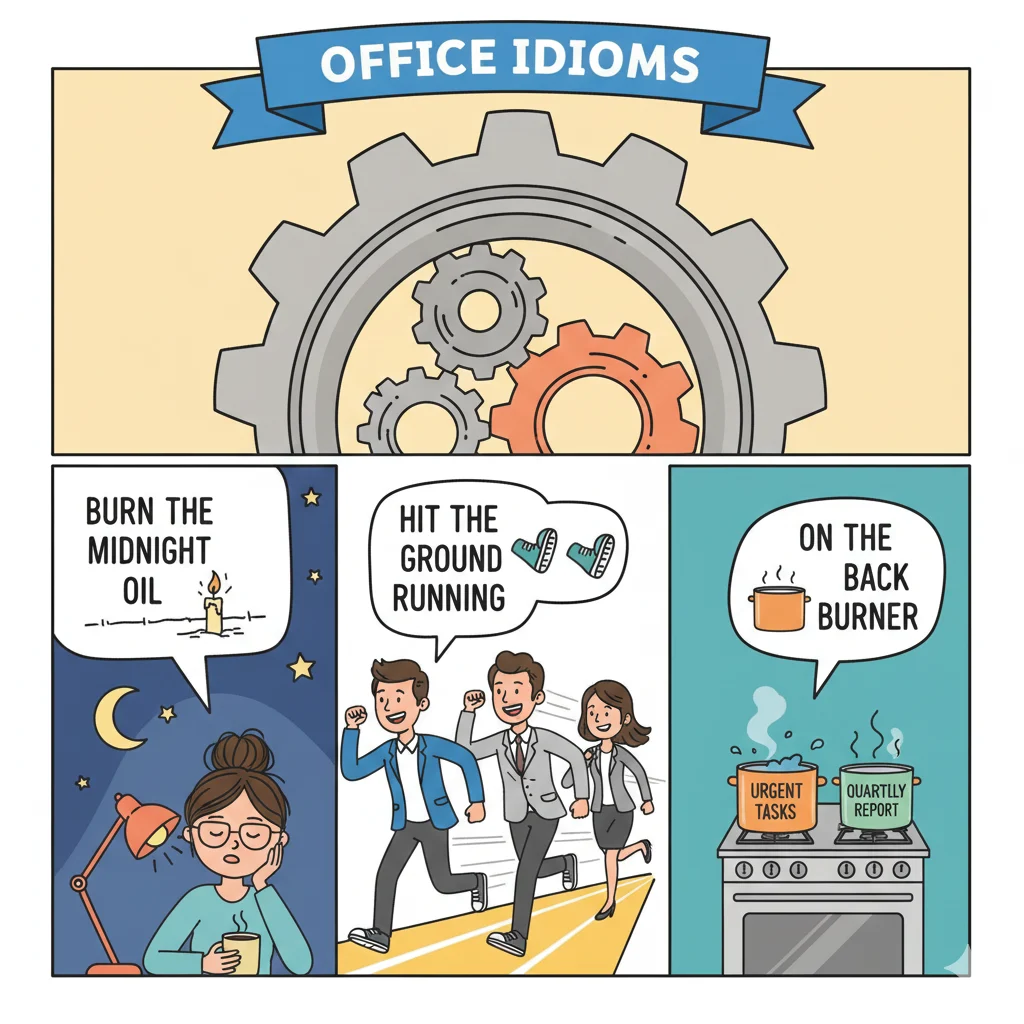
Word-by-Word Meaning: Place something on the back of the stove.
Idiomatic/Figurative Meaning: Delay or postpone a task.
Example Sentences:
- The client’s request is on the back burner until we finish urgent tasks.
Common Error: Don’t confuse with completely forgetting something.
Usage Note: Often used in business prioritization.
Think Outside the Box
Word-by-Word Meaning: Imagine beyond a literal box.
Idiomatic/Figurative Meaning: Be creative and find innovative solutions.
Example Sentences:
- To solve this problem, we need to think outside the box.
Common Error: Avoid using literally; it’s not about a physical box.
Usage Note: Ideal for brainstorming or creative work discussions.
In the Loop
Word-by-Word Meaning: Inside a circular connection.
Idiomatic/Figurative Meaning: Kept informed about developments.
Example Sentences:
- Keep me in the loop about any changes to the schedule.
Common Error: Don’t confuse with being physically “in a loop.”
Usage Note: Frequently used in emails and meetings.
By the Book
Word-by-Word Meaning: According to written rules.
Idiomatic/Figurative Meaning: Follow rules or procedures strictly.
Example Sentences:
- The manager prefers everyone to work by the book.
Common Error: Avoid using it for casual, flexible tasks.
Usage Note: Common in corporate and legal contexts.
Behind the Scenes
Word-by-Word Meaning: At the back of a stage.
Idiomatic/Figurative Meaning: Work done secretly or not publicly visible.
Example Sentences:
- The team worked behind the scenes to organize the event.
Common Error: Don’t use it to describe front-facing tasks.
Usage Note: Emphasizes support work that is not immediately obvious.
Go the Extra Mile
Word-by-Word Meaning: Travel more than necessary.
Idiomatic/Figurative Meaning: Put in more effort than expected.
Example Sentences:
- She always goes the extra mile to satisfy clients.
Common Error: Avoid using for tasks that are already standard.
Usage Note: Expresses dedication and professionalism.
Under the Table
Word-by-Word Meaning: Beneath a table.
Idiomatic/Figurative Meaning: Secretly or illegally, often referring to payments.
Example Sentences:
- Some companies pay contractors under the table, which is illegal.
Common Error: Don’t use in formal professional praise; it implies dishonesty.
Usage Note: Usually negative or informal.
Bite Off More Than You Can Chew
Word-by-Word Meaning: Take a bigger bite than possible.
Idiomatic/Figurative Meaning: Take on too much work or responsibility.
Example Sentences:
- He bit off more than he could chew by agreeing to lead two projects at once.
Common Error: Don’t confuse with eating literally.
Usage Note: Often used to warn or advise.
Break the Ice
Word-by-Word Meaning: Crack frozen water.
Idiomatic/Figurative Meaning: Make people feel comfortable in a social situation.
Example Sentences:
- She told a joke to break the ice at the team meeting.
Common Error: Avoid using for work productivity; it’s social.
Usage Note: Good for meetings, workshops, and introductions.
Up to Speed
Word-by-Word Meaning: Reaching maximum speed.
Idiomatic/Figurative Meaning: Fully informed or proficient.
Example Sentences:
- I’m getting up to speed on the new software.
Common Error: Don’t confuse with physical speed.
Usage Note: Used for training or project updates.
Back to the Drawing Board
Word-by-Word Meaning: Return to a plan on paper.
Idiomatic/Figurative Meaning: Start over after failure.
Example Sentences:
- The prototype failed tests, so it’s back to the drawing board.
Common Error: Avoid using casually; it implies significant revision.
Usage Note: Common in project management and design work.
Cut Corners
Word-by-Word Meaning: Take a shortcut.
Idiomatic/Figurative Meaning: Do something in a cheaper or faster, but lower-quality way.
Example Sentences:
- Don’t cut corners when preparing the client presentation.
Common Error: Not all shortcuts are “cutting corners.”
Usage Note: Usually negative, warns about quality compromise.
All Hands on Deck
Word-by-Word Meaning: Everyone needed on the ship’s deck.
Idiomatic/Figurative Meaning: Everyone’s help is required.
Example Sentences:
- It’s all hands on deck to finish this project on time.
Common Error: Don’t use for small, individual tasks.
Usage Note: Common in urgent or team-heavy situations.
Red Tape
Word-by-Word Meaning: Bureaucratic rules.
Idiomatic/Figurative Meaning: Excessive formalities or bureaucracy.
Example Sentences:
- The project got delayed due to government red tape.
Common Error: Not all rules are “red tape.”
Usage Note: Usually negative, referring to unnecessary bureaucracy.
Clock In / Clock Out
Word-by-Word Meaning: Record the start/end of work.
Idiomatic/Figurative Meaning: Begin or end work officially.
Example Sentences:
- Employees must clock in by 9 a.m. every day.
Common Error: Don’t use figuratively in casual settings without context.
Usage Note: Common in hourly jobs and attendance tracking.
Touch Base
Word-by-Word Meaning: Make contact briefly.
Idiomatic/Figurative Meaning: Communicate or check in briefly.
Example Sentences:
- Let’s touch base tomorrow to discuss the report.
Common Error: Avoid using too casually in formal reports.
Usage Note: Perfect for emails, meetings, and status updates.
FAQs About Idioms for Working
Q1: Can I use these idioms in formal emails?
A1: Most idioms like “hit the ground running” or “pull your weight” are suitable for semi-formal emails, but avoid overly casual ones like “under the table.”
Q2: Are these idioms common in British and American English?
A2: Yes, most are widely recognized in both, though some may have slightly different usage preferences.
Q3: How can I remember these idioms easily?
A3: Create personal examples, use them in sentences daily, and pair them with visuals or stories.
Q4: Can idioms for working be used in casual conversation?
A4: Absolutely! Idioms like “burn the midnight oil” make your speech more natural and engaging in daily conversation.
Q5: What’s the best way to practice these idioms?
A5: Speak, write, and read actively. Try incorporating one new idiom per day into your work-related discussions.
Conclusion
Working idioms are essential expressions that make talking about jobs, effort, and workplace situations more vivid and relatable. Phrases like “burning the midnight oil”, “pulling your weight”, or “climbing the corporate ladder” capture dedication, teamwork, and ambition in just a few words. Learning these idioms enhances English communication, boosts professional vocabulary, and helps convey ideas clearly and effectively.
By using working-related idioms in writing or conversation, readers can make their language more engaging, expressive, and culturally rich. Incorporating these idioms not only improves fluency but also allows individuals to discuss work, challenges, and success with confidence and impact, making their English both practical and memorable.

“Iris Murdoch explores the beauty of language and idioms on LearnIdom.com, making learning phrases engaging, memorable, and fun for everyone.”