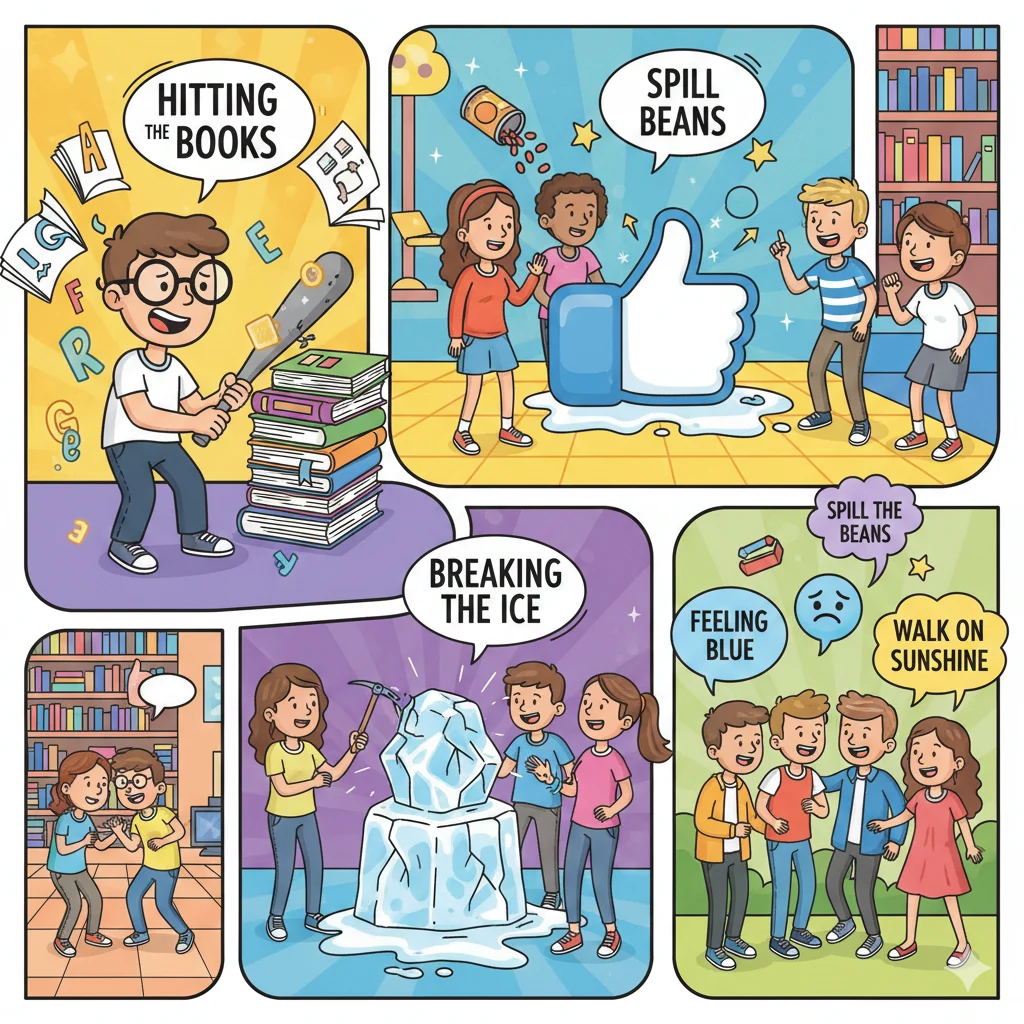
Ever heard someone say, “Break a leg!” and wondered why they’d wish you harm? Idioms can be confusing but also super fun for teens to learn. They’re like secret codes in English—once you know them, you can understand movies, texts, and even impress your friends. In this post, we’ll explore 20 famous idioms for teens, complete with meanings, examples, and tips to use them correctly.
Break the ice
Word-by-word meaning: Break → destroy; ice → frozen water
Idiomatic meaning: To start a conversation in an awkward or new situation
Example sentence: “To break the ice at the party, I told a funny story about my cat.”
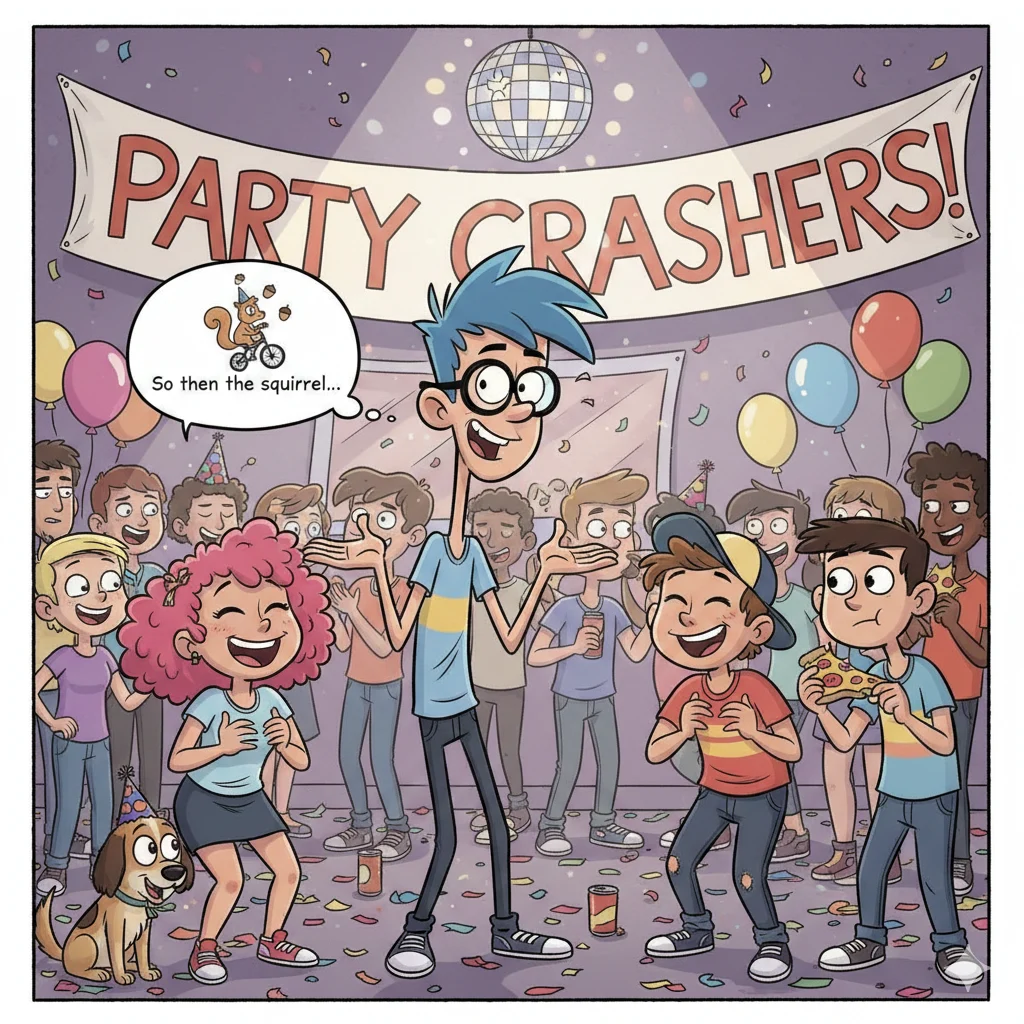
Common error: Using it to mean literally breaking ice
Usage note: Often used in social settings, especially at parties or first meetings
Hit the books
Word-by-word meaning: Hit → strike; books → reading material
Idiomatic meaning: To study hard
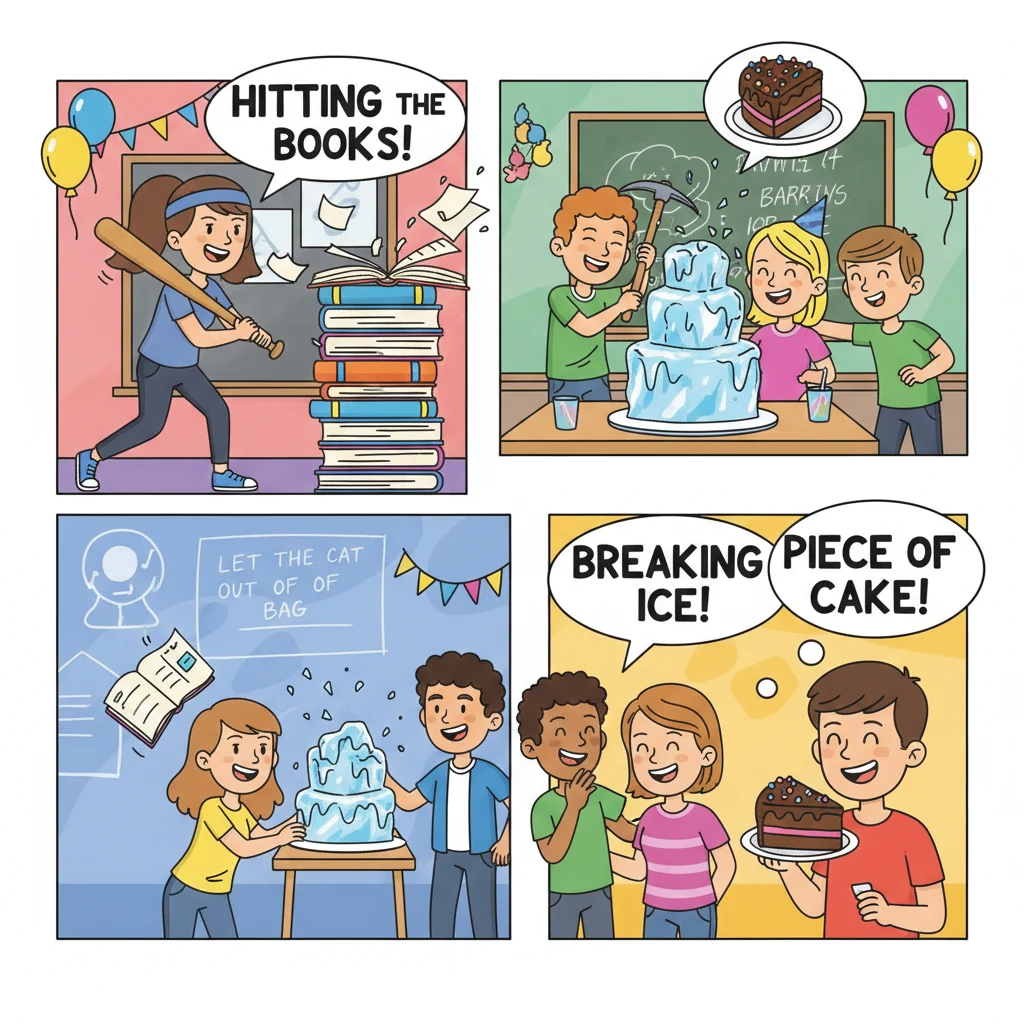
Example sentence: “I can’t go out tonight; I need to hit the books for my math test.”

Common error: Saying “hit the book” (singular)
Usage note: Casual, teen-friendly way to talk about studying
Piece of cake
Word-by-word meaning: Piece → portion; cake → dessert
Idiomatic meaning: Something very easy
Example sentence: “That history assignment was a piece of cake.”
Common error: Using it to describe food literally
Usage note: Perfect for school, games, or challenges
Let the cat out of the bag
Word-by-word meaning: Let → allow; cat → animal; bag → container
Idiomatic meaning: Reveal a secret by accident
Example sentence: “I accidentally let the cat out of the bag about the surprise party.”
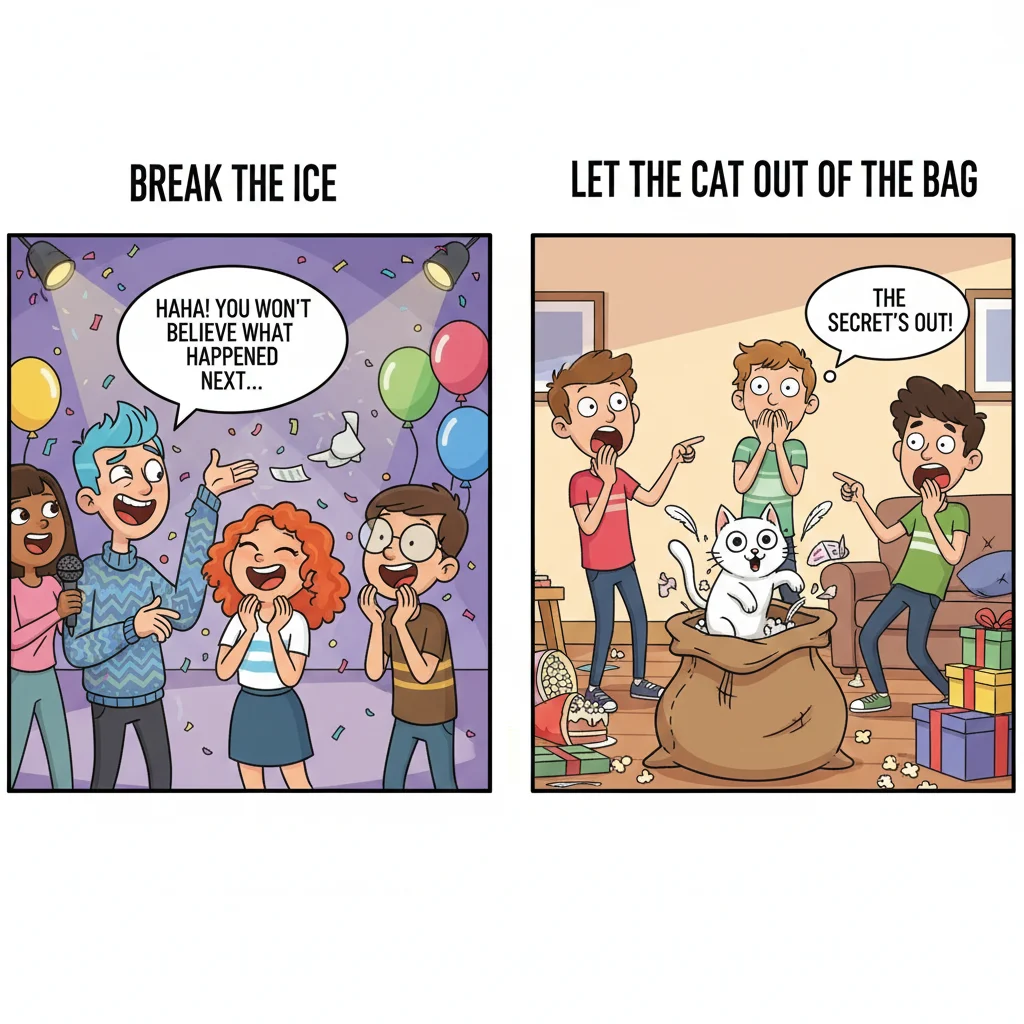
Common error: Using it for intentional actions
Usage note: Works best in informal conversations
Spill the beans
Word-by-word meaning: Spill → drop; beans → seeds
Idiomatic meaning: To reveal secret information
Example sentence: “Don’t spill the beans about our plan to skip class!”

Common error: Confusing it with literal spilling of food
Usage note: Synonym of “let the cat out of the bag,” casual usage
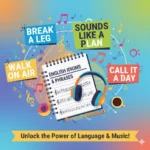
Break a leg
Word-by-word meaning: Break → fracture; leg → limb
Idiomatic meaning: Good luck
Example sentence: “You’re going on stage? Break a leg!”
Common error: Thinking it’s negative
Usage note: Commonly used before performances
Under the weather
Word-by-word meaning: Under → below; weather → atmospheric conditions
Idiomatic meaning: Feeling sick or unwell
Example sentence: “I won’t come to school today; I’m feeling under the weather.”
Common error: Taking it literally
Usage note: Casual and friendly expression
Hit the hay
Word-by-word meaning: Hit → strike; hay → dried grass
Idiomatic meaning: Go to sleep
Example sentence: “It’s late; time to hit the hay.”
Common error: Using it to mean literally striking hay
Usage note: Common in everyday casual talk
Cost an arm and a leg
Word-by-word meaning: Cost → price; arm and leg → body parts
Idiomatic meaning: Very expensive
Example sentence: “The new phone costs an arm and a leg.”
Common error: Using it for cheap things
Usage note: Can exaggerate expenses humorously
Bite the bullet
Word-by-word meaning: Bite → chew; bullet → ammunition
Idiomatic meaning: Accept something difficult or unpleasant
Example sentence: “I hate dentist visits, but I’ll bite the bullet and go.”
Common error: Thinking it’s violent
Usage note: Shows courage in facing challenges
A blessing in disguise
Word-by-word meaning: Blessing → good thing; disguise → costume
Idiomatic meaning: Something bad at first but turns out good
Example sentence: “Losing my old job was a blessing in disguise—I found a better one!”
Common error: Using it literally
Usage note: Great for storytelling
Call it a day
Word-by-word meaning: Call → name; day → 24 hours
Idiomatic meaning: Stop working for the day
Example sentence: “We’ve finished the project. Let’s call it a day.”
Common error: Thinking it’s about bedtime
Usage note: Casual, mostly work or study-related
On cloud nine
Word-by-word meaning: Cloud → sky fluff; nine → number
Idiomatic meaning: Extremely happy
Example sentence: “I was on cloud nine when I won the game.”
Common error: Using for negative feelings
Usage note: Great for celebrations or achievements
Burn the midnight oil
Word-by-word meaning: Burn → set on fire; midnight → 12 AM; oil → fuel
Idiomatic meaning: Study or work late at night
Example sentence: “I burned the midnight oil to finish my essay.”
Common error: Using it literally
Usage note: Often used for exams or deadlines
Barking up the wrong tree
Word-by-word meaning: Barking → dog sound; tree → plant
Idiomatic meaning: Accusing or blaming the wrong person
Example sentence: “If you think I took your pencil, you’re barking up the wrong tree.”
Common error: Taking it literally
Usage note: Useful in casual disagreements
Caught between a rock and a hard place
Word-by-word meaning: Rock → stone; hard place → solid surface
Idiomatic meaning: Facing two difficult choices
Example sentence: “I’m caught between a rock and a hard place: study or hang out with friends.”
Common error: Thinking it’s a literal physical situation
Usage note: Shows tough decision-making
Kill two birds with one stone
Word-by-word meaning: Kill → end life; birds → animals; stone → rock
Idiomatic meaning: Achieve two things at once
Example sentence: “I walked to school and bought groceries—killed two birds with one stone.”
Common error: Misunderstanding it as violence encouragement
Usage note: Commonly used for efficiency
The ball is in your court
Word-by-word meaning: Ball → sports object; court → playing area
Idiomatic meaning: It’s your decision or responsibility
Example sentence: “I’ve done my part; now the ball is in your court.”
Common error: Using in literal sports context only
Usage note: Popular in decision-making situations
When pigs fly
Word-by-word meaning: Pigs → animals; fly → move in the air
Idiomatic meaning: Something impossible
Example sentence: “I’ll clean my room when pigs fly.”
Common error: Thinking it’s about real pigs
Usage note: Funny and sarcastic expression
Hit the nail on the head
Word-by-word meaning: Hit → strike; nail → metal fastener; head → top
Idiomatic meaning: Describe something accurately
Example sentence: “You hit the nail on the head with your answer.”
Common error: Using for physical hammering only
Usage note: Great for discussions or explanations
FAQs About Idioms for Teens
Q1: Why should teens learn idioms?
A: Idioms make your English sound natural, fun, and fluent. They’re used in movies, songs, and everyday conversations.
Q2: How can I remember idioms easily?
A: Use them in daily speech, make flashcards, or associate them with funny stories.
Q3: Can idioms be used in school essays?
A: Yes, but use them sparingly. They’re better for creative writing or informal tasks.
Q4: Are idioms the same in British and American English?
A: Some differ. For example, “take a rain check” is common in American English, while Brits might say “postpone.”
Q5: Is it okay to translate idioms literally?
A: No, most idioms don’t make sense word-for-word. Always learn their figurative meaning.
Conclusion
Learning idioms can make English more fun, relatable, and impressive. Try using one or two every day, and soon you’ll sound like a native speaker! Start small, practice often, and remember—mistakes are part of learning. Now, go ahead and hit the books… or should I say, hit the idioms!

“L.P. Hartley brings classic idioms to life on LearnIdom.com, helping readers explore language with wit, clarity, and timeless insight.”