Raising children isn’t just about food, school, and rules—it’s also about language. In English, parents often use colorful expressions that don’t mean exactly what the words say. These are called idioms for parents, and they appear everywhere: at home, in movies, and in everyday conversations.
Imagine a mother saying, “I bend over backwards for my kids,” or a father joking, “You’re the apple of my eye.” Without knowing idioms, these sentences can feel confusing. This article explains the 20 most famous idioms related to parents and parenting in a simple, learner-friendly way.
Each idiom includes meanings, examples, common mistakes, and usage notes—so parents, students, and English learners can understand and use them confidently in real life.
👶 Apple of My Eye
Word-by-Word Meaning
The apple of someone’s eye
Idiomatic / Figurative Meaning
Someone you love very much, especially a child
Example Sentences
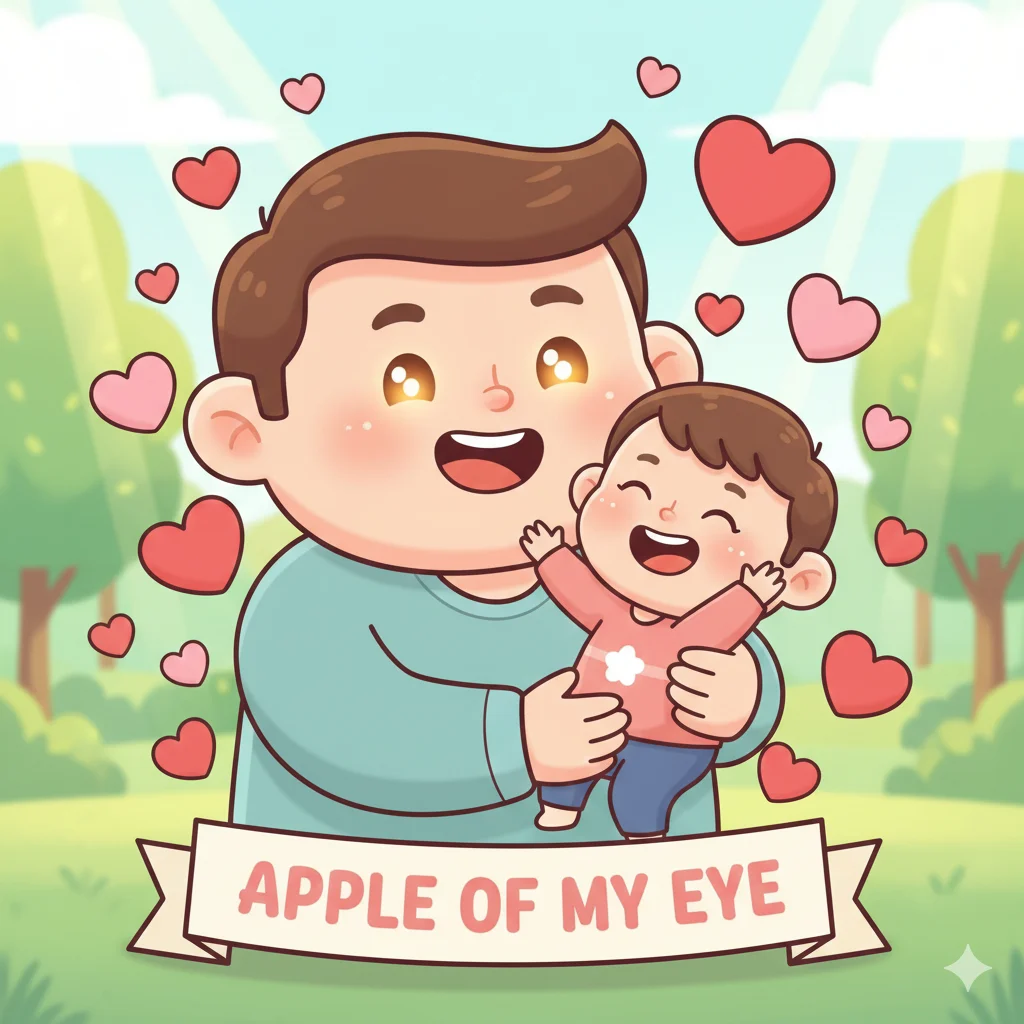
- My daughter is the apple of my eye.
- Every parent thinks their child is the apple of their eye.
Common Error
❌ Using it for objects
Usage Note
Very common in emotional and loving contexts
🧡 Like Father, Like Son
Word-by-Word Meaning
Father and son are alike
Idiomatic Meaning
Children often behave like their parents
Example Sentences
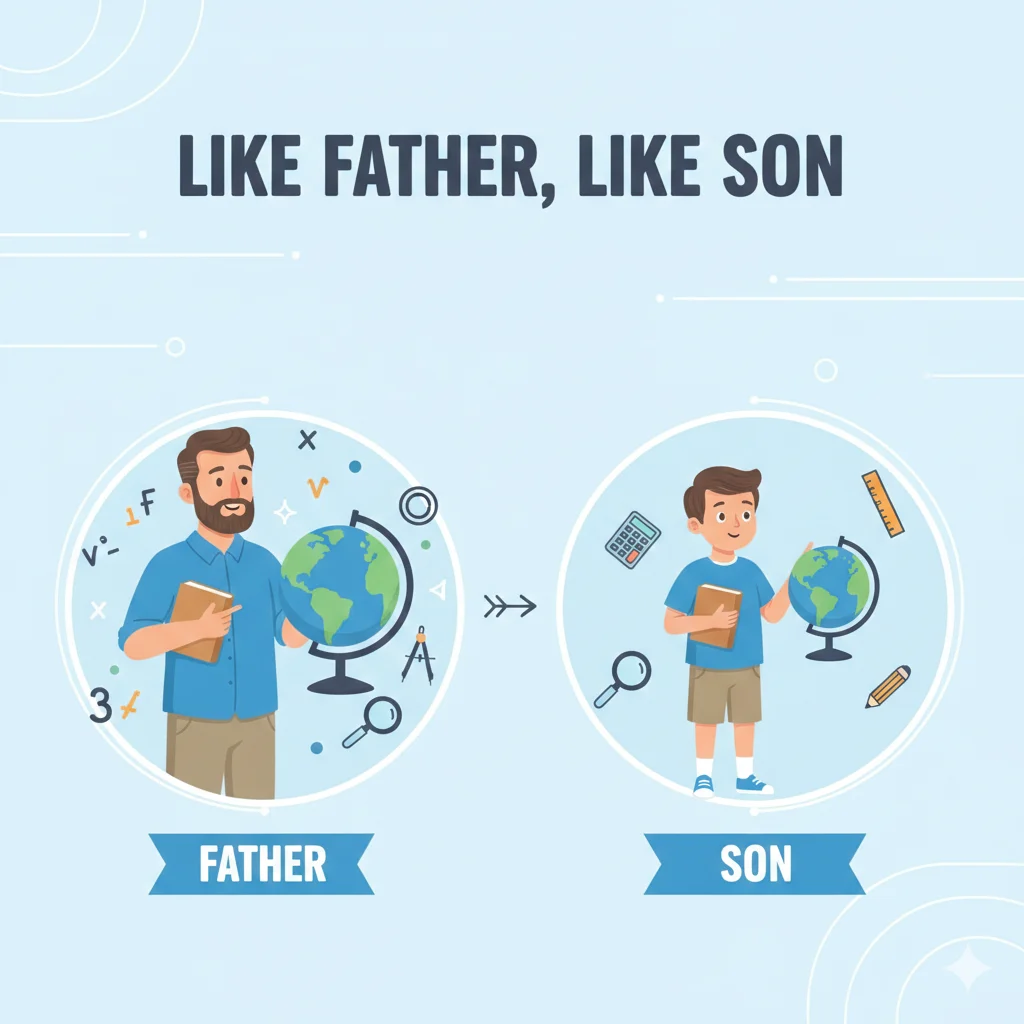
- He loves sports—like father, like son.
Common Error
❌ Using it only for boys
Usage Note
Can also be used as like mother, like daughter
👩👧 A Chip Off the Old Block
Word-by-Word Meaning
A small piece from a block
Idiomatic Meaning
A child who is very similar to their parent
Example Sentences
- She’s a great cook, a chip off the old block.
Common Error
❌ Using it negatively
Usage Note
Usually positive or proud
🏡 Born with a Silver Spoon
Word-by-Word Meaning
Born holding silver spoon
Idiomatic Meaning
Born into a rich or privileged family
Example Sentences
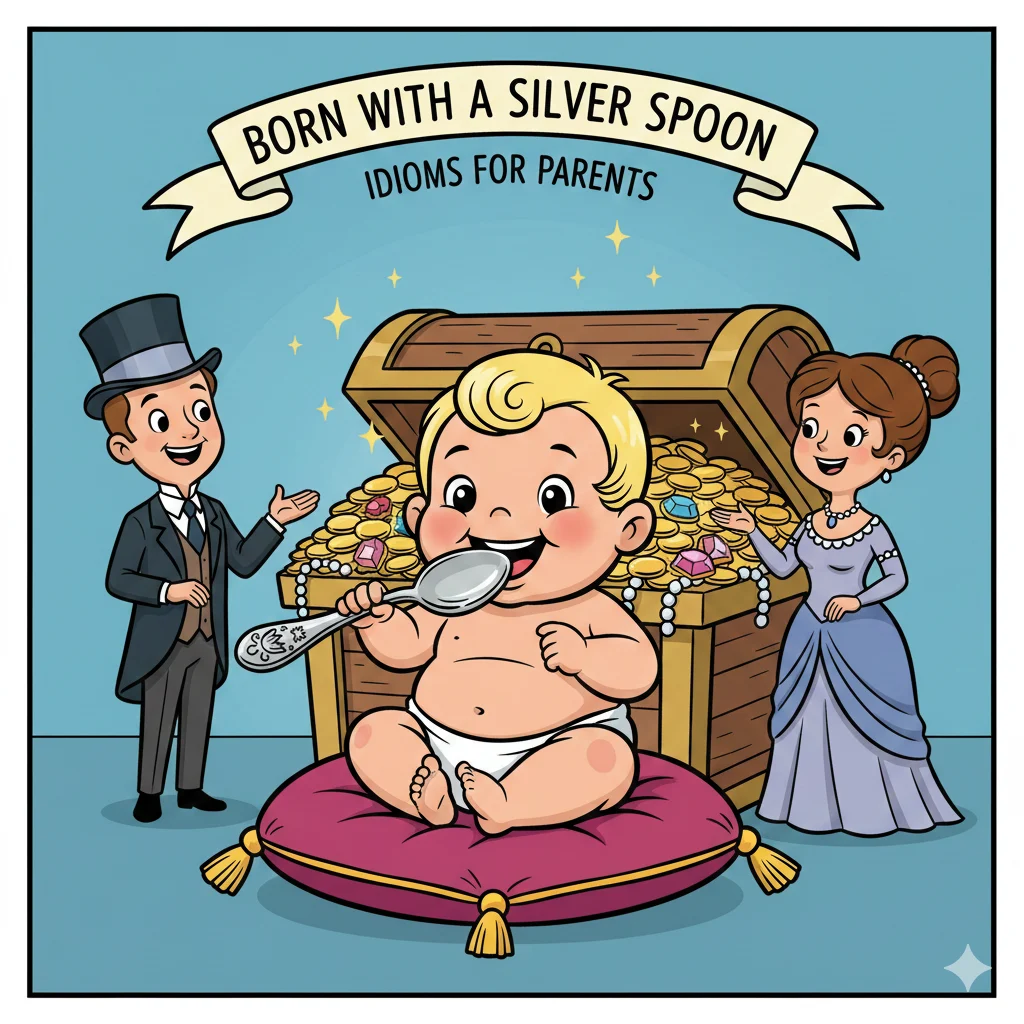
- He was born with a silver spoon.
Common Error
❌ Using it for success earned later
Usage Note
Often used critically
💕 Mother Hen
Word-by-Word Meaning
A hen caring for chicks
Idiomatic Meaning
An overprotective mother
Example Sentences
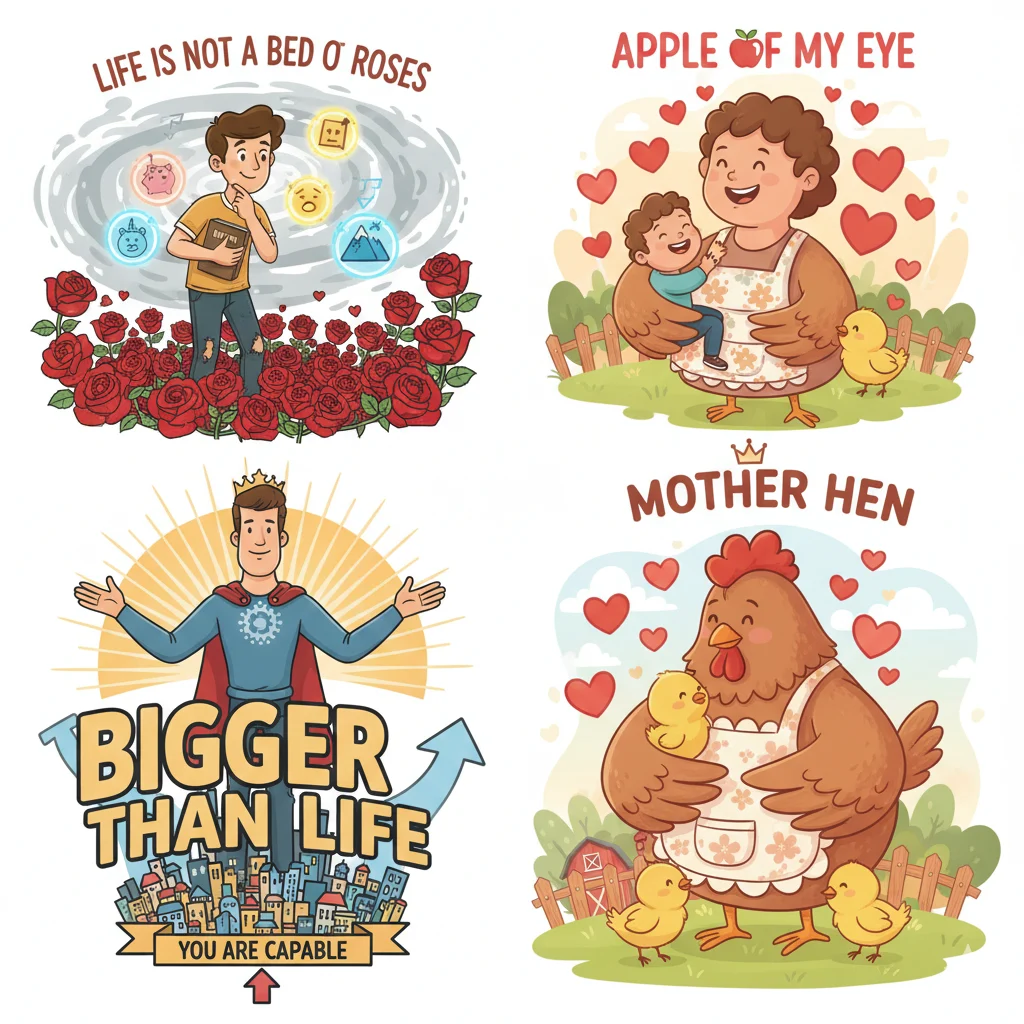
- She’s a real mother hen with her kids.
Common Error
❌ Using it as an insult
Usage Note
Usually gentle or humorous
👨👧👦 Breadwinner
Word-by-Word Meaning
One who earns bread
Idiomatic Meaning
Main earning parent of the family
Example Sentences
- My father is the breadwinner.
Common Error
❌ Assuming only fathers
Usage Note
Gender-neutral in modern English
🍼Bundle of Joy
Word-by-Word Meaning
A happy bundle
Idiomatic Meaning
A newborn baby
Example Sentences
- They welcomed a bundle of joy.
Common Error
❌ Using it for older children
Usage Note
Very common in parenting contexts
🧠 Learn the Hard Way
Word-by-Word Meaning
Learning through difficulty
Idiomatic Meaning
Learning from mistakes
Example Sentences
- Kids often learn the hard way.
Common Error
❌ Using it positively
Usage Note
Common in parenting advice
🏫 Put Your Foot Down
Word-by-Word Meaning
Place foot firmly
Idiomatic Meaning
Be strict, especially as a parent
Example Sentences
- I had to put my foot down about screen time.
Common Error
❌ Using it for physical action
Usage Note
Used when setting rules
❤️ Have a Soft Spot
Word-by-Word Meaning
A gentle place
Idiomatic Meaning
Feel extra love or sympathy
Example Sentences
- I have a soft spot for my youngest.
Common Error
❌ Confusing with weakness
Usage Note
Positive emotional expression
🧓 Generation Gap
Word-by-Word Meaning
Difference between generations
Idiomatic Meaning
Difference in opinions between parents and children
Example Sentences
- Technology causes a generation gap.
Common Error
❌ Using it for small age gaps
Usage Note
Common in family discussions
🎒Helicopter Parent
Word-by-Word Meaning
Parent hovering like helicopter
Idiomatic Meaning
Overly involved parent
Example Sentences
- Some helicopter parents worry too much.
Common Error
❌ Using it respectfully
Usage Note
Often slightly critical
🏠 Run in the Family
Word-by-Word Meaning
Move through family
Idiomatic Meaning
Common family trait
Example Sentences
- Musical talent runs in the family.
Common Error
❌ Using for habits only
Usage Note
Used for traits and illnesses
👩🏫 Set a Good Example
Word-by-Word Meaning
Show correct behavior
Idiomatic Meaning
Parents behaving well for children to copy
Example Sentences
- Parents should set a good example.
Common Error
❌ Using it passively
Usage Note
Common in moral advice
👶 Spoil the Child
Word-by-Word Meaning
Damage by overgiving
Idiomatic Meaning
Give too much comfort or gifts
Example Sentences
- Don’t spoil the child too much.
Common Error
❌ Confusing with love
Usage Note
Used in discipline discussions
🧭Lay Down the Law
Word-by-Word Meaning
Create rules
Idiomatic Meaning
Be very strict
Example Sentences
- Parents sometimes lay down the law.
Common Error
❌ Using in friendly talks
Usage Note
Strong authority tone
🧑🤝🧑 Empty Nest
Word-by-Word Meaning
Nest without birds
Idiomatic Meaning
Parents whose children left home
Example Sentences
- They feel lonely after becoming empty nesters.
Common Error
❌ Using for single parents
Usage Note
Emotional parenting phase
🏡 Bring Up a Child
Word-by-Word Meaning
Raise upward
Idiomatic Meaning
Raise and care for children
Example Sentences
- It’s not easy to bring up a child.
Common Error
❌ Using “bring” literally
Usage Note
Very common British English
🎓Push Too Hard
Word-by-Word Meaning
Apply too much force
Idiomatic Meaning
Pressure children excessively
Example Sentences
- Don’t push kids too hard academically.
Common Error
❌ Using for motivation only
Usage Note
Used in parenting balance advice
❤️ Parental Instinct
Word-by-Word Meaning
Natural feeling
Idiomatic Meaning
Natural ability to protect children
Example Sentences
- Her parental instinct kicked in immediately.
Common Error
❌ Using for learned behavior
Usage Note
Positive and emotional phrase
❓ FAQs About Idioms for Parents
1. Why should parents learn idioms?
Idioms help parents understand natural English conversations.
2. Are parenting idioms used in daily life?
Yes, very commonly in families and media.
3. Can ESL learners use these idioms safely?
Yes, with context and practice.
4. Are these idioms formal or informal?
Mostly informal but widely accepted.
5. How can I practice them?
Use one idiom daily in conversation or writing.
🌱 Conclusion
Learning idioms for parents is like learning the emotional side of English. These expressions help you sound natural, understand family conversations, and express love, discipline, and care more clearly. Start using a few idioms each week, and soon they’ll feel like a natural part of your English parenting vocabulary.

“Iris Murdoch explores the beauty of language and idioms on LearnIdom.com, making learning phrases engaging, memorable, and fun for everyone.”