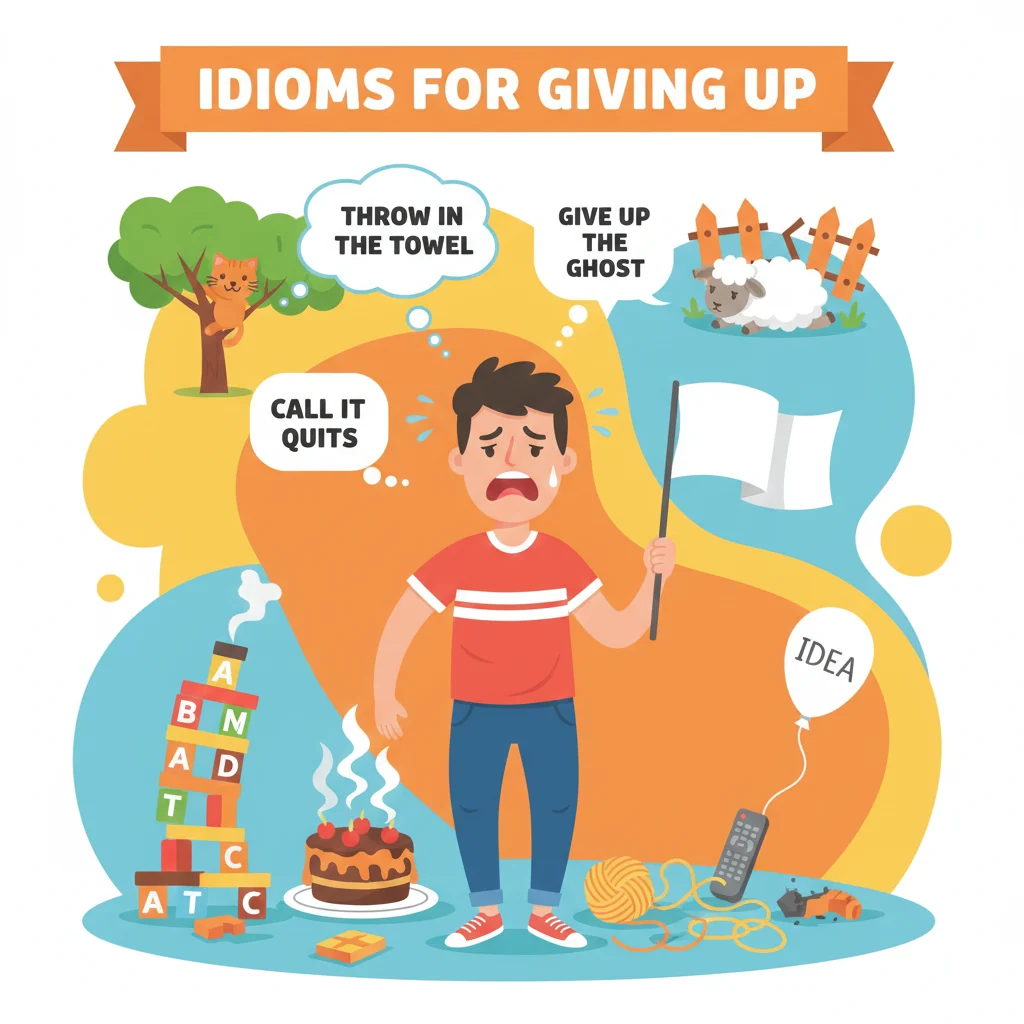
Ever felt like giving up after trying something over and over? English has tons of idioms for giving up that make your speech more colorful and expressive. From casual conversations to storytelling, knowing these idioms helps you express frustration, surrender, or defeat in a fun way. Let’s explore 20 famous idioms for giving up!
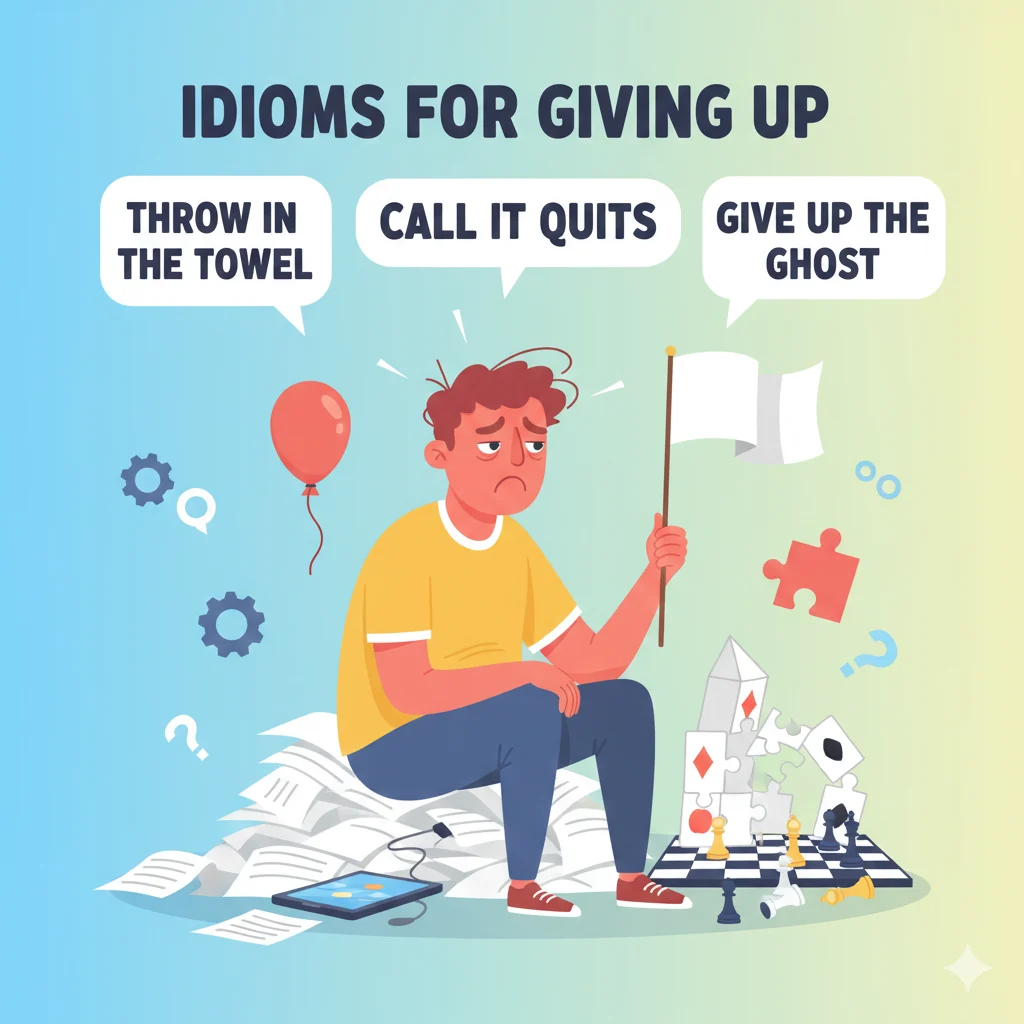
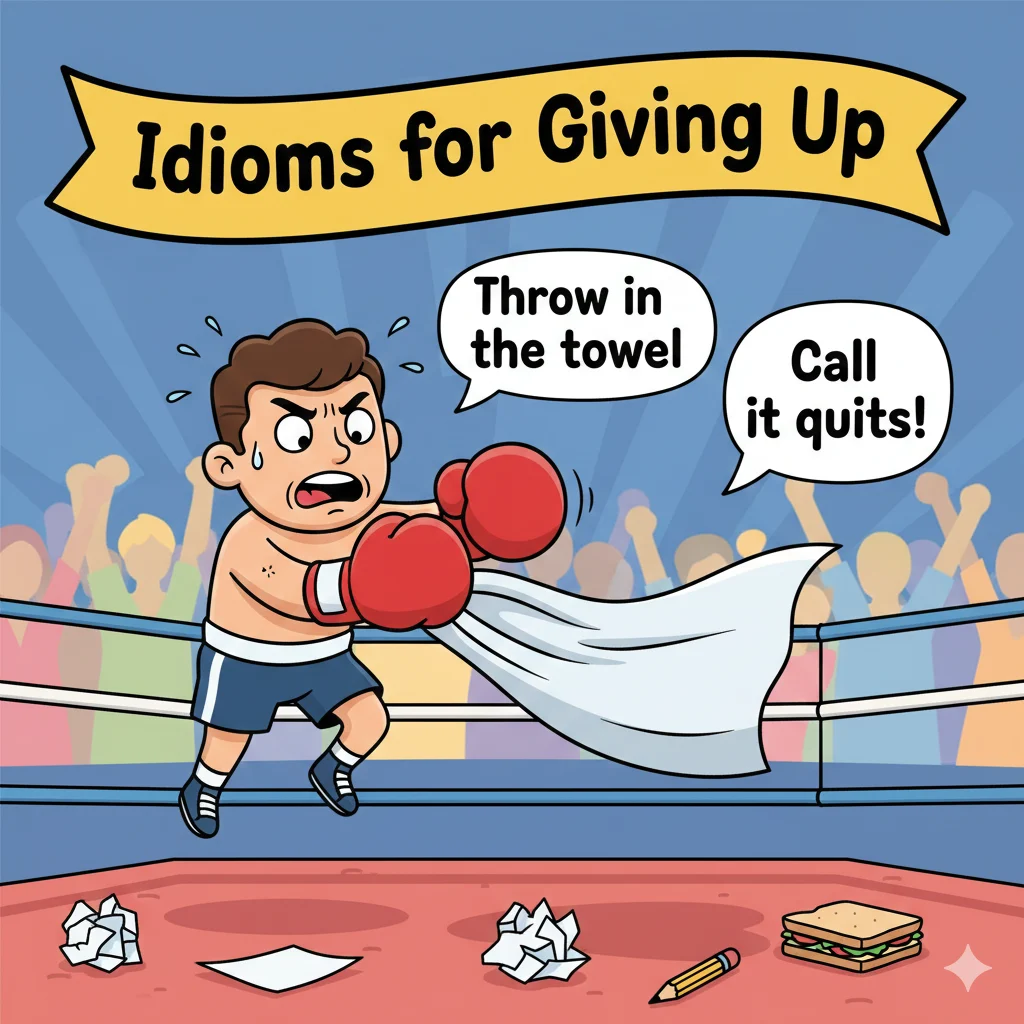
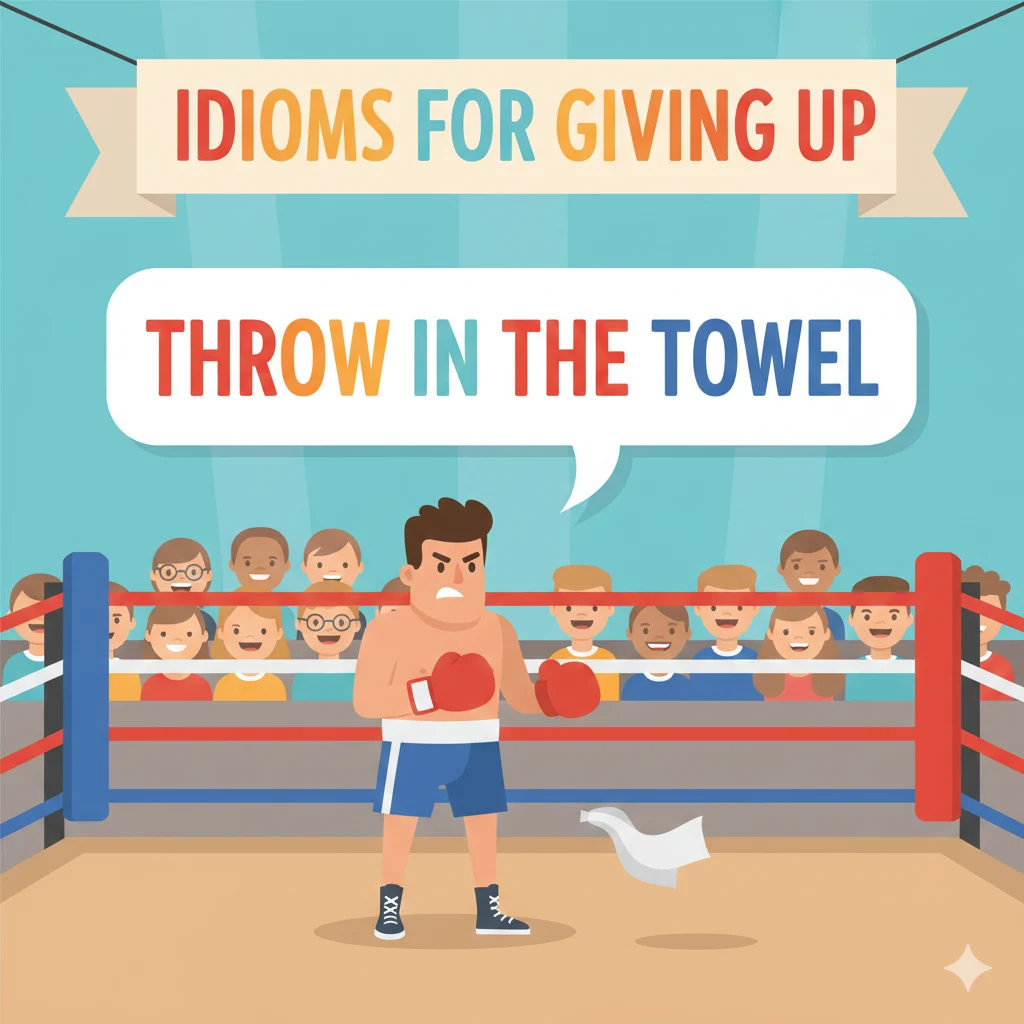
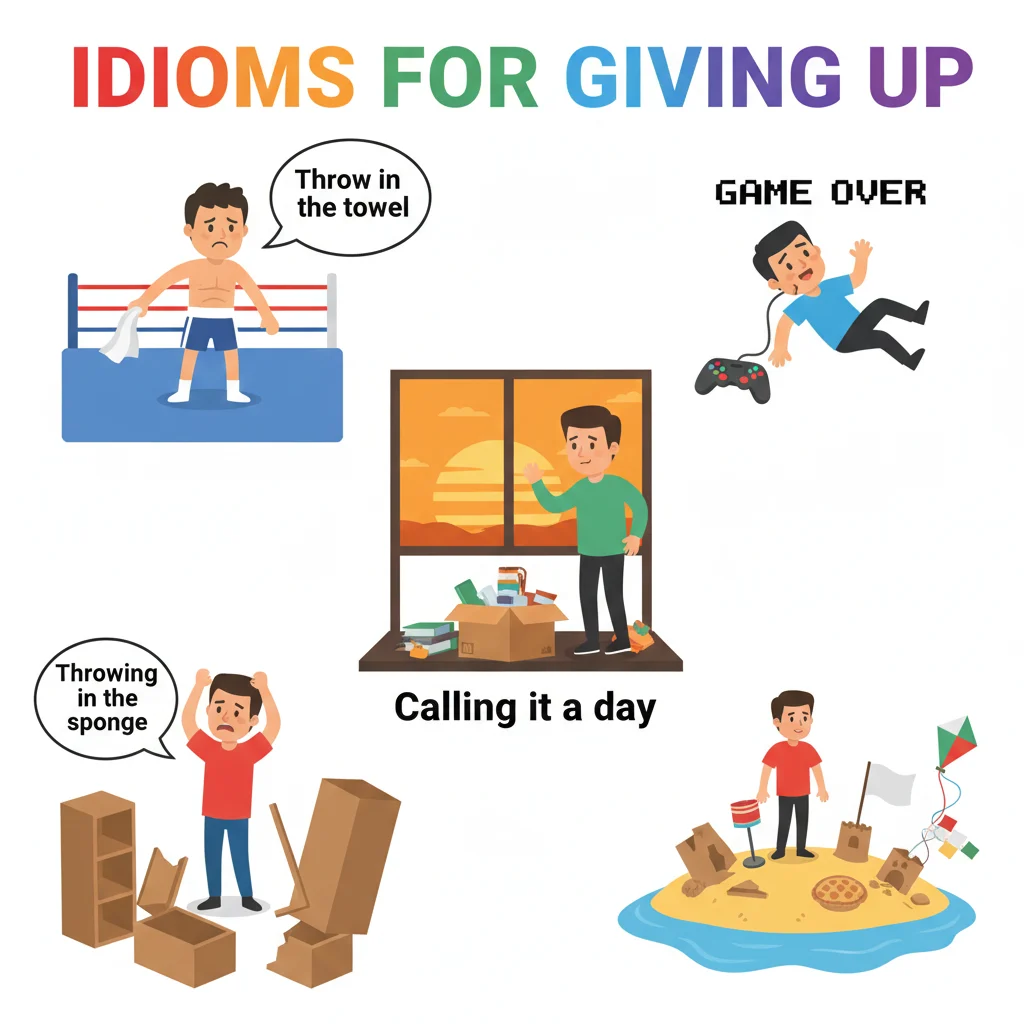
Throw in the towel
Word-by-Word Meaning: To throw a towel into a boxing ring as a signal of surrender.
Idiomatic Meaning: To give up or stop trying.
Example Sentences:
- After months of trying to fix the old car, he finally threw in the towel.
Common Error: Do not confuse with “towel off,” which means drying yourself.
Usage Note: Used informally in work, sports, and personal challenges.
Bite the dust
Word-by-Word Meaning: Literally fall to the ground.
Idiomatic Meaning: To fail or give up completely.
Example Sentences:
- The startup bit the dust after just six months.
Common Error: Avoid using for literal injuries.
Usage Note: Casual, often used in storytelling.
Call it a day
Word-by-Word Meaning: Announce the end of work for the day.
Idiomatic Meaning: Stop working on a task after effort.
Example Sentences:
- We’ve been solving this puzzle for hours; let’s call it a day.
Common Error: Not for permanent quitting.
Usage Note: Common in workplace or study settings.
Throw up one’s hands
Word-by-Word Meaning: Raise hands in frustration.
Idiomatic Meaning: Give up after feeling overwhelmed.
Example Sentences:
- After trying to assemble the furniture, she threw up her hands.
Common Error: Not used for excitement.
Usage Note: Expresses frustration.
210+ Popular Hiking Idioms Explained with Easy Meaning ✨ 2025
Wave the white flag
Word-by-Word Meaning: White flag symbolizes surrender in battle.
Idiomatic Meaning: Admit defeat or stop resisting.
Example Sentences:
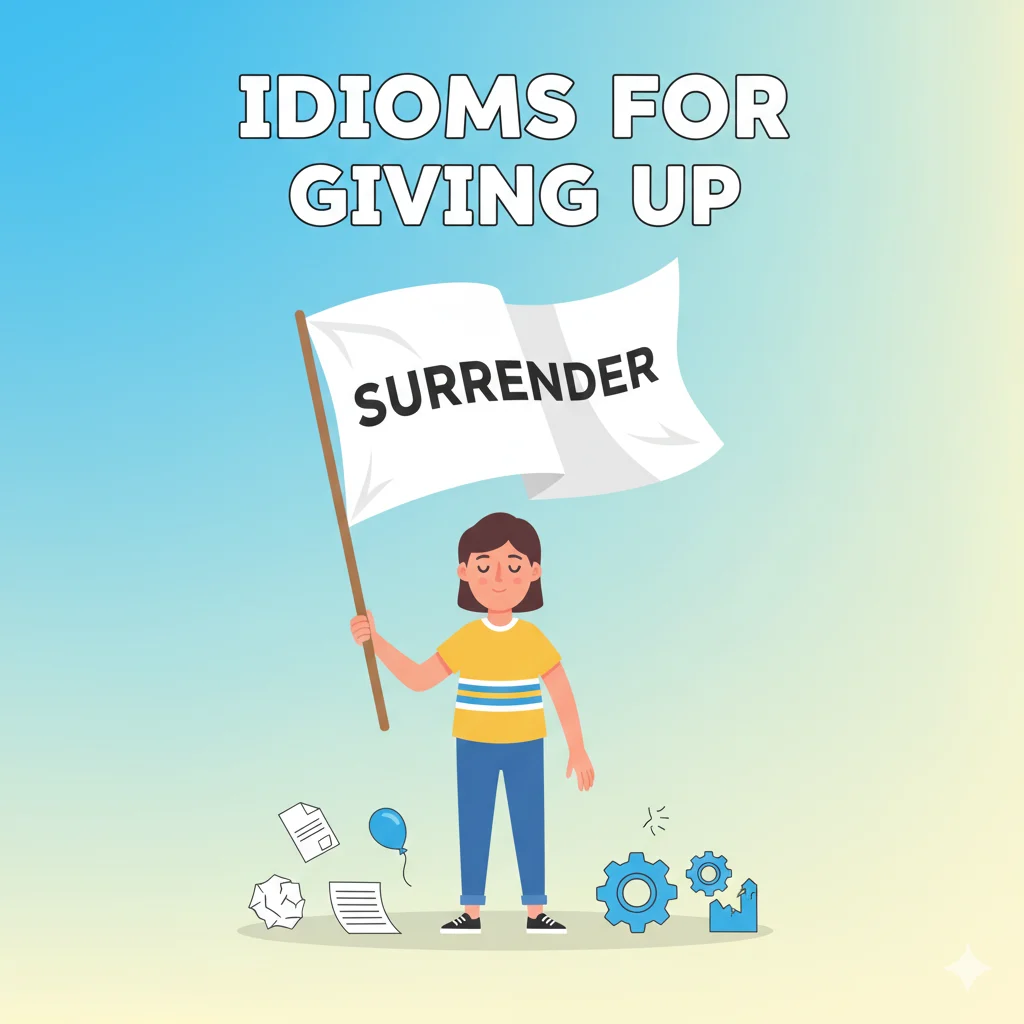
- After hours of negotiation, he waved the white flag.
Common Error: Rarely literal outside of war context.
Usage Note: Can be used metaphorically in work, school, or conflicts.
Give up the ghost
Word-by-Word Meaning: Let a spirit escape.
Idiomatic Meaning: Stop trying, often used for machines or projects.
Example Sentences:
- My old laptop finally gave up the ghost.
Common Error: Not for living beings unless humorous.
Usage Note: Often humorous or dramatic.
Throw one’s hands in the air
Word-by-Word Meaning: Similar to “throw up one’s hands.”
Idiomatic Meaning: Show frustration and give up.
Example Sentences:
- After failing the test three times, she threw her hands in the air.
Usage Note: Informal, emotional expression.
Hang up one’s boots
Word-by-Word Meaning: Literally remove boots.
Idiomatic Meaning: Retire or give up a profession or activity.
Example Sentences:
- He hung up his boots after 20 years as a footballer.
Usage Note: Often used in sports or long-term careers.
Pack it in
Word-by-Word Meaning: Stop activity and pack your things.
Idiomatic Meaning: Give up or quit.
Example Sentences:
- I think it’s time to pack it in and try a new strategy.
Usage Note: Casual, friendly tone.
10. Throw one’s towel
Word-by-Word Meaning: Similar to throwing a towel in boxing.
Idiomatic Meaning: Give up trying.
Example Sentences:
- She threw her towel after multiple failed attempts at baking.
Usage Note: Less common, informal.
Knock it on the head
Word-by-Word Meaning: Stop something immediately.
Idiomatic Meaning: End or give up an activity.
Example Sentences:
- Let’s knock this project on the head and start fresh.
Usage Note: Common in British English, casual or work context.
Drop out
Word-by-Word Meaning: Leave or exit a group/course.
Idiomatic Meaning: Quit an ongoing activity.
Example Sentences:
- She dropped out of the marathon halfway through.
Usage Note: Often used for school, sports, or competitions.
Surrender
Word-by-Word Meaning: Give up control or submit.
Idiomatic Meaning: Admit defeat or stop resisting.
Example Sentences:
- After hours of debate, he surrendered his argument.
Usage Note: Formal or informal contexts.
Quit while ahead
Word-by-Word Meaning: Stop before things get worse.
Idiomatic Meaning: Give up at a successful moment.
Example Sentences:
- I was winning at chess, so I decided to quit while ahead.
Usage Note: Strategic quitting, often positive.
Fold
Word-by-Word Meaning: Literally close or collapse.
Idiomatic Meaning: Stop competing or give up.
Example Sentences:
- The poker player folded after a bad hand.
Usage Note: Common in games and business.
Throw in the sponge
Word-by-Word Meaning: British version of “throw in the towel.”
Idiomatic Meaning: Give up or surrender.
Example Sentences:
- They threw in the sponge after several failed attempts.
Usage Note: Mostly British English.
Call it quits
Word-by-Word Meaning: Agree to stop something.
Idiomatic Meaning: Give up or end an activity.
Example Sentences:
- Let’s call it quits on this argument.
Usage Note: Informal, conversational.
Give it up
Word-by-Word Meaning: Stop trying to achieve something.
Idiomatic Meaning: Surrender or quit.
Example Sentences:
- He gave it up after years of struggling with the piano.
Usage Note: Casual, common in everyday speech.
Wave goodbye
Word-by-Word Meaning: Literally wave while leaving.
Idiomatic Meaning: Stop pursuing or abandon something.
Example Sentences:
- We waved goodbye to our old project and started anew.
Usage Note: Figurative, often cheerful or reflective.
Admit defeat
Word-by-Word Meaning: Acknowledge loss.
Idiomatic Meaning: Accept failure and give up.
Example Sentences:
- She admitted defeat after the intense debate.
Usage Note: Formal or informal; conveys acceptance.
FAQs About Idioms for Giving Up
Can these idioms be used in formal writing?
A1: Some, like “admit defeat” or “call it quits,” are formal. Many others are casual.
Are these idioms only used in English-speaking countries?
A2: Mostly yes, but many have equivalents in other languages.
Can “throw in the towel” be used literally?
A3: Rarely—it’s almost always figurative.
How do I know when to use an idiom?
A4: Use idioms in informal conversations, storytelling, or writing. Avoid overuse in formal reports.
Are there cultural differences in giving-up idioms?
A5: Yes! British English favors “throw in the sponge,” while American English prefers “throw in the towel.”
Conclusion
Learning idioms for giving up adds color to your English. Try using one idiom a day in conversations or writing. With practice, these expressions will feel natural and make your communication more expressive. Remember: knowing how to surrender elegantly is just as important as knowing how to persist!

“Rose Macaulay shares the charm of idioms on LearnIdom.com, making language learning delightful, insightful, and full of wit for every reader.”