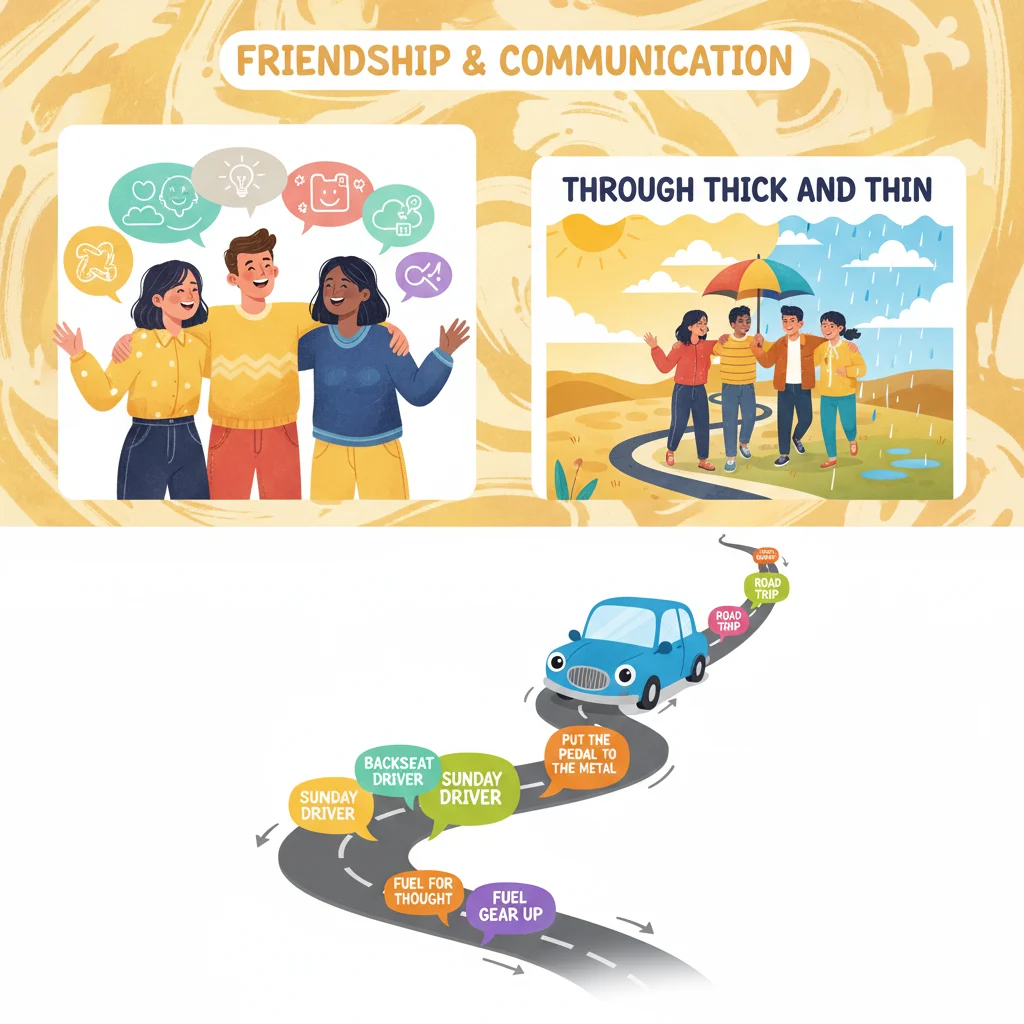
Have you ever heard someone say “We’re spinning our wheels” or “That plan ran out of gas”? These everyday expressions come from driving and vehicles. In this guide to idioms for cars, you’ll learn the most common car-related idioms, what they really mean, and how to use them naturally in English.
Whether you’re learning English for school, work, or conversation, these idioms will help you sound more fluent—without hitting any speed bumps.
Hit the Road
Word-by-word meaning:
– Hampasin ang kalsada
Idiomatic meaning:
– Umalis o magsimula ng biyahe
Example sentences:
- It’s late, let’s hit the road.
- We hit the road early in the morning.
Common error:
❌ Using it for short movement (e.g., going to another room)
✅ Ginagamit lang kapag aalis talaga / maglalakbay
Usage note:
Very common sa spoken English.
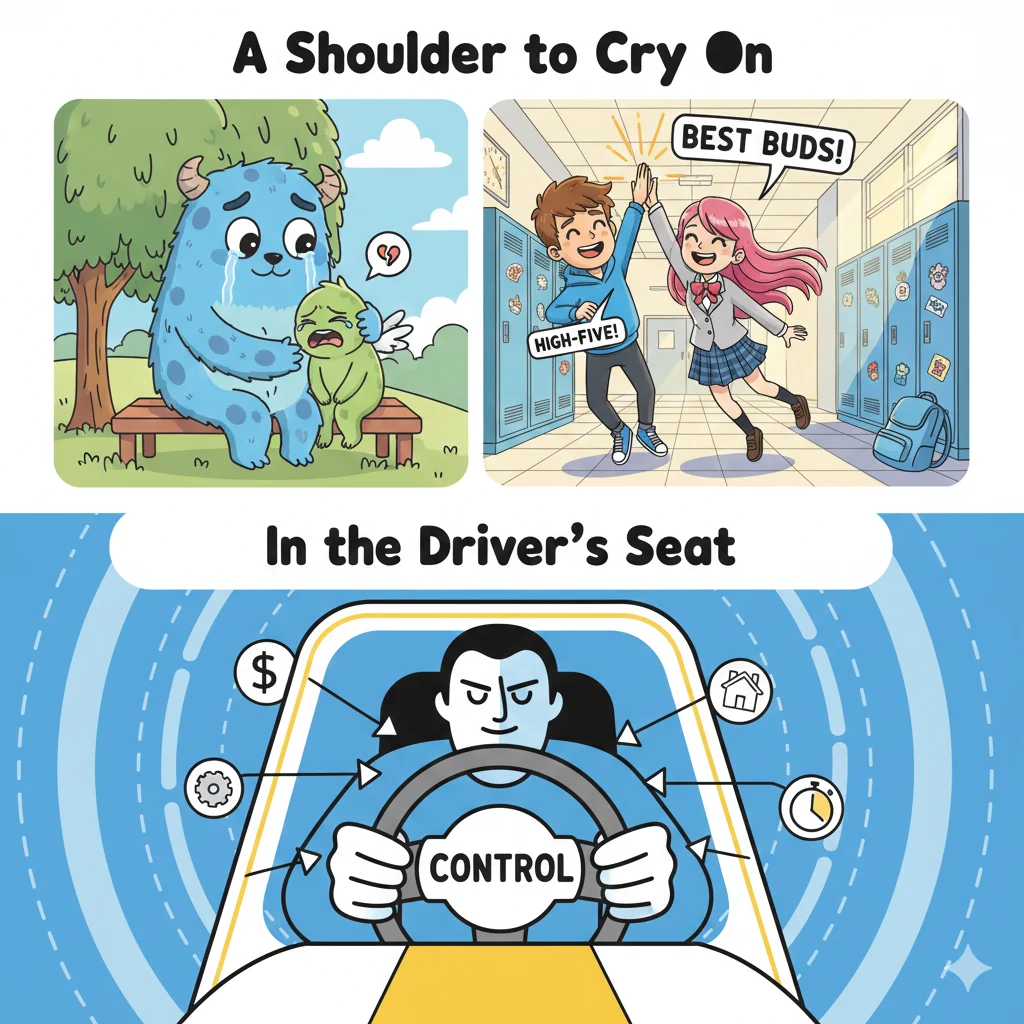
In the Driver’s Seat
Word-by-word meaning:
– Nasa upuan ng driver
Idiomatic meaning:
– Ikaw ang may kontrol o desisyon
Example sentences:
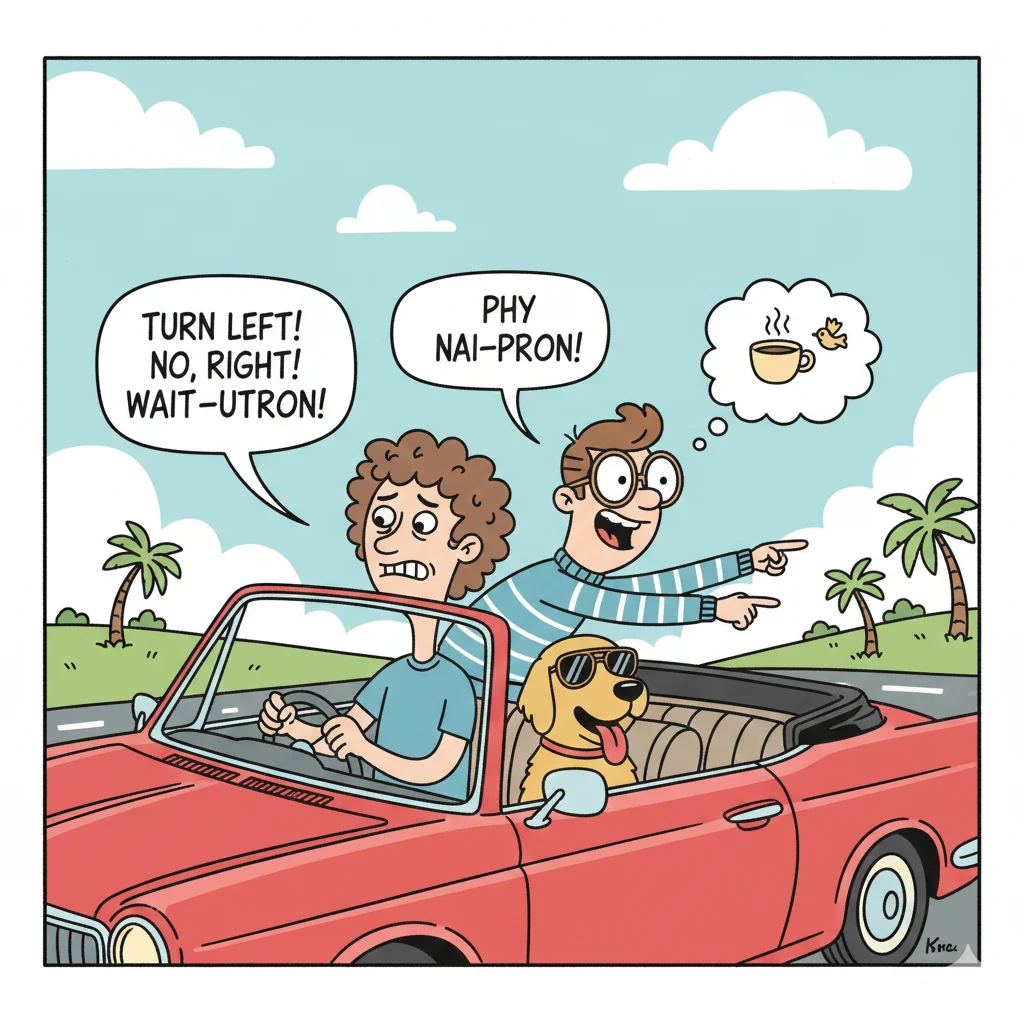
- She’s in the driver’s seat of the project.
- Now I’m in the driver’s seat.
Common error:
❌ Literal lang na pagmamaneho
✅ Control ang ibig sabihin
Usage note:
Madalas sa work, school, leadership.
Backseat Driver
Word-by-word meaning:
– Driver na nasa likod
Idiomatic meaning:
– Taong mahilig mag-utos kahit hindi siya in charge
Example sentences:
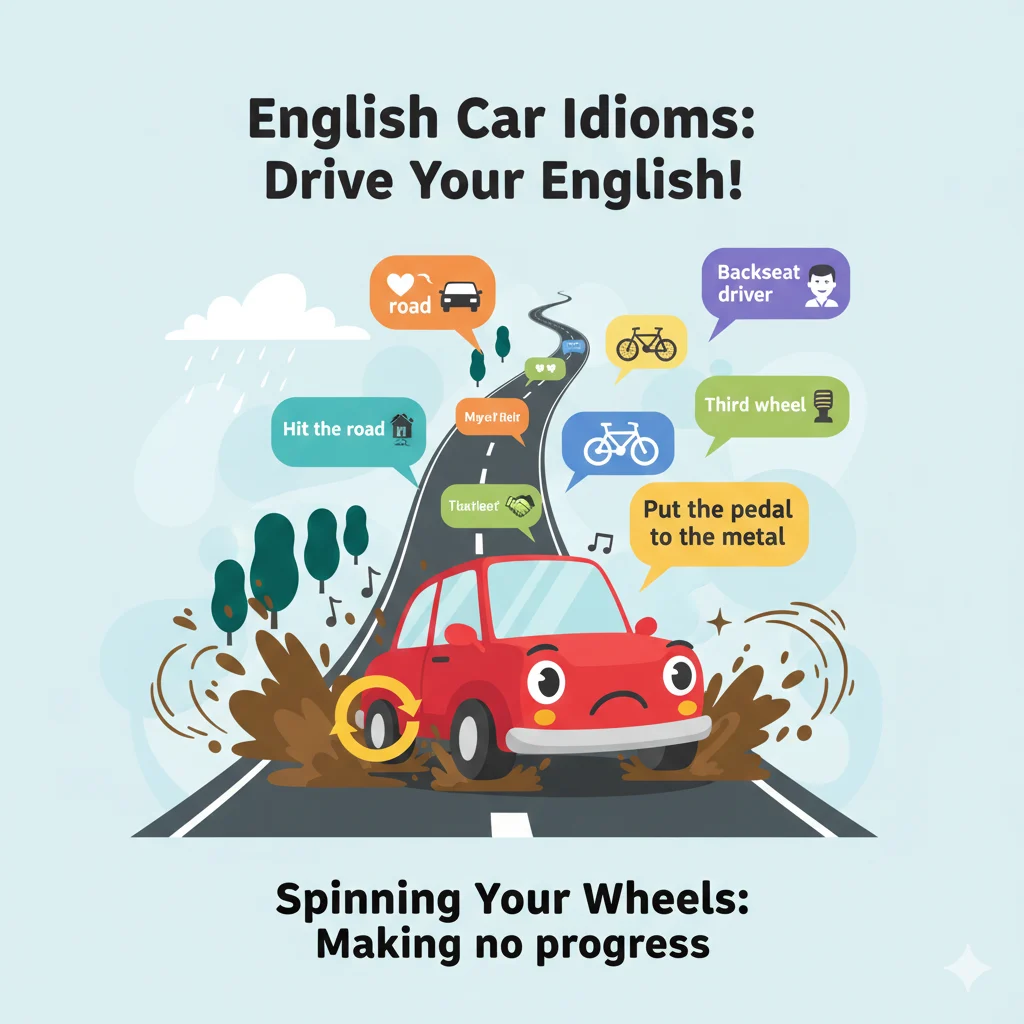
- Stop being a backseat driver!
- He’s a backseat driver in group work.
Common error:
❌ Thinking it’s positive
✅ Usually negative or joke
Usage note:
Informal, minsan sarcastic.
Spinning Your Wheels
Word-by-word meaning:
– Umiikot ang gulong pero hindi umaandar
Idiomatic meaning:
– Pagod na effort pero walang progress
Example sentences:
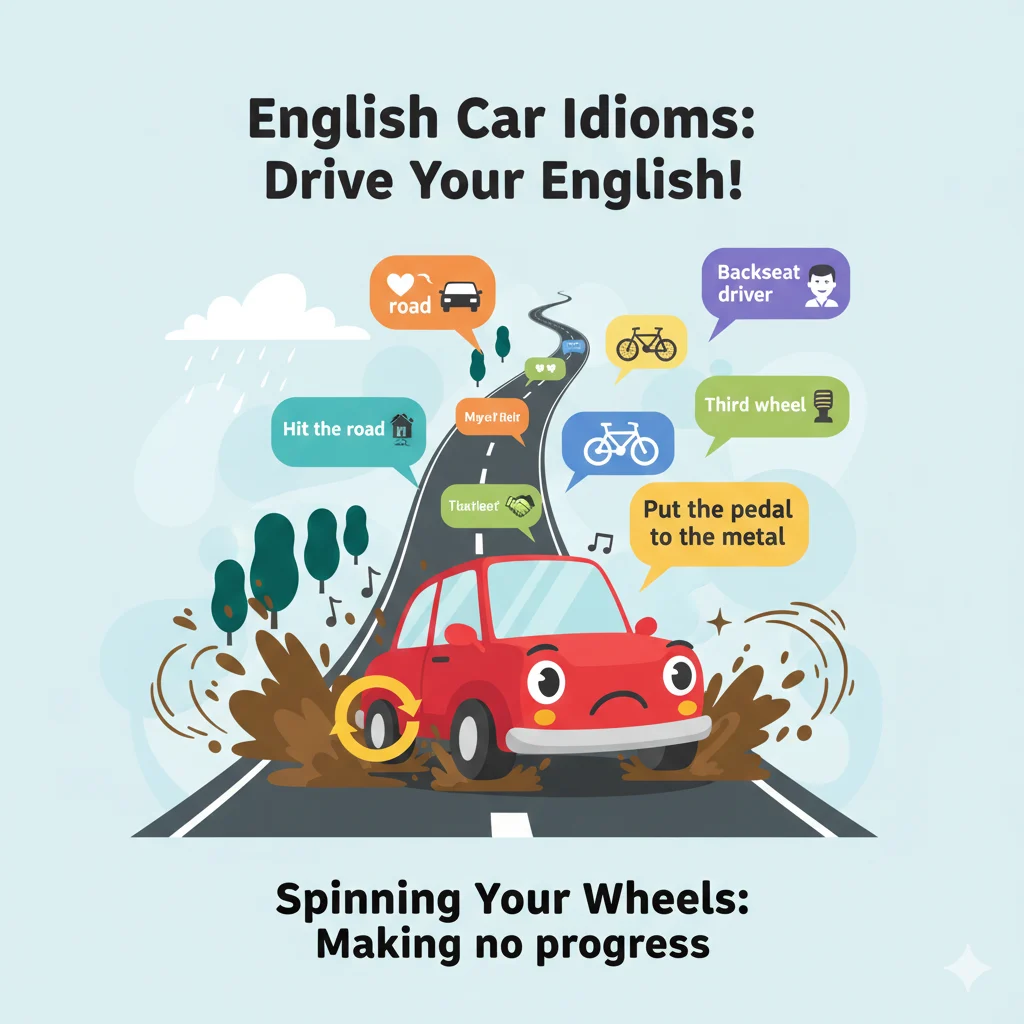
- I’m spinning my wheels studying without focus.
- We’re spinning our wheels on this task.
Common error:
❌ Using it for success
✅ Used for frustration
Usage note:
Expresses stress or wasted effort.
Run Out of Gas
Word-by-word meaning:
– Naubusan ng gasolina
Idiomatic meaning:
– Naubusan ng lakas, energy, o motivation
Example sentences:
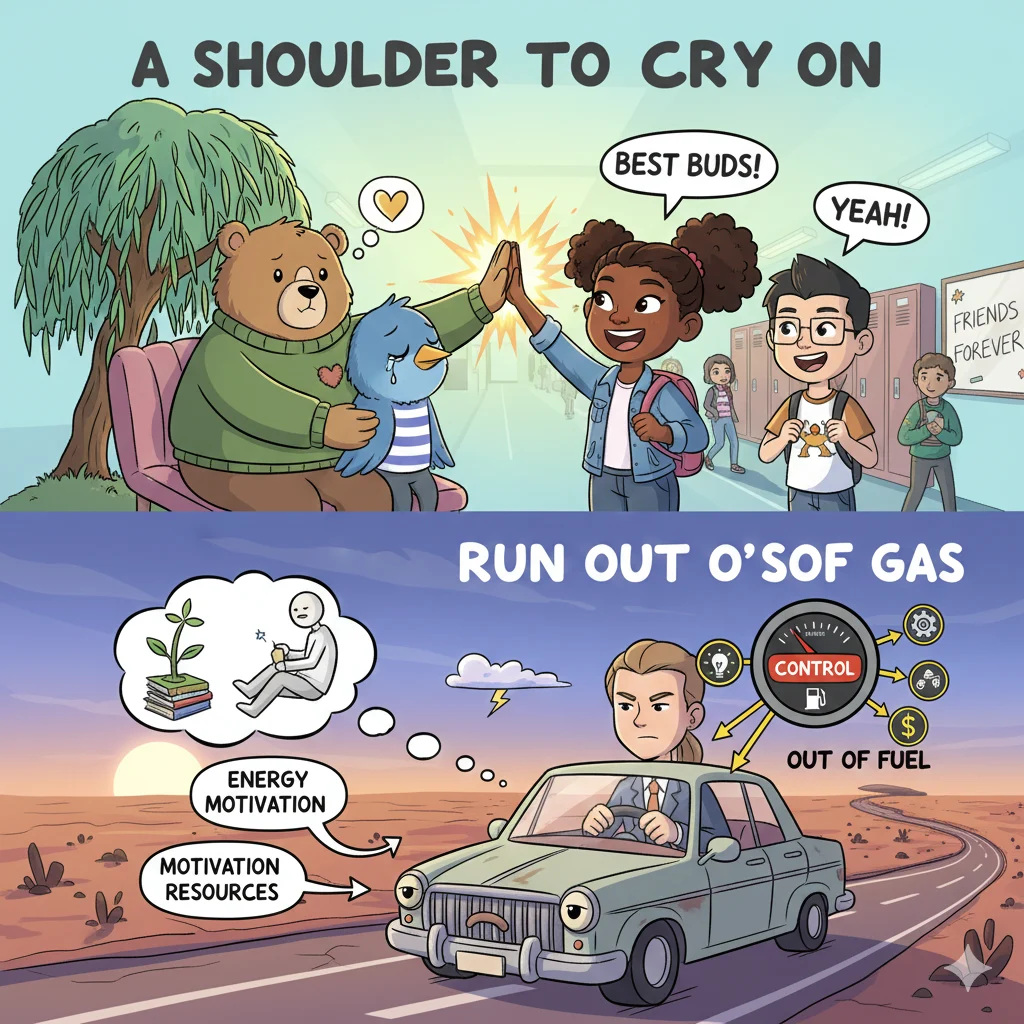
- I ran out of gas during the exam.
- He ran out of gas halfway.
Common error:
❌ Only for fuel
✅ Pwede sa tao
Usage note:
Physical or mental exhaustion.
Put the Brakes On
Word-by-word meaning:
– Apakan ang preno
Idiomatic meaning:
– Pigilan o pabagalin ang isang plano
Example sentences:
- The boss put the brakes on the idea.
- Let’s put the brakes on spending.
Common error:
❌ Using it for accidents
✅ Used for decisions
Usage note:
Neutral, decision-making idiom.
Fast Lane
Word-by-word meaning:
– Mabilis na lane
Idiomatic meaning:
– Mabilis at busy na lifestyle
Example sentences:
- He lives in the fast lane.
- Success pushed her into the fast lane.
Common error:
❌ Mixing literal + figurative
✅ Lifestyle meaning
Usage note:
Dramatic expression.
Change Gears
Word-by-word meaning:
– Magpalit ng gear
Idiomatic meaning:
– Magpalit ng topic, plan, o approach
Example sentences:
- Let’s change gears and talk about school.
- The company changed gears.
Common error:
❌ Only about speed
✅ About direction/change
Usage note:
Very common in conversation.
Roadblock
Word-by-word meaning:
– Harang sa daan
Idiomatic meaning:
– Problema o hadlang
Example sentences:
- Money is a roadblock to my plans.
- Fear can be a roadblock.
Common error:
❌ Only physical object
✅ Can be emotional, mental
Usage note:
Used in problem-solving.
On the Right Track
Word-by-word meaning:
– Nasa tamang daan
Idiomatic meaning:
– Tama ang ginagawa, may progress
Example sentences:
- Your answer is on the right track.
- We’re on the right track now.
Common error:
❌ Using it when finished
✅ Used during progress
Usage note:
Encouraging idiom 👍
Miss the Bus
Word-by-word meaning:
– Hindi nakaabot sa bus
Idiomatic / Figurative meaning:
– Mapalampas ang isang pagkakataon o opportunity
Example sentences:
- I missed the bus when I didn’t apply for the scholarship on time.
- If you don’t study now, you might miss the bus later.
Common error:
❌ I miss the bus yesterday
✅ I missed the bus yesterday
Usage note:
Ginagamit ito kapag late ka na at wala ka nang chance ulit.
Jump-Start
Word-by-word meaning:
– Paandarin ang kotse gamit ang extra battery
Idiomatic meaning:
– Simulan o pabilisin ang isang bagay (project, motivation, idea)
Example sentences:
- The teacher jump-started our interest in English.
- A short break helped jump-start my energy.
Common error:
❌ Using only for cars
✅ Pwede sa ideas, plans, motivation
Usage note:
Positive idiom, madalas sa school at work.
Steer Someone Wrong
Word-by-word meaning:
– Iliko sa maling direksyon
Idiomatic meaning:
– Bigyan ng maling payo ang isang tao
Example sentences:
- He trusted the advice, but it steered him wrong.
- I didn’t mean to steer you wrong.
Common error:
❌ Steer someone wrongly (hindi common)
✅ Steer someone wrong
Usage note:
Madalas ginagamit kapag hindi sinasadya ang maling advice.
Fuel the Fire
Word-by-word meaning:
– Lagyan ng gasolina ang apoy
Idiomatic meaning:
– Palalain ang problema o away
Example sentences:
- His angry reply only fueled the fire.
- Spreading rumors fuels the fire.
Common error:
❌ Using it for positive situations
✅ Always negative context
Usage note:
Warning idiom — nagpapalala ng sitwasyon.
Go the Extra Mile
Word-by-word meaning:
– Maglakad pa ng mas malayo
Idiomatic meaning:
– Gumawa ng higit pa sa inaasahan
Example sentences:
- She goes the extra mile to help her classmates.
- Good teachers always go the extra mile.
Common error:
❌ Using it for distance only
✅ Effort ang ibig sabihin
Usage note:
Very positive idiom 👍
Drive Someone Crazy
Word-by-word meaning:
– Baliwin ang isang tao
Idiomatic meaning:
– Sobrang inisin o mainis
Example sentences:
- That loud noise is driving me crazy.
- Waiting drives me crazy.
Common error:
❌ Using it seriously (mental illness)
✅ Expression lang ito
Usage note:
Informal, pang-araw-araw na English.
Smooth Ride
Word-by-word meaning:
– Maayos na biyahe
Idiomatic meaning:
– Madali at walang problema ang experience
Example sentences:
- The exam was a smooth ride.
- Our trip was a smooth ride.
Common error:
❌ Using it for difficult situations
✅ Only kapag easy
Usage note:
Positive at relaxed tone.
At a Crossroads
Word-by-word meaning:
– Nasa sangandaan
Idiomatic meaning:
– Kailangang pumili sa mahahalagang desisyon
Example sentences:
- I’m at a crossroads in my career.
- She’s at a crossroads in life.
Common error:
❌ Using it for small choices
✅ Big life decisions
Usage note:
Serious at reflective idiom.
Hit a Bump in the Road
Word-by-word meaning:
– May nadaanang lubak
Idiomatic meaning:
– May maliit na problema pero tuloy pa rin
Example sentences:
- We hit a bump in the road, but didn’t quit.
- Every project hits a bump in the road.
Common error:
❌ Thinking it means failure
✅ Temporary problem lang
Usage note:
Encouraging idiom 💪
Full Speed Ahead
Word-by-word meaning:
– Pinakamabilis na takbo
Idiomatic meaning:
– Ituloy ang plano nang buong lakas
Example sentences:
- Now that we’re ready, it’s full speed ahead.
- The team decided to go full speed ahead.
Common error:
❌ Using it when unsure
✅ Used kapag decided na
Usage note:
Motivational at confident expression.
❓ FAQs About Idioms for Cars
1. Are idioms for cars used in formal English?
Some are informal, but many are acceptable in business and academic contexts.
2. Should I use these idioms in writing?
Yes, especially in blogs, emails, and creative writing—but use them carefully in formal essays.
3. How can I remember car idioms easily?
Imagine real driving situations and connect them to daily life experiences.
4. Are car idioms common in American and British English?
Yes! Most idioms for cars are used in both varieties.
🚦 Final Thoughts
Learning idioms for cars is like upgrading your English engine. Start using one or two idioms a day in conversation or writing, and soon they’ll feel natural. Don’t be afraid to make mistakes—language learning is a journey, not a race.
So buckle up, practice often, and enjoy the ride! 🚗✨

“Iris Murdoch explores the beauty of language and idioms on LearnIdom.com, making learning phrases engaging, memorable, and fun for everyone.”