Dog idioms are common English expressions that use the word “dog” to describe loyalty, hard times, competition, or behavior in a figurative way. Popular examples include “every dog has its day” (everyone gets a chance for success), “work like a dog” (work very hard), and “dog-eat-dog world” (a highly competitive environment).
These idioms are widely used in daily conversations, movies, news, and professional discussions. Many English learners feel confused because dog idioms are not literal — their meanings are symbolic. Learning dog idioms helps you understand real spoken English, expand vocabulary, and communicate more naturally.
Whether you are a student, professional, or content creator, mastering dog idioms improves fluency and makes your speech more expressive and engaging. Once you understand their meanings and usage, you’ll start recognizing them everywhere in everyday English communication.
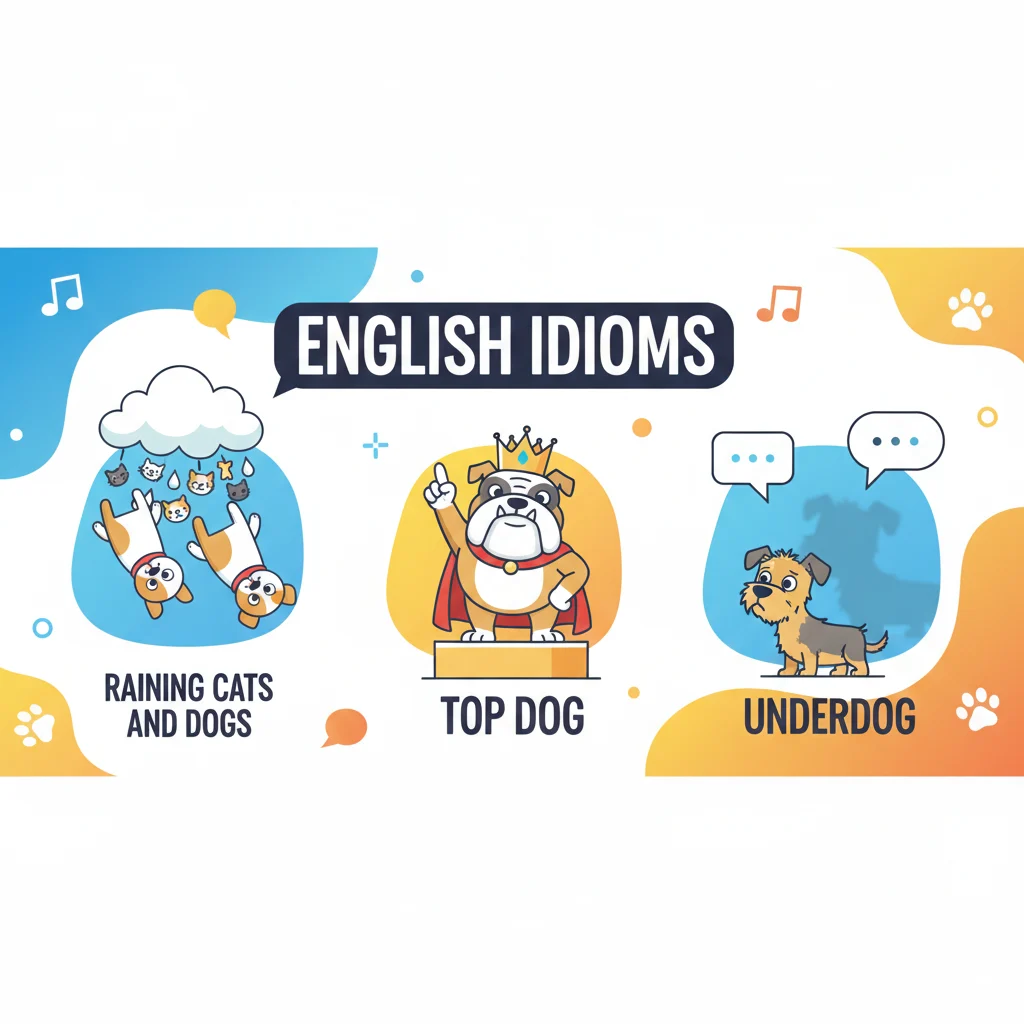
It’s Raining Cats and Dogs
Word-by-word Meaning
- Raining = water falling from sky
- Cats and dogs = animals
Idiomatic Meaning
It’s raining very heavily.
Example Sentences
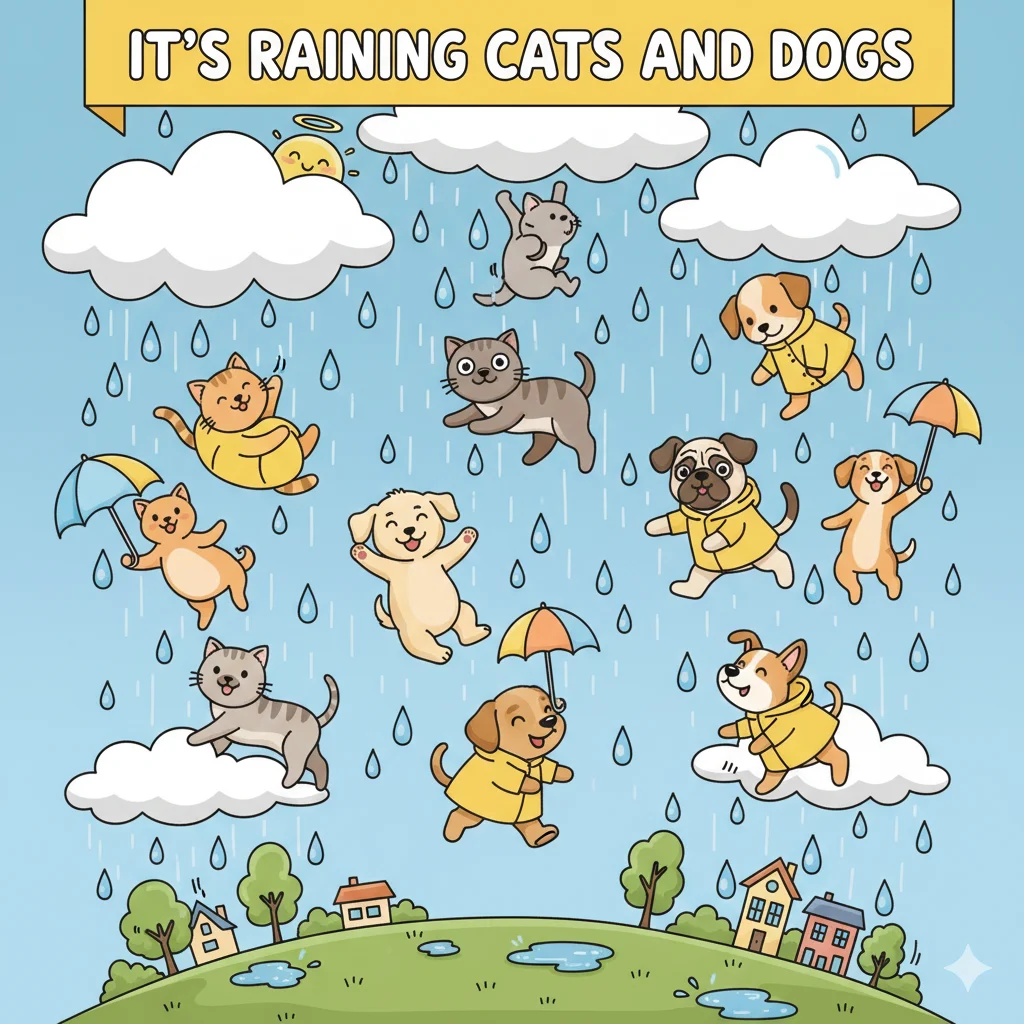
- Take an umbrella! It’s raining cats and dogs.
- We stayed home because it was raining cats and dogs.
Common Error
❌ Not about real animals falling.
Usage Note
Used in informal speech to describe heavy rain.
Every Dog Has Its Day
Word-by-word Meaning
- Every dog = each dog
- Has its day = gets a special time
Idiomatic Meaning
Everyone gets a chance to succeed eventually.
Example Sentences

- Don’t give up — every dog has its day.
- He finally won the match. Every dog has its day!
Usage Note
Encouraging phrase used during tough times.
Let Sleeping Dogs Lie
Word-by-word Meaning
- Sleeping dogs = resting dogs
- Lie = stay
Idiomatic Meaning
Avoid restarting old conflicts.
Example Sentences
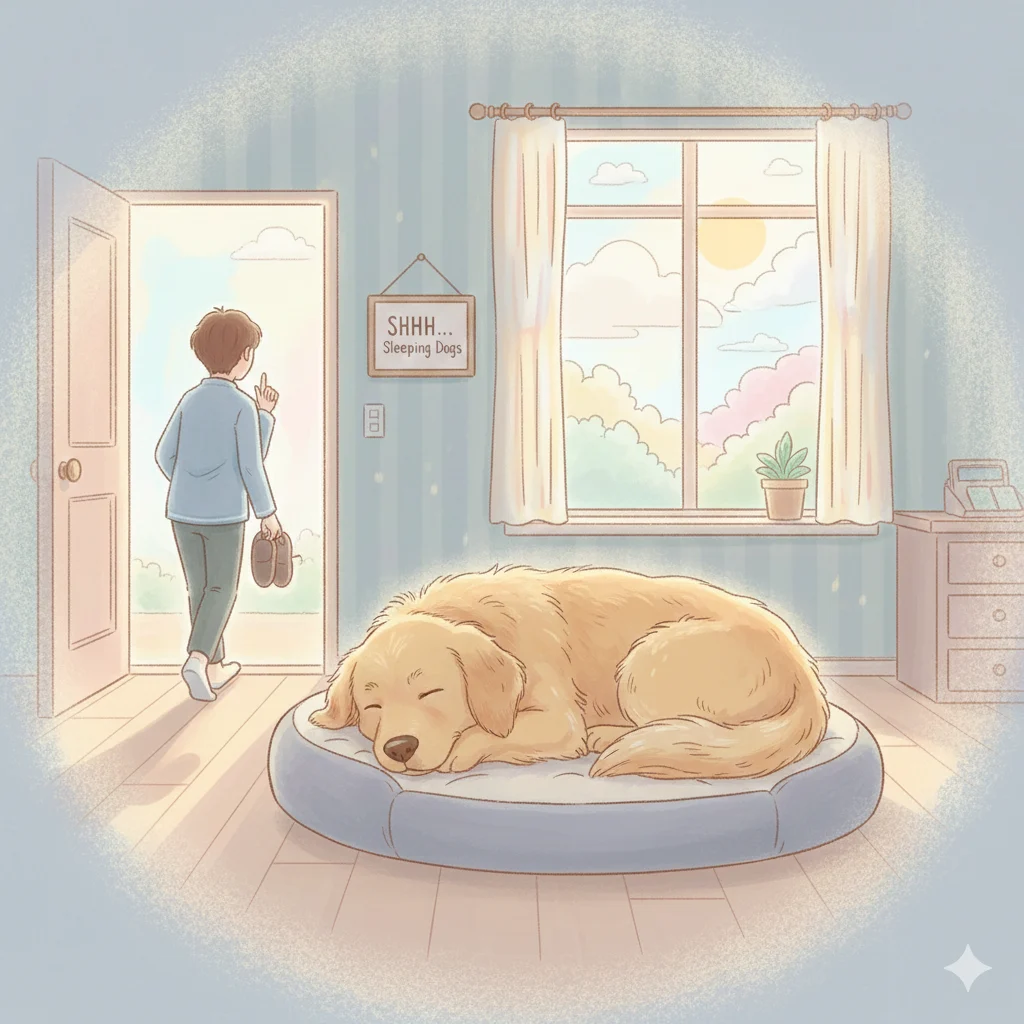
- Don’t mention the argument. Let sleeping dogs lie.
Usage Note
Used when past issues should not be discussed again.
Top Dog
Word-by-word Meaning
- Top = highest
- Dog = animal
Idiomatic Meaning
The leader or most successful person.
Example Sentences

- She became the top dog in the company.
Usage Note
Common in business or competition contexts.
Underdog
Word-by-word Meaning
- Under = below
- Dog = animal
Idiomatic Meaning
The weaker or less likely to win person/team.
Example Sentences

- The underdog team won the championship.
Usage Note
Often used in sports and competitions.
Dog-Eat-Dog World
Idiomatic Meaning
A very competitive and ruthless environment.
Example Sentences
- It’s a dog-eat-dog world in the business industry.
Common Error
❌ Not about real dogs fighting.
Usage Note
Used to describe tough competition.
Work Like a Dog
Idiomatic Meaning
To work extremely hard.
Example Sentences
- I worked like a dog to finish the project.
Usage Note
Informal expression for hard work.
Sick as a Dog
Idiomatic Meaning
Very sick.
Example Sentences
- I was sick as a dog last week.
Usage Note
Used casually in conversation.
Barking Up the Wrong Tree
Idiomatic Meaning
Making a wrong assumption.
Example Sentences
- If you think I broke it, you’re barking up the wrong tree.
Usage Note
Often used to correct misunderstandings.
The Tail Wagging the Dog
Word-by-word Meaning
- Tail = the back part of a dog
- Wagging = moving side to side
- Dog = the whole animal
Literally, it would mean the small tail controlling the big dog.
Idiomatic / Figurative Meaning
When a small or less important part controls the whole situation.
Example Sentences
- The assistant makes all the decisions — it’s the tail wagging the dog.
- Small problems shouldn’t control the entire project. Don’t let the tail wag the dog.
Common Error
❌ Not used for physical dogs.
✔ Used for imbalance in power or control.
Usage Note
Common in business, politics, and management discussions.
Dog Days
Word-by-word Meaning
- Dog = animal
- Days = period of time
Idiomatic / Figurative Meaning
The hottest and most uncomfortable days of summer.
Example Sentences
- During the dog days of July, everyone stays indoors.
- The dog days make outdoor work exhausting.
Common Error
❌ Not about dogs behaving badly.
✔ Refers to extreme summer heat.
Usage Note
Mostly used in weather-related conversations.
In the Doghouse
Word-by-word Meaning
- Doghouse = small shelter for a dog
Idiomatic / Figurative Meaning
To be in trouble with someone.
Example Sentences
- I forgot our anniversary — now I’m in the doghouse.
- He’s in the doghouse after missing the meeting.
Common Error
❌ Not about actually living in a doghouse.
Usage Note
Common in relationships and family situations.
Give a Dog a Bad Name
Word-by-word Meaning
- Give = assign
- Bad name = negative reputation
Idiomatic / Figurative Meaning
Once someone has a bad reputation, people continue to judge them negatively.
Example Sentences
- He made one mistake, but they gave him a bad name forever.
- Don’t judge her — people gave her a bad name unfairly.
Common Error
❌ Not about naming pets.
Usage Note
Used in reputation-related discussions.
Hair of the Dog
Word-by-word Meaning
- Hair = strand from animal
- Dog = animal
Idiomatic / Figurative Meaning
A small amount of alcohol taken to reduce a hangover.
Example Sentences
- He had a little hair of the dog after the party.
Common Error
❌ Not about real dog hair.
Usage Note
Informal expression used in casual settings.
Dog-Tired
Word-by-word Meaning
- Dog = animal
- Tired = exhausted
Idiomatic / Figurative Meaning
Extremely tired.
Example Sentences
- After working all day, I was dog-tired.
- She felt dog-tired after the long journey.
Common Error
❌ Not related to dogs specifically.
Usage Note
Very common in everyday English.
Call Off the Dogs
Word-by-word Meaning
- Call off = stop
- Dogs = animals
Idiomatic / Figurative Meaning
To stop attacking, criticizing, or pressuring someone.
Example Sentences
- Once he apologized, they called off the dogs.
- The media finally called off the dogs.
Common Error
❌ Not about real hunting dogs.
Usage Note
Often used in media or conflict contexts.
Like a Dog with a Bone
Word-by-word Meaning
- Dog = animal
- Bone = something dogs chew
Idiomatic / Figurative Meaning
Refusing to give up on something.
Example Sentences
- She’s like a dog with a bone when solving mysteries.
- He won’t stop asking — he’s like a dog with a bone.
Common Error
❌ Not negative by default.
✔ Can be positive (determined) or negative (annoying persistence).
Usage Note
Used to describe strong determination.
Go to the Dogs
Word-by-word Meaning
- Go = move
- Dogs = animals
Idiomatic / Figurative Meaning
To decline in quality or become worse.
Example Sentences
- The company has gone to the dogs since management changed.
- The old house went to the dogs after years of neglect.
Common Error
❌ Not about visiting dogs.
Usage Note
Used when describing decline or deterioration.
Love Me, Love My Dog
Word-by-word Meaning
- Love me = accept me
- Love my dog = accept what belongs to me
Idiomatic / Figurative Meaning
If you love someone, you must accept everything about them.
Example Sentences
- If you want to be my friend, love me, love my dog.
- Marriage means love me, love my dog.
Common Error
❌ Not limited to actual pets.
Usage Note
Common in relationships and personal acceptance discussions.
A Dog’s Life
Word-by-word Meaning
- Dog’s life = life of a dog
Idiomatic / Figurative Meaning
A difficult, unhappy, or unfair life.
Example Sentences
- He worked long hours for little pay — it was a dog’s life.
- She felt she was living a dog’s life before changing jobs.
Common Error
❌ Not about modern pampered pets.
Usage Note
Used when describing hardship or struggle.
FAQs About Idioms Dogs
1. Why are dogs used in so many idioms?
Dogs have been close companions to humans for centuries, making them part of cultural expressions.
2. Are dog idioms formal?
Most are informal but widely accepted in conversation.
3. Can I use dog idioms in writing?
Yes, especially in creative or informal writing.
4. Do idioms dogs have negative meanings?
Some do (like dog-eat-dog), but others are positive (like top dog).
5. How can I remember idioms easily?
Use them in daily sentences and associate them with real-life situations.
Conclusion
Learning idioms dogs is a fun and practical way to improve your English. These expressions may sound strange at first, but once you understand them, they make conversations more colorful and natural. Instead of speaking basic English, you’ll sound more fluent and confident.
Start by choosing three idioms from this list and use them in sentences today. Maybe tell a friend, “I worked like a dog,” or say, “Every dog has its day” when encouraging someone. The more you practice, the more natural these phrases will feel.
Language learning doesn’t have to be boring. With expressive idioms and real-life examples, you can make English exciting and memorable. Keep practicing, stay curious, and soon you’ll master not just vocabulary — but real, living English!

“Wilkie Collins brings classic idioms to life on LearnIdom.com, making language learning engaging, memorable, and full of literary charm.”