
Business idioms are common English expressions used in professional and corporate settings to describe work, money, leadership, and decision-making in a symbolic way. Popular examples include “think outside the box” (be creative), “get down to business” (start working seriously), and “learn the ropes” (understand how something works).
These idioms are frequently used in meetings, emails, presentations, and workplace conversations. Many English learners struggle to understand business idioms because their meanings are not literal, which can lead to confusion in professional communication. Learning business idioms helps you sound more confident, communicate ideas clearly, and understand workplace English naturally.
Whether you are preparing for interviews, working in an office, or improving professional vocabulary, mastering business idioms strengthens fluency and makes your communication more polished, persuasive, and impactful in real-world business environments.
Think Outside the Box
Word-by-Word Meaning
Think = consider
Outside = beyond
Box = limits
Idiomatic Meaning
To think creatively and differently.
Example Sentences
- We need to think outside the box to increase sales.
- She always thinks outside the box.

Common Error
❌ Not about a real box.
Usage Note
Common in brainstorming sessions.
Get the Ball Rolling
Word-by-Word Meaning
Ball = object
Rolling = moving

Idiomatic Meaning
To start a project or process.
Examples
- Let’s get the ball rolling on this deal.
Usage Note
Used when initiating action.
Touch Base
Idiomatic Meaning
To briefly communicate or update someone.
Example

- I’ll touch base with you tomorrow.
Usage Note
Common in emails.
Back to the Drawing Board
Word-by-Word Meaning
Back = return
Drawing board = planning table
Idiomatic Meaning
To start again after a plan has failed.
Example Sentences
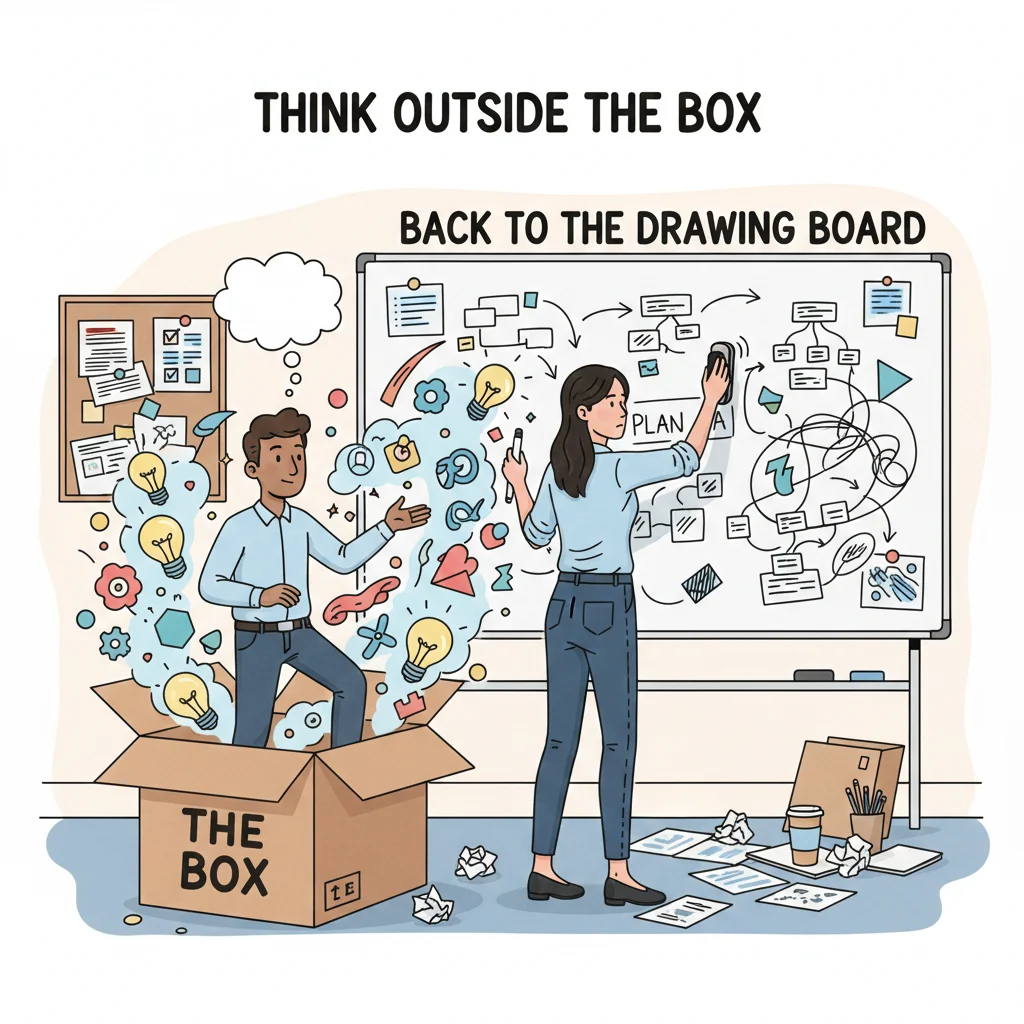
- The marketing strategy failed, so it’s back to the drawing board.
- Our proposal was rejected — back to the drawing board.
- If the design doesn’t work, we go back to the drawing board.
Common Error
❌ It does not mean literally drawing something.
Usage Note
Often used in project management and product development.
In the Loop
Word-by-Word Meaning
Loop = circle of communication
Idiomatic Meaning
To be informed and included in updates.
Example Sentences
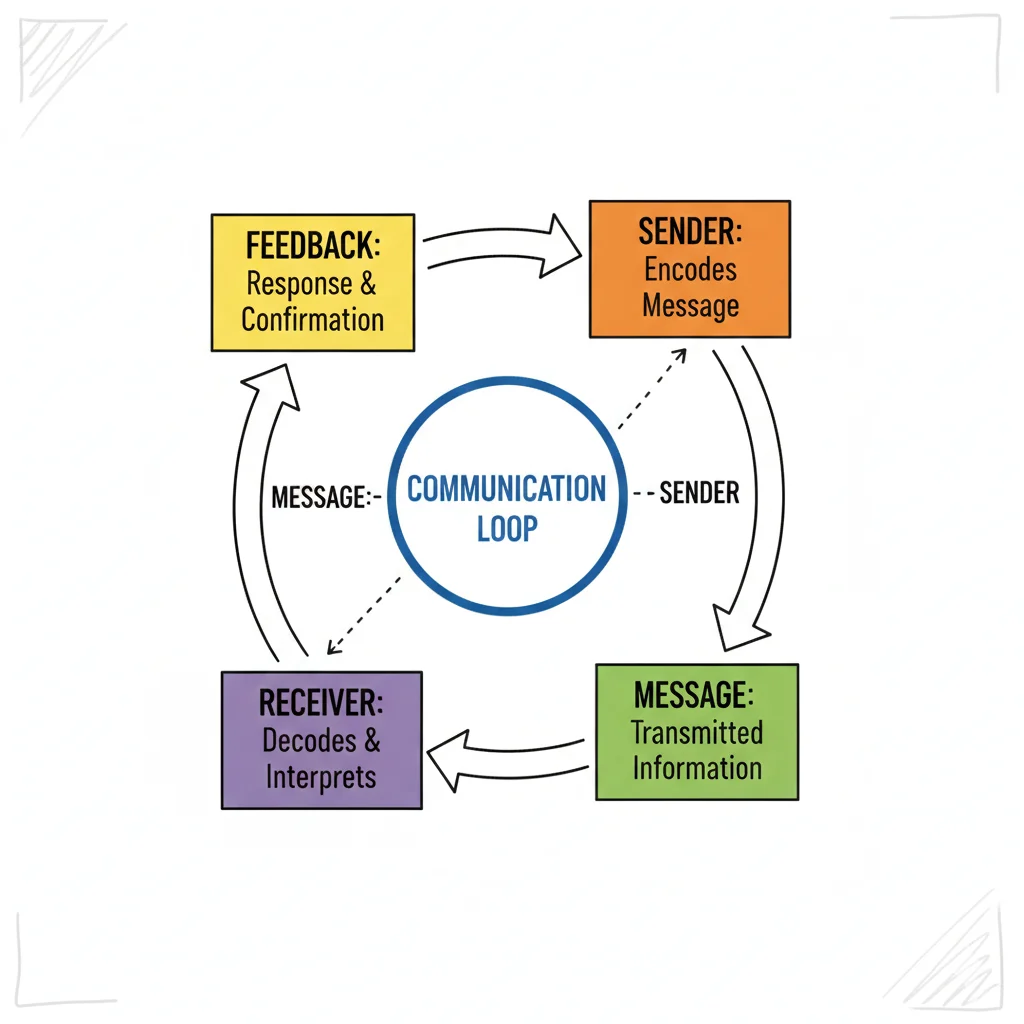
- Please keep me in the loop about the client meeting.
- I wasn’t in the loop, so I missed the update.
- Managers should stay in the loop.
Common Error
❌ Not related to physical loops.
Usage Note
Very common in professional emails.
Cut Corners
Word-by-Word Meaning
Cut = reduce
Corners = edges
Idiomatic Meaning
To do something in the easiest, cheapest, or fastest way (often badly).
Example Sentences
- The company cut corners to save money.
- Don’t cut corners on quality.
- Cutting corners can damage reputation.
Common Error
❌ Not about actual cutting.
Usage Note
Usually has a negative meaning.
On the Same Page
Word-by-Word Meaning
Same page = same understanding
Idiomatic Meaning
To agree or share the same understanding.
Example Sentences
- Let’s make sure we’re on the same page.
- The team is finally on the same page.
Usage Note
Common in meetings and teamwork discussions.
Learn the Ropes
Word-by-Word Meaning
Ropes = controls (from sailing)
Idiomatic Meaning
To learn how a job or system works.
Example Sentences
- She is learning the ropes at her new job.
- Give him time to learn the ropes.
Usage Note
Used for beginners in new roles.
Time Is Money
Idiomatic Meaning
Time is valuable and should not be wasted.
Example Sentences
- Let’s start the meeting; time is money.
- In business, time is money.
Usage Note
Common motivational phrase.
Raise the Bar
Word-by-Word Meaning
Bar = standard
Idiomatic Meaning
To increase standards or expectations.
Example Sentences
- The new CEO raised the bar.
- We must raise the bar for customer service.
The Bottom Line
Word-by-Word Meaning
Bottom line = final number
Idiomatic Meaning
The final result, especially profit or main point.
Example Sentences
- The bottom line is we need more sales.
- What’s the bottom line profit?
Usage Note
Common in finance discussions.
Go the Extra Mile
Idiomatic Meaning
To put in extra effort beyond expectations.
Example Sentences
- She always goes the extra mile for clients.
- Going the extra mile improves success.
Hit the Ground Running
Idiomatic Meaning
To start something energetically and immediately.
Example Sentences
- The new manager hit the ground running.
- We need someone who can hit the ground running.
A Win-Win Situation
Idiomatic Meaning
A situation where all parties benefit.
Example Sentences
- The deal was a win-win situation.
- We aim for win-win outcomes.
Think on Your Feet
Idiomatic Meaning
To react quickly and confidently.
Example Sentences
- Managers must think on their feet.
- She handled the question by thinking on her feet.
Big Picture
Idiomatic Meaning
The overall situation, not small details.
Example Sentences
- Focus on the big picture.
- Leaders must see the big picture.
Red Tape
Idiomatic Meaning
Too many official rules and formalities.
Example Sentences
- Government red tape delayed the project.
- There’s too much red tape.
Climb the Corporate Ladder
Idiomatic Meaning
To advance in career and get promotions.
Example Sentences
- She is climbing the corporate ladder.
- Hard work helps climb the corporate ladder.
Cash Cow
Idiomatic Meaning
A product or service that generates steady profit.
Example Sentences
- This product is our cash cow.
- The company depends on its cash cow.
Burn the Midnight Oil
Idiomatic Meaning
To work late into the night.
Example Sentences
- We burned the midnight oil to finish the report.
- Entrepreneurs often burn the midnight oil.
Common Error
❌ Not about actual oil — means working late.
Quick Summary Table
| Idiom | Meaning |
|---|---|
| Think outside the box | Be creative |
| Touch base | Briefly contact |
| Bottom line | Final result |
| Win-win | Mutual benefit |
| Red tape | Excessive rules |
FAQs About Business Idioms
1. Why are business idioms important?
They improve professional communication and fluency.
2. Are business idioms formal?
Some are semi-formal; use carefully in formal writing.
3. Can I use them in interviews?
Yes, but naturally and correctly.
4. How can I memorize business idioms?
Practice using them in emails and conversations.
Conclusion
Mastering these business idioms can transform the way you communicate at work. Instead of using simple, repetitive sentences, you’ll express ideas with confidence, clarity, and professionalism. In modern workplaces — especially in 2026’s fast-paced global environment — strong communication skills are a major advantage. Whether you’re attending meetings, writing emails, negotiating deals, or preparing for interviews, these idioms will help you sound more natural and competent.
The key is practice. Start by using one or two business idioms daily in conversations or emails. Over time, they will become part of your natural vocabulary. Remember, fluency is not about using difficult words — it’s about using the right expressions at the right time. Keep learning, keep practicing, and raise the bar in your professional English journey. 🚀

“Rose Macaulay shares the charm of idioms on LearnIdom.com, making language learning delightful, insightful, and full of wit for every reader.”