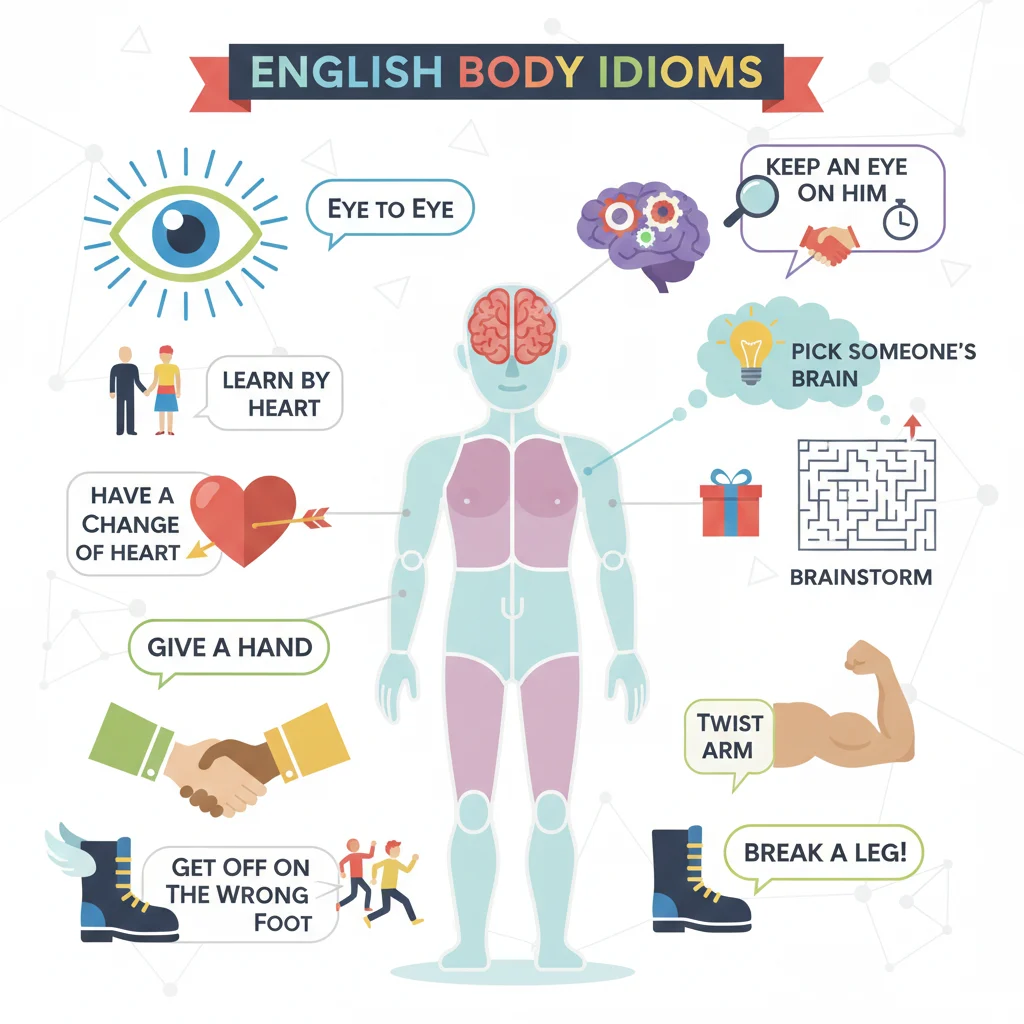
Body parts are commonly used in English idioms to describe emotions, actions, or personality traits in a creative and expressive way. Idioms with body parts make language more vivid, engaging, and relatable.
Popular examples include “cost an arm and a leg” (very expensive), “cold feet” (nervous or hesitant), “keep an eye on” (monitor or watch), and “break a leg” (good luck). These idioms are widely used in daily conversations, writing, social media, and professional communication, helping learners sound natural and fluent.
Understanding and using body part idioms allows English speakers to express feelings, describe situations, and add humor or emphasis to their language. This guide provides a variety of body part idioms with meanings and examples, making it easy to incorporate them confidently into everyday English.
👁️ Keep an Eye On
Word-by-Word Meaning
Use your eye to look
Idiomatic / Figurative Meaning
To watch or take care of something
Example Sentences
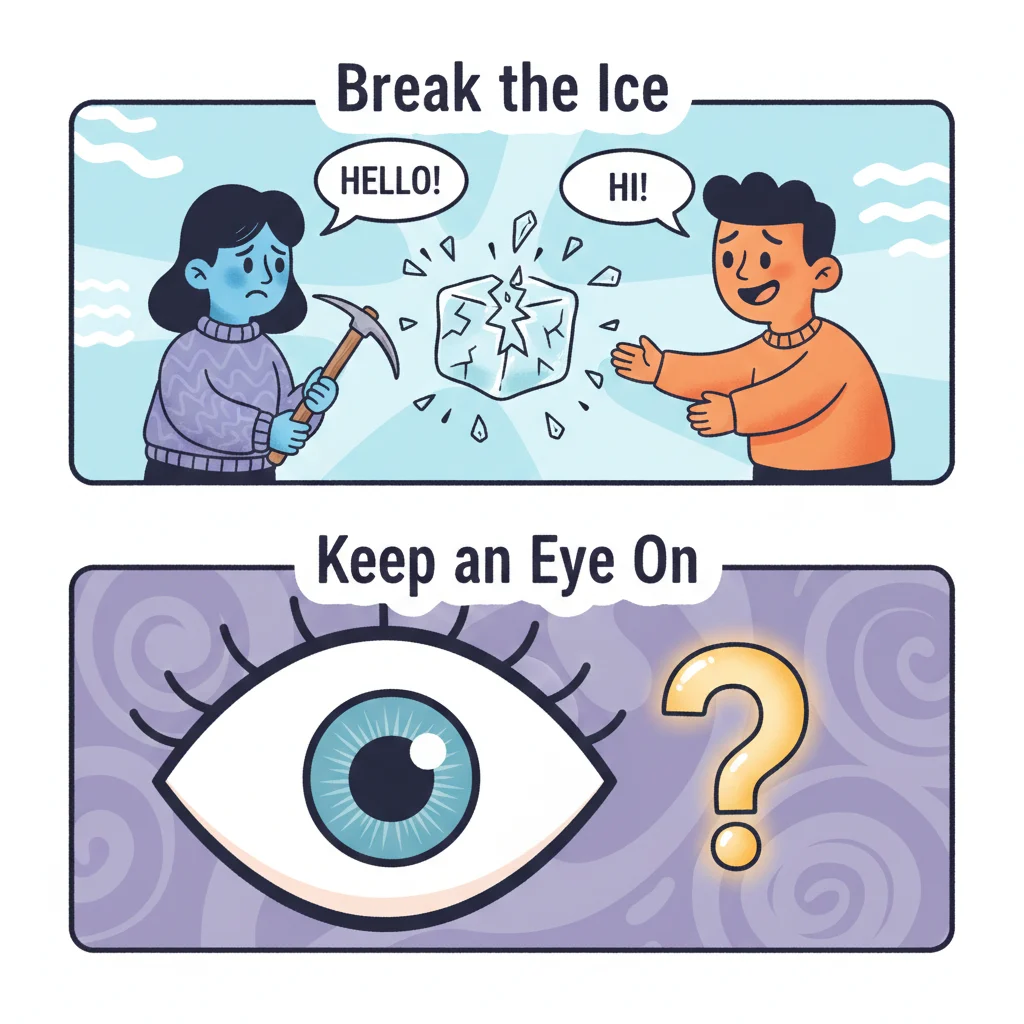
- Please keep an eye on my bag.
- She kept an eye on the kids.
Common Error
❌ “Keep eyes on”
Usage Note
Very common in daily spoken English
🦵 Cost an Arm and a Leg
Word-by-Word Meaning
Cost body parts
Idiomatic / Figurative Meaning
Be very expensive
Example Sentences
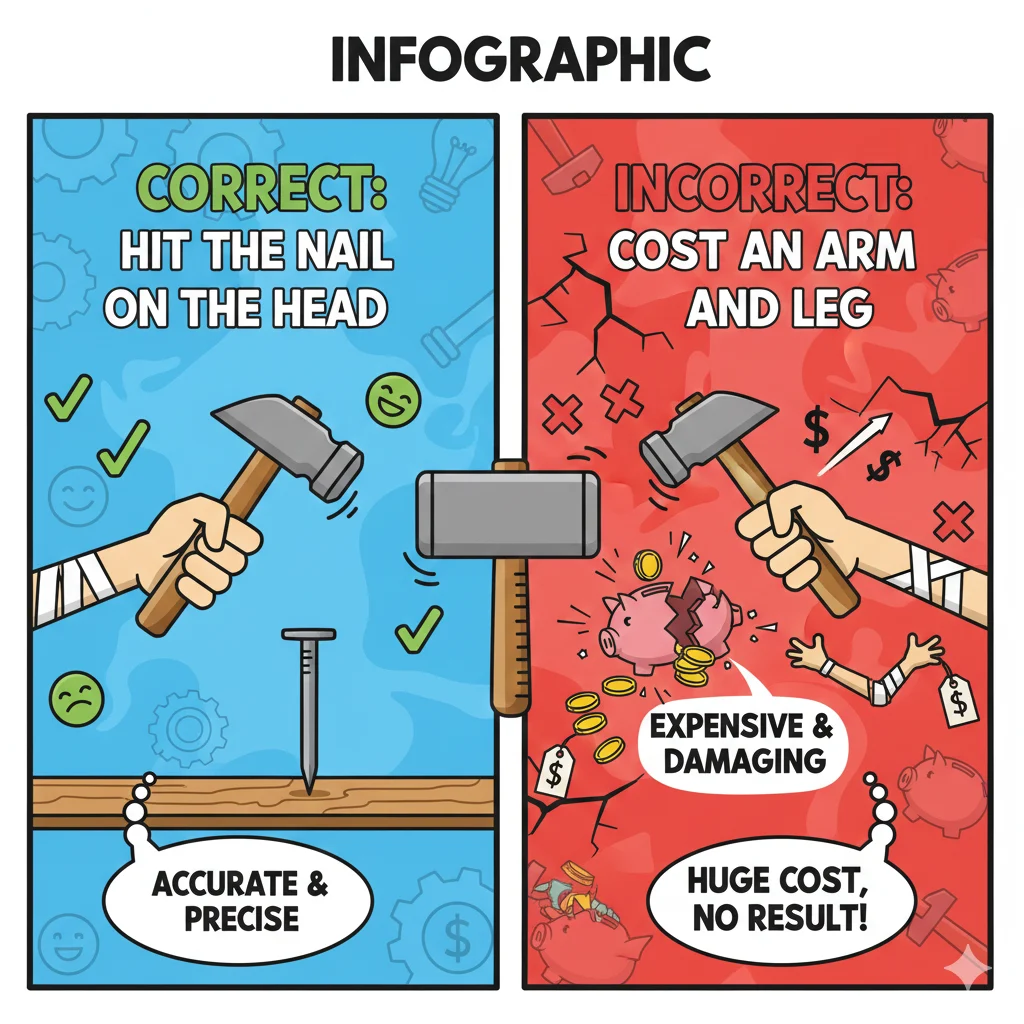
- This phone costs an arm and a leg.
Common Error
❌ Using it for cheap items
Usage Note
Informal expression
👂 All Ears
Word-by-Word Meaning
Only ears
Idiomatic / Figurative Meaning
Ready to listen carefully
Example Sentences

- Tell me everything—I’m all ears.
Common Error
❌ Using for hearing problems
Usage Note
Friendly and positive tone
🧠 Use Your Head
Word-by-Word Meaning
Use your brain
Idiomatic / Figurative Meaning
Think carefully
Example Sentences
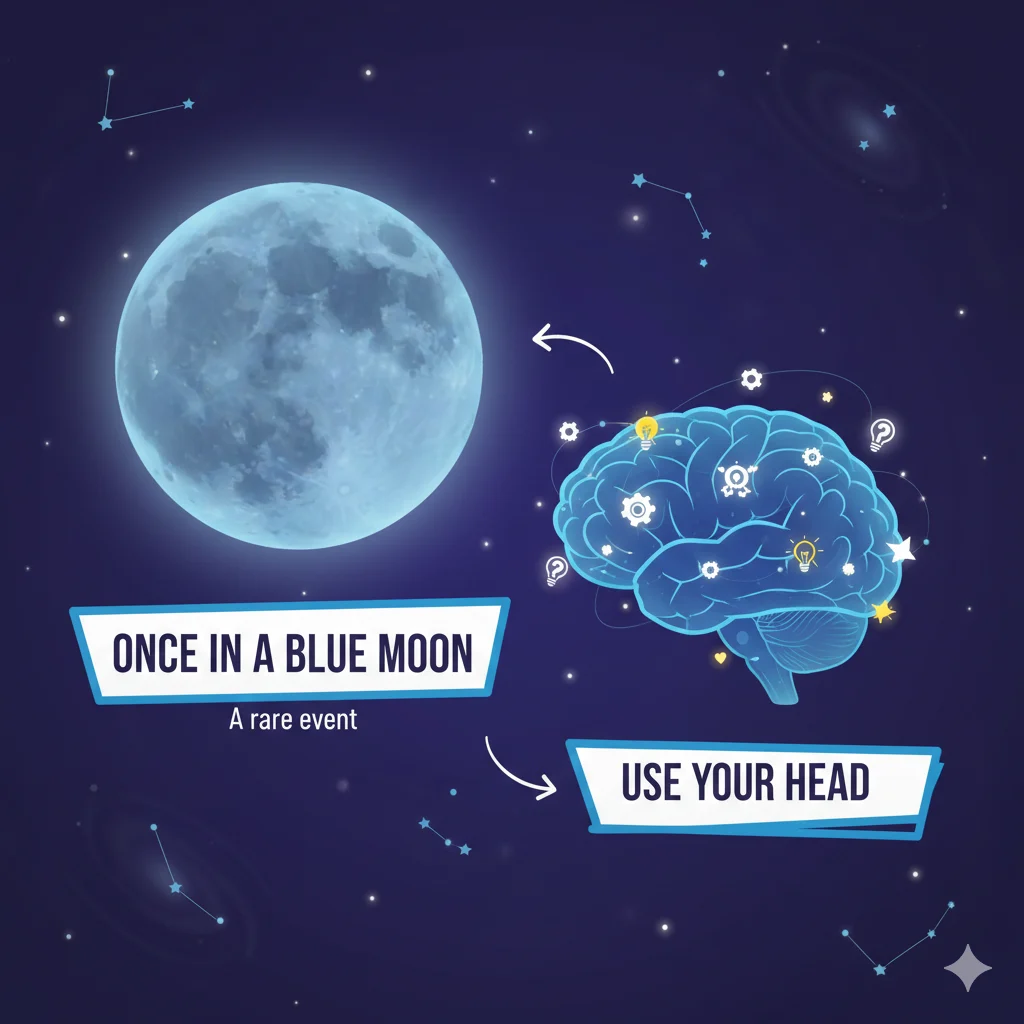
- Use your head before deciding.
Common Error
❌ Using for physical movement
Usage Note
Advice-giving situations
👅 Bite Your Tongue
Word-by-Word Meaning
Bite your tongue
Idiomatic / Figurative Meaning
Stop yourself from speaking
Example Sentences
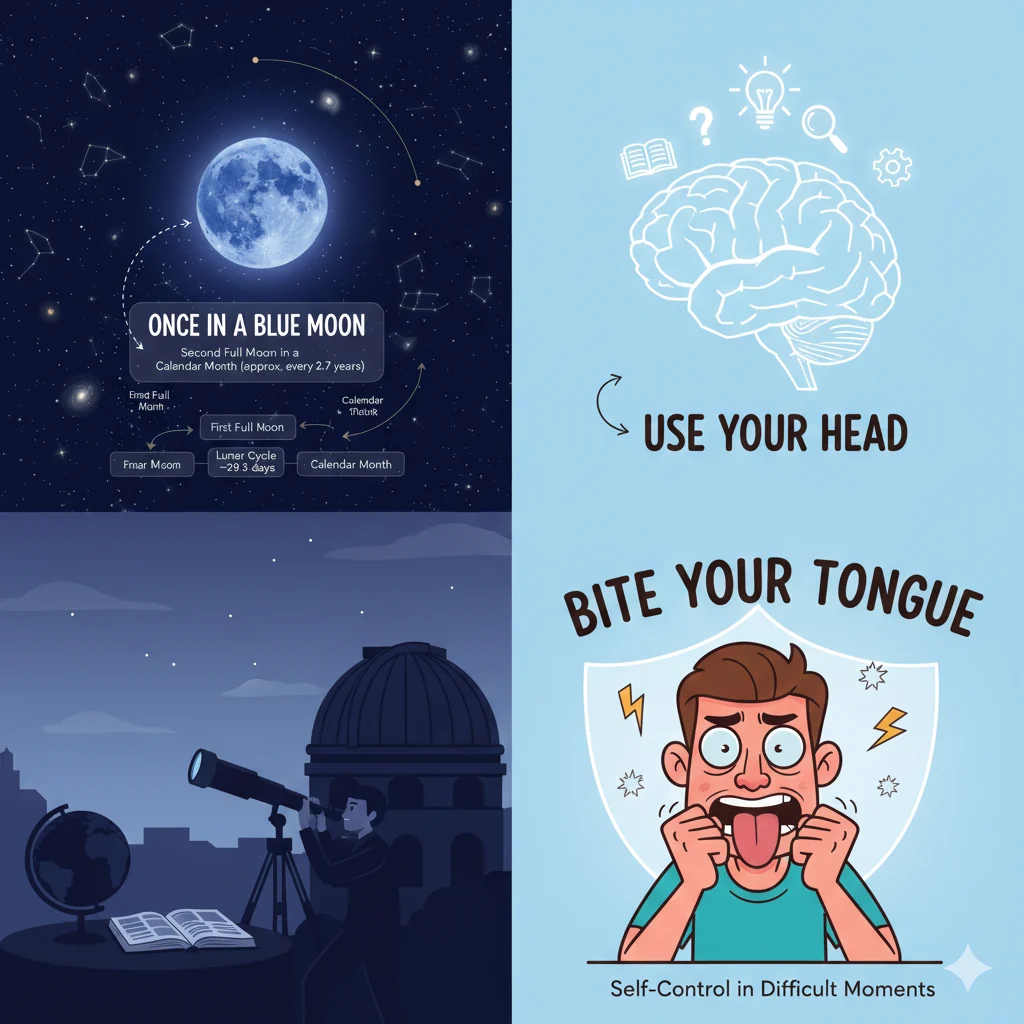
- I wanted to argue but bit my tongue.
Common Error
❌ Taking it literally
Usage Note
Used for self-control
🖐️ Give a Hand
Word-by-Word Meaning
Give your hand
Idiomatic / Figurative Meaning
Help someone
Example Sentences
- Can you give me a hand?
Common Error
❌ Using for applause only
Usage Note
Casual and polite
👃 Nose Around
Word-by-Word Meaning
Use nose to look
Idiomatic / Figurative Meaning
Search or investigate secretly
Example Sentences
- He was nosing around my room.
Common Error
❌ Using positively
Usage Note
Slightly negative tone
👂 Turn a Deaf Ear
Word-by-Word Meaning
Make ears deaf
Idiomatic / Figurative Meaning
Ignore something intentionally
Example Sentences
- She turned a deaf ear to criticism.
Common Error
❌ Confusing with hearing issues
Usage Note
Formal and informal both
🦷 Get Your Teeth Into
Word-by-Word Meaning
Use teeth
Idiomatic / Figurative Meaning
Start something seriously
Example Sentences
- I want to get my teeth into this project.
Common Error
❌ Using for food only
Usage Note
British English
👀 Catch Someone’s Eye
Word-by-Word Meaning
Catch eye
Idiomatic / Figurative Meaning
Attract attention
Example Sentences
- That dress caught my eye.
Common Error
❌ Using for long attention
Usage Note
Common in descriptions
🧍 Stand on Your Own Feet
Word-by-Word Meaning
Stand on feet
Idiomatic / Figurative Meaning
Be independent
Example Sentences
- She learned to stand on her own feet.
Common Error
❌ Using for physical balance
Usage Note
Motivational context
🫀 Learn by Heart
Word-by-Word Meaning
Learn with heart
Idiomatic / Figurative Meaning
Memorize completely
Example Sentences
- Learn the poem by heart.
Common Error
❌ “Learn from heart”
Usage Note
Very common in education
🧠 Pick Someone’s Brain
Word-by-Word Meaning
Pick brain
Idiomatic / Figurative Meaning
Ask for ideas or advice
Example Sentences
- Can I pick your brain?
Common Error
❌ Using for stealing ideas
Usage Note
Friendly and informal
🦶 Put Your Foot Down
Word-by-Word Meaning
Put foot down
Idiomatic / Figurative Meaning
Be firm or strict
Example Sentences
- The boss put his foot down.
Common Error
❌ Using for walking
Usage Note
Authority situations
👄 Zip Your Lips
Word-by-Word Meaning
Close lips
Idiomatic / Figurative Meaning
Stay quiet
Example Sentences
- Zip your lips—it’s a secret.
Common Error
❌ Using in formal writing
Usage Note
Very informal
🧠 Get Something Off Your Chest
Word-by-Word Meaning
Remove from chest
Idiomatic / Figurative Meaning
Share a hidden feeling
Example Sentences
- I need to get this off my chest.
Common Error
❌ Using for physical pain
Usage Note
Emotional conversations
👀 See Eye to Eye
Word-by-Word Meaning
Eyes same level
Idiomatic / Figurative Meaning
Agree completely
Example Sentences
- We don’t see eye to eye.
Common Error
❌ Using for vision
Usage Note
Used in disagreements
🦴 Bone of Contention
Word-by-Word Meaning
Fighting bone
Idiomatic / Figurative Meaning
Cause of disagreement
Example Sentences
- Money was the bone of contention.
Common Error
❌ Using casually
Usage Note
Formal usage
👃 Stick Your Nose Into
Word-by-Word Meaning
Put nose in
Idiomatic / Figurative Meaning
Interfere in others’ matters
Example Sentences
- Don’t stick your nose into my work.
Common Error
❌ Positive usage
Usage Note
Negative tone
🖐️ Wash Your Hands of Something
Word-by-Word Meaning
Clean hands
Idiomatic / Figurative Meaning
Stop taking responsibility
Example Sentences
- I’ve washed my hands of the issue.
Common Error
❌ Using for hygiene
Usage Note
Strong statement
❓ Frequently Asked Questions (FAQs)
1. Why are body parts idioms important?
They make your English sound natural and native-like.
2. Are these idioms used in exams?
Yes, especially in IELTS and spoken English tests.
3. Should beginners learn idioms?
Yes, start with common ones like these.
4. Can idioms be used in writing?
Mostly in informal or semi-formal writing.
5. How can I practice idioms daily?
Use one idiom in a sentence every day.
🎯 Conclusion
Learning idioms of body parts is a powerful step toward fluent English. These expressions help you understand native speakers better and express yourself more confidently. Don’t try to memorize all at once—practice a few daily, use them in speaking, and soon they’ll feel natural. Keep practicing, stay curious, and let your English grow stronger every day.

“L.P. Hartley brings classic idioms to life on LearnIdom.com, helping readers explore language with wit, clarity, and timeless insight.”