Have you ever heard someone say “He kicked the bucket” and wondered what buckets have to do with anything? That’s the magic of idioms and euphemisms. Idioms add color and personality to English, while euphemisms help us speak politely about sensitive topics. Together, they make everyday conversations sound natural, friendly, and fluent.
Imagine a friend telling you, “I’m feeling under the weather,” instead of explaining every symptom. Or a teacher saying, “Let’s revisit this topic,” rather than “You’re wrong.” These small language choices matter more than you think.
In this guide, you’ll explore 20 of the most famous idioms and euphemisms, broken down clearly with meanings, examples, and common mistakes. Whether you’re a student, ESL learner, or language lover, this post will help you understand, remember, and confidently use these expressions in real life.
Break the Ice
Word-by-word meaning
To literally crack ice.
Idiomatic meaning
To start a conversation or ease tension.
Example sentences
- I told a joke to break the ice in class.

Common error
❌ Using it for physical ice only.
Usage note
Perfect for social or professional situations.
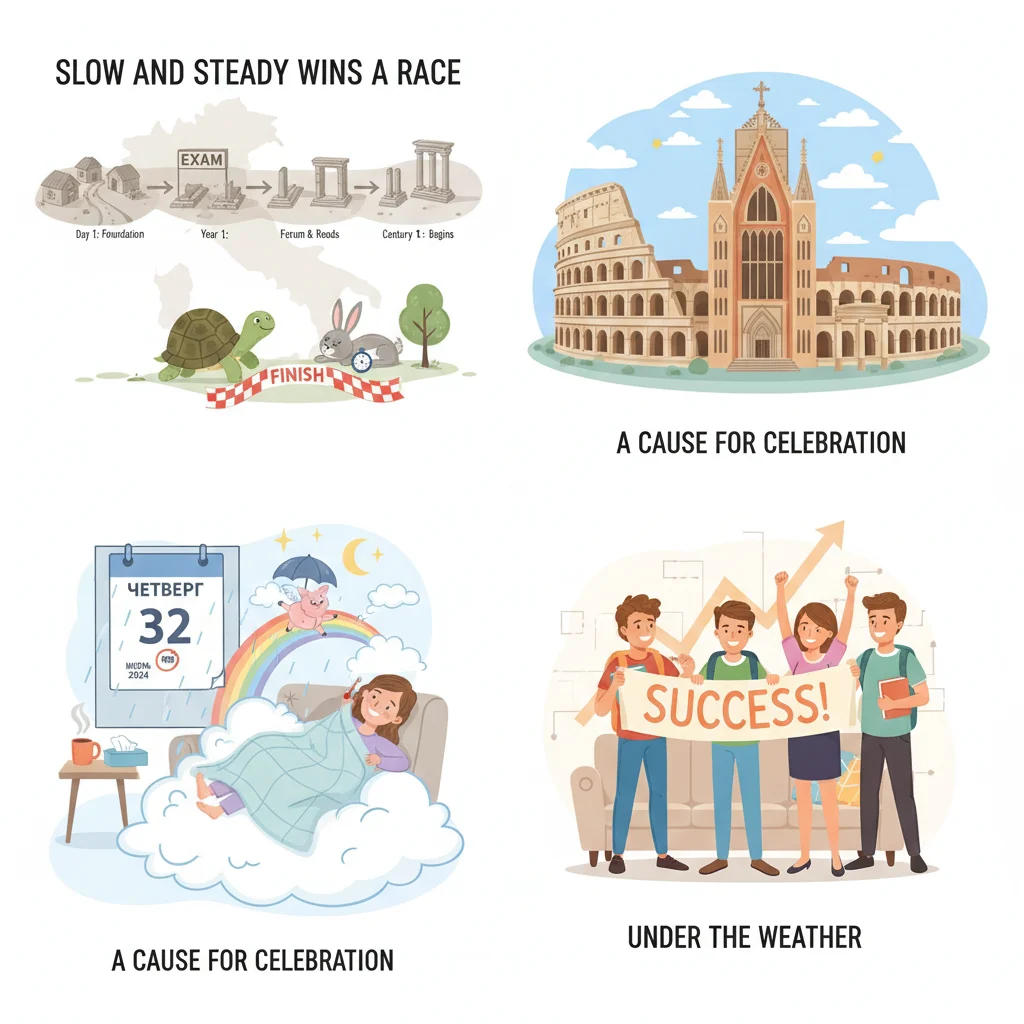
Under the Weather
Word-by-word meaning
Below the weather.
Idiomatic meaning
Feeling slightly ill (a euphemism).
Example sentences
- I’m a bit under the weather today.
Common error
❌ Using it for serious illness.
Usage note
Casual and polite expression.
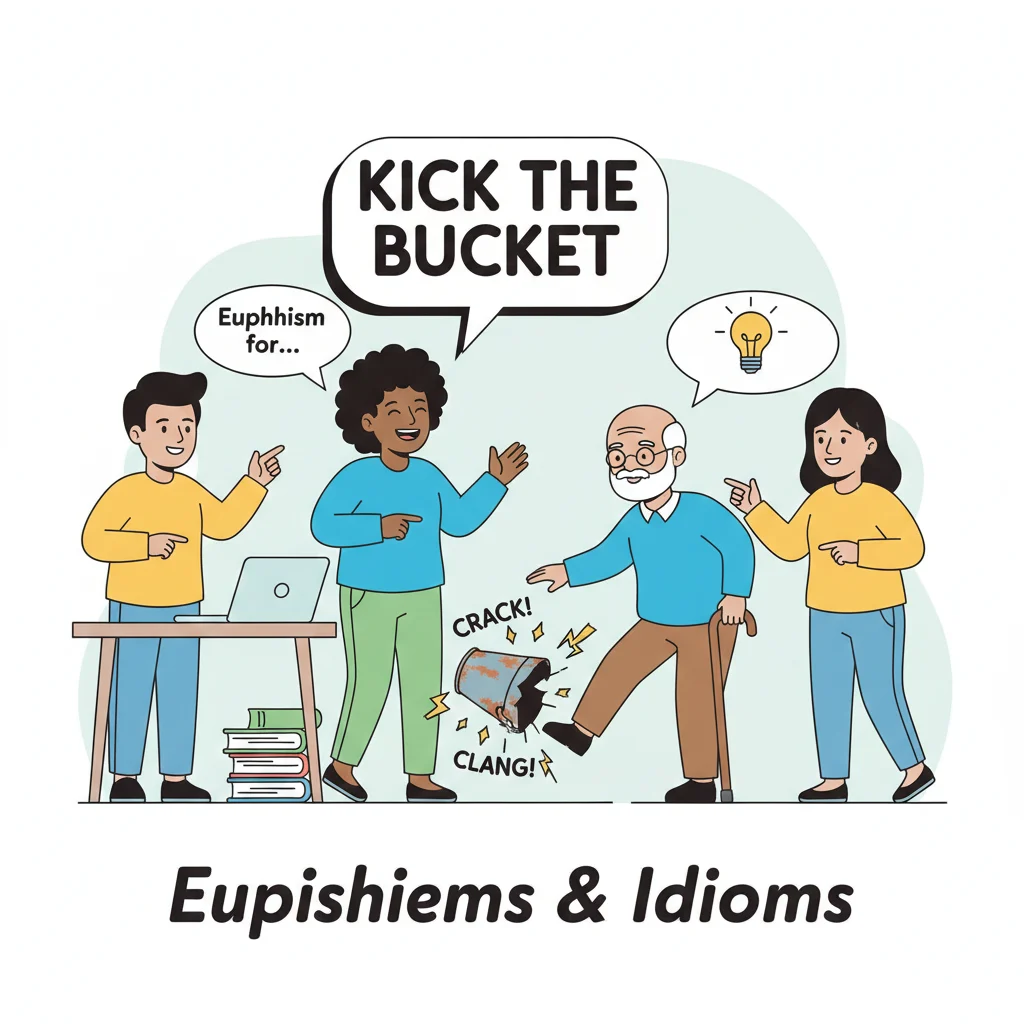
Kick the Bucket
Word-by-word meaning
To hit a bucket.
Idiomatic meaning
To die (informal euphemism).
Example sentences
- The old car finally kicked the bucket.
Common error
❌ Using it in formal or sensitive contexts.
Usage note
Avoid in serious conversations.
Bite the Bullet
Word-by-word meaning
To bite a metal bullet.
Idiomatic meaning
To face something difficult bravely.
Example sentences
- I bit the bullet and apologized.
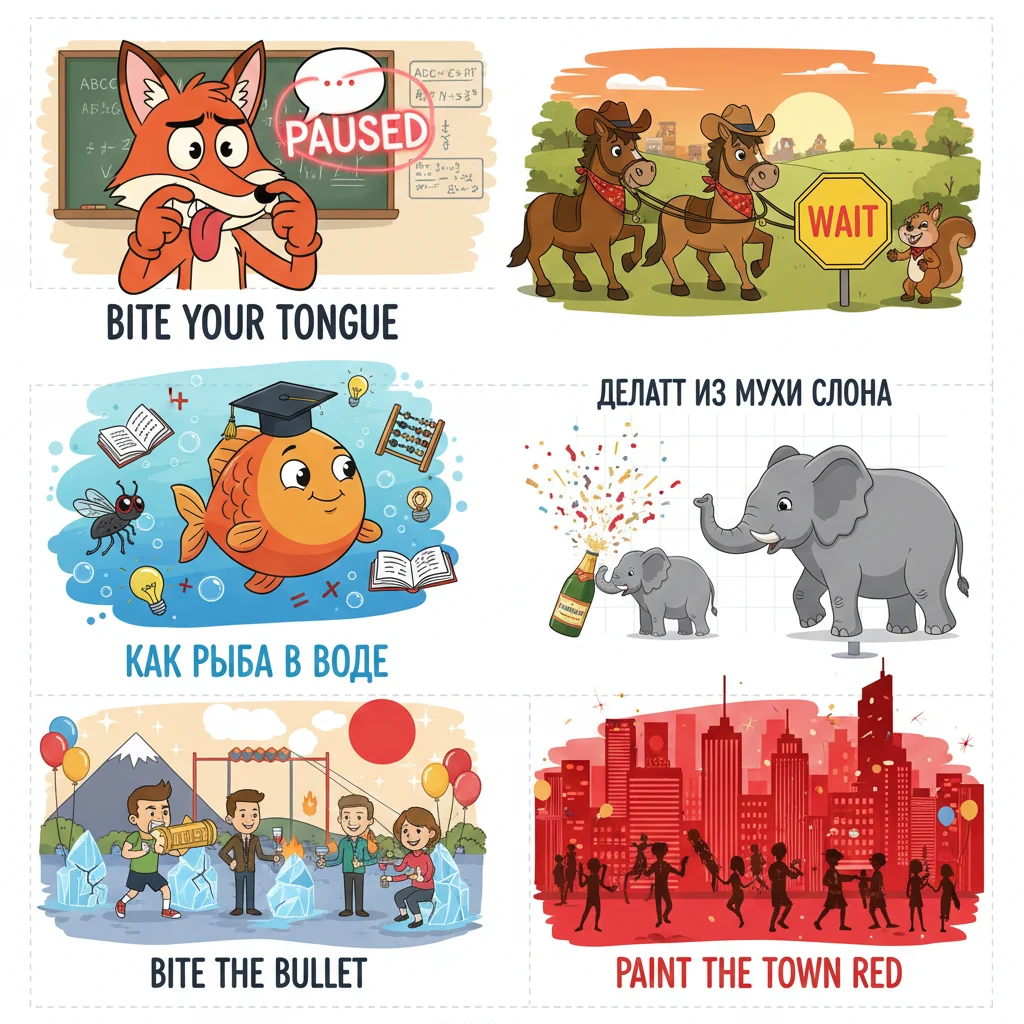
Common error
❌ Thinking it means violence.
Usage note
Common in advice.
On Cloud Nine
Word-by-word meaning
Standing on a cloud.
Idiomatic meaning
Extremely happy.
Example sentences
- She was on cloud nine after the results.

Common error
❌ Mixing with sadness.
Usage note
Positive emotional context.
Let the Cat Out of the Bag
Word-by-word meaning
Release a cat from a bag.
Idiomatic meaning
Reveal a secret accidentally or unintentionally.
Example sentences
- I accidentally let the cat out of the bag about the surprise party.
- Don’t let the cat out of the bag about the new project.
Common error
❌ Using it literally with actual cats.
Usage note
Useful for social situations where secrets are involved.
Hit the Sack
Word-by-word meaning
Strike a sack.
Idiomatic meaning
Go to bed or sleep.
Example sentences
- I’m exhausted; it’s time to hit the sack.
- After the long journey, we all hit the sack immediately.
Common error
❌ Thinking it means hitting a bag physically.
Usage note
Casual, informal phrase for bedtime.
Spill the Beans
Word-by-word meaning
Drop beans from a container.
Idiomatic meaning
Reveal a secret or confidential information.
Example sentences
- She spilled the beans about the surprise trip.
- Don’t spill the beans; it’s meant to be a secret.
Common error
❌ Using it literally for food.
Usage note
Informal; often used in gossip or playful situations.
Beat Around the Bush
Word-by-word meaning
Avoid the bush by beating around it.
Idiomatic meaning
Avoid talking about the main topic or issue directly.
Example sentences
- Stop beating around the bush and tell me what happened.
- He kept beating around the bush instead of giving a straight answer.
Common error
❌ Using it for literal gardening or beating objects.
Usage note
Common in professional, social, and informal conversations.
A Piece of Cake
Word-by-word meaning
A portion of a cake.
Idiomatic meaning
Something very easy to do.
Example sentences
- The exam was a piece of cake.
- Don’t worry about the presentation; it’ll be a piece of cake.
Common error
❌ Using it for difficult tasks literally.
Usage note
Informal; positive expression for simplicity or ease.
Cost an Arm and a Leg
Word-by-word meaning
Pay with an arm and a leg.
Idiomatic meaning
Something very expensive.
Example sentences
- That designer bag costs an arm and a leg.
- Renovating the house will cost an arm and a leg.
Common error
❌ Using it literally or in small purchases.
Usage note
Informal; used in casual conversation about money.
In Hot Water
Word-by-word meaning
Inside boiling water.
Idiomatic meaning
Being in trouble or facing difficulties.
Example sentences
- He’s in hot water for missing the meeting.
- She got in hot water with her teacher for cheating.
Common error
❌ Confusing it with being physically in water.
Usage note
Used in personal, work, or school contexts.
Pull Someone’s Leg
Word-by-word meaning
Physically pull someone’s leg.
Idiomatic meaning
To joke or tease someone playfully.
Example sentences
- Don’t worry, I’m just pulling your leg.
- He said he won the lottery, but he was pulling my leg.
Common error
❌ Taking it literally or thinking it’s aggressive.
Usage note
Lighthearted teasing; informal.
Call It a Day
Word-by-word meaning
Decide this is the day.
Idiomatic meaning
Stop working for the day or conclude an activity.
Example sentences
- We’ve finished enough work; let’s call it a day.
- After painting for hours, I decided to call it a day.
Common error
❌ Using it for ending life or a long-term project.
Usage note
Mostly used in work, study, or casual activity contexts.
Burn the Midnight Oil
Word-by-word meaning
Burn oil late at night.
Idiomatic meaning
Work late into the night.
Example sentences
- She burned the midnight oil to finish her project.
- Students often burn the midnight oil before exams.
Common error
❌ Taking it literally with fire or lamps.
Usage note
Common in academic or professional discussions about hard work.
Pass Away
Word-by-word meaning
Go away or leave.
Euphemistic meaning
To die politely.
Example sentences
- Her grandfather passed away peacefully.
- The famous actor passed away last year.
Common error
❌ Using it for minor departures or temporary absence.
Usage note
Used in formal and sensitive situations instead of “die.”
Down in the Dumps
Word-by-word meaning
Inside trash or rubbish.
Idiomatic meaning
Feeling sad, depressed, or low.
Example sentences
- He’s feeling down in the dumps after losing the match.
- Don’t be down in the dumps; things will improve.
Common error
❌ Confusing it with physical location.
Usage note
Informal, emotional state expression.
Sweeping Under the Rug
Word-by-word meaning
Hide something under a rug.
Idiomatic meaning
To hide or ignore a problem instead of solving it.
Example sentences
- The company is just sweeping the complaints under the rug.
- Don’t sweep your mistakes under the rug; face them.
Common error
❌ Using it literally for cleaning.
Usage note
Used in professional, family, or social contexts to highlight avoidance.
y Between a Rock and a Hard Place
Word-by-word meaning
Stuck between a rock and a hard place.
Idiomatic meaning
Facing a difficult decision with no easy solution.
Example sentences
- I was caught between a rock and a hard place: accept the offer or stay.
- She’s between a rock and a hard place with work and family duties.
Common error
❌ Using it for minor inconveniences.
Usage note
Mostly in professional, academic, or personal dilemmas.
Take It with a Grain of Salt
Word-by-word meaning
Take something with a small grain of salt.
Idiomatic meaning
Don’t take something too seriously; be skeptical.
Example sentences
- I’d take his advice with a grain of salt; he exaggerates a lot.
- News online should always be taken with a grain of salt.
Common error
❌ Using it literally as cooking advice.
Usage note
Useful in casual conversation and critical thinking discussions.
Frequently Asked Questions (FAQs)
Q1: What is the difference between idioms and euphemisms?
Idioms are figurative expressions, while euphemisms are polite substitutes for harsh topics.
Q2: Are idioms formal English?
Most idioms are informal or semi-formal.
Q3: Can idioms be used in exams?
Yes, but only when appropriate.
Q4: Why are euphemisms important?
They help maintain politeness and sensitivity.
Q5: How can I learn idioms faster?
Practice them in real-life sentences daily.
Conclusion
Mastering idioms and euphemisms is like unlocking the hidden layer of English. Start by learning a few expressions each week, notice them in movies or conversations, and try using them confidently. The more you practice, the more natural your English will sound—so pick your favorite idiom today and use it! 🚀

“Elizabeth Bowen shares timeless idioms and language wisdom on LearnIdom.com, making learning phrases fun, easy, and unforgettable.”