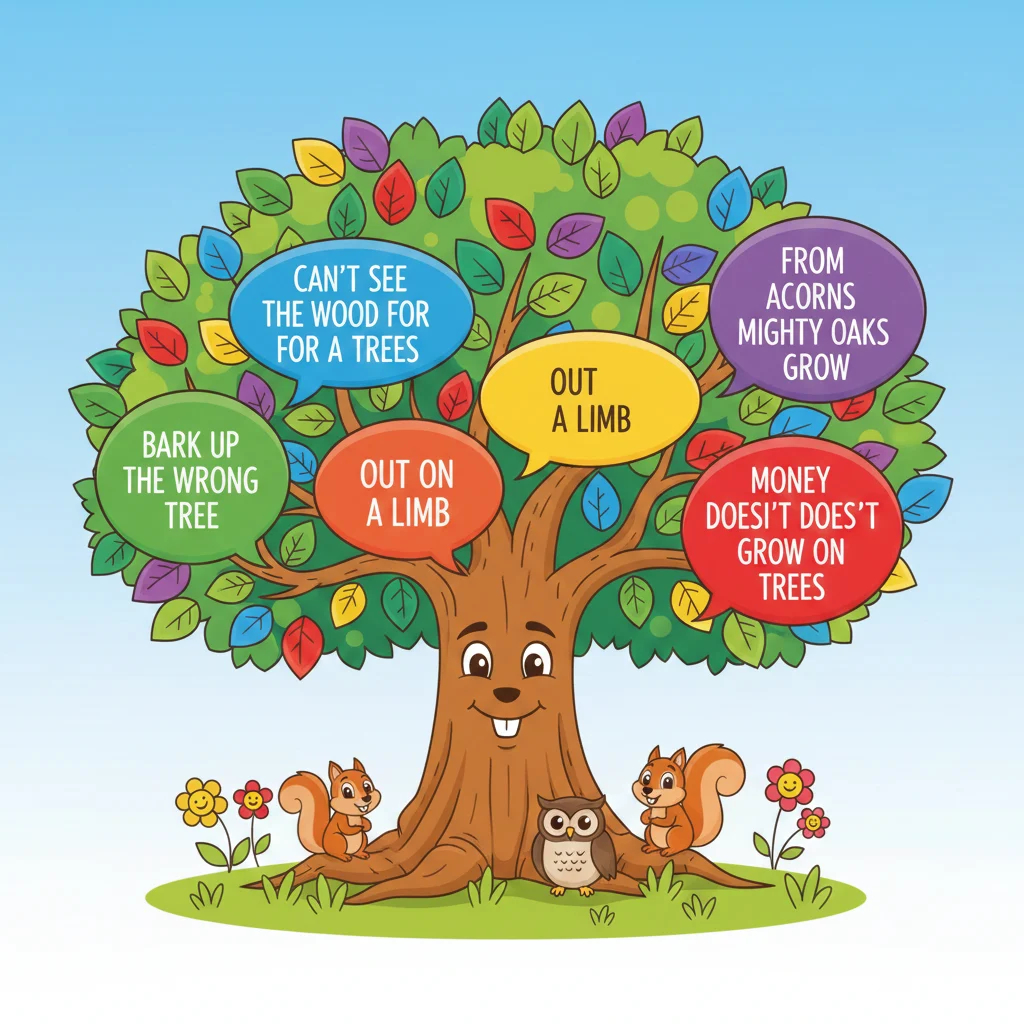
Idioms about trees are everywhere in everyday English—you hear them in conversations, movies, books, and even classrooms. Imagine a teacher saying, “You can’t see the forest for the trees,” or a friend warning, “Don’t bark up the wrong tree.
” These expressions don’t really talk about trees, but they use nature to describe human behavior, mistakes, growth, and success.
Learning idioms about trees helps you understand native speakers better and express ideas in a more colorful, natural way. When I first learned English idioms, tree expressions were some of the easiest to remember because they paint clear mental pictures.
In this guide, you’ll explore 20 famous idioms about trees, with simple explanations, examples, and common mistakes—perfect for learners who want to grow their English skills step by step.
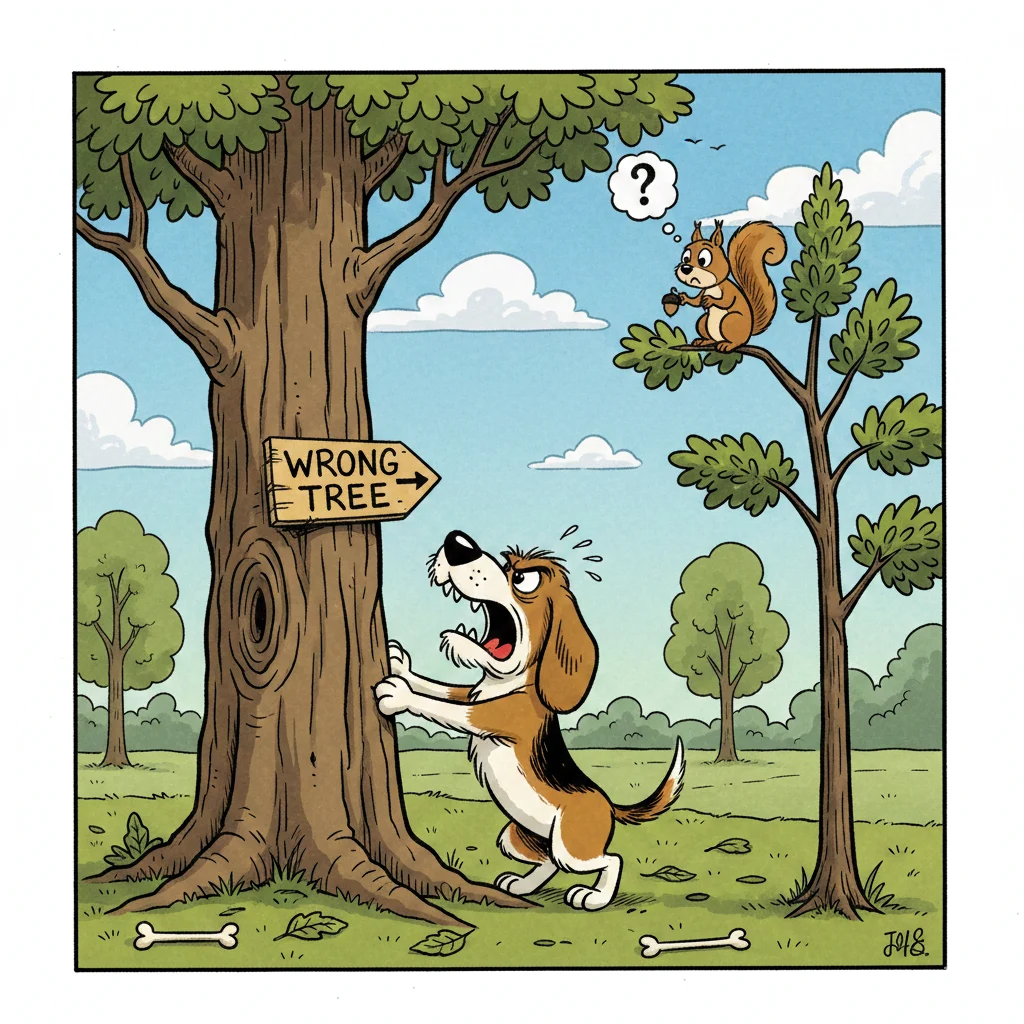
🌲 Bark up the wrong tree
Word-by-word meaning
To bark at a tree
Idiomatic / figurative meaning
To accuse or blame the wrong person
Example sentences
- You’re barking up the wrong tree if you think I broke the laptop.
- She barked up the wrong tree by blaming her teammate.
Common error
❌ Bark the wrong tree
✅ Bark up the wrong tree
Usage note
Often used when correcting someone’s misunderstanding.
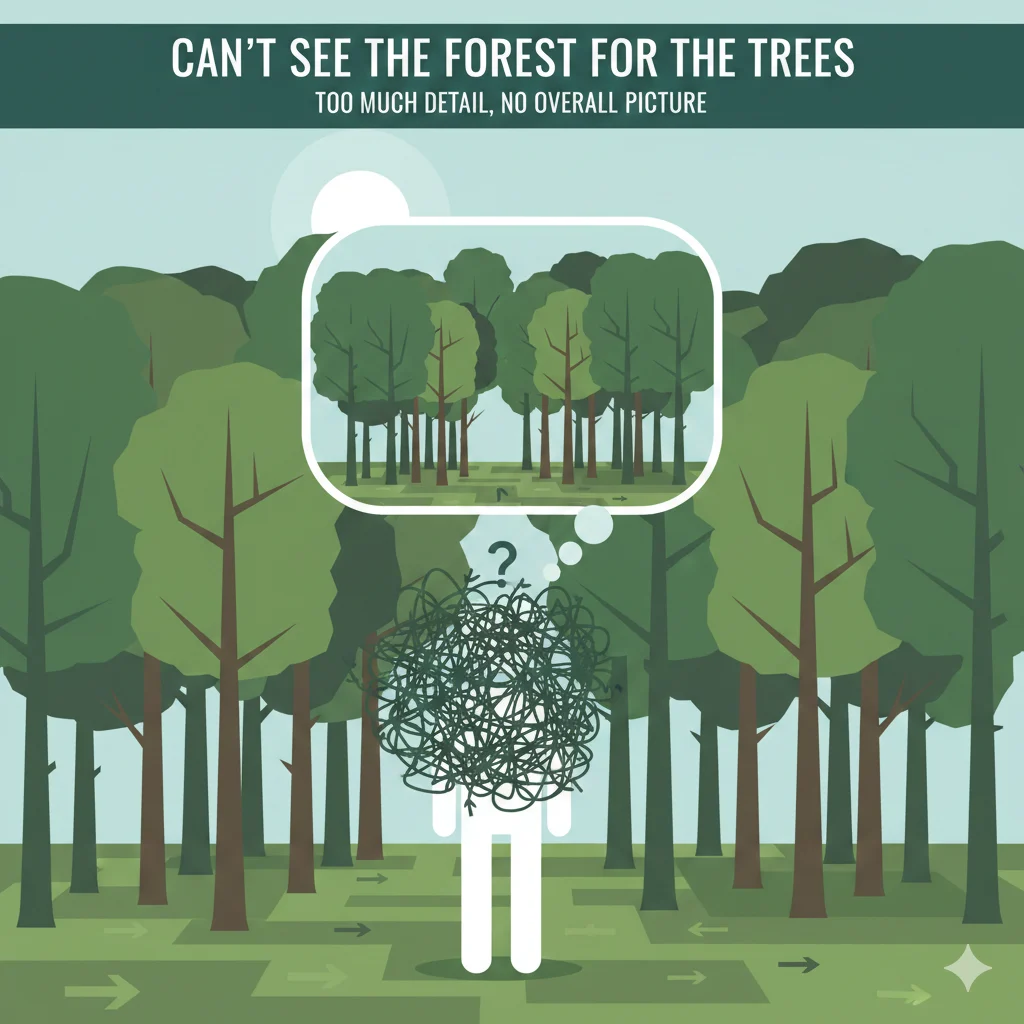
🌲 Can’t see the forest for the trees
Word-by-word meaning
Unable to see the forest because of trees
Idiomatic / figurative meaning
Focusing too much on small details and missing the big picture
Example sentences
- He’s so worried about grammar that he can’t see the forest for the trees.
Common error
Using it for physical vision problems
Usage note
Common in work, study, and problem-solving contexts.
🌲 The apple doesn’t fall far from the tree
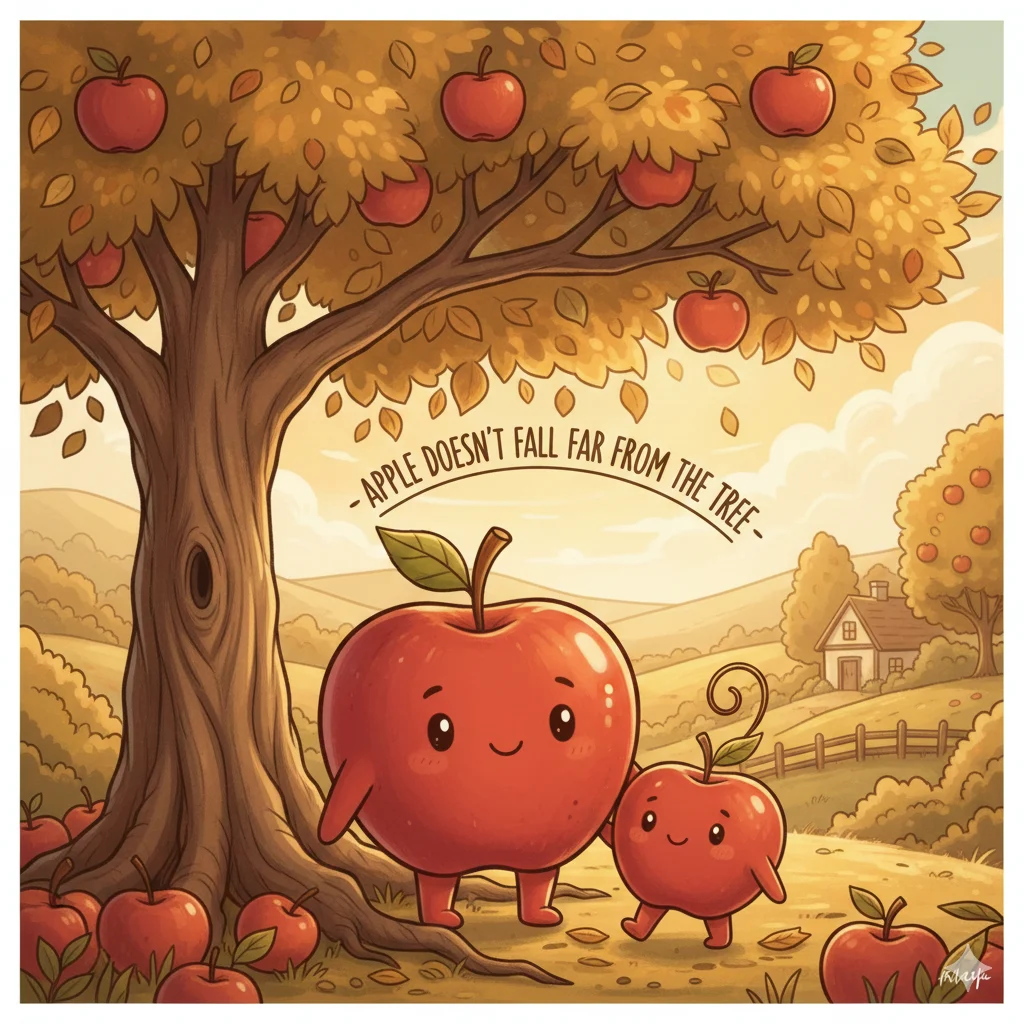
Word-by-word meaning
An apple stays near its tree
Idiomatic / figurative meaning
Children are often similar to their parents
Example sentences
- She’s great at music— the apple doesn’t fall far from the tree.
Common error
❌ Apple doesn’t fall far of the tree
Usage note
Often used when talking about family traits.
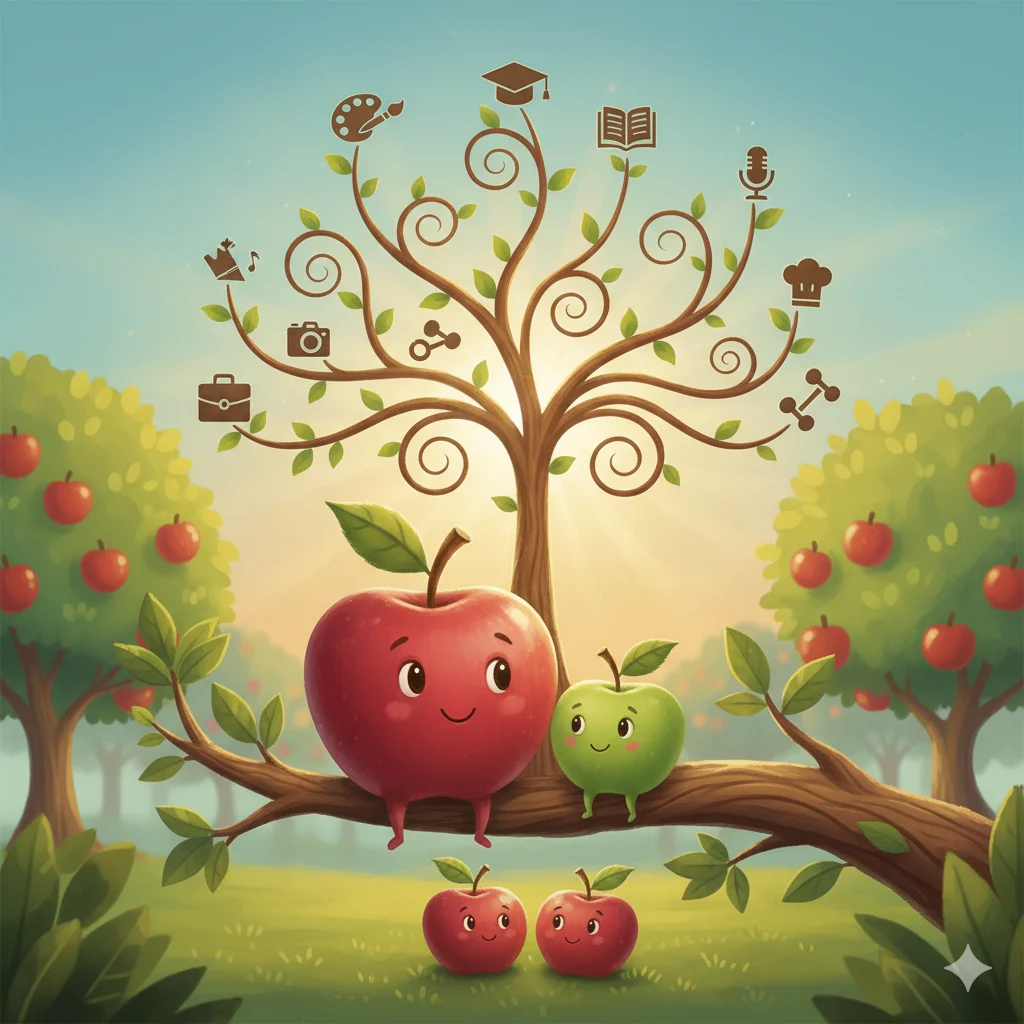
🌲 Branch out
Word-by-word meaning
Grow new branches
Idiomatic / figurative meaning
To try new activities or ideas
Example sentences
- The company decided to branch out into online courses.
Common error
Confusing it with “break out”
Usage note
Positive tone, related to growth.
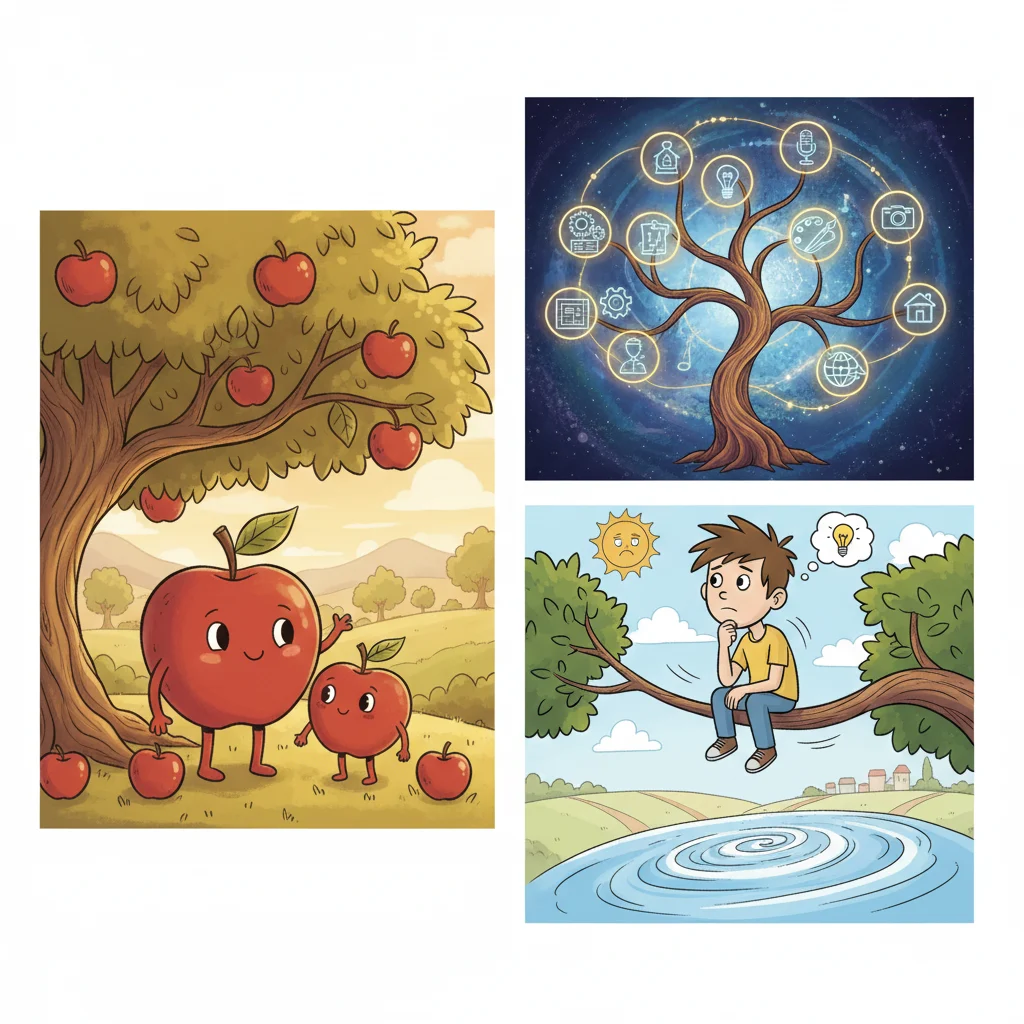
🌲 Out on a limb
Word-by-word meaning
Standing on a weak branch
Idiomatic / figurative meaning
Taking a risk or expressing a risky opinion
Example sentences
- I’m going out on a limb, but I think he’ll win.
Common error
❌ On the limb
Usage note
Often used with opinions or predictions.
🌲 Root of the problem
Word-by-word meaning
The root of a tree
Idiomatic meaning
The main cause of an issue
Example
- Stress is the root of the problem.
Common error
Using it for minor causes
Usage note
Helpful in explanations and analysis.
🌲 Put down roots
Meaning
To settle permanently
Example
- They put down roots in a small town.
Usage note
Often about home or community.
🌲 8. Shake like a leaf
Word-by-word meaning
Leaf ki tarah hilna
Idiomatic / figurative meaning
Dar, ghabrahat, ya thand ki wajah se zyada kaanpna
Example sentences
- He was shaking like a leaf before giving his speech.
- She shook like a leaf when she heard the loud noise.
Common error
❌ Shake like leaves
✅ Shake like a leaf
Usage note
Fear, nervousness, ya cold situations mein use hota hai.
🌲 Money doesn’t grow on trees
Word-by-word meaning
Paise darakhton par nahi ugte
Idiomatic / figurative meaning
Paise limited hote hain; asaani se nahi milte
Example sentences
- Stop wasting money—money doesn’t grow on trees.
- My parents always said money doesn’t grow on trees.
Common error
Using it for literal money discussion
Usage note
Advice ya warning dene ke liye common phrase.
🌲 Turn over a new leaf
Word-by-word meaning
Naya patta palatna
Idiomatic / figurative meaning
Nayi shuruaat karna, apna behavior sudharna
Example sentences
- He turned over a new leaf after failing the exam.
- She promised to turn over a new leaf this year.
Common error
❌ Turn a new leaf
✅ Turn over a new leaf
Usage note
Self-improvement aur change ke liye use hota hai.
🌲 Tall trees catch the wind
Word-by-word meaning
Lambay darakht hawa pakarte hain
Idiomatic / figurative meaning
Zyada successful log zyada criticism face karte hain
Example sentences
- Famous people know that tall trees catch the wind.
- Leaders are criticized because tall trees catch the wind.
Common error
Using it for physical trees only
Usage note
Success aur jealousy ke context mein use hota hai.
🌲 Dead wood
Word-by-word meaning
Mara hua lakri
Idiomatic / figurative meaning
Be-kaar log ya cheezen jo progress rok rahi hon
Example sentences
- The company removed dead wood from the team.
- We need to clear the dead wood to move forward.
Common error
Using it for people directly in formal settings
Usage note
Informal aur thoda harsh expression hai.
🌲 Family tree
Word-by-word meaning
Khandani darakht
Idiomatic / figurative meaning
Family ka history record (ancestors)
Example sentences
- She created her family tree for a school project.
- Our family tree goes back 200 years.
Common error
Confusing with idiom (ye semi-literal hai)
Usage note
Education aur history context mein common.
🌲 Tree hugger
Word-by-word meaning
Darakht ko galay lagane wala
Idiomatic / figurative meaning
Environment ko protect karne wala person
Example sentences
- He’s a tree hugger who loves nature.
- She proudly calls herself a tree hugger.
Common error
Assuming it’s always an insult
Usage note
Funny ya informal tone mein use hota hai.
🌲 Bear fruit
Word-by-word meaning
Phal lana
Idiomatic / figurative meaning
Mehnat ka result milna
Example sentences
- Her hard work finally bore fruit.
- The plan will bear fruit soon.
Common error
❌ Bring fruit
✅ Bear fruit
Usage note
Success aur patience ke liye strong idiom.
🌲 As old as the hills
Word-by-word meaning
Paharon jitna purana
Idiomatic / figurative meaning
Bohat zyada purana
Example sentences
- That tradition is as old as the hills.
- This joke is as old as the hills.
Common error
Using it for people’s exact age
Usage note
Informal exaggeration ke liye use hota hai.
🌲 Cut down in one’s prime
Word-by-word meaning
Jawani mein kaat diya jana
Idiomatic / figurative meaning
Career ya life ka achanak end ho jana
Example sentences
- The athlete was cut down in his prime.
- His career was cut down in its prime.
Common error
Using casually (ye serious idiom hai)
Usage note
Serious aur emotional contexts mein.
🌲 A thorn in my side
Word-by-word meaning
Side mein kaanta
Idiomatic / figurative meaning
Hamesha pareshan karne wali cheez ya person
Example sentences
- This bug in the app is a thorn in my side.
- He has been a thorn in my side for years.
Common error
❌ Thorn on my side
✅ Thorn in my side
Usage note
Irritation express karne ke liye useful.
🌲 Leaf through
Word-by-word meaning
Patton ko palatna
Idiomatic / figurative meaning
Kisi cheez ko jaldi jaldi dekhna
Example sentences
- I leafed through the magazine.
- She leafed through her notes before class.
Common error
❌ Leaf over
✅ Leaf through
Usage note
Books, magazines, notes ke liye common.
🌲 Put down roots
Word-by-word meaning
Jarrain jamana
Idiomatic / figurative meaning
Kahin permanently settle ho jana
Example sentences
- They put down roots in Canada.
- After years of travel, she put down roots.
Common error
Using it for short visits
Usage note
Home, family, aur long-term living ke liye use hota hai.
❓ FAQs About Idioms About Trees
1. Why are idioms about trees so common?
Because trees symbolize life, growth, and nature in many cultures.
2. Are tree idioms formal or informal?
Most are informal but acceptable in spoken and written English.
3. Can I use these idioms in exams?
Yes, but only when they fit naturally.
4. How can I remember idioms easily?
Visualize the tree image and use the idiom in a sentence.
🌱 Final Thoughts
Learning idioms about trees is like planting seeds for better communication. Start by using one or two idioms a day in conversation or writing. Over time, your English will grow stronger, more natural, and more confident—just like a well-rooted tree. 🌳 Keep practicing!

“Elizabeth Bowen shares timeless idioms and language wisdom on LearnIdom.com, making learning phrases fun, easy, and unforgettable.”