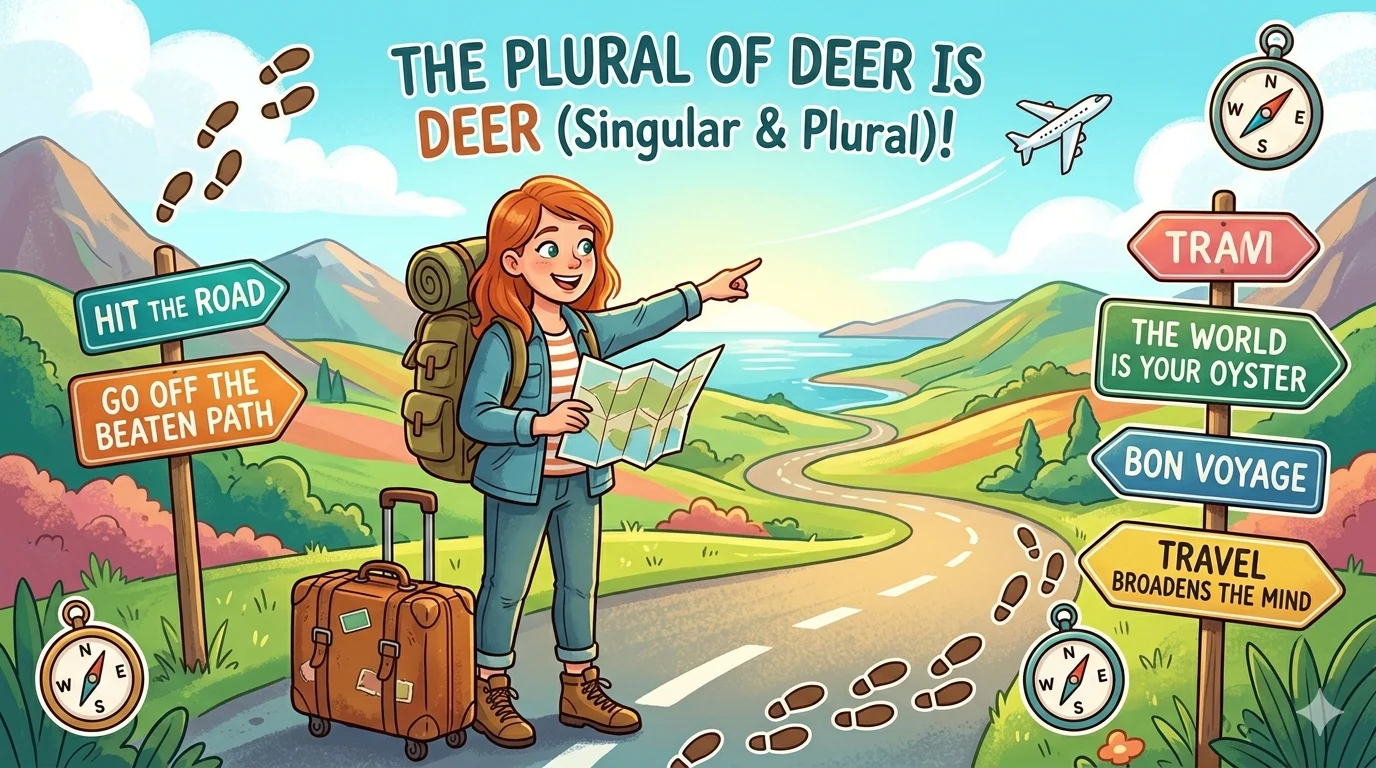
Traveling is more than just visiting new places—it’s about the experiences, stories, and memories we collect along the way. To make your travel tales lively and fun, English offers a treasure trove of idioms about traveling.
Imagine telling your friends you’re “hitting the road” for a weekend adventure, or that your vacation was “off the beaten track”—these expressions instantly paint vivid pictures and add personality to your speech. Whether you’re planning a backpacking trip, exploring hidden gems, or simply sharing stories of past journeys, knowing these idioms will make you sound more natural and expressive.
In this guide, we’ll explore famous travel-related idioms with meanings, examples, common errors, and usage notes so that you can confidently add them to your travel vocabulary and impress your friends while sharing your adventures.
Hit the Road
Word-by-word Meaning
“Hit” = start or strike, “the road” = the journey.
Idiomatic/Figurative Meaning
To begin a journey or leave a place.
Example Sentences
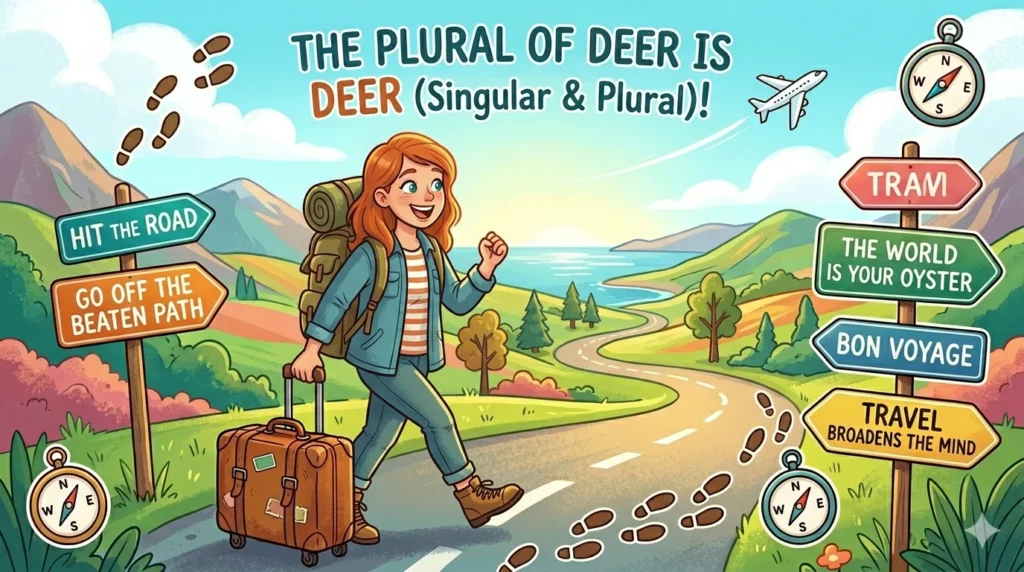
- “It’s getting late; we should hit the road.”
- “After breakfast, they hit the road toward the mountains.”
Common Error
Incorrect: “We hit the roads.” (Plural form is usually unnecessary)
Usage Note
Informal, often used in spoken English or casual travel stories.
Off the Beaten Track
Word-by-word Meaning
“Off” = away, “beaten track” = popular path.
Idiomatic/Figurative Meaning
A place not commonly visited; unusual or hidden.
Example Sentences
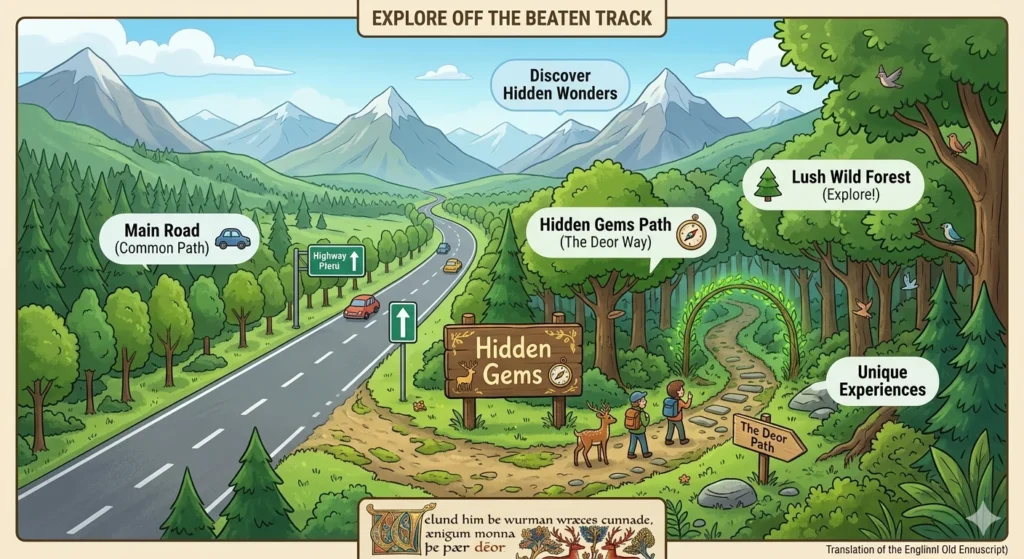
- “We found a cozy café off the beaten track in Paris.”
- “She loves traveling off the beaten track to discover hidden gems.”
Common Error
Avoid using “off the beaten path” interchangeably in British English; “track” is preferred.
Usage Note
Perfect for blogs and storytelling, conveys uniqueness.
Travel Light
Word-by-word Meaning
“Travel” = move from one place to another, “light” = not heavy.
Idiomatic/Figurative Meaning
To pack minimally when traveling.
Example Sentences
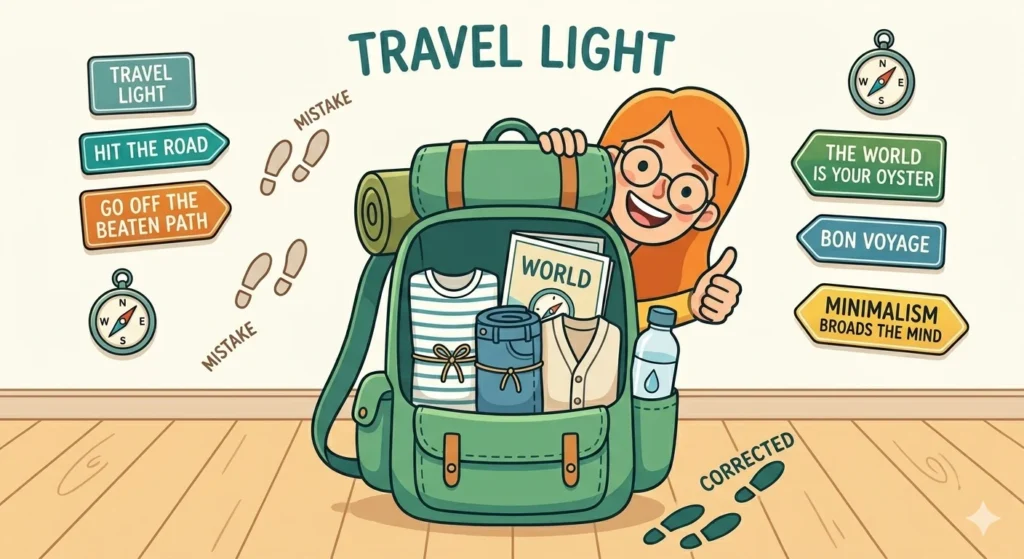
- “I always travel light to avoid extra baggage fees.”
- “Backpacking trips are easier if you travel light.”
Common Error
Incorrect: “Travel lightly” (less common; “travel light” is standard).
Usage Note
Useful for tips or adventure narratives.
On the Road Again
Word-by-word Meaning
“On” = in a state of, “the road” = journey, “again” = once more.
Idiomatic/Figurative Meaning
To start traveling again after a break.
Example Sentences
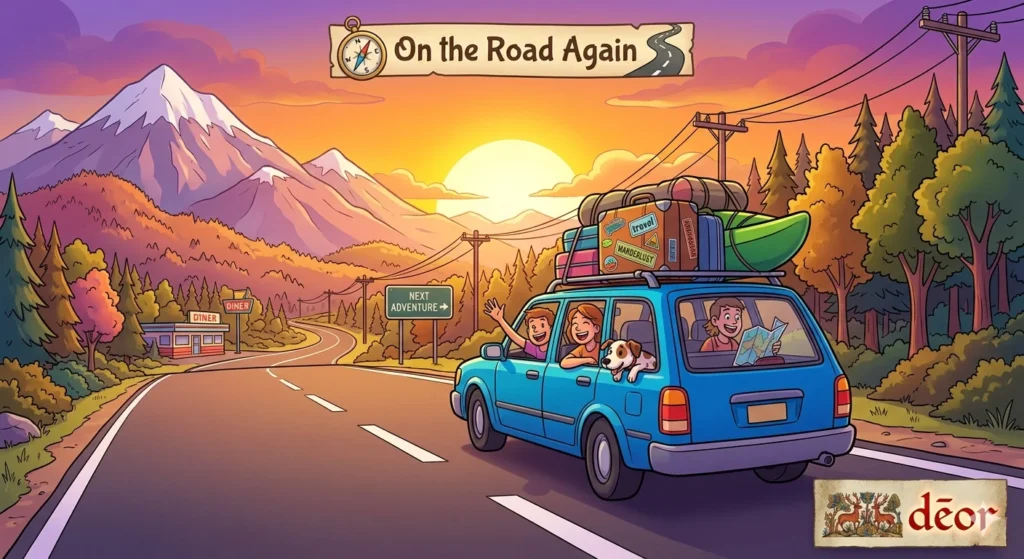
- “After a week at home, they are on the road again.”
- “I love being on the road again, exploring new cities.”
Common Error
Avoid using in formal writing—it’s casual.
Usage Note
Used in songs, travel stories, and casual conversations.
Make Tracks
Word-by-word Meaning
“Make” = initiate, “tracks” = footprints or marks.
Idiomatic/Figurative Meaning
To leave a place quickly or start moving.
Example Sentences
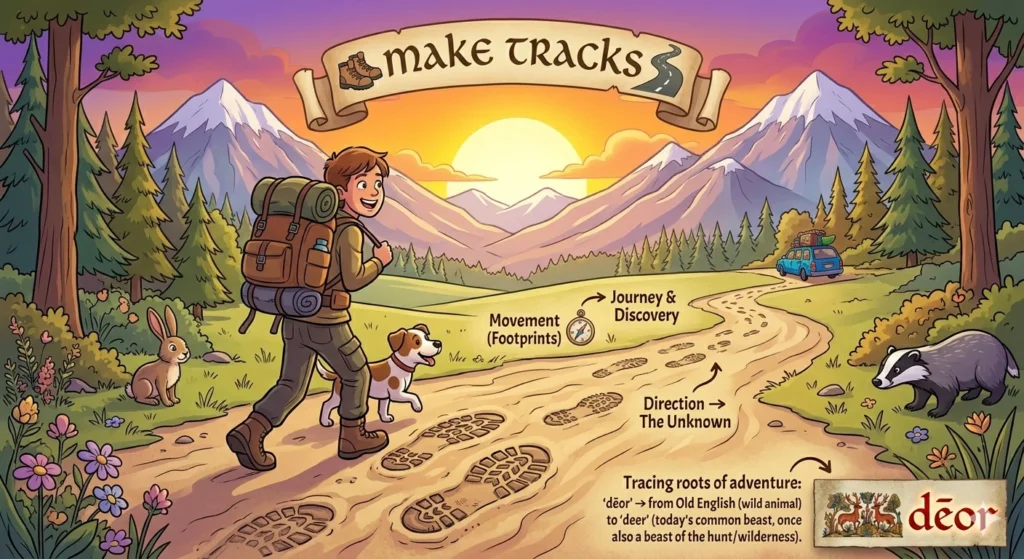
- “It’s getting dark; we should make tracks before the storm.”
- “After lunch, we made tracks toward the coast.”
Common Error
Do not confuse with “track someone,” which means following.
Usage Note
Great for adventure or travel narratives.
Catch the Travel Bug
Word-by-word Meaning
“Catch” = get, “travel bug” = desire to travel.
Idiomatic/Figurative Meaning
To develop a strong passion for traveling.
Example Sentences
- “She caught the travel bug after her first trip to Thailand.”
- “Once you catch the travel bug, you never stop exploring.”
Common Error
Incorrect: “Catch travel bug” (needs “the”).
Usage Note
Used in casual conversation or blogs about travel passion.
Go the Extra Mile
Word-by-word Meaning
“Go” = move, “extra mile” = additional distance.
Idiomatic/Figurative Meaning
To make extra effort or go beyond expectations.
Example Sentences
- “The tour guide really went the extra mile to make our trip memorable.”
- “Always go the extra mile when exploring a new city.”
Common Error
Do not confuse with literal distance; it’s figurative.
Usage Note
Useful in motivational travel stories or recommendations.
At a Stone’s Throw
Word-by-word Meaning
“Stone’s throw” = very short distance.
Idiomatic/Figurative Meaning
Something very close or nearby.
Example Sentences
- “The hotel is at a stone’s throw from the beach.”
- “There’s a café at a stone’s throw from the train station.”
Common Error
Avoid using “stone throw” without possessive ‘s.
Usage Note
Common in descriptive travel writing.
Come Hell or High Water
Word-by-word Meaning
“Hell” = difficulties, “high water” = obstacles.
Idiomatic/Figurative Meaning
No matter what happens; despite difficulties.
Example Sentences
- “We’ll finish the hike come hell or high water.”
- “She’ll travel to Paris come hell or high water.”
Common Error
Avoid literal interpretation; it’s metaphorical.
Usage Note
Adds drama and determination to stories.
In the Same Boat
Word-by-word Meaning
“Same boat” = same situation or condition.
Idiomatic/Figurative Meaning
Facing the same problem as others.
Example Sentences
- “Travelers in the same boat waited for hours at the airport.”
- “We’re in the same boat with limited luggage space.”
Common Error
Don’t use literally; it’s figurative.
Usage Note
Great for shared travel experiences.
Jump on the Bandwagon
Word-by-word Meaning
“Jump” = join, “bandwagon” = popular trend.
Idiomatic/Figurative Meaning
To join a popular activity or trend.
Example Sentences
- “Everyone’s jumping on the travel bandwagon to Japan.”
- “He jumped on the bandwagon and booked the new cruise trip.”
Common Error
Do not confuse with literal jumping.
Usage Note
Good for trends in travel experiences.
Take the Scenic Route
Word-by-word Meaning
“Scenic” = visually attractive, “route” = path.
Idiomatic/Figurative Meaning
To choose a longer, more beautiful path.
Example Sentences
- “We decided to take the scenic route along the coast.”
- “Always take the scenic route for better photos.”
Common Error
Avoid using in non-travel contexts literally.
Usage Note
Adds descriptive flair to storytelling.
Pack Up and Leave
Word-by-word Meaning
“Pack up” = gather belongings, “leave” = depart.
Idiomatic/Figurative Meaning
To get ready and depart immediately.
Example Sentences
- “The storm is coming; we need to pack up and leave.”
- “They packed up and left before sunrise.”
Common Error
Do not separate the phrase; it works best together.
Usage Note
Used in urgent or casual travel contexts.
Roam Around
Word-by-word Meaning
“Roam” = wander, “around” = in the area.
Idiomatic/Figurative Meaning
To explore freely without a fixed plan.
Example Sentences
- “We spent the afternoon roaming around the old town.”
- “She loves roaming around new cities without a map.”
Common Error
Avoid using “roam about” in casual American English; “roam around” is preferred.
Usage Note
Perfect for free-spirited travel narratives.
Wanderlust
Word-by-word Meaning
“Wander” = travel, “lust” = strong desire.
Idiomatic/Figurative Meaning
A strong desire or passion for traveling.
Example Sentences
- “He has a serious case of wanderlust and travels every year.”
- “Wanderlust drove her to explore 15 countries last year.”
Common Error
Do not use literally as lust; it’s metaphorical.
Usage Note
Great for personal stories or motivational travel posts.
Hit the Skids
Word-by-word Meaning
“Skids” = sliding or failing.
Idiomatic/Figurative Meaning
To face difficulties or decline suddenly.
Example Sentences
- “Our travel plans hit the skids because of flight cancellations.”
- “The road trip hit the skids after the car broke down.”
Common Error
Avoid using literally; it’s figurative.
Usage Note
Use to describe unexpected problems.
Travel on a Shoestring
Word-by-word Meaning
“Shoestring” = small amount of money.
Idiomatic/Figurative Meaning
Travel cheaply, with minimal budget.
Example Sentences
- “We traveled on a shoestring through Europe.”
- “Students often travel on a shoestring during summer vacations.”
Common Error
Do not use literally; it’s figurative.
Usage Note
Perfect for budget travel advice.
Call it a Day
Word-by-word Meaning
“Call” = decide, “day” = current activity period.
Idiomatic/Figurative Meaning
To stop working or end an activity.
Example Sentences
- “After hiking for 8 hours, we decided to call it a day.”
- “The tour guide called it a day due to bad weather.”
Common Error
Avoid literal interpretation; it’s figurative.
Usage Note
Useful in travel diaries or casual storytelling.
Around the World in 80 Days
Word-by-word Meaning
Title of the novel, implies traveling globally.
Idiomatic/Figurative Meaning
To travel extensively in a short time.
Example Sentences
- “Their backpacking trip felt like around the world in 80 days.”
- “He’s always planning adventures like around the world in 80 days.”
Common Error
Use metaphorically, not literally for book titles.
Usage Note
Fun reference for adventurous travel stories.
Footloose and Fancy-Free
Word-by-word Meaning
“Footloose” = free to move, “fancy-free” = without obligations.
Idiomatic/Figurative Meaning
Free to travel or live without restrictions.
Example Sentences
- “Now that she’s graduated, she’s footloose and fancy-free to explore the world.”
- “They traveled footloose and fancy-free across Europe.”
Common Error
Avoid using literally; it describes freedom, not actual feet.
Usage Note
Great for storytelling about carefree travel.
FAQs About Traveling Idioms
Q1: Are these idioms suitable for everyday conversation?
Yes, especially informal travel storytelling or casual chats.
Q2: Can I mix multiple idioms in one story?
Yes, but keep it clear—too many can confuse readers.
Q3: How can I practice them naturally?
Use them in journals, blogs, or narrate your trips using 2–3 idioms per paragraph.
Q4: Do British and American English use these the same way?
Most are similar; some have slight variations like “off the beaten track” (UK) vs “path” (US).
Conclusion
Learning these idioms about traveling adds color and personality to your stories. Use them in your journals, blogs, or conversations to make your adventures memorable. Start small—pick one or two idioms per trip—and soon you’ll feel confident sharing vivid, expressive travel tales. Keep exploring, keep learning, and let these idioms travel with you on every journey!
“Wilkie Collins brings classic idioms to life on LearnIdom.com, making language learning engaging, memorable, and full of literary charm.”