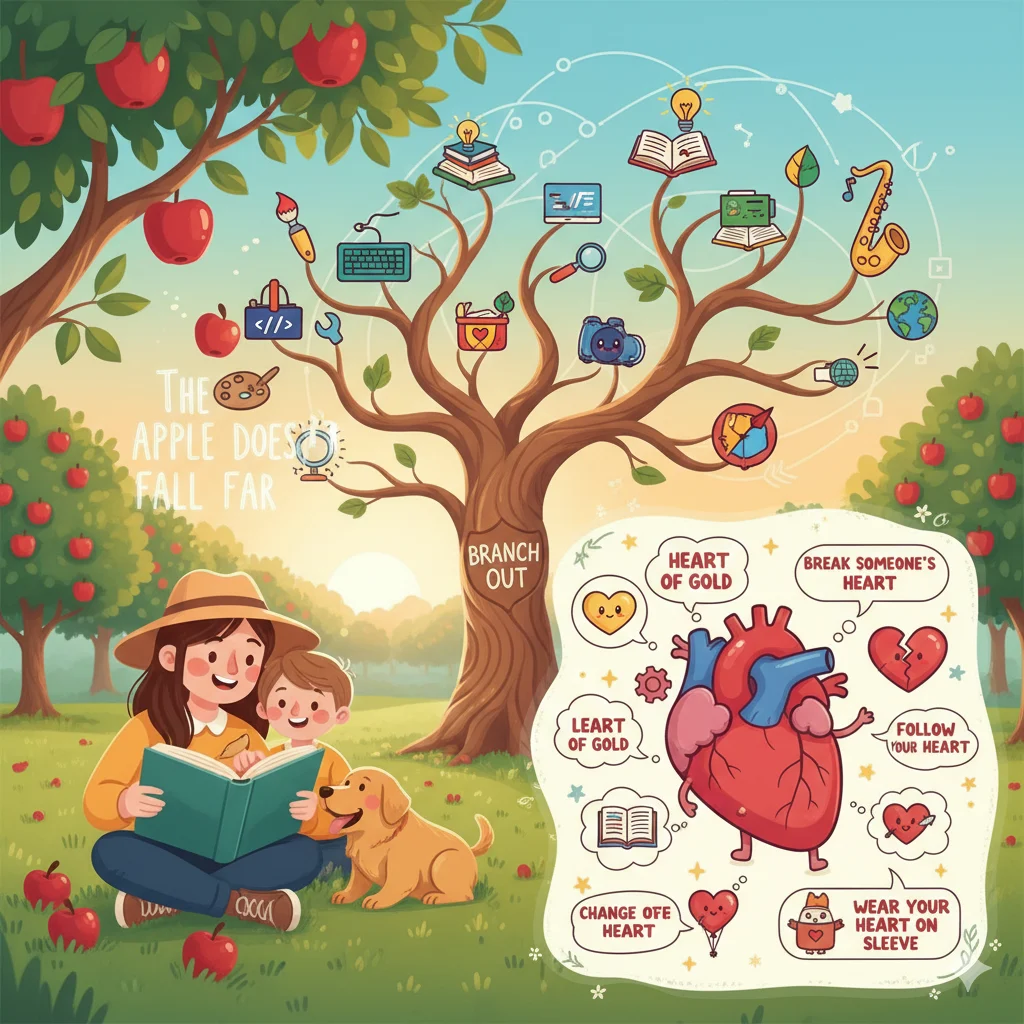
The heart isn’t just a vital organ—it’s a symbol of emotions, courage, love, and even vulnerability. English is full of idioms about the heart, which are used in everyday speech to express feelings, decisions, and reactions in a colorful way.
For example, when someone says, “Follow your heart,” they’re encouraging you to trust your feelings rather than overthinking. Or, if someone has a “heart of stone,” it means they may be cold or unfeeling.
Understanding idioms about the heart not only makes your English sound more natural but also helps you connect with others on an emotional level. In this article, we’ll explore 20 famous idioms about the heart, their meanings, examples, and common mistakes, so you can use them confidently.
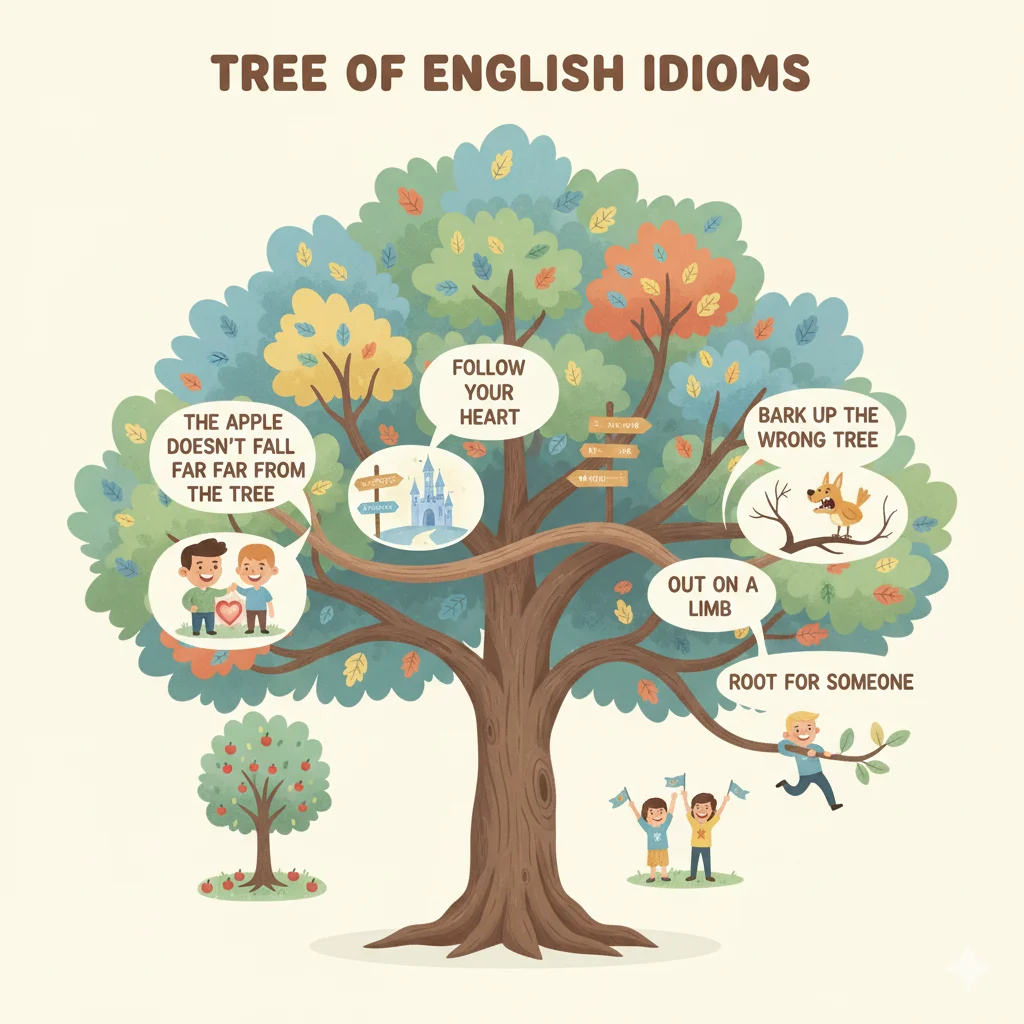
Follow Your Heart
Word-by-Word Meaning
Follow = go after, Heart = feelings or desires
Idiomatic/Figurative Meaning
To trust your emotions or intuition when making a decision.
Example Sentences
- She decided to follow her heart and move to Italy.
- Sometimes you have to follow your heart instead of logic.
Common Error
Saying “Follow your mind” instead of “Follow your heart” when emphasizing emotions.
Usage Note
Often used in advice, motivational speech, or personal decisions.
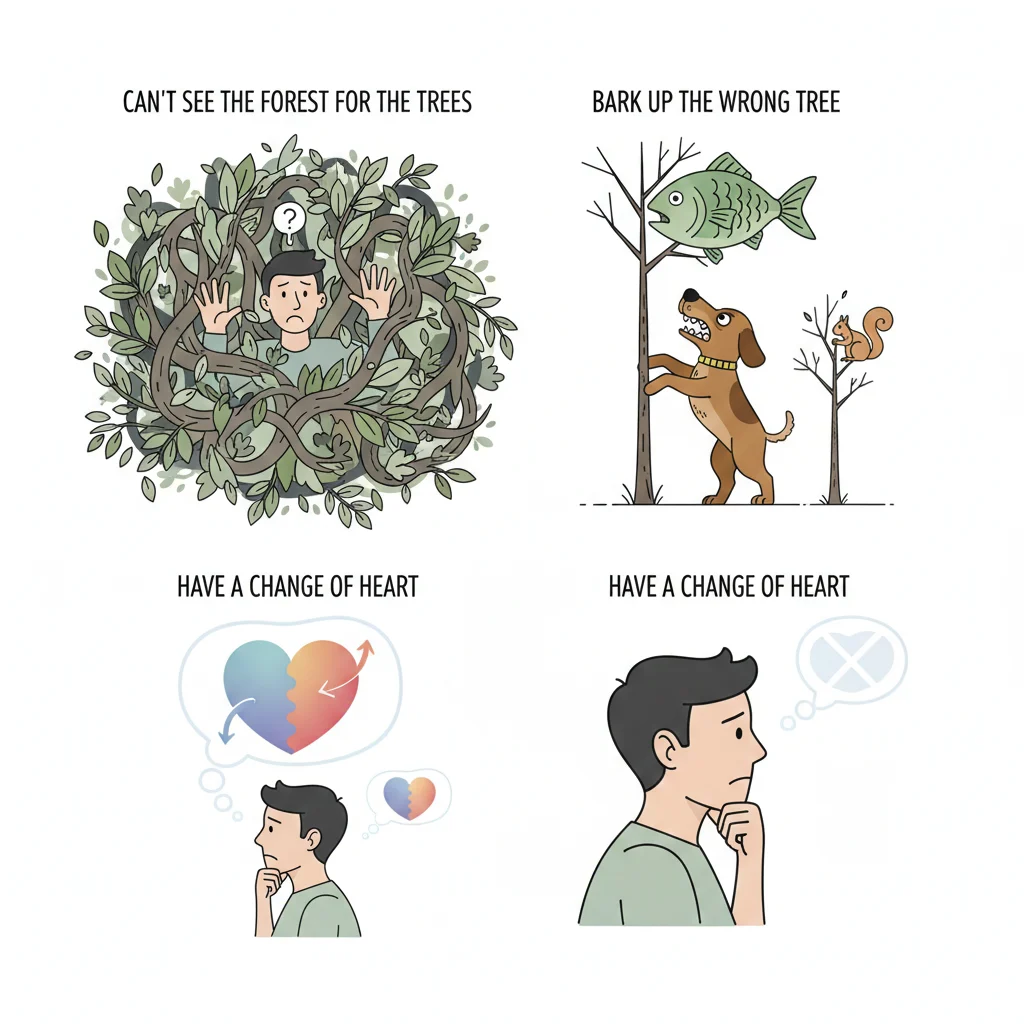
Have a Change of Heart
Word-by-Word Meaning
Change = shift, Heart = feelings or attitude
Idiomatic/Figurative Meaning
To change your opinion or attitude about something.
Example Sentences
- I was going to quit, but I had a change of heart.
- He had a change of heart and apologized.
Common Error
Confusing with “change your mind” (slightly less emotional than heart idioms).
Usage Note
Used when emotions or personal feelings influence a change in decision.
Cross My Heart
Word-by-Word Meaning
Cross = make a sign, Heart = feelings or honesty
Idiomatic/Figurative Meaning
A promise or assurance that you are telling the truth.
Example Sentences
- I’ll be there on time, cross my heart!
- Cross my heart, I didn’t take your book.

Common Error
Using it in formal writing; it’s informal and mostly spoken.
Usage Note
Mostly used in casual promises, especially with children or friends.
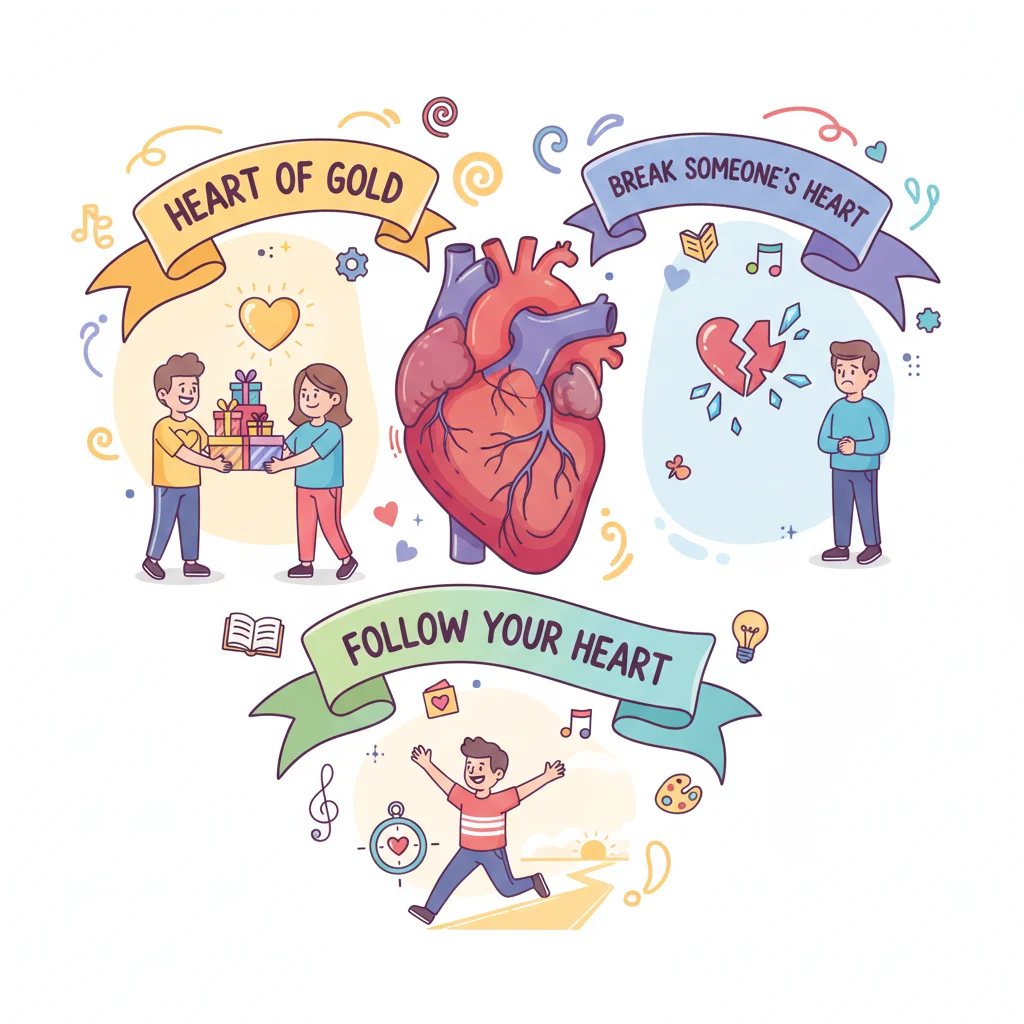
Heart of Gold
Word-by-Word Meaning
Heart = core of a person, Gold = precious or valuable
Idiomatic/Figurative Meaning
A very kind and generous person.
Example Sentences
- She volunteers every weekend; she has a heart of gold.
- Even though he seems strict, he has a heart of gold.
Common Error
Calling someone “gold-hearted” (less common, sounds awkward).
Usage Note
Can be used in both formal and informal contexts.
Break Someone’s Heart
Word-by-Word Meaning
Break = destroy, Heart = emotions or feelings
Idiomatic/Figurative Meaning
To deeply hurt someone emotionally, often in love.
Example Sentences
- She broke his heart when she moved away.
- Don’t break her heart over small misunderstandings.

Common Error
Saying “hurt someone’s heart” (less idiomatic in English).
Usage Note
Usually used in romantic contexts but can also apply to strong emotional disappointment.
Learn to Live with a Heavy Heart
Word-by-Word Meaning
Heavy = weighted, Heart = feelings
Idiomatic/Figurative Meaning
To cope with sadness or grief.
Example Sentences
- He lived with a heavy heart after losing his pet.
- We all have to live with a heavy heart sometimes.
Common Error
Confusing with “sad heart” (less expressive than the idiom).
Usage Note
Mostly literary or reflective speech.
Wear Your Heart on Your Sleeve
Word-by-Word Meaning
Wear = show, Heart = emotions, Sleeve = outward display
Idiomatic/Figurative Meaning
To openly show your feelings.
Example Sentences
- She wears her heart on her sleeve and shows how she feels.
- Not everyone can wear their heart on their sleeve like that.
Common Error
Saying “show your heart” (not idiomatic).
Usage Note
Used to describe emotional transparency, often in personality descriptions.
Eat Your Heart Out
Word-by-Word Meaning
Eat = consume, Heart = emotions or envy
Idiomatic/Figurative Meaning
To feel intense jealousy or envy.
Example Sentences
- Eat your heart out, John, I just won the lottery!
- She’s eating her heart out because she wasn’t invited.
Common Error
Using literally (confusing metaphorical vs. literal).
Usage Note
Mostly informal, humorous, or dramatic expressions.
Have a Heart
Word-by-Word Meaning
Have = show, Heart = kindness
Idiomatic/Figurative Meaning
To be compassionate or kind.
Example Sentences
- Have a heart and help her with the project.
- Come on, have a heart! She’s struggling.
Common Error
Saying “show your heart” (less idiomatic).
Usage Note
Common in requests or persuasion.
Change of Heart
Word-by-Word Meaning
Change = shift, Heart = feelings or attitude
Idiomatic/Figurative Meaning
To change your mind because of feelings or emotions.
Example Sentences
- I was about to refuse, but I had a change of heart.
- She had a change of heart after hearing his story.
Common Error
Confusing with “change your mind” (less emotional).
Usage Note
Emphasizes emotional reasons behind a decision.
Open Heart
Word-by-Word Meaning
Open = not closed, Heart = emotions or feelings
Idiomatic/Figurative Meaning
Being honest, sincere, and emotionally transparent.
Example Sentences
- She spoke with an open heart about her struggles.
- An open heart leads to stronger relationships.
Common Error
Saying “heart open” (incorrect word order).
Usage Note
Often used in personal conversations, counseling, or reflections.
Cold-Hearted
Word-by-Word Meaning
Cold = lacking warmth, Hearted = in one’s feelings
Idiomatic/Figurative Meaning
Being unfeeling, cruel, or emotionally distant.
Example Sentences
- That villain is cold-hearted and doesn’t care about others.
- Don’t be cold-hearted; help those in need.
Common Error
Using “heartless” interchangeably without nuance—“cold-hearted” implies emotional detachment more than moral failing.
Usage Note
Used in descriptions of personality or behavior.
Heavy Heart
Word-by-Word Meaning
Heavy = weighted down, Heart = emotions
Idiomatic/Figurative Meaning
Feeling sorrow, grief, or deep sadness.
Example Sentences
- She left her hometown with a heavy heart.
- He carried a heavy heart after hearing the bad news.
Common Error
Confusing with “sad heart” (less expressive).
Usage Note
Often used in literary writing, reflections, or storytelling.
Young at Heart
Word-by-Word Meaning
Young = youthful, Heart = core personality
Idiomatic/Figurative Meaning
Feeling or acting youthful regardless of actual age.
Example Sentences
- My grandmother is 75 but young at heart.
- He may be older, but he’s young at heart and full of energy.
Common Error
Saying “heart young” (incorrect word order).
Usage Note
Used to describe personality and attitude rather than physical age.
Heart and Soul
Word-by-Word Meaning
Heart = emotion, Soul = inner being
Idiomatic/Figurative Meaning
Putting full effort, dedication, or passion into something.
Example Sentences
- She put her heart and soul into writing the book.
- They built the community center with heart and soul.
Common Error
Saying “heart to soul” (incorrect idiom).
Usage Note
Used to emphasize wholehearted dedication or effort.
Heart-to-Heart
Word-by-Word Meaning
Heart = emotions, To = connection, Heart = emotions
Idiomatic/Figurative Meaning
An honest, intimate conversation about feelings.
Example Sentences
- We had a heart-to-heart about our friendship.
- A heart-to-heart can resolve many misunderstandings.
Common Error
Confusing with “talk heart” (not idiomatic).
Usage Note
Common in personal and relationship contexts.
Change Your Heart
Word-by-Word Meaning
Change = shift, Heart = feelings
Idiomatic/Figurative Meaning
To alter one’s emotions, opinion, or attitude.
Example Sentences
- He changed his heart about moving abroad.
- Sometimes people change their heart after getting new information.
Common Error
Saying “change mind” (correct, but less emotional than “change your heart”).
Usage Note
Used when emotions drive the change rather than logic.
Take Heart
Word-by-Word Meaning
Take = receive, Heart = courage or hope
Idiomatic/Figurative Meaning
To feel encouraged or hopeful.
Example Sentences
- Take heart; things will get better soon.
- She took heart after hearing the positive news.
Common Error
Saying “have heart” (incorrect in this idiomatic context).
Usage Note
Used in motivational or encouraging speech.
Heart in Your Mouth
Word-by-Word Meaning
Heart = emotions, Mouth = expression
Idiomatic/Figurative Meaning
Feeling extremely nervous, scared, or anxious.
Example Sentences
- My heart was in my mouth during the exam.
- He had his heart in his mouth when the car skidded.
Common Error
Confusing with “heart pounding” (similar, but not idiomatic).
Usage Note
Often used in storytelling or casual conversation about suspense.
Pour Your Heart Out
Word-by-Word Meaning
Pour = release, Heart = emotions, Out = external expression
Idiomatic/Figurative Meaning
To express feelings freely and openly, often about sorrow or love.
Example Sentences
- She poured her heart out to her best friend.
- Sometimes, you just need to pour your heart out to feel better.
Common Error
Saying “show heart out” (incorrect).
Usage Note
Mostly used in personal conversations or emotional expressions.
FAQs About Idioms About the Heart
Q1: Are heart idioms only used in romantic contexts?
No, many heart idioms express courage, kindness, honesty, or emotional states beyond romance.
Q2: Can I use these idioms in formal writing?
Some idioms, like “heart of gold,” are acceptable; others, like “eat your heart out,” are informal.
Q3: How can I remember these idioms?
Create personal examples or associate them with real-life situations—it helps retention.
Q4: Do idioms about the heart have the same meaning in all English-speaking countries?
Mostly yes, though expressions may be more common in British or American English.
Q5: How often should I use idioms in conversation?
Moderation is key; use them naturally to enhance expression, not overload sentences.
Conclusion
Idioms about the heart bring color, emotion, and depth to English. Whether you want to express love, courage, sorrow, or kindness, these idioms help your speech sound natural and heartfelt. Practice by creating your own sentences, using them in conversations, and paying attention when native speakers use them. Soon, you’ll find your language more expressive and emotionally connected.

“L.P. Hartley brings classic idioms to life on LearnIdom.com, helping readers explore language with wit, clarity, and timeless insight.”