Patience is something we all struggle with—whether it’s waiting for exam results, career growth, or slow internet at midnight. English reflects this everyday experience through rich expressions that make speech sound natural and fluent. Idioms about patience help you express calmness, endurance, and self-control in a vivid, memorable way.
Imagine telling a friend you’re “biting your tongue” during an argument or reminding yourself that “Rome wasn’t built in a day” while learning a new skill. These expressions instantly connect language with real life.
In this article, you’ll explore 20 of the most famous idioms about patience, broken down clearly for learners. Each idiom includes word-by-word meaning, figurative meaning, examples, common mistakes, and usage notes—so you don’t just memorize them, you use them confidently. Let’s build patience into your English, one idiom at a time.
Bite Your Tongue
Word-by-word meaning: Hold your tongue with your teeth
Idiomatic meaning: Stop yourself from speaking
Example: I bit my tongue during the meeting to avoid an argument.
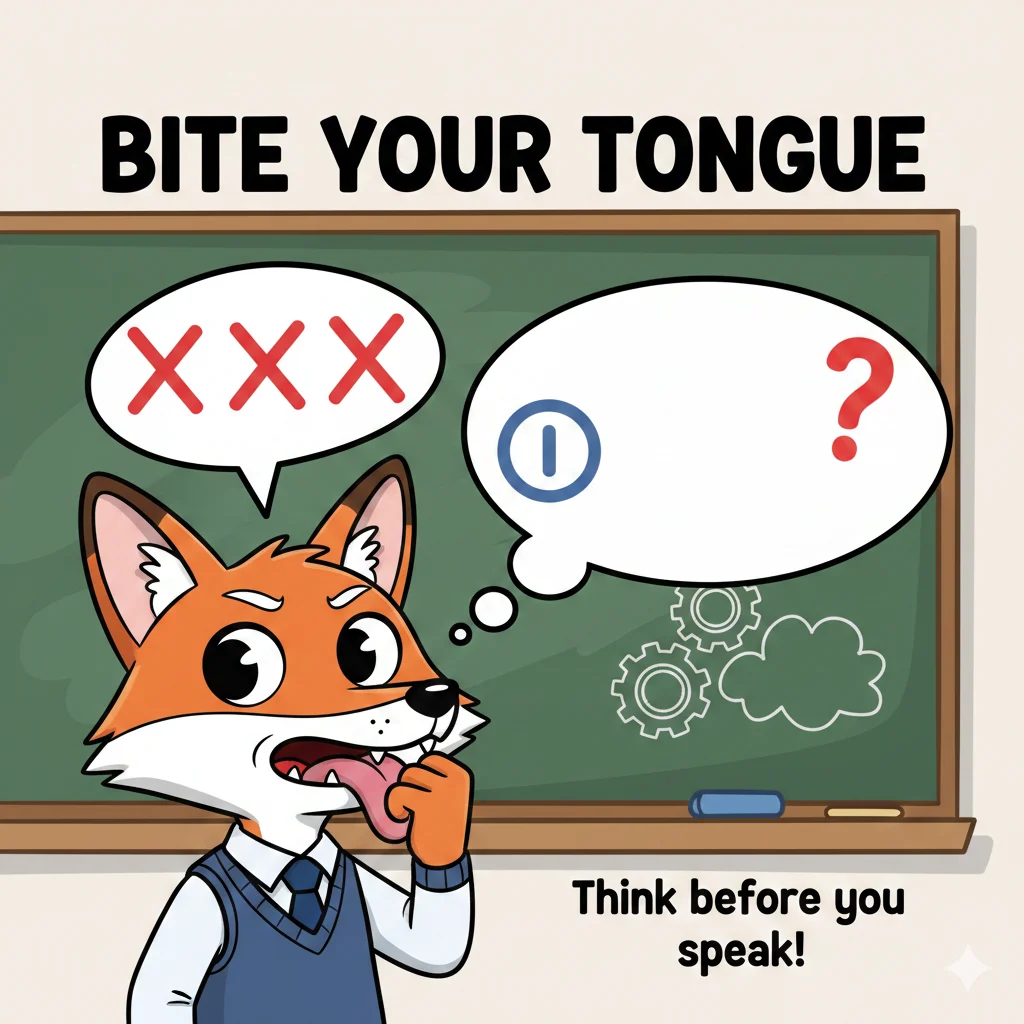
Common error: ❌ Bite my mouth
Usage note: Often used when emotions are high.
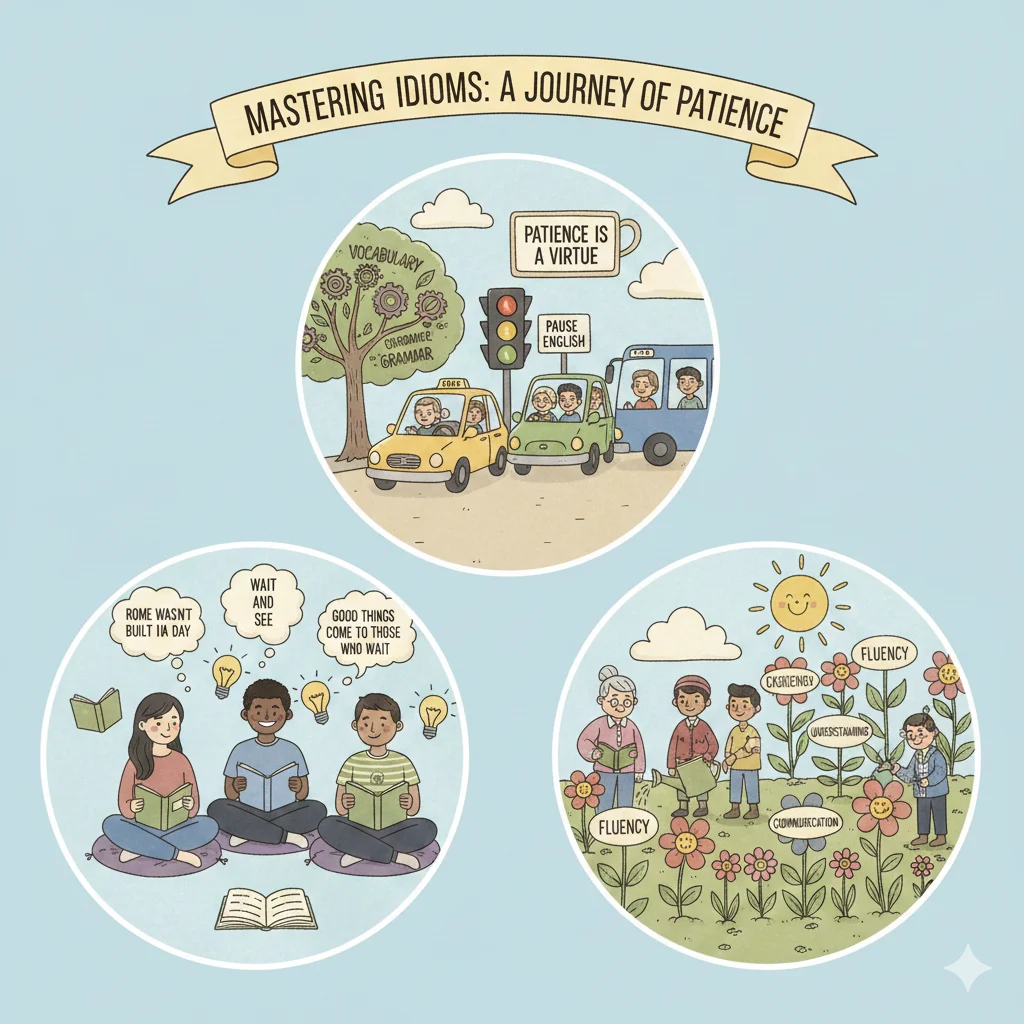
Rome Wasn’t Built in a Day
Word-by-word meaning: Rome took time to build
Idiomatic meaning: Great things take time
Example: Learning English takes time—Rome wasn’t built in a day.
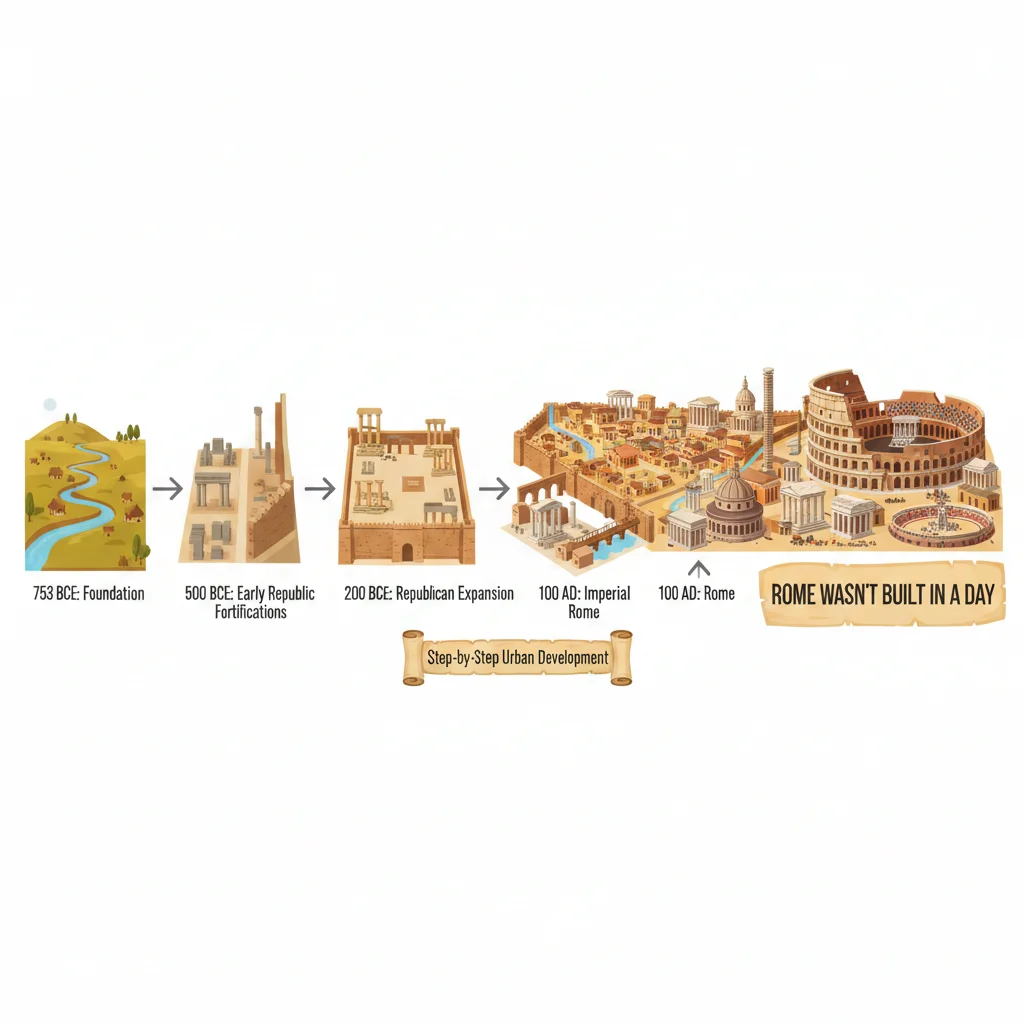
Common error: Using it for very small tasks
Usage note: Best for long-term goals.
Keep Your Shirt On
Word-by-word meaning: Don’t remove your shirt
Idiomatic meaning: Stay calm and patient
Example: Keep your shirt on—the bus will arrive soon.

Common error: Taking it literally
Usage note: Informal, often humorous.
Hold Your Horses
Word-by-word meaning: Stop horses from moving
Idiomatic meaning: Wait a moment
Example: Hold your horses! Let me explain first.
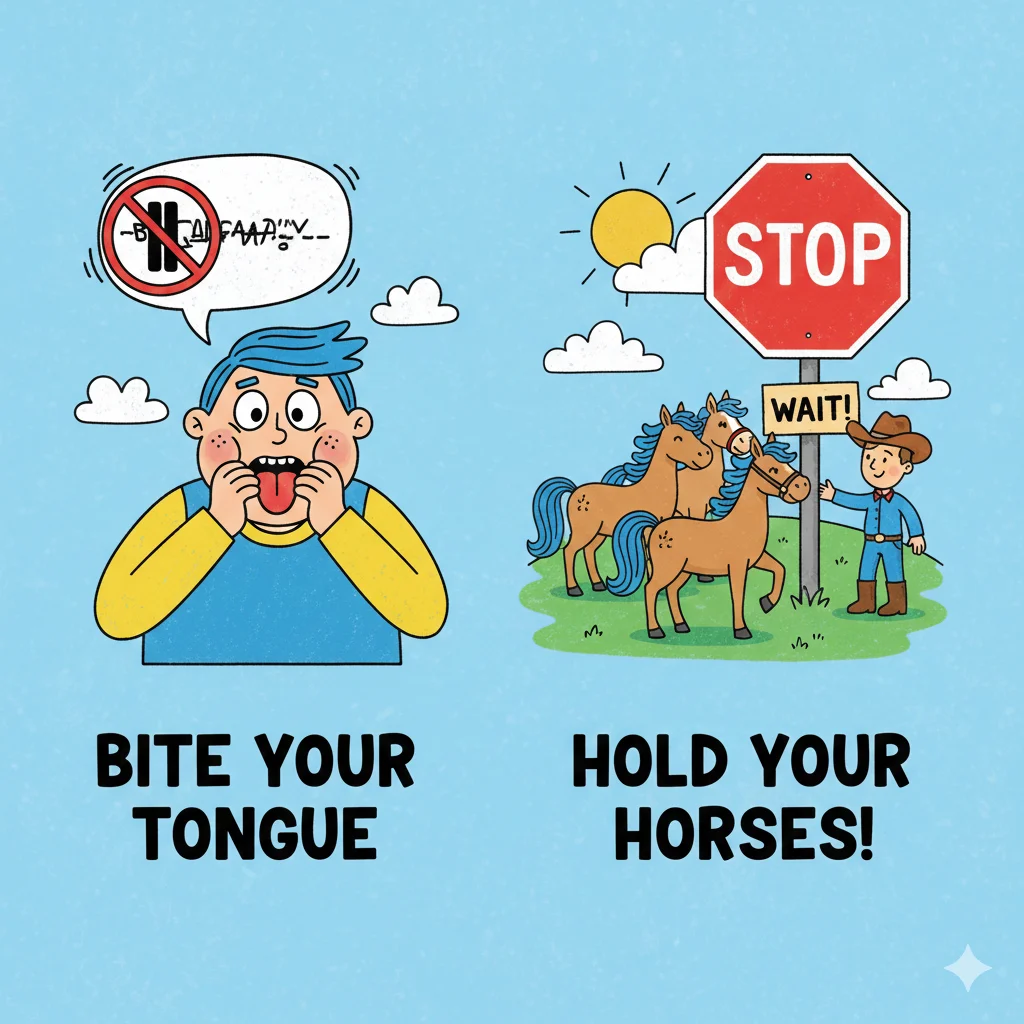
Common error: Using in very formal writing
Usage note: Casual spoken English.
Slow and Steady Wins the Race
Word-by-word meaning: Moving slowly but consistently
Idiomatic meaning: Patience leads to success
Example: She studies daily—slow and steady wins the race.
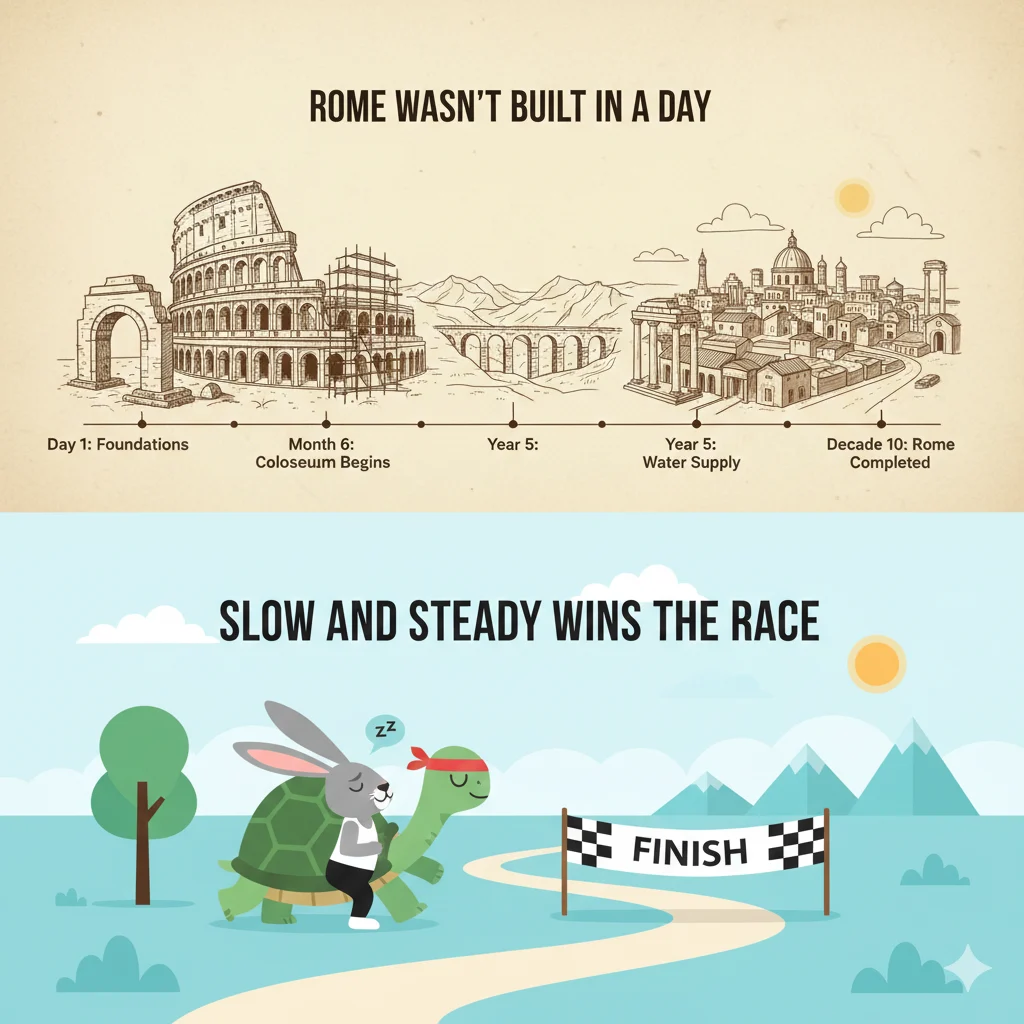
Common error: Shortening incorrectly
Usage note: Motivational tone.
Play the Waiting Game
Word-by-word meaning: A game of waiting
Idiomatic meaning: Be patient for results
Example: After applying, I’m playing the waiting game.
Common error: Using “doing” instead of “playing”
Usage note: Common in professional contexts.
Have the Patience of a Saint
Word-by-word meaning: As patient as a holy person
Idiomatic meaning: Extremely patient
Example: She has the patience of a saint with kids.
Common error: Using without exaggeration context
Usage note: Often complimentary.
Wait It Out
Word-by-word meaning: Wait until something ends
Idiomatic meaning: Be patient until conditions improve
Example: Let’s wait it out until traffic clears.
Common error: Forgetting “it”
Usage note: Used for temporary problems.
Good Things Come to Those Who Wait
Word-by-word meaning: Waiting brings rewards
Idiomatic meaning: Patience leads to success
Example: Don’t rush—good things come to those who wait.
Common error: Using sarcastically by mistake
Usage note: Encouraging phrase.
Keep Calm
Word-by-word meaning: Stay calm
Idiomatic meaning: Control emotions and wait patiently
Example: Keep calm and trust the process.
Common error: Overusing clichés
Usage note: Very common in modern English.
Take a Deep Breath
Word-by-word meaning: Inhale deeply
Idiomatic meaning: Calm yourself
Example: Take a deep breath before responding.
Common error: Using only literally
Usage note: Useful in advice.
All in Good Time
Word-by-word meaning: Everything at the right time
Idiomatic meaning: Be patient
Example: You’ll understand it all in good time.
Common error: Wrong preposition
Usage note: Polite reassurance.
Sit Tight
Word-by-word meaning: Sit firmly
Idiomatic meaning: Wait patiently
Example: Sit tight—we’ll call you soon.
Common error: Using in formal essays
Usage note: Informal.
Don’t Hold Your Breath
Word-by-word meaning: Don’t stop breathing
Idiomatic meaning: Don’t expect something soon
Example: Don’t hold your breath for a reply.
Common error: Misunderstanding tone
Usage note: Often slightly negative.
At Your Own Pace
Word-by-word meaning: Your speed
Idiomatic meaning: No rush
Example: Learn at your own pace.
Common error: Using “speed” instead of “pace”
Usage note: Supportive phrase.
Let Nature Take Its Course
Word-by-word meaning: Allow natural process
Idiomatic meaning: Don’t rush outcomes
Example: We’ll let nature take its course.
Common error: Overusing in emotional topics
Usage note: Calm, reflective tone.
Count to Ten
Word-by-word meaning: Count numbers
Idiomatic meaning: Calm down before reacting
Example: Count to ten before replying.
Common error: Using only literal meaning
Usage note: Advice-based idiom.
Time Will Tell
Word-by-word meaning: Time reveals truth
Idiomatic meaning: Be patient for results
Example: Time will tell if it works.
Common error: Using for immediate outcomes
Usage note: Neutral tone.
19. In the Long Run
Word-by-word meaning: Over a long period
Idiomatic meaning: Eventually
Example: Patience pays off in the long run.
Common error: Using for short-term events
Usage note: Common in essays.
Trust the Process
Word-by-word meaning: Believe in steps
Idiomatic meaning: Stay patient during progress
Example: Trust the process while learning.
Common error: Overuse in motivational talk
Usage note: Modern, popular idiom.
FAQs About Idioms About Patience
1. Why are idioms about patience important in English?
They help express emotions naturally and improve fluency.
2. Can I use these idioms in exams?
Yes—especially in speaking and writing, if used correctly.
3. Are idioms informal?
Most are informal, but some fit essays (e.g., in the long run).
4. How can I remember idioms easily?
Connect them with personal experiences and practice sentences.
5. Should beginners learn idioms?
Yes, but start with common, everyday idioms like these.
Conclusion
Mastering idioms about patience is like building a muscle—it takes time, repetition, and calm effort. Start by choosing 3–5 idioms, use them in daily conversations, and write short sentences. With patience and practice, your English will sound more confident, natural, and expressive. Remember—slow and steady wins the race.

“Wilkie Collins brings classic idioms to life on LearnIdom.com, making language learning engaging, memorable, and full of literary charm.”