History is not just about dates and wars—it also lives inside our everyday language. Many common English expressions come directly from historical events, traditions, and human experiences. These idioms about history help us talk about the past, repeat mistakes, learn lessons, and understand how time shapes behavior.
Imagine someone saying, “That’s water under the bridge,” or “History repeats itself.” You know the words, but the meaning feels deeper than history books. When I first learned English, these expressions helped me understand how native speakers connect past experiences with present situations.
In this article, you’ll explore 20 famous idioms about history, explained in a clear, learner-friendly way. Each idiom includes meanings, examples, common errors, and usage notes—so you can confidently use them in speaking and writing.
🏛️ History Repeats Itself
Word-by-Word Meaning
The past happens again
Idiomatic / Figurative Meaning
People often make the same mistakes again and again
Example Sentences
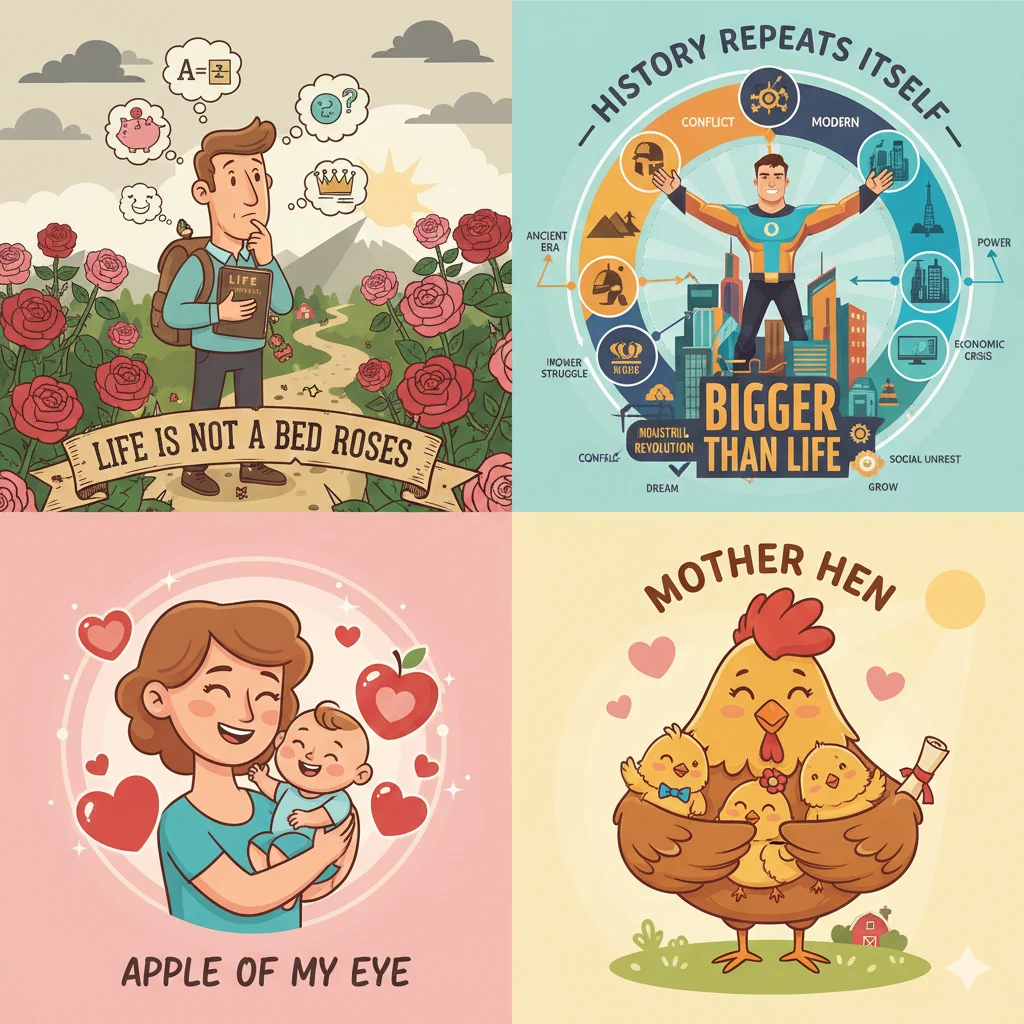
- If we don’t learn, history repeats itself.
- Wars show how history repeats itself.
Common Error
❌ Using it for positive repetition only
Usage Note
Often used as a warning or lesson
🏛️ Learn from History
Word-by-Word Meaning
Study past events
Idiomatic / Figurative Meaning
Use past experiences to avoid future mistakes
Example Sentences

- We must learn from history to grow.
Common Error
❌ Using it casually without context
Usage Note
Common in academic and motivational speech
🏛️ A Blast from the Past
Word-by-Word Meaning
Something coming from old times
Idiomatic / Figurative Meaning
Something that reminds you of the past
Example Sentences
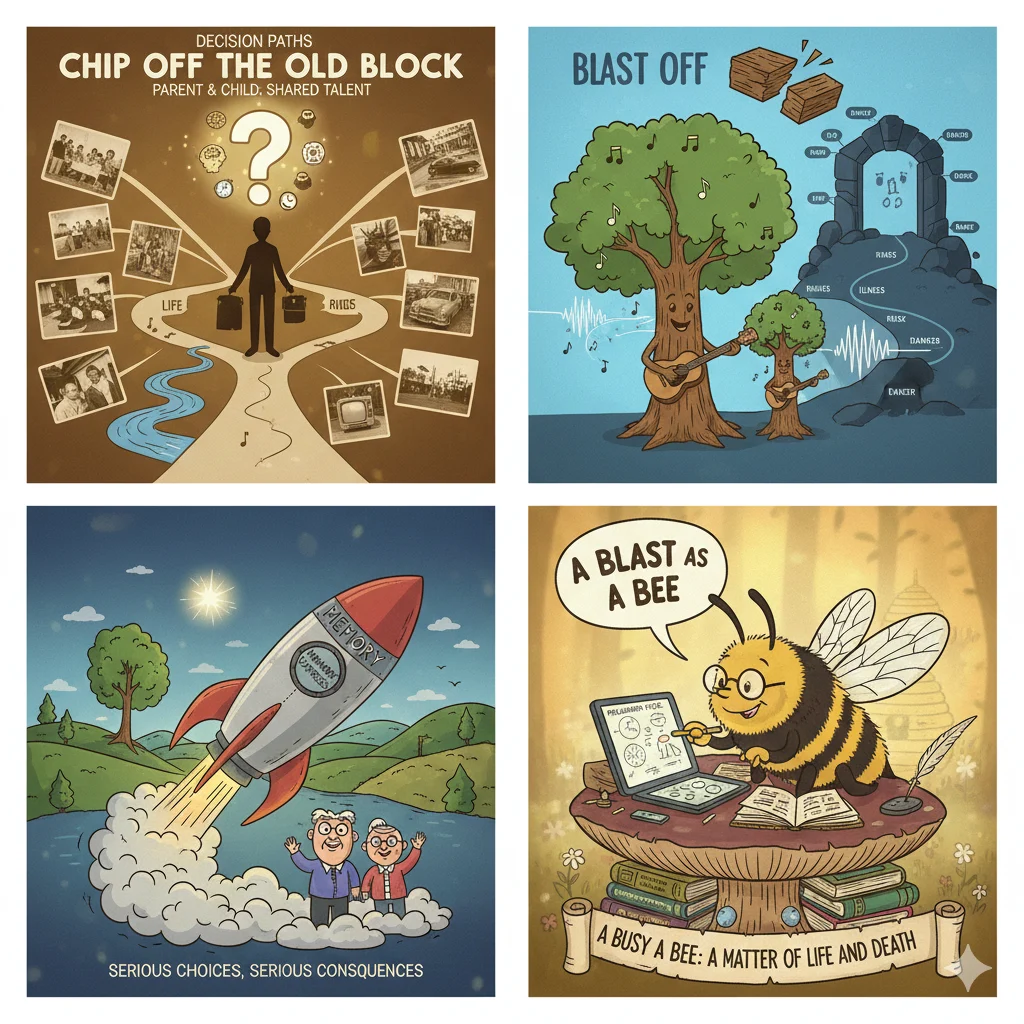
- Seeing that photo was a blast from the past.
Common Error
❌ Using it for negative memories only
Usage Note
Usually positive or nostalgic
🏛️ Go Down in History
Word-by-Word Meaning
Be written in history books
Idiomatic / Figurative Meaning
Be remembered for a long time
Example Sentences
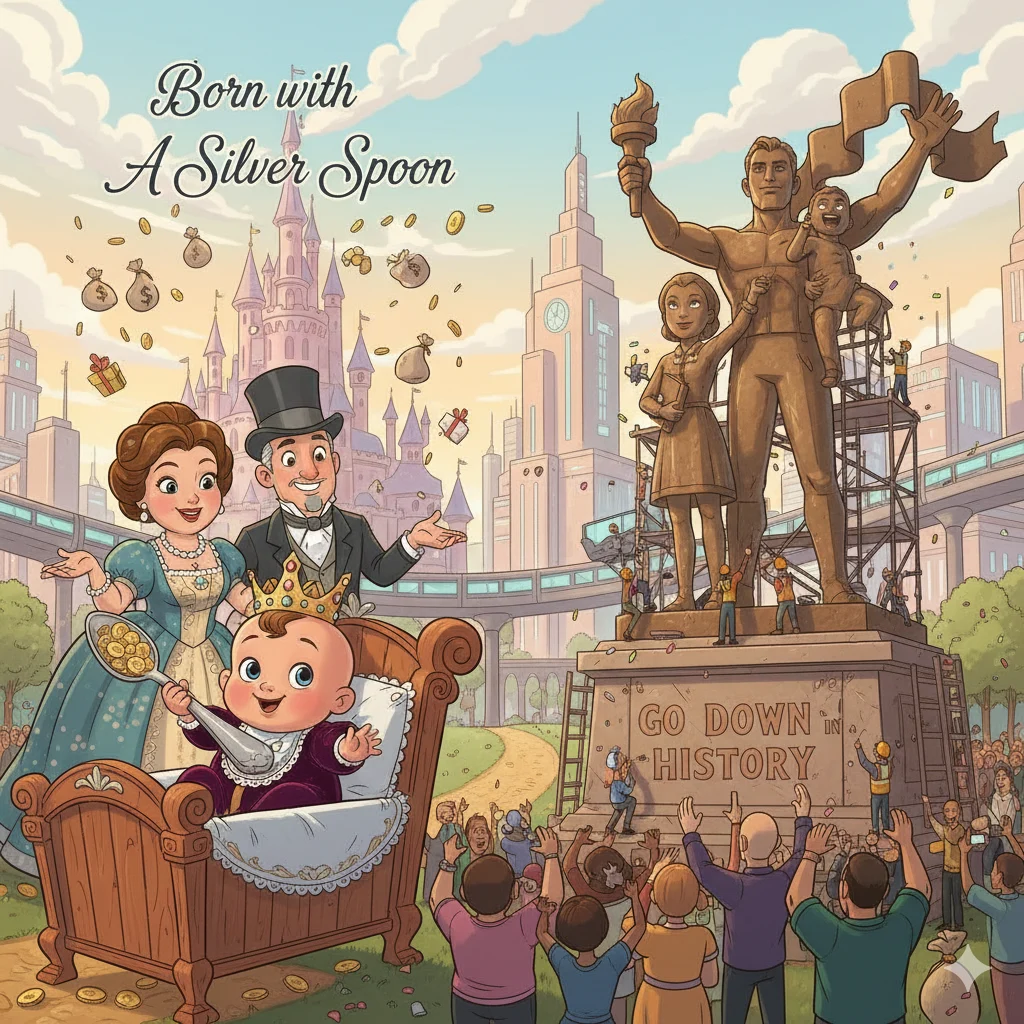
- Her discovery will go down in history.
Common Error
❌ Using it for small events
Usage Note
Used for important achievements
🏛️ Rewrite History
Word-by-Word Meaning
Change recorded past
Idiomatic / Figurative Meaning
Change facts to suit your story
Example Sentences
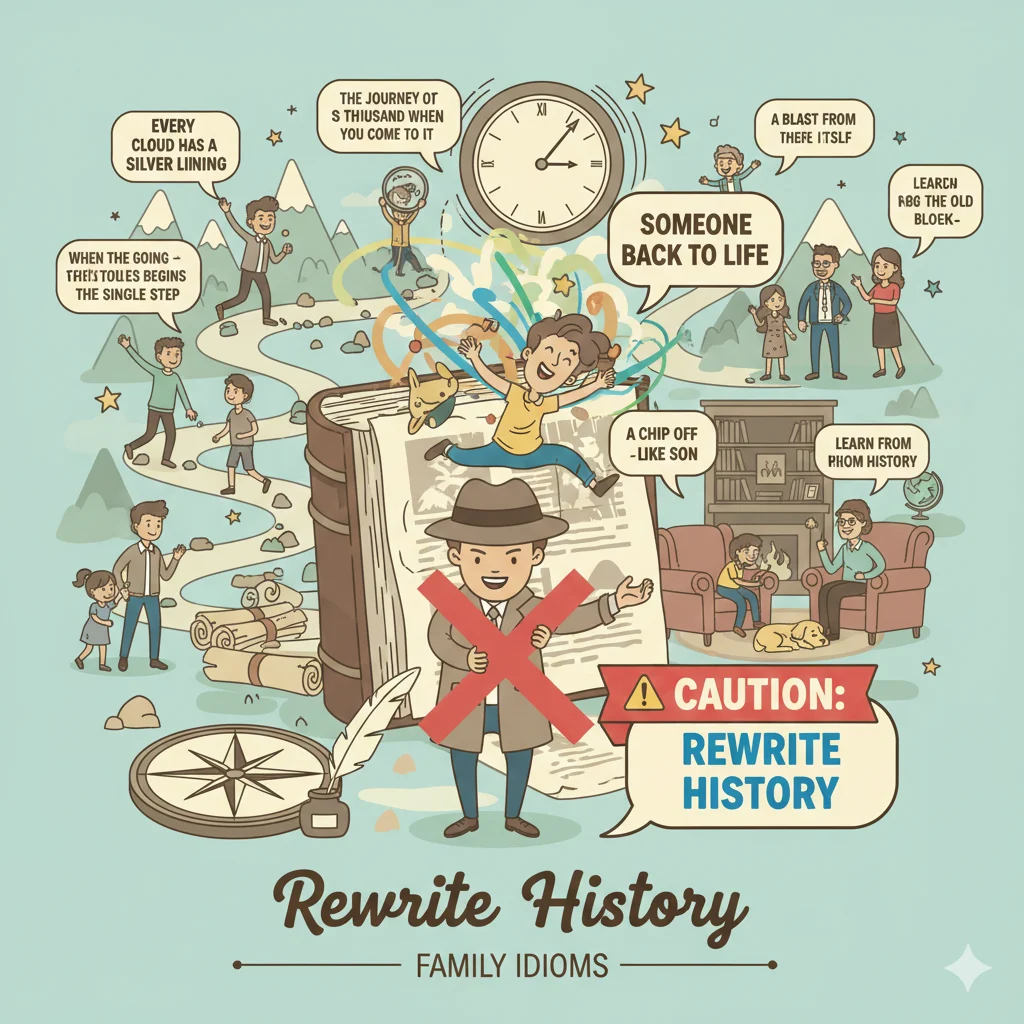
- Don’t try to rewrite history.
Common Error
❌ Using it for creative writing only
Usage Note
Often critical or serious
🏛️ Make History
Word-by-Word Meaning
Create history
Idiomatic / Figurative Meaning
Do something important or new
Example Sentences
- She made history by winning gold.
Common Error
❌ Using it for ordinary actions
Usage Note
Used for first-time achievements
🏛️ Be History
Word-by-Word Meaning
Become part of the past
Idiomatic / Figurative Meaning
Be finished or no longer relevant
Example Sentences
- That old rule is history now.
Common Error
❌ Using it for people literally dying
Usage Note
Casual spoken English
🏛️ Dwell on the Past
Word-by-Word Meaning
Live mentally in old times
Idiomatic / Figurative Meaning
Think too much about past events
Example Sentences
- Don’t dwell on the past.
Common Error
❌ Confusing with “remember”
Usage Note
Often advice-giving
🏛️ Ancient History
Word-by-Word Meaning
Very old history
Idiomatic / Figurative Meaning
Something no longer important
Example Sentences
- That argument is ancient history.
Common Error
❌ Using it for real ancient civilizations
Usage Note
Informal expression
🏛️ A Thing of the Past
Word-by-Word Meaning
Something belonging to history
Idiomatic / Figurative Meaning
Something that no longer exists
Example Sentences
- Fear is now a thing of the past.
Common Error
❌ Using for ongoing situations
Usage Note
Common in writing and speech
🏛️ Dig Up the Past
Word-by-Word Meaning
Unearth old things
Idiomatic / Figurative Meaning
Bring back old memories or secrets
Example Sentences
- Don’t dig up the past again.
Common Error
❌ Using it positively
Usage Note
Often negative
🏛️ Live in the Past
Word-by-Word Meaning
Exist in old times
Idiomatic / Figurative Meaning
Refuse to move forward
Example Sentences
- He still lives in the past.
Common Error
❌ Using it for historians
Usage Note
Mild criticism
🏛️Past Is Prologue
Word-by-Word Meaning
The past introduces the future
Idiomatic / Figurative Meaning
Past actions shape the future
Example Sentences
- In politics, the past is prologue.
Common Error
❌ Using without explanation
Usage Note
Formal and literary
🏛️ Relive History
Word-by-Word Meaning
Experience history again
Idiomatic / Figurative Meaning
Experience something similar again
Example Sentences
- I don’t want to relive history.
Common Error
❌ Confusing with “rewrite history”
Usage Note
Emotional context
🏛️ A Page from History
Word-by-Word Meaning
Part of historical record
Idiomatic / Figurative Meaning
A lesson from the past
Example Sentences
- This event is a page from history.
Common Error
❌ Mixing with “turn the page”
Usage Note
Reflective tone
🏛️ Turn Back the Clock
Word-by-Word Meaning
Reverse time
Idiomatic / Figurative Meaning
Return to earlier times
Example Sentences
- You can’t turn back the clock.
Common Error
❌ Using it literally
Usage Note
Common life advice
🏛️ Be on the Right Side of History
Word-by-Word Meaning
Stand with correct historical judgment
Idiomatic / Figurative Meaning
Make morally correct choices
Example Sentences
- Justice puts you on the right side of history.
Common Error
❌ Using casually
Usage Note
Often political or ethical
🏛️History in the Making
Word-by-Word Meaning
History being created now
Idiomatic / Figurative Meaning
Something important happening now
Example Sentences
- We are witnessing history in the making.
Common Error
❌ Using for small events
Usage Note
Exciting tone
🏛️ A Walk Down Memory Lane
Word-by-Word Meaning
Strolling through memories
Idiomatic / Figurative Meaning
Remembering past experiences
Example Sentences
- Old photos took me on a walk down memory lane.
Common Error
❌ Using for sad memories only
Usage Note
Often nostalgic
🏛️ Learn the Lessons of History
Word-by-Word Meaning
Study historical outcomes
Idiomatic / Figurative Meaning
Understand mistakes to improve future actions
Example Sentences
- Leaders must learn the lessons of history.
Common Error
❌ Repeating idiom #2 without context
Usage Note
Formal and educational
❓ Frequently Asked Questions (FAQs)
1. Why are idioms about history important?
They help express lessons, experiences, and time-based ideas naturally.
2. Are history idioms used in exams?
Yes, especially in IELTS, essays, and reading passages.
3. Can beginners learn these idioms?
Yes—start with common ones and practice daily.
4. Are these idioms formal or informal?
Some are formal, others casual—context matters.
5. How can I practice them?
Use one idiom daily in speaking or writing.
🎯 Conclusion
Idioms about history don’t just improve vocabulary—they help you think like a native speaker. Each expression carries wisdom from the past and makes your English more powerful, natural, and expressive. Choose a few idioms, practice them in sentences, and slowly build confidence. Remember: when it comes to language learning, history is your teacher, not your enemy.

“L.P. Hartley brings classic idioms to life on LearnIdom.com, helping readers explore language with wit, clarity, and timeless insight.”