Dancing idioms are lively English expressions that use the idea of dancing to describe emotions, situations, or behaviors in a symbolic way. Common examples include “dance to someone’s tune” (to do what someone else wants), “it takes two to tango” (both parties are responsible), and “dance around the issue” (avoid addressing a topic directly).
These idioms are widely used in conversations, movies, stories, and social media to make speech more vivid and expressive. Many English learners struggle because the meanings aren’t literal, which can cause confusion. Learning dancing idioms helps you communicate more naturally, sound fluent, and understand native speakers better.
Whether you’re a student, professional, or content creator, mastering these idioms improves vocabulary, makes conversations engaging, and allows you to describe situations, relationships, and actions more effectively in everyday English.
Dance to someone’s tune

Word-by-word meaning: Perform actions following someone else’s instructions or desires.
Idiomatic/figurative meaning: To do exactly what someone else wants.
Example sentence: She always dances to her boss’s tune, never questioning his decisions.
Common error: Using “dance to someone’s music” (incorrect in idiomatic usage).
Usage note: Often used in contexts of control or influence.
Dance on air

Word-by-word meaning: Literally moving lightly above the ground.
Idiomatic/figurative meaning: Feeling extremely happy or excited.
Example sentence: She was dancing on air after hearing the good news about her promotion.
Common error: Confusing with “walking on air.”
Usage note: Usually describes temporary joy or excitement.
Lead someone a merry dance
Word-by-word meaning: Guide someone in a confusing, chaotic way.
Idiomatic/figurative meaning: To cause someone trouble or confusion.
Example sentence: The complicated instructions led me a merry dance before I finally finished the task.
Common error: Interchanging with “lead someone on a merry-go-round.”
Usage note: Can be used humorously or seriously.
Dance around the issue

Word-by-word meaning: Move around a topic without addressing it directly.
Idiomatic/figurative meaning: Avoiding the main point in a conversation.
Example sentence: Stop dancing around the issue and tell me what really happened.
Common error: Using “dance about the issue” (less common, not standard).
Usage note: Often used in meetings, debates, or difficult conversations.
It takes two to tango
Word-by-word meaning: Two people are needed to dance the tango.
Idiomatic/figurative meaning: Both parties are responsible for a situation.
Example sentence: Don’t blame him alone; it takes two to tango.
Common error: Using for solo mistakes.
Usage note: Commonly used in conflicts or negotiations.
Dance with death
Word-by-word meaning: Engage in risky or dangerous behavior.
Idiomatic/figurative meaning: To put oneself in great danger.
Example sentence: He danced with death by climbing the cliff without safety gear.
Common error: Interchanging with “play with fire” (similar meaning, but not idiomatic).
Usage note: Often used in news or storytelling to emphasize danger.
Dance on someone’s grave
Word-by-word meaning: Celebrate someone’s misfortune or death.
Idiomatic/figurative meaning: Express extreme joy at someone else’s failure.
Example sentence: It’s cruel to dance on someone’s grave after they lost the competition.
Common error: Misunderstood as literally dancing.
Usage note: Usually metaphorical, expressing revenge or schadenfreude.
Dance to the rhythm
Word-by-word meaning: Move according to the beat of music.
Idiomatic/figurative meaning: Adapt or go along with a situation smoothly.
Example sentence: She learned to dance to the rhythm of office politics quickly.
Common error: Using without context of adaptability.
Usage note: Can describe social skills or flexibility.
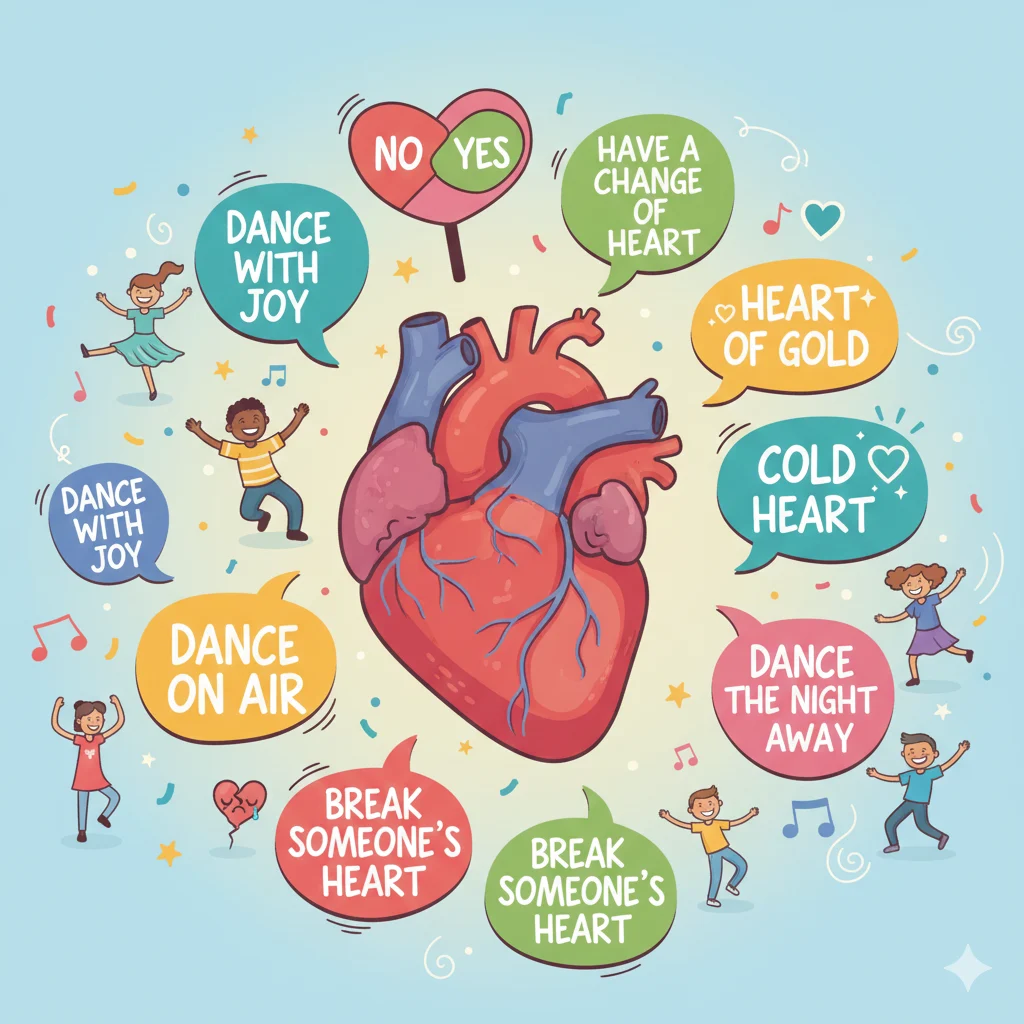
Dance with joy
Word-by-word meaning: Move happily to celebrate.
Idiomatic/figurative meaning: Show extreme happiness.
Example sentence: He danced with joy when he passed the final exam.
Common error: Overused literally in professional writing.
Usage note: Best for casual, emotional storytelling.
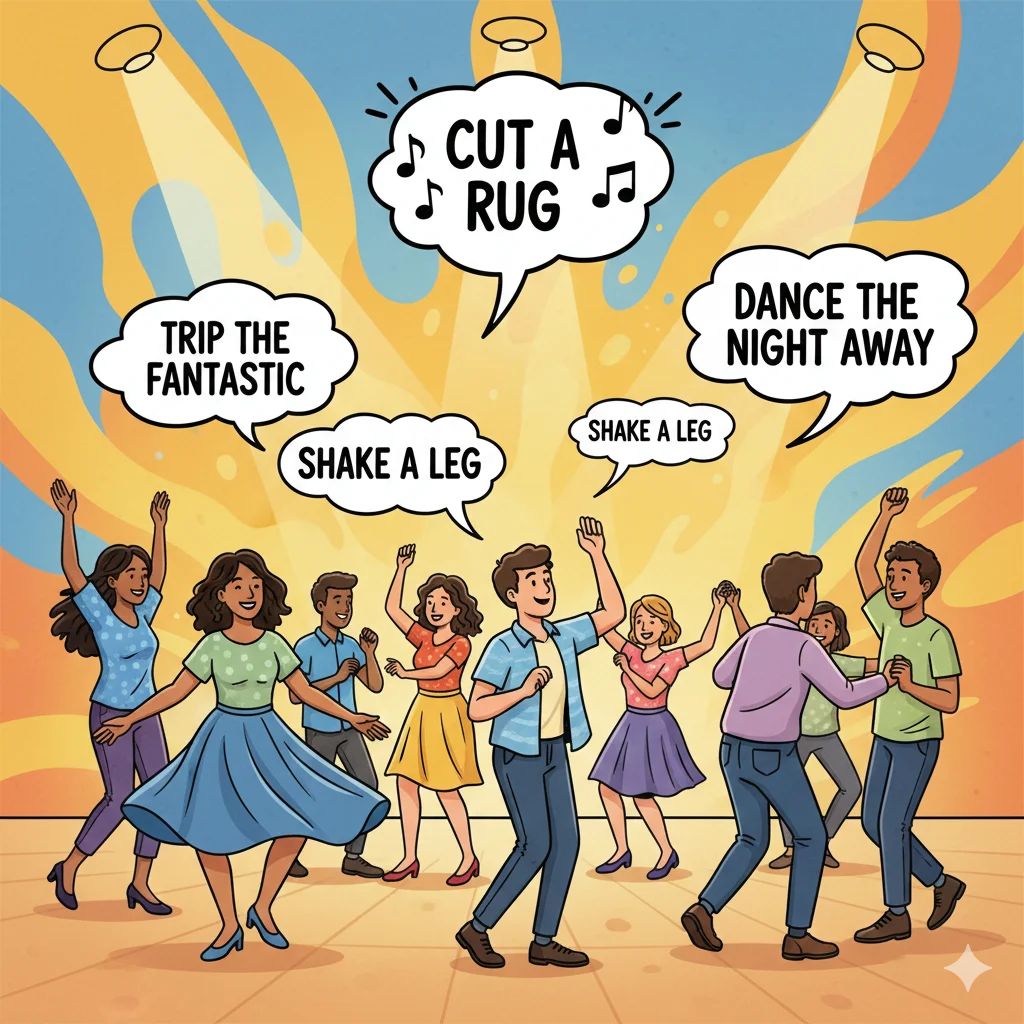
Dance the night away
Word-by-word meaning: Dance throughout the entire night.
Idiomatic/figurative meaning: Enjoy oneself without worrying about time.
Example sentence: At the party, everyone danced the night away.
Common error: Using “dance all night” is simpler but less idiomatic.
Usage note: Often used in party, festival, or romantic contexts.
Break into a dance
Word-by-word meaning: Suddenly start moving your body rhythmically to music.
Idiomatic/figurative meaning: Express sudden joy or excitement physically.
Example sentence: She broke into a dance when she heard the exam was postponed.
Common error: Saying “broke a dance” (incorrect).
Usage note: Often used to describe spontaneous happiness.
Dance attendance on
Word-by-word meaning: Pay careful attention to someone while following them around.
Idiomatic/figurative meaning: To serve or flatter someone constantly.
Example sentence: He danced attendance on his teacher to get extra credit.
Common error: Confusing with “dance after someone” (not idiomatic).
Usage note: Typically used in formal or literary contexts.
Dance the light fantastic
Word-by-word meaning: Move elegantly in a dancing style.
Idiomatic/figurative meaning: To dance gracefully, often at a party or formal event.
Example sentence: They danced the light fantastic at the charity ball.
Common error: Saying “dance the light fantasticly” (incorrect).
Usage note: Poetic or literary, less common in daily conversation.
Dance to the beat of your own drum
Word-by-word meaning: Move according to your own rhythm rather than following others.
Idiomatic/figurative meaning: Do things your own way; be independent.
Example sentence: She always dances to the beat of her own drum, ignoring peer pressure.
Common error: Confusing with “dance to someone else’s drum” (opposite meaning).
Usage note: Positive, often used to praise independence.
Dance in someone’s shadow
Word-by-word meaning: Move within another person’s presence.
Idiomatic/figurative meaning: Live under someone’s influence or overshadowed by them.
Example sentence: He danced in his brother’s shadow until he found his own path.
Common error: Saying “dance under someone’s shadow” (less idiomatic).
Usage note: Can describe personal or professional situations.
Dance with danger
Word-by-word meaning: Move alongside dangerous situations.
Idiomatic/figurative meaning: Engage in risky behavior.
Example sentence: The stuntman danced with danger on the tall skyscraper.
Common error: Using “play with danger” instead (similar but different idiomatic effect).
Usage note: Dramatic or cautionary contexts; often storytelling.
Dance on someone’s grave
Word-by-word meaning: Literally dance over a grave.
Idiomatic/figurative meaning: Celebrate someone’s failure or misfortune.
Example sentence: Critics accused the tabloids of dancing on the celebrity’s grave.
Common error: Misinterpreting literally.
Usage note: Strong negative connotation; metaphorical use only.
Dance to someone’s music
Word-by-word meaning: Move according to another person’s musical rhythm.
Idiomatic/figurative meaning: Follow someone’s plans or control.
Example sentence: Employees often dance to the manager’s music without questioning.
Common error: “Dance to someone’s tunes” is informal but less common.
Usage note: Often describes influence, authority, or control.
Dance around the truth
Word-by-word meaning: Move without touching the truth.
Idiomatic/figurative meaning: Avoid telling the truth directly.
Example sentence: Politicians often dance around the truth during interviews.
Common error: “Dance about the truth” (non-standard).
Usage note: Used in debates, discussions, and tricky conversations.
Dance all night / Dance the night away
Word-by-word meaning: Keep dancing throughout the night.
Idiomatic/figurative meaning: Enjoy oneself fully without worrying about time.
Example sentence: At the wedding, guests danced the night away.
Common error: “Dance all the night” is less idiomatic.
Usage note: Commonly used in parties, festivals, and celebrations.
Conclusion
Dancing idioms add rhythm and energy to everyday English, making expressions lively, fun, and memorable. Phrases like “dance to someone’s tune” or “lead someone a merry dance” go beyond literal meaning, reflecting influence, freedom, joy, and challenges in life.
Learning and using these idioms enhances vocabulary, communication skills, and cultural understanding. By incorporating dancing idioms into speech or writing, readers can make conversations more engaging, creative, and relatable. These expressions not only enrich language but also allow people to convey emotions, situations, and personalities with flair, turning ordinary statements into impactful and colorful communication.

“Iris Murdoch explores the beauty of language and idioms on LearnIdom.com, making learning phrases engaging, memorable, and fun for everyone.”