Ever noticed how many English expressions come from the outdoors? Hiking idioms are everywhere—from school conversations to movies and daily life. If you’ve ever felt like you were “on the right path” or had to “take the high road,” you’ve already used one without realizing it.
In this guide, we’ll explore the most famous hiking-related idioms, break them down clearly, and help you use them with confidence.
Why Learn Hiking Idioms?
Hiking idioms help you:
- Sound more natural in English
- Understand movies, books, and conversations better
- Express life challenges using vivid, memorable language
Think of idioms like trail signs—they guide you to meaning faster 🚶♂️
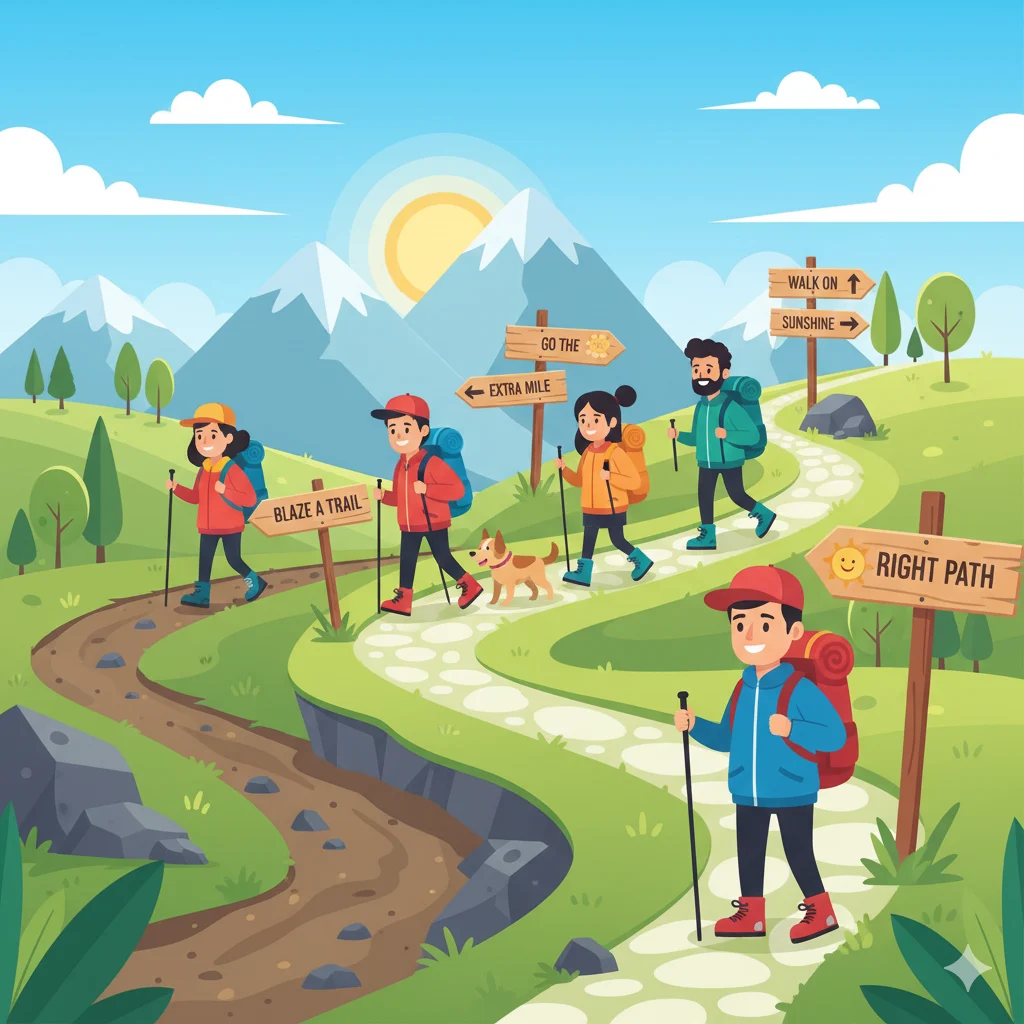
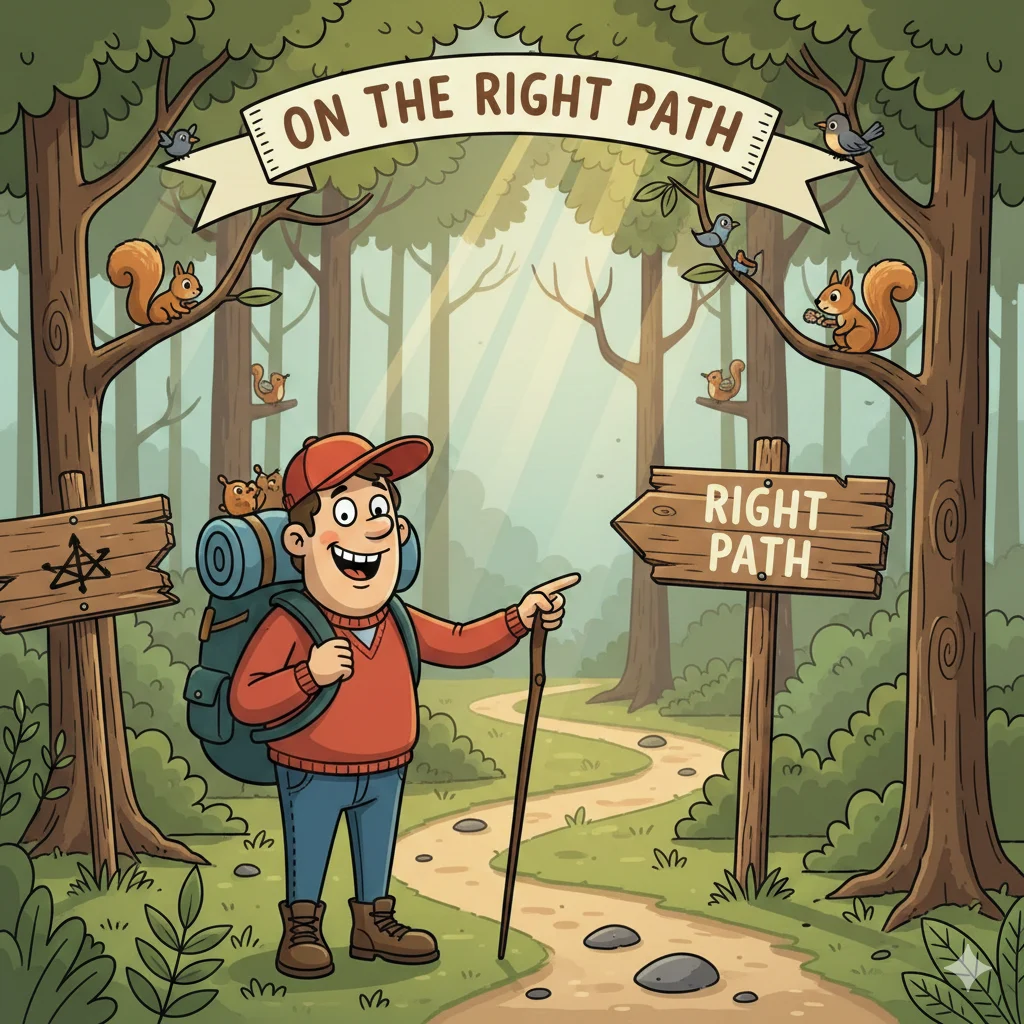
On the Right Path
Word-by-word meaning: Walking on a correct trail
Idiomatic meaning: Making good or correct decisions
Example:

- After changing her study habits, she’s finally on the right path.
Common error: Saying in the right path ❌
Usage note: Always use on, not in.
Blaze a Trail
Word-by-word meaning: Clear a new hiking path
Idiomatic meaning: Do something new or innovative
Example:

- She blazed a trail for women in science.
Common error: Using it for small, routine actions
Usage note: Best for big achievements or first-time actions.
Take the High Road
Word-by-word meaning: Choose a higher path
Idiomatic meaning: Act morally or maturely
Example:

- Instead of arguing online, he took the high road.
Common error: Confusing with physical travel
Usage note: Often used in conflicts.
At a Crossroads
Word-by-word meaning: Standing where paths meet
Idiomatic meaning: Facing an important decision
Example:
- I’m at a crossroads in my career.
Common error: Using it for minor choices
Usage note: Implies life-changing decisions.
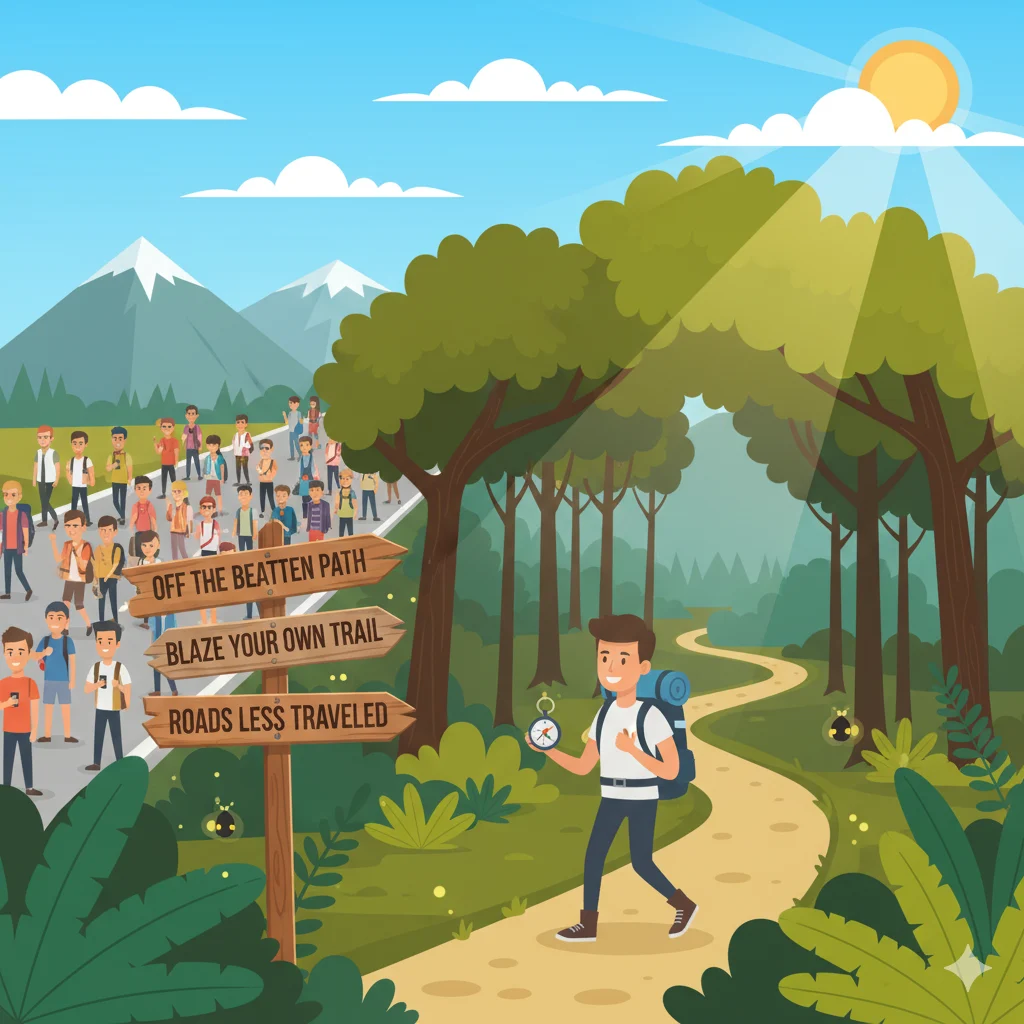
Off the Beaten Path
Word-by-word meaning: Away from popular trails
Idiomatic meaning: Unusual or unconventional
Example:
- They enjoy traveling off the beaten path.
Common error: Saying out of the beaten path
Usage note: Often used positively.
Go Down a Different Path
Word-by-word meaning: Choose another trail
Idiomatic meaning: Choose a different life direction
Example:
- He went down a different path after college.
Common error: Mixing tenses incorrectly
Usage note: Flexible with past, present, future.
Lose Your Way
Word-by-word meaning: Get lost on a trail
Idiomatic meaning: Lose purpose or direction
Example:
- She felt she’d lost her way emotionally.
Common error: Using only for physical loss
Usage note: Often emotional or moral.
Find Your Footing
Word-by-word meaning: Stand firmly while hiking
Idiomatic meaning: Become confident in a situation
Example:
- It took time, but he found his footing at work.
Common error: Confusing with find your feet
Usage note: Very common in career contexts.
A Rocky Road
Word-by-word meaning: A rough trail
Idiomatic meaning: A difficult journey
Example:
- Starting a business is a rocky road.
Common error: Forgetting the article “a”
Usage note: Often paired with long-term goals.
Uphill Battle
Word-by-word meaning: Fighting while walking uphill
Idiomatic meaning: Very difficult struggle
Example:
- Learning English felt like an uphill battle.
Common error: Using for easy tasks
Usage note: Strong negative difficulty tone.
Downhill From Here
Word-by-word meaning: Path slopes downward
Idiomatic meaning: Things will get worse
Example:
- After the injury, it was downhill from there.
Common error: Confusing with “getting easier”
Usage note: Usually negative.
Hit the Trail
Word-by-word meaning: Start hiking
Idiomatic meaning: Leave or begin a journey
Example:
- It’s late—we should hit the trail.
Common error: Using only for hiking contexts
Usage note: Informal and friendly.
Walk the Walk
Word-by-word meaning: Actually walk
Idiomatic meaning: Do what you claim
Example:
- He talks about leadership, but does he walk the walk?
Common error: Forgetting repetition structure
Usage note: Often paired with talk the talk.
On a Long Road
Word-by-word meaning: Walking far
Idiomatic meaning: A long process ahead
Example:
- Recovery is a long road, but I’m hopeful.
Common error: Missing article “a”
Usage note: Emotional or motivational tone.
Take It One Step at a Time
Word-by-word meaning: Walk slowly
Idiomatic meaning: Handle things gradually
Example:
- Don’t stress—take it one step at a time.
Common error: Changing verb tense
Usage note: Very common advice phrase.
Go the Extra Mile
Word-by-word meaning: Walk farther than needed
Idiomatic meaning: Make extra effort
Example:
- She always goes the extra mile for her students.
Common error: Using miles plural
Usage note: Positive and professional.
On Track
Word-by-word meaning: Following a trail
Idiomatic meaning: Making progress correctly
Example:
- The project is back on track.
Common error: Saying in track
Usage note: Business and study contexts.
Stray From the Path
Word-by-word meaning: Leave the trail
Idiomatic meaning: Act wrongly or differently
Example:
- He strayed from the path he promised to follow.
Common error: Confusing with “off the beaten path”
Usage note: Often moral or ethical.
A Long Way to Go
Word-by-word meaning: Much distance left
Idiomatic meaning: Much progress still needed
Example:
- I’ve improved, but I have a long way to go.
Common error: Saying far way
Usage note: Honest and reflective.
Lead the Way
Word-by-word meaning: Walk first
Idiomatic meaning: Guide or inspire others
Example:
- She led the way in environmental education.
Common error: Using past tense incorrectly
Usage note: Leadership-focused idiom.
Frequently Asked Questions (FAQs)
What are hiking idioms?
Hiking idioms are expressions inspired by walking, trails, and journeys that describe life, choices, or challenges.
Are hiking idioms common in daily English?
Yes! Native speakers use them often in conversations, work, and storytelling.
Can I use hiking idioms in writing?
Absolutely. They’re great for essays, blogs, speeches, and creative writing.
Are hiking idioms formal or informal?
Most are neutral and work in both casual and semi-formal contexts.
How can I remember hiking idioms easily?
Connect each idiom to a real-life situation or imagine yourself on a trail.
Conclusion
Learning hiking idioms is like packing the right gear for your English journey—they make communication smoother, richer, and more confident. Pick 3–5 idioms today, use them in sentences, and notice how naturally they fit into your conversations.
So go ahead—hit the trail and level up your English 🚶♀️✨

“Elizabeth Bowen shares timeless idioms and language wisdom on LearnIdom.com, making learning phrases fun, easy, and unforgettable.”