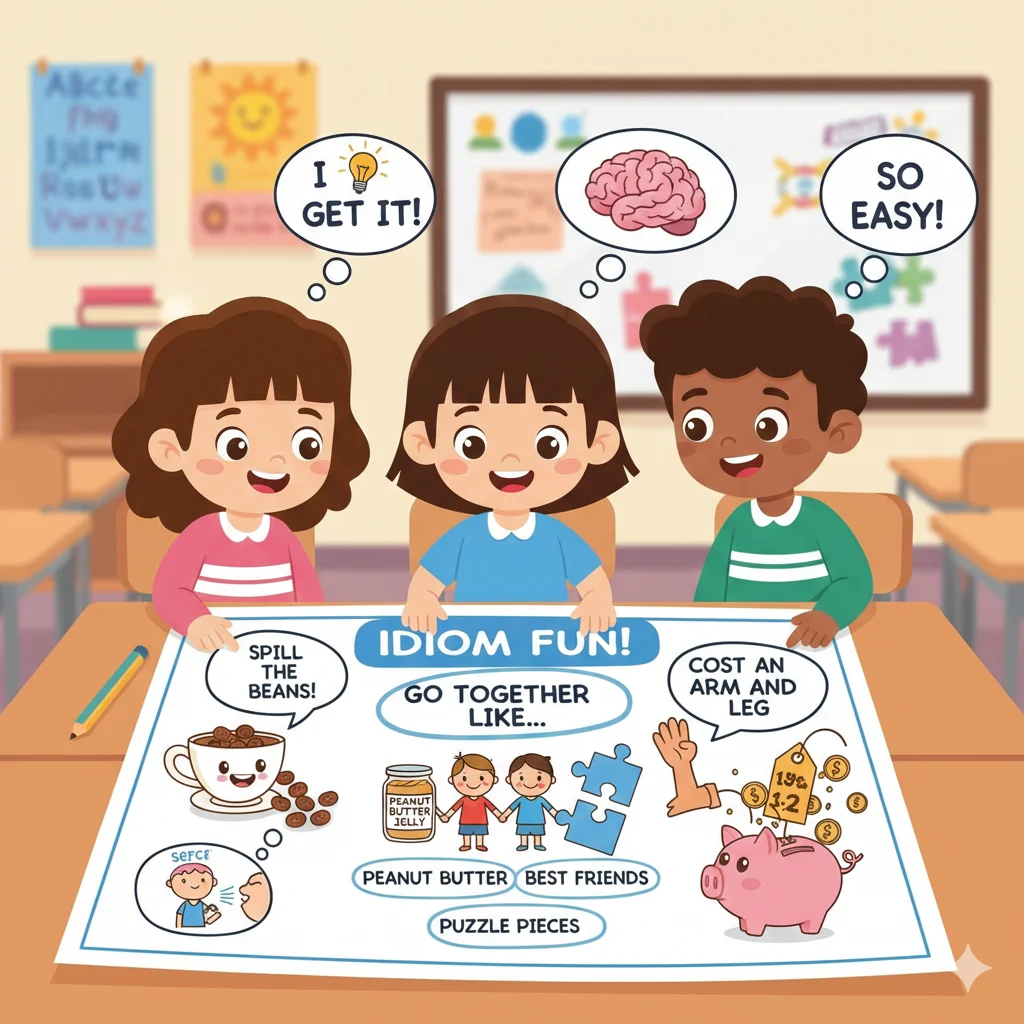
Ever met two friends who are always together—or foods that just feel wrong when separated? English has dozens of expressions for that feeling. This guide to go together like idioms will help you sound more natural, confident, and fluent in everyday conversations.
Whether you’re learning English or polishing your expressions, these idioms show how native speakers describe things that naturally belong together.
What Does “Go Together Like” Mean in Idioms?
Idioms using go together like compare two things that:
- Naturally match
- Are inseparable
- Always appear as a pair
Think relationships, habits, personalities, or even problems and consequences.
Go together like peanut butter and jelly

Word-by-word meaning: A nut spread and fruit jam
Idiomatic meaning: A perfect match
Example sentence:
They work so well together—they go together like peanut butter and jelly.
Common error: Using it for things that don’t naturally match
Usage note: Informal, very common in American English
Two peas in a pod
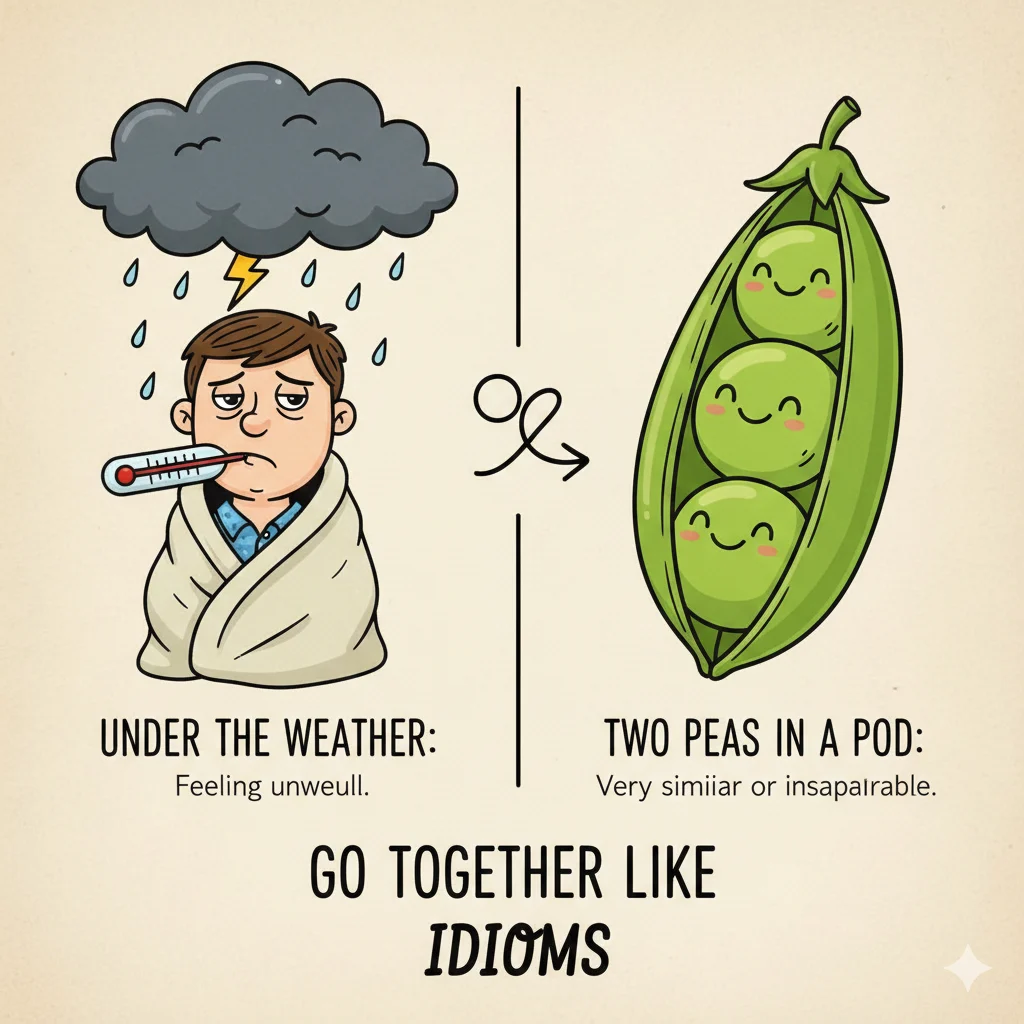
Word-by-word meaning: Two peas inside the same pod
Idiomatic meaning: Very similar people
Example sentence:
Those twins are two peas in a pod.
Common error: Using it for objects instead of people
Usage note: Used mainly for personalities or appearance
Hand in glove
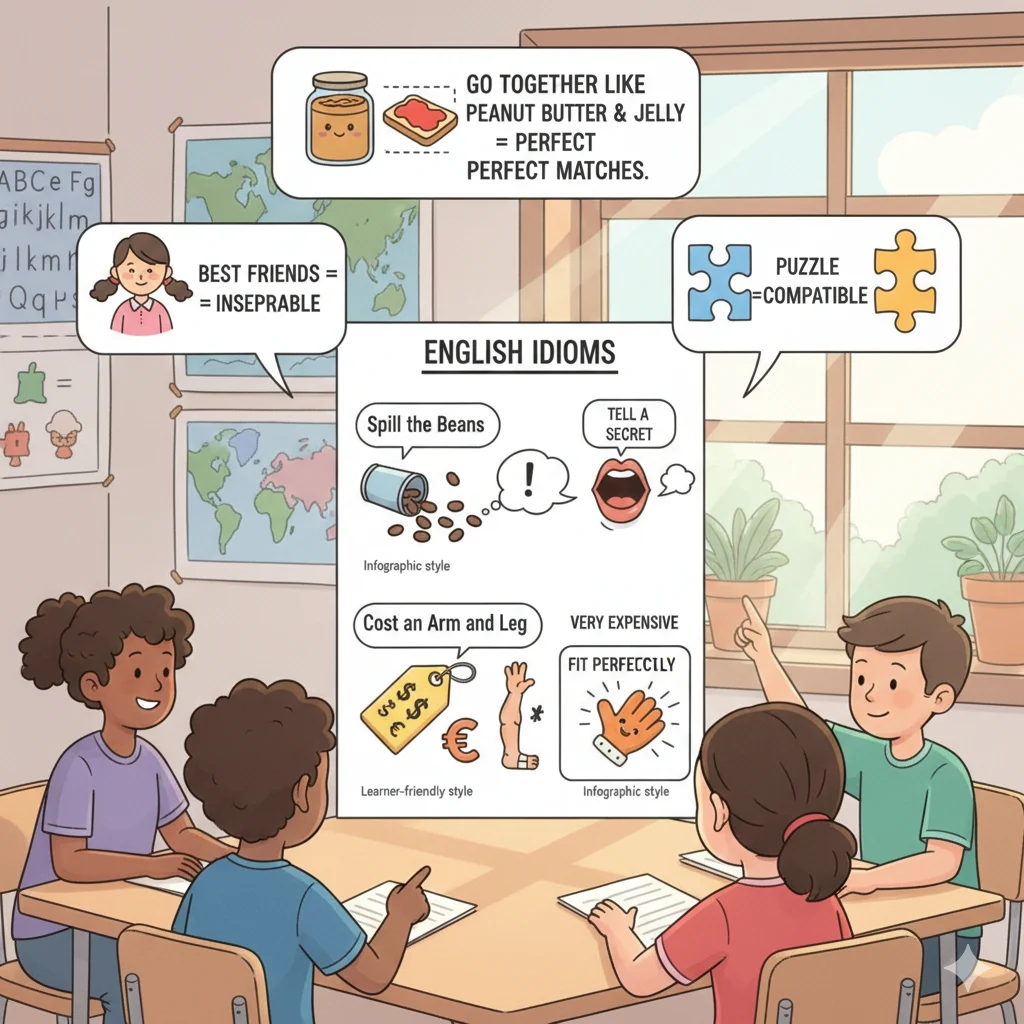
Word-by-word meaning: A hand fitting perfectly in a glove
Idiomatic meaning: Closely connected or cooperating
Example sentence:
Corruption and secrecy often go hand in glove.
Common error: Confusing it with physical contact
Usage note: Often used in formal or serious contexts
Like bread and butter
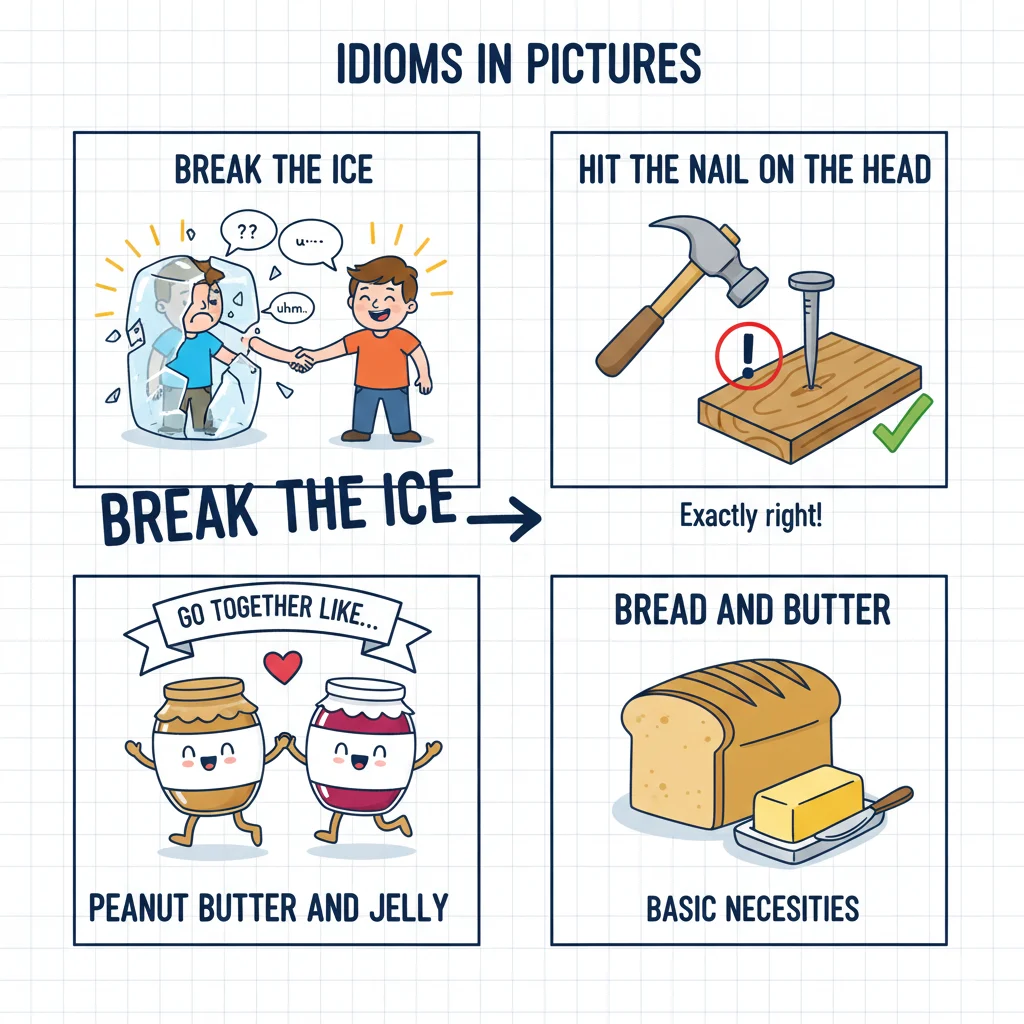
Word-by-word meaning: A basic food combination
Idiomatic meaning: Essential or inseparable
Example sentence:
For him, writing and coffee are like bread and butter.
Common error: Mixing it with “daily bread”
Usage note: Can mean livelihood as well
A match made in heaven

Word-by-word meaning: A perfect pairing created in heaven
Idiomatic meaning: An ideal combination
Example sentence:
That actor and director are a match made in heaven.
Common error: Using it sarcastically without context
Usage note: Common in relationships and teamwork
Go hand in hand
Word-by-word meaning: Holding hands
Idiomatic meaning: Closely connected
Example sentence:
Success and hard work go hand in hand.
Common error: Using it only for romance
Usage note: Very flexible and neutral
Joined at the hip
Word-by-word meaning: Physically connected
Idiomatic meaning: Always together
Example sentence:
They’ve been joined at the hip since college.
Common error: Using in formal writing
Usage note: Informal and conversational
Cut from the same cloth
Word-by-word meaning: Made from the same fabric
Idiomatic meaning: Very similar in character
Example sentence:
The two leaders are cut from the same cloth.
Common error: Using it for objects
Usage note: Often about values or behavior
Birds of a feather (flock together)
Word-by-word meaning: Similar birds stay together
Idiomatic meaning: Similar people associate
Example sentence:
Gamers tend to stick together—birds of a feather.
Common error: Forgetting “flock together”
Usage note: Can sound judgmental if misused
In the same boat
Word-by-word meaning: Sharing one boat
Idiomatic meaning: Sharing the same problem
Example sentence:
We’re all in the same boat with these exams.
Common error: Using it for positive situations
Usage note: Often used for challenges
Like chalk and cheese
Word-by-word meaning: Two very different things
Idiomatic meaning: Completely different
Example sentence:
The brothers are like chalk and cheese.
Common error: Using it to show similarity
Usage note: British English
A package deal
Word-by-word meaning: Items sold together
Idiomatic meaning: Things that come together
Example sentence:
With fame comes pressure—it’s a package deal.
Common error: Using it only for shopping
Usage note: Common in relationships and work
Two sides of the same coin
Word-by-word meaning: One coin, two sides
Idiomatic meaning: Different aspects of the same thing
Example sentence:
Risk and reward are two sides of the same coin.
Common error: Using it for unrelated ideas
Usage note: Neutral, semi-formal
Lock, stock, and barrel
Word-by-word meaning: All parts of a gun
Idiomatic meaning: Everything, completely
Example sentence:
He accepted the plan lock, stock, and barrel.
Common error: Using it for people
Usage note: Emphasizes completeness
Like milk and cookies
Word-by-word meaning: A classic snack pair
Idiomatic meaning: A comforting or perfect combo
Example sentence:
Their humor works together like milk and cookies.
Common error: Overusing in formal writing
Usage note: Informal and friendly tone
Made for each other
Word-by-word meaning: Created to match
Idiomatic meaning: Perfectly compatible
Example sentence:
Those business partners were made for each other.
Common error: Assuming romantic meaning only
Usage note: Works for people or ideas
Go together like fire and smoke
Word-by-word meaning: Fire produces smoke
Idiomatic meaning: Naturally connected
Example sentence:
Politics and controversy go together like fire and smoke.
Common error: Using it positively
Usage note: Often neutral or negative
Like father, like son
Word-by-word meaning: Parent and child similarity
Idiomatic meaning: Children resemble parents
Example sentence:
He’s a talented musician—like father, like son.
Common error: Using it only for sons
Usage note: Also used for mothers/daughters
Part and parcel
Word-by-word meaning: A component of something
Idiomatic meaning: An essential part
Example sentence:
Stress is part and parcel of the job.
Common error: Forgetting “of” after it
Usage note: Common in work-related contexts
Like oil and water
Word-by-word meaning: Two liquids that don’t mix
Idiomatic meaning: Cannot get along
Example sentence:
Those coworkers are like oil and water.
Common error: Using it for temporary conflict
Usage note: Strong expression of incompatibility
FAQs About Go Together Like Idioms
1. What are “go together like” idioms used for?
They describe things that naturally match, clash, or are inseparable.
2. Are these idioms formal or informal?
Most are informal, but some work in semi-formal writing.
3. Can I use these idioms in exams?
Yes, if used correctly and naturally.
4. Do these idioms work in American and British English?
Most do, but a few are region-specific.
5. How can I remember idioms easily?
Learn them in pairs and create personal examples.
Conclusion
Idioms aren’t just expressions—they’re shortcuts to sounding natural. By practicing these go together like idioms, you’ll add color, confidence, and clarity to your English.
👉 Pick 3 idioms today and use them in your next conversation or writing practice.

“L.P. Hartley brings classic idioms to life on LearnIdom.com, helping readers explore language with wit, clarity, and timeless insight.”