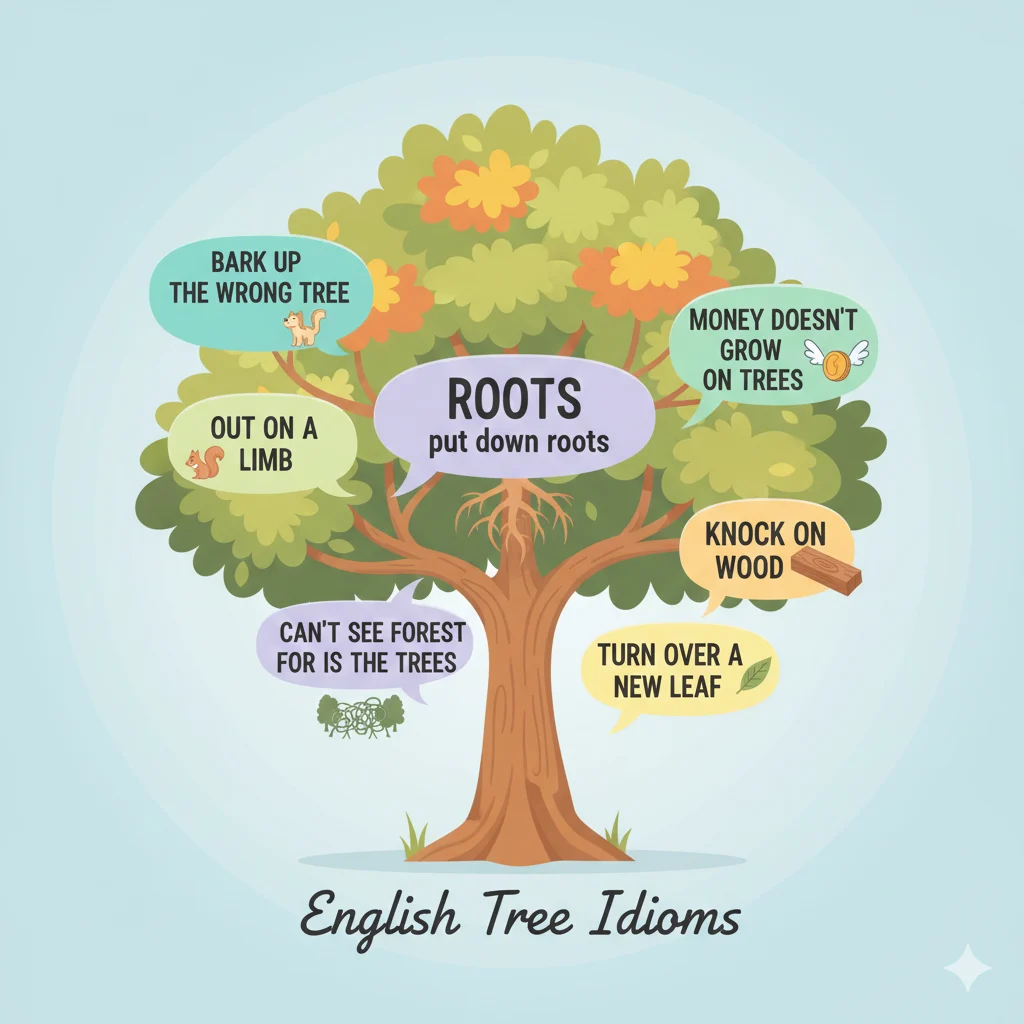
Idioms about trees are very common in spoken and written English. Native speakers use these expressions to talk about family, problems, growth, mistakes, and new beginnings. Although these idioms mention trees, forests, or leaves, their meanings are usually figurative—not literal.
Many students find them confusing at first, but once you understand the idea behind each idiom, they become easy to remember. I noticed that learners remember tree idioms faster because they create strong mental images.
In this article, you will learn 20 famous idioms about trees, explained in a simple and clear way. Each idiom includes its meaning, example sentence, common mistake, and a usage note to help you use it correctly in exams and daily conversation.
Bark Up the Wrong Tree
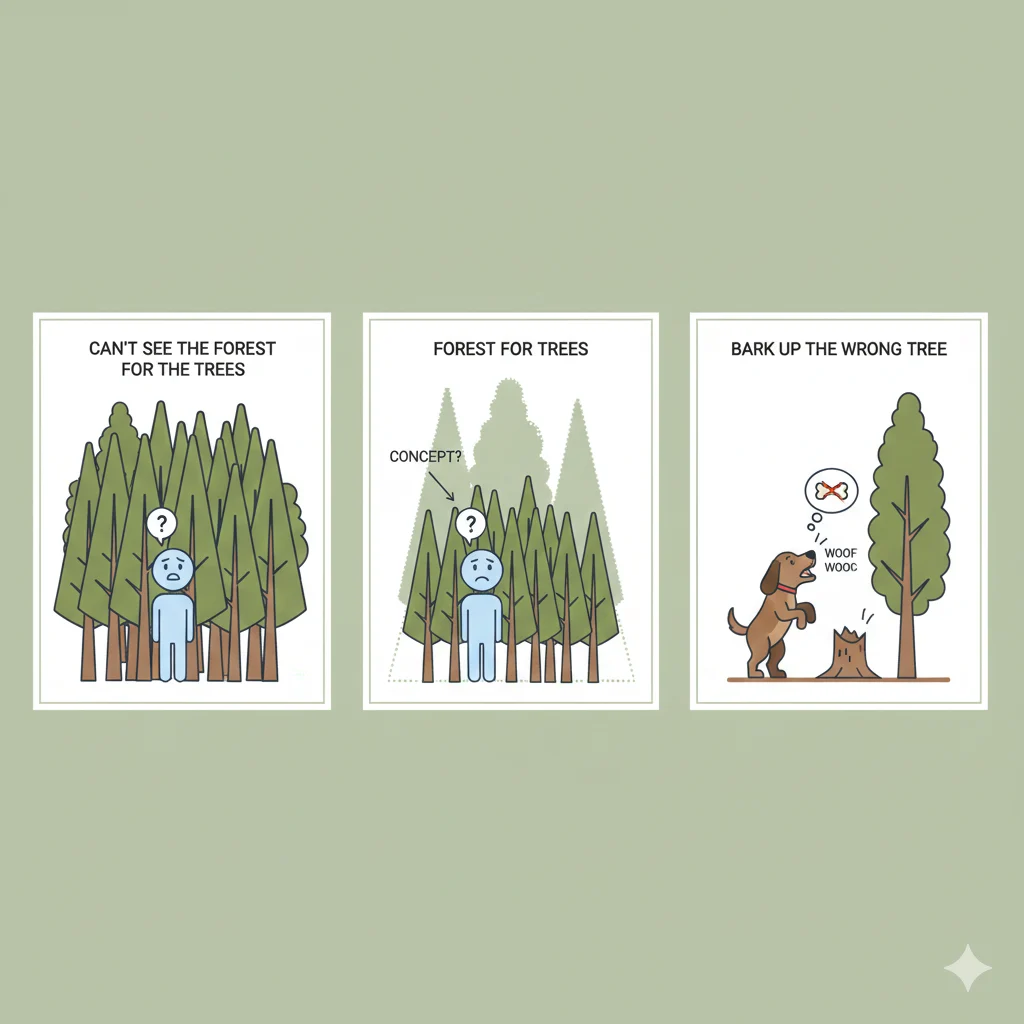
Word-by-word meaning: Barking at the wrong tree
Idiomatic meaning: Blaming or accusing the wrong person
Example sentence: You’re barking up the wrong tree if you think I broke the phone.
Common error: Using it for physical directions
Usage note: Often used to correct someone’s assumption
Can’t See the Forest for the Trees
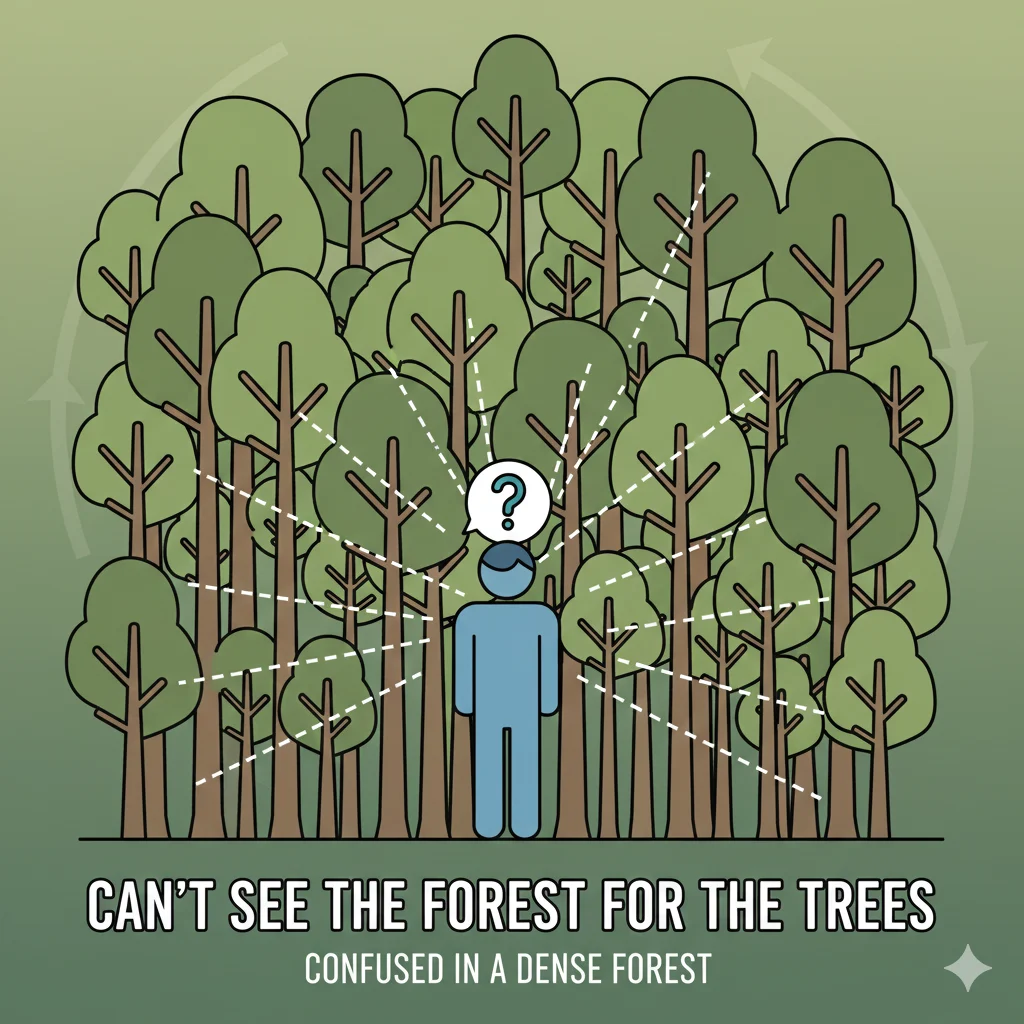
Word-by-word meaning: Trees hide the forest
Idiomatic meaning: Missing the big picture because of small details
Example sentence: He can’t see the forest for the trees when planning projects.
Common error: Mixing “forest” and “woods” incorrectly
Usage note: Common in academic and work contexts
The Apple Doesn’t Fall Far from the Tree

Word-by-word meaning: An apple falls near its tree
Idiomatic meaning: Children are similar to their parents
Example sentence: She’s hardworking like her father—the apple doesn’t fall far from the tree.
Common error: Using it for unrelated people
Usage note: Often positive, sometimes neutral
Out on a Limb

Word-by-word meaning: Standing on a tree branch
Idiomatic meaning: Taking a risk or making a bold statement
Example sentence: I’m out on a limb supporting this idea.
Common error: Using it for safe situations
Usage note: Informal expression
Branch Out

Word-by-word meaning: Grow new branches
Idiomatic meaning: Try new activities or ideas
Example sentence: She branched out into online teaching.
Common error: Forgetting “out”
Usage note: Positive and motivational
Put Down Roots
Word-by-word meaning: Grow roots into the ground
Idiomatic meaning: Settle permanently in one place
Example sentence: They put down roots in the city.
Common error: Using it for short visits
Usage note: About home, family, or lifestyle
Shake Like a Leaf
Word-by-word meaning: Leaf shaking in wind
Idiomatic meaning: Tremble with fear or cold
Example sentence: He was shaking like a leaf before the test.
Common error: Using only for excitement
Usage note: Informal
Money Doesn’t Grow on Trees
Word-by-word meaning: Money doesn’t come from trees
Idiomatic meaning: Money is limited and valuable
Example sentence: Don’t waste it—money doesn’t grow on trees.
Common error: Taking it literally
Usage note: Very common in families
Family Tree
Word-by-word meaning: Tree showing family branches
Idiomatic meaning: Diagram of family relationships
Example sentence: We made a family tree for our project.
Common error: Confusing it with genealogy terms
Usage note: Neutral and common
Turn Over a New Leaf
Word-by-word meaning: Flip a new leaf
Idiomatic meaning: Start fresh or improve behavior
Example sentence: He turned over a new leaf this year.
Common error: Wrong tense usage
Usage note: Common in advice
Root of the Problem
Word-by-word meaning: Root of a plant
Idiomatic meaning: Main cause of an issue
Example sentence: Poor planning is the root of the problem.
Common error: Using plural unnecessarily
Usage note: Works in formal writing
Grow Like a Weed
Word-by-word meaning: Fast-growing weed
Idiomatic meaning: Grow very quickly
Example sentence: Children grow like weeds.
Common error: Using it negatively only
Usage note: Informal and common
Dead Wood
Word-by-word meaning: Dry, useless wood
Idiomatic meaning: Useless person or thing
Example sentence: The team removed dead wood.
Common error: Using it too casually for people
Usage note: Can sound rude
As Solid as an Oak
Word-by-word meaning: Strong oak tree
Idiomatic meaning: Very strong or dependable
Example sentence: Her support is as solid as an oak.
Usage note: Compliment
Leaf Through
Word-by-word meaning: Turn pages like leaves
Idiomatic meaning: Look at pages quickly
Example sentence: I leafed through the newspaper.
Common error: Using “leaf” as a noun
Usage note: Verb phrase
Tree-Hugger
Word-by-word meaning: Someone hugging trees
Idiomatic meaning: Environmental activist
Example sentence: He proudly calls himself a tree-hugger.
Usage note: Can be humorous or critical
Cut Down to Size
Word-by-word meaning: Cut something smaller
Idiomatic meaning: Reduce pride or power
Example sentence: The failure cut him down to size.
Usage note: Negative tone
Wooden Expression
Word-by-word meaning: Expression like wood
Idiomatic meaning: Showing no emotion
Example sentence: She answered with a wooden expression.
Usage note: Descriptive
Old-Growth
Word-by-word meaning: Very old trees
Idiomatic meaning: Long-established or traditional
Example sentence: Old-growth traditions still exist here.
Usage note: Formal usage
Sapling Years
Word-by-word meaning: Young tree stage
Idiomatic meaning: Early years of life or career
Example sentence: In his sapling years, he learned discipline.
Usage note: Literary, less common
FAQ
1. What are idioms about trees?
Idioms about trees are expressions that use words like tree, leaf, root, or forest to give a figurative meaning, not a literal one.
2. Are idioms about trees common in daily English?
Yes, many tree idioms such as root of the problem and money doesn’t grow on trees are very common in everyday English.
3. Can students use tree idioms in exams?
Yes, students can use common and neutral tree idioms in writing and speaking exams, but very informal ones should be avoided.
4. Why do learners find tree idioms easy to remember?
Because tree idioms create clear mental images, which makes their meanings easier to understand and remember.
5. How can I practice idioms about trees effectively?
Practice by making your own sentences, using them in conversations, and noticing how native speakers use them in real life.
Conclusion
Learning idioms about trees helps you understand real English and express ideas naturally. Practice a few idioms daily and try using them in sentences. With time, your vocabulary will grow—just like a tree 🌳.

“Iris Murdoch explores the beauty of language and idioms on LearnIdom.com, making learning phrases engaging, memorable, and fun for everyone.”