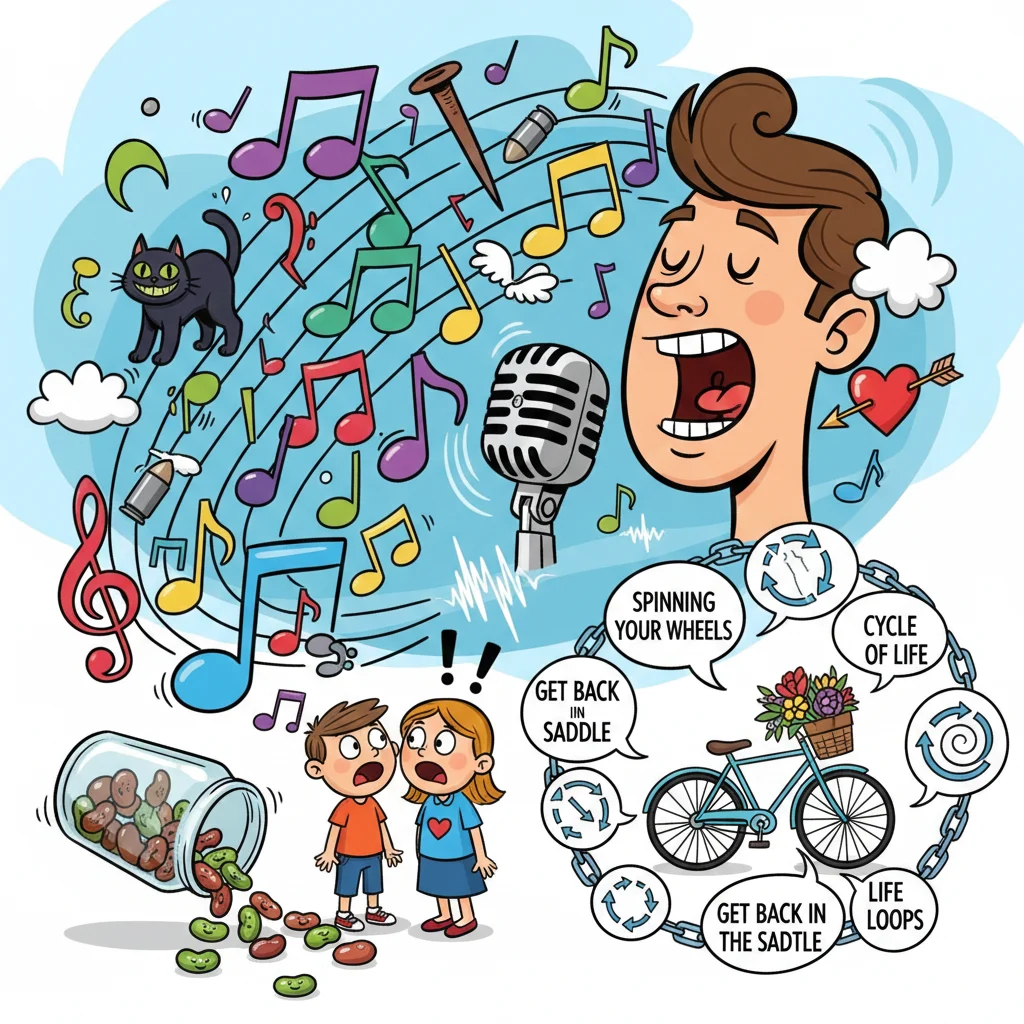
Ever feel like life is just repeating itself? That’s where cycle idioms come in! These expressions describe routines, patterns, or repeating events in a fun and memorable way.
Think about riding a bike: sometimes smooth, sometimes bumpy, sometimes going in circles—just like our experiences. English speakers love using cycle idioms to make conversations lively and relatable.
Whether in storytelling, writing, or casual chat, these idioms give your language color and personality. In this guide, we’ll explore 20 famous cycle idioms with word-by-word meanings, figurative interpretations, example sentences, common errors, and usage tips.
By the end, you’ll be able to sprinkle these idioms naturally into everyday conversation and writing!
What Goes Around Comes Around

- Word-by-word meaning: Actions (what) that move in a circle (goes around) eventually return (comes around).
- Idiomatic meaning: Your actions, good or bad, will eventually have consequences.
- Example sentence: “He cheated his colleagues, and now he’s facing legal trouble. What goes around comes around.”
- Common error: Using it only for bad actions; it applies to good deeds too.
- Usage note: Often used in moral lessons or reflective conversations.
Full Circle
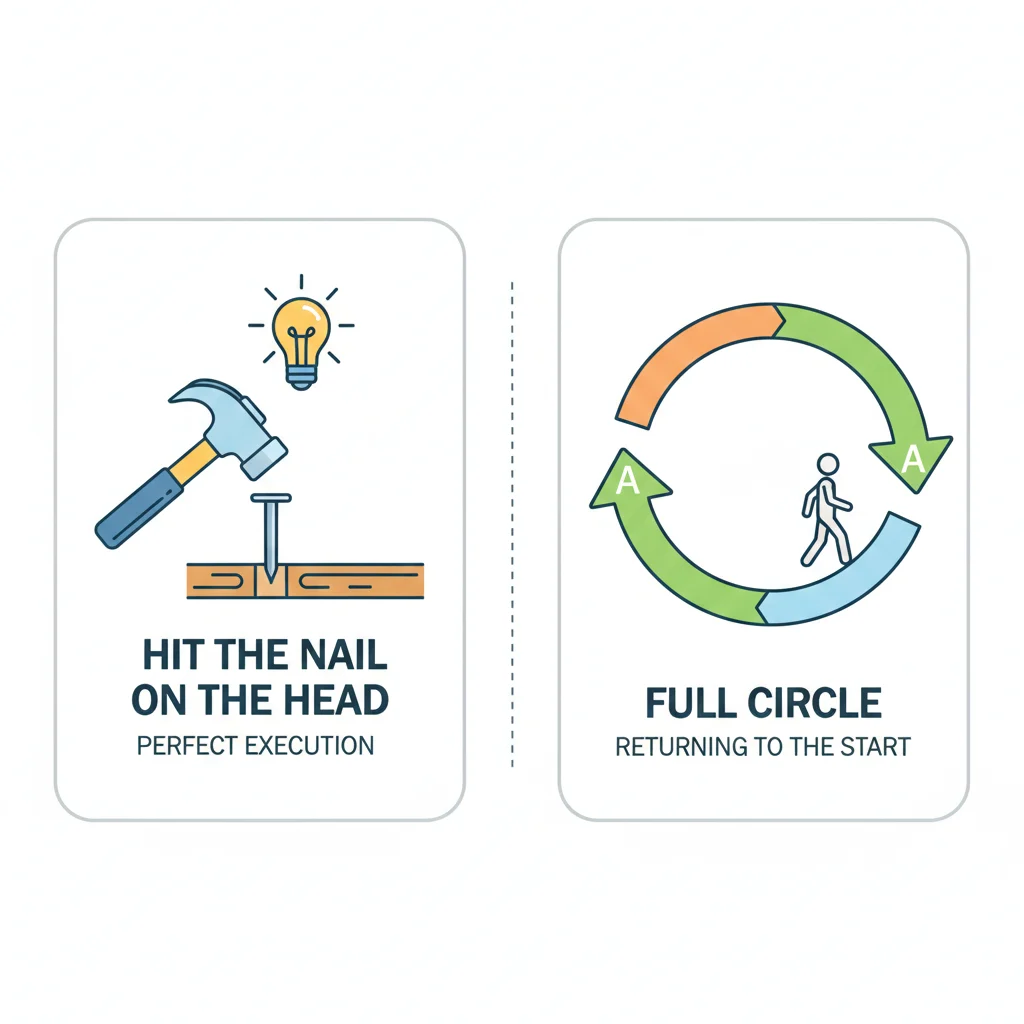
- Word-by-word meaning: Completing a loop entirely.
- Idiomatic meaning: Returning to the original position or situation after a journey or process.
- Example sentence: “After years abroad, she returned home full circle to run her family business.”
- Common error: Confusing with “come around”; full circle implies completion.
- Usage note: Perfect for personal growth stories or journeys.
270+ Must-Know Song Lyrics Featuring Idioms 🎤🔥
Go in Circles
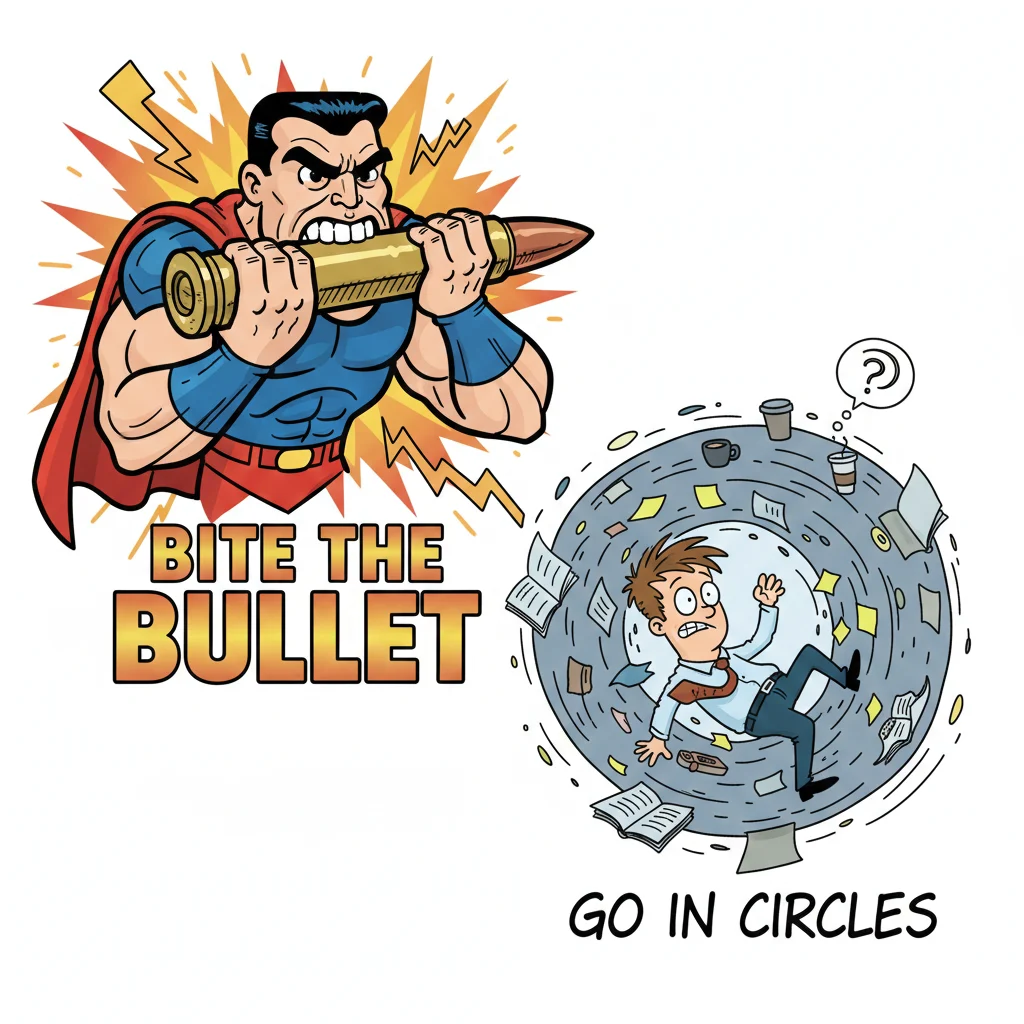
- Word-by-word meaning: Move repeatedly around the same point.
- Idiomatic meaning: Doing something repeatedly without progress.
- Example sentence: “We’ve been going in circles trying to solve this puzzle.”
- Common error: Misinterpreting as actual circular motion; it’s metaphorical.
- Usage note: Use in problem-solving or unproductive situations.
Break the Cycle

- Word-by-word meaning: Stop a repeating pattern.
- Idiomatic meaning: End a negative habit, routine, or pattern.
- Example sentence: “She wanted to break the cycle of unhealthy relationships.”
- Common error: Forgetting that the “cycle” often refers to negative patterns.
- Usage note: Motivational and self-improvement contexts.
Life in the Fast Lane
- Word-by-word meaning: A lane for high-speed travel in life.
- Idiomatic meaning: Living a fast, exciting, and sometimes risky life.
- Example sentence: “He’s been living life in the fast lane since he started his new job.”
- Common error: Assuming it’s always negative; context matters.
- Usage note: Often used to describe energetic lifestyles.
Pedal to the Metal
- Word-by-word meaning: Press the pedal fully to the car’s metal floor.
- Idiomatic meaning: Go as fast or work as hard as possible.
- Example sentence: “The team put the pedal to the metal to meet the deadline.”
- Common error: Using literally for bicycles only; it’s metaphorical.
- Usage note: Often used in work, sports, or high-energy tasks.
Back on Track
- Word-by-word meaning: Return to the track after a detour.
- Idiomatic meaning: Return to the right path after a disruption.
- Example sentence: “After the setback, the project is finally back on track.”
- Common error: Confusing with “full circle”; back on track means recovery, not completion.
- Usage note: Common in professional, academic, and personal contexts.
On the Wheel
- Word-by-word meaning: Being on or controlling a wheel.
- Idiomatic meaning: Being in control of a situation.
- Example sentence: “He’s really on the wheel with this project management.”
- Common error: Misunderstanding as literal cycling; it’s about control.
- Usage note: Motivational or leadership contexts.
Cycle of Life
- Word-by-word meaning: Life moves in repeating patterns.
- Idiomatic meaning: Natural sequence of life events.
- Example sentence: “Birth, growth, and death are all part of the cycle of life.”
- Common error: Using only in philosophical writing; can be used casually too.
- Usage note: Great for storytelling or life reflections.
Spin Your Wheels
- Word-by-word meaning: Wheels spin without moving forward.
- Idiomatic meaning: Make efforts without progress.
- Example sentence: “We’ve been spinning our wheels on this issue for hours.”
- Common error: Thinking it’s positive; usually negative.
- Usage note: Often used in frustration or problem-solving.
Go Full Tilt
- Word-by-word meaning: Move at maximum speed or intensity.
- Idiomatic meaning: Put in maximum effort or energy.
- Example sentence: “She went full tilt to finish her exams on time.”
- Common error: Confusing with “pedal to the metal”; tilt is broader intensity.
- Usage note: Can describe physical or mental efforts.
Take a Spin
- Word-by-word meaning: Go for a ride.
- Idiomatic meaning: Try something out or experience briefly.
- Example sentence: “Let’s take the new bike for a spin this weekend.”
- Common error: Not always literal; can mean testing ideas too.
- Usage note: Casual conversations and friendly advice.
Out of the Loop
- Word-by-word meaning: Outside the circle of information.
- Idiomatic meaning: Not informed or excluded from knowledge.
- Example sentence: “I was out of the loop about the company’s new policy.”
- Common error: Misinterpreting as isolation; it’s about missing info.
- Usage note: Office, group work, and social situations.
Round and Round
- Word-by-word meaning: Moving in circles repeatedly.
- Idiomatic meaning: Repeating the same actions endlessly.
- Example sentence: “The discussion went round and round without a solution.”
- Common error: Using for progress; implies no progress.
- Usage note: Good for describing repetitive conflicts or routines.
Hit a Dead End
- Word-by-word meaning: Reach a street or path that stops.
- Idiomatic meaning: Reach a point with no progress possible.
- Example sentence: “Our research hit a dead end, so we started over.”
- Common error: Confusing with failure; it’s temporary obstacle.
- Usage note: Problem-solving or project contexts.
Ride Out the Storm
- Word-by-word meaning: Stay on a ride during bad weather.
- Idiomatic meaning: Endure difficult situations until they pass.
- Example sentence: “We just need to ride out the storm and things will improve.”
- Common error: Thinking it means avoiding; it’s about enduring.
- Usage note: Motivational and supportive contexts.
Jump on the Bandwagon
- Word-by-word meaning: Join a moving wagon.
- Idiomatic meaning: Follow a popular trend or activity.
- Example sentence: “Everyone started investing in crypto; he jumped on the bandwagon too.”
- Common error: Assuming commitment; it’s temporary trend-following.
- Usage note: Casual conversations about trends or popularity.
In the Loop
- Word-by-word meaning: Inside the circle of information.
- Idiomatic meaning: Being informed or included.
- Example sentence: “Keep me in the loop about the project updates.”
- Common error: Confusing with “out of the loop”; opposite meaning.
- Usage note: Professional and group communication.
Keep the Ball Rolling
- Word-by-word meaning: Keep the ball moving.
- Idiomatic meaning: Maintain momentum or progress.
- Example sentence: “Let’s keep the ball rolling and finish this task today.”
- Common error: Using literally; it’s metaphorical.
- Usage note: Motivational and work-related contexts.
Wheel and Deal
- Word-by-word meaning: Turn the wheel and make deals.
- Idiomatic meaning: Negotiate or maneuver cleverly.
- Example sentence: “He likes to wheel and deal to get the best prices.”
- Common error: Thinking it’s only about business; can apply socially.
- Usage note: Negotiation, business, or clever maneuvering contexts.
Conclusion
Cycle idioms make your English expressive, relatable, and fun. Practice these 20 idioms daily in conversations, writing, or storytelling. Start using one idiom per day, and you’ll notice your language skills cycling to a whole new level!

“Wilkie Collins brings classic idioms to life on LearnIdom.com, making language learning engaging, memorable, and full of literary charm.”