
College life isn’t just about lectures, exams, and deadlines—it’s also full of unique expressions that students and professors use every day. These college idioms often confuse learners because their meanings go far beyond the literal words.
Imagine your professor saying, “This exam will separate the wheat from the chaff,” or a friend joking, “I’m pulling an all-nighter again.” If you take these phrases word for word, they might sound strange or even funny.
Understanding college idioms helps you follow conversations, sound more natural, and feel more confident in academic and campus life.
Whether you’re an international student, an ESL learner, or just curious, this guide will walk you through the most common expressions you’ll hear in college hallways, classrooms, and study groups.
Pull an All-Nighter
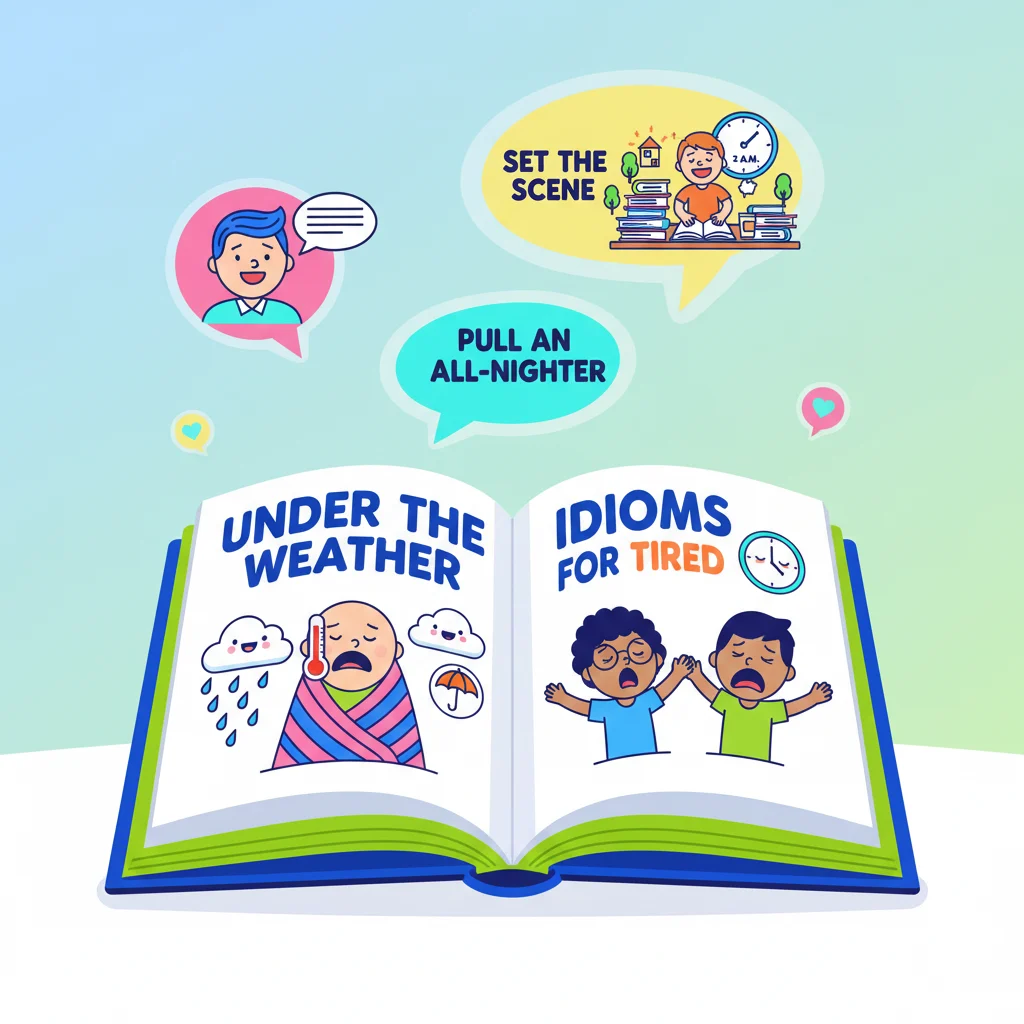
Word-by-word meaning: Stay awake all night
Idiomatic meaning: Study or work without sleeping
Example sentence: I pulled an all-nighter to finish my history paper.
Common error: Using it for fun activities only
Usage note: Mostly used for studying or deadlines
Hit the Books

Word-by-word meaning: Physically hit books
Idiomatic meaning: Study seriously
Example sentence: Finals are coming, so it’s time to hit the books.
Common error: Thinking it involves reading casually
Usage note: Very common in student conversations
Ace the Exam

Word-by-word meaning: Get an ace
Idiomatic meaning: Do extremely well on a test
Example sentence: She aced the chemistry exam.
Common error: Using it for average results
Usage note: Informal and positive
Cram for a Test

Word-by-word meaning: Force things into a small space
Idiomatic meaning: Study intensively in a short time
Example sentence: I crammed all night before the math test.
Common error: Using it for long-term studying
Usage note: Often implies stress or poor planning
Pass with Flying Colors

Word-by-word meaning: Pass while colors fly
Idiomatic meaning: Succeed very easily
Example sentence: He passed the entrance exam with flying colors.
Common error: Using it for small achievements
Usage note: Works for exams, interviews, or courses
Drop a Class
Word-by-word meaning: Physically drop something
Idiomatic meaning: Withdraw from a course
Example sentence: I dropped a class to reduce my workload.
Common error: Confusing it with failing
Usage note: Common in academic advising
Skip Class
Word-by-word meaning: Jump over a class
Idiomatic meaning: Not attend a lecture
Example sentence: He skipped class to finish a project.
Common error: Using it in formal writing
Usage note: Informal and conversational
Burn the Midnight Oil
Word-by-word meaning: Use oil late at night
Idiomatic meaning: Work or study late
Example sentence: She burned the midnight oil during finals week.
Common error: Mixing it with early-morning work
Usage note: Slightly old-fashioned but still common
Learn the Ropes
Word-by-word meaning: Learn how ropes work
Idiomatic meaning: Understand how something functions
Example sentence: It took me weeks to learn the ropes of college life.
Common error: Using it for expert-level knowledge
Usage note: Great for first-year experiences
Fresh Out of High School
Word-by-word meaning: Recently exited school
Idiomatic meaning: Very new or inexperienced
Example sentence: He’s fresh out of high school and adjusting to college.
Common error: Using it for older students
Usage note: Descriptive, neutral tone
On a Tight Schedule
Word-by-word meaning: Schedule that is tight
Idiomatic meaning: Very little free time
Example sentence: I’m on a tight schedule this semester.
Common error: Using it only for exams
Usage note: Works for students and professors
Get Cold Feet
Word-by-word meaning: Feet feel cold
Idiomatic meaning: Feel nervous and hesitate
Example sentence: She got cold feet before choosing her major.
Common error: Taking it literally
Usage note: Used for decisions
In the Same Boat
Word-by-word meaning: Share a boat
Idiomatic meaning: Be in the same situation
Example sentence: We’re all in the same boat during finals.
Common error: Using it for unequal situations
Usage note: Expresses empathy
Keep Your Head Above Water
Word-by-word meaning: Avoid sinking
Idiomatic meaning: Manage despite difficulties
Example sentence: I’m just keeping my head above water this semester.
Common error: Using it for success
Usage note: Often about workload or stress
Get the Hang of It
Word-by-word meaning: Hang onto something
Idiomatic meaning: Learn how to do something
Example sentence: I finally got the hang of online classes.
Common error: Using it for mastery
Usage note: Casual and friendly
Make the Grade
Word-by-word meaning: Achieve a grade
Idiomatic meaning: Meet expectations
Example sentence: His project didn’t quite make the grade.
Common error: Using it only for exams
Usage note: Can apply to performance
On the Same Page
Word-by-word meaning: Read same page
Idiomatic meaning: Agree or understand equally
Example sentence: Let’s make sure we’re on the same page about the assignment.
Common error: Using it literally
Usage note: Common in group work
Behind the Curve
Word-by-word meaning: Positioned behind a curve
Idiomatic meaning: Not up to date
Example sentence: I’m behind the curve in statistics.
Common error: Confusing it with being last
Usage note: Academic and informal
Raise the Bar
Word-by-word meaning: Lift a bar higher
Idiomatic meaning: Increase standards
Example sentence: This professor really raises the bar.
Common error: Using it for lowering standards
Usage note: Often about expectations
The Final Stretch
Word-by-word meaning: Last part of a long path
Idiomatic meaning: Last stage of something difficult
Example sentence: It’s the final stretch before graduation.
Common error: Using it at the beginning
Usage note: Motivational tone
Frequently Asked Questions About College Idioms
1. What are college idioms?
College idioms are common expressions used in academic and campus life that have meanings beyond their literal words.
2. Why should students learn college idioms?
They help students understand conversations, lectures, and campus culture more naturally.
3. Are college idioms used in formal writing?
Most are informal and better suited for speaking or casual writing.
4. Can international students use college idioms?
Yes! Using them correctly can improve fluency and confidence.
5. How can I practice college idioms?
Listen to campus conversations, watch college-themed shows, and use them in daily speech.
Conclusion
Learning college idioms is like unlocking a hidden layer of campus communication. The more you notice and practice them, the more natural your English will sound. Try using one or two idioms this week in conversations or writing. Little by little, they’ll stick—and soon, you’ll feel completely at home in college conversations.

“Wilkie Collins brings classic idioms to life on LearnIdom.com, making language learning engaging, memorable, and full of literary charm.”