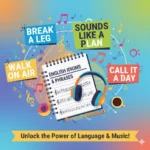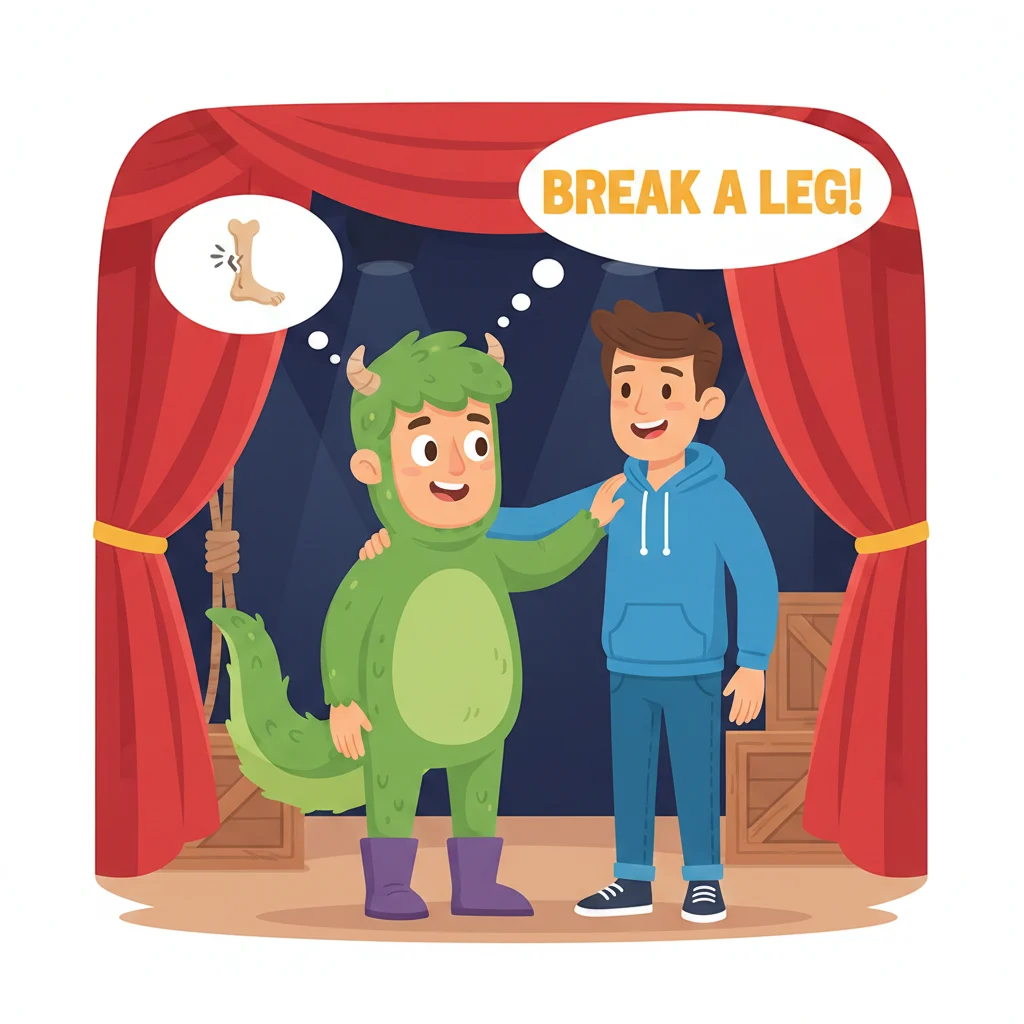
English idioms often sound strange when taken literally, and “break a leg” is one of the most confusing examples. If someone says this before an exam, performance, or interview, they are not wishing you harm at all. In fact, the break a leg meaning in idioms is completely positive—it means good luck.
This expression is especially popular in theater, public speaking, and competitive situations. Many English learners feel surprised or even shocked when they hear it for the first time. I remember hearing it before a school presentation and wondering why anyone would say something so negative. Later, I learned it was actually a kind wish.
Understanding idioms like this helps you sound more natural, confident, and fluent in real-life English conversations. In this article, you will learn the meaning, usage, examples, and related idioms in a clear and practical way.
Break a Leg
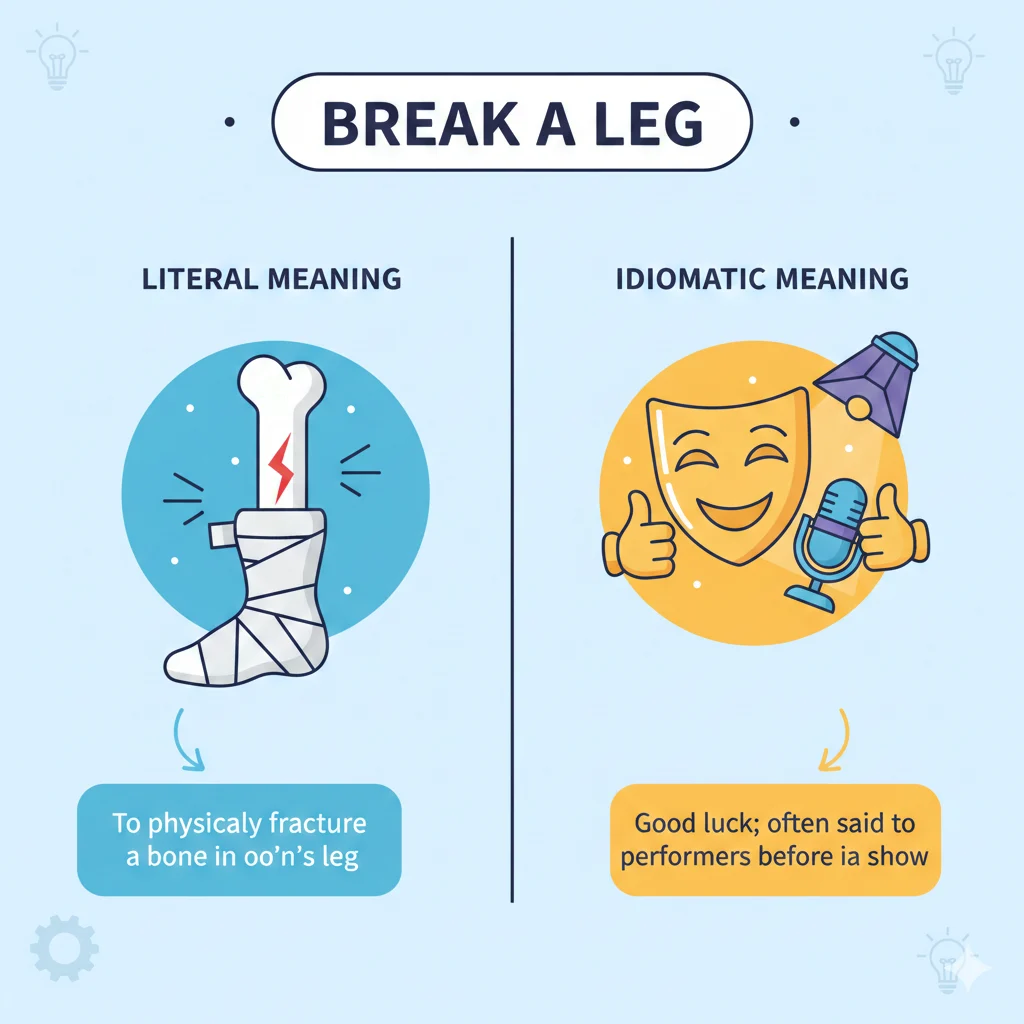
Word-by-word meaning:
- Break = damage
- Leg = body part
Idiomatic meaning:
To wish someone good luck, especially before a performance or important event.
Example sentences:
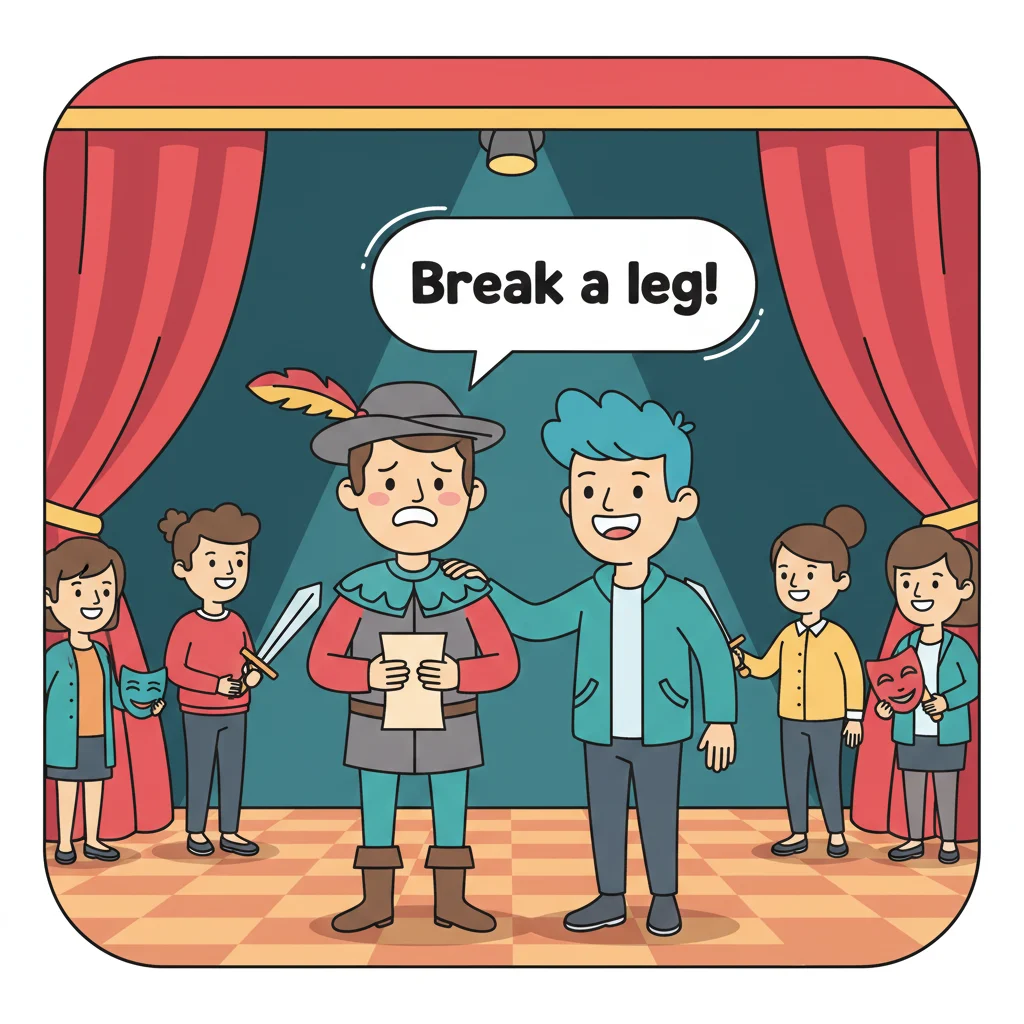
- You have a test today? Break a leg!
- Break a leg on stage tonight.
Common error:
❌ Thinking it means something bad
✔️ It is always positive
Usage note:
Used before an event, not after.
Knock ’Em Dead
Word-by-word meaning:
- Knock = hit
- Dead = not alive
Idiomatic meaning:
To impress people strongly.
Example sentences:

- Go knock ’em dead in your interview!
- She knocked them dead with her speech.
Common error:
❌ Using it in sad situations
✔️ Use it only for encouragement
Steal the Show
Word-by-word meaning:
- Steal = take
- Show = performance
Idiomatic meaning:
To be the best and most memorable performer.
Example sentences:
- The child actor stole the show.
- Her dance stole the show.
Usage note:
Often used after a performance.
On the Ball
Word-by-word meaning:
- Ball = object used in sports
Idiomatic meaning:
To be alert, active, and quick-thinking.
Example sentences:
- She’s really on the ball at work.
- Stay on the ball during the exam.
Hit the Stage
Word-by-word meaning:
- Hit = arrive
- Stage = performance area
Idiomatic meaning:
To begin performing.
Example sentences:
- The singer hits the stage at 8 PM.
- The band hit the stage confidently.
Take Center Stage
Word-by-word meaning:
- Center = middle
- Stage = platform
Idiomatic meaning:
To become the main focus of attention.
Example sentences:
- Education took center stage in the meeting.
- She took center stage in the discussion.
In the Spotlight
Word-by-word meaning:
- Spotlight = strong light
Idiomatic meaning:
To receive a lot of attention.
Example sentences:
- The winner is in the spotlight.
- Celebrities live in the spotlight.
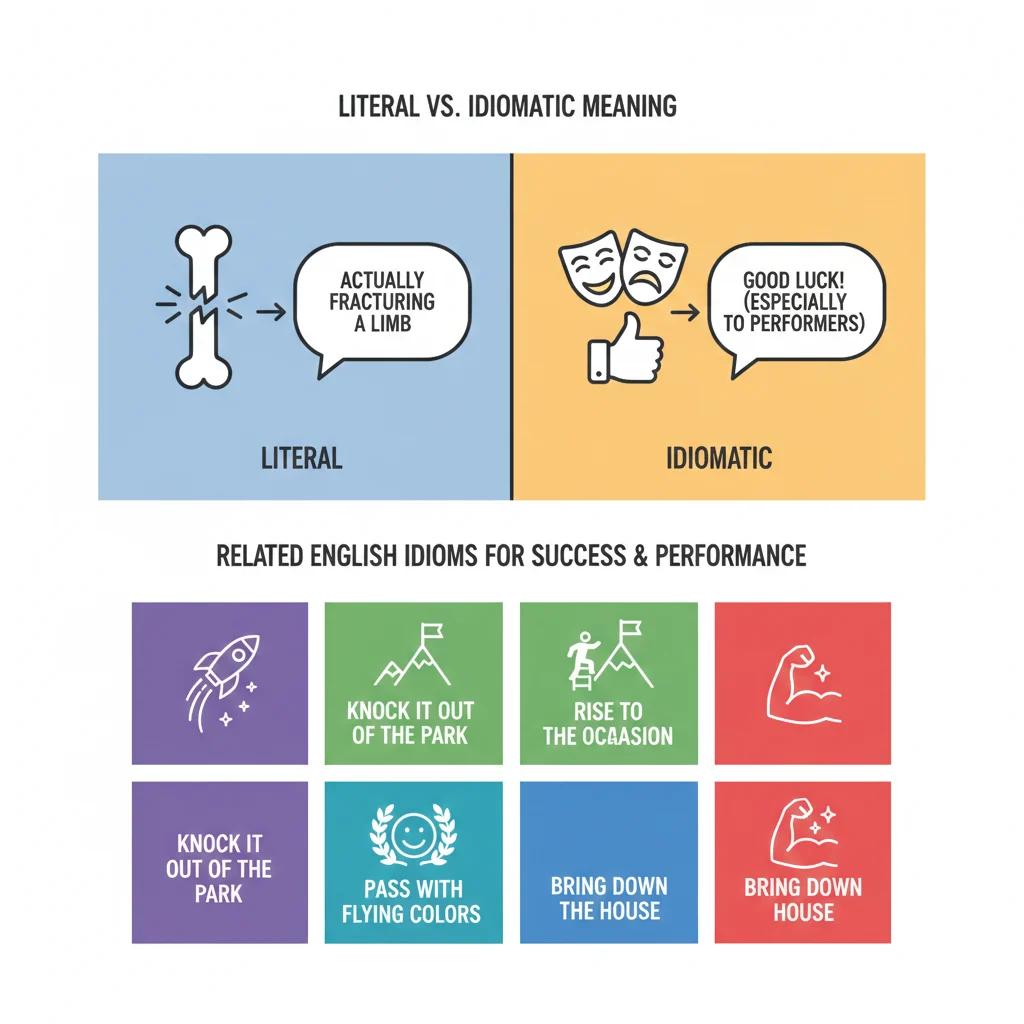
Rise to the Occasion
Word-by-word meaning:
- Rise = go up
- Occasion = event
Idiomatic meaning:
To perform well in a difficult situation.
Example sentences:
- He rose to the occasion during the final.
- She rose to the occasion when needed.
Bring the House Down
Word-by-word meaning:
- House = building
Idiomatic meaning:
To receive huge applause or laughter.
Example sentences:
- The comedian brought the house down.
- Her song brought the house down.
Have Butterflies (in Your Stomach)
Word-by-word meaning:
- Butterflies = insects
Idiomatic meaning:
To feel nervous or excited.
Example sentences:
- I had butterflies before the test.
- She gets butterflies before speaking.
Ace It
Word-by-word meaning:
- Ace = top score
Idiomatic meaning:
To do extremely well.
Example sentences:
- You’ll ace the exam!
- He aced the interview.
Hit It Out of the Park
Word-by-word meaning:
- Park = baseball field
Idiomatic meaning:
To be very successful.
Example sentences:
- She hit it out of the park with her project.
- That presentation hit it out of the park.
Make a Splash
Word-by-word meaning:
- Splash = water sound
Idiomatic meaning:
To attract attention quickly.
Example sentences:
- The new actor made a splash.
- The product made a big splash.
Give It Your All
Word-by-word meaning:
- All = everything
Idiomatic meaning:
To try your best.
Example sentences:
- Give it your all in the competition.
- She gave it her all.
Show Your Stuff
Word-by-word meaning:
- Stuff = skills
Idiomatic meaning:
To show your abilities.
Example sentences:
- Now’s your time to show your stuff.
- He showed his stuff on stage.
Pull It Off
Word-by-word meaning:
- Pull = remove
Idiomatic meaning:
To succeed despite difficulty.
Example sentences:
- They pulled off the event.
- She pulled it off beautifully.
Step Up Your Game
Word-by-word meaning:
- Step up = increase
Idiomatic meaning:
To improve performance.
Example sentences:
- You need to step up your game.
- The team stepped up their game.
In Fine Form
Word-by-word meaning:
- Fine = good
- Form = condition
Idiomatic meaning:
To be performing very well.
Example sentences:
- The players are in fine form.
- She’s in fine form today.
Go Over Big
Word-by-word meaning:
- Big = large
Idiomatic meaning:
To be liked by many people.
Example sentences:
- The joke went over big.
- His speech went over big.
Nailed It
Word-by-word meaning:
- Nail = fix firmly
Idiomatic meaning:
To do something perfectly.
Example sentences:
- You nailed the performance!
- She nailed the answer.
FAQs About “Break a Leg” Meaning in Idioms
1. Is “break a leg” rude?
No. It’s a friendly and positive idiom meaning good luck.
2. Can I say “break a leg” to anyone?
Best used with friends, performers, or colleagues—not in formal writing.
3. Why don’t people just say “good luck”?
In theater tradition, saying “good luck” was believed to bring bad luck.
4. Is “break a leg” used outside theater?
Yes! It’s now common before exams, interviews, and presentations.
5. Do other languages have similar idioms?
Yes—many languages use ironic phrases to wish good luck.
Conclusion
Understanding the break a leg meaning in idioms helps you sound more natural and confident in English.
Try using it—and the related idioms—in conversations, role-plays, or writing exercises.
👉 Your challenge: Pick 3 idioms from this list and use them in sentences today!

“L.P. Hartley brings classic idioms to life on LearnIdom.com, helping readers explore language with wit, clarity, and timeless insight.”