Many English learners and writers search online for “agast or aghast.” The reason is simple: people often hear this word in movies, news, or conversations, but they are unsure how to spell it correctly.
When someone tries to write the word, they may type agast, agasp, or even arghast. These spellings appear in search queries such as:
- Agast or aghast meaning
- Agast or aghast in English
- Aghast pronunciation
- Aghast in a sentence
- Agast or aghast examples
The confusion happens because English spelling does not always match pronunciation. When people hear “uh-gast,” they guess the spelling and often write it incorrectly.
The correct word is aghast, and it describes a strong feeling of shock, horror, or extreme surprise. It is often used in storytelling, journalism, and everyday conversations.
In this complete guide, you will learn:
- The correct spelling: agast or aghast
- The real aghast meaning
- Aghast pronunciation
- Aghast synonyms and antonyms
- Real aghast in a sentence examples
- Why people spell the word incorrectly
By the end, you will clearly understand how to use aghast correctly in English writing and speech.
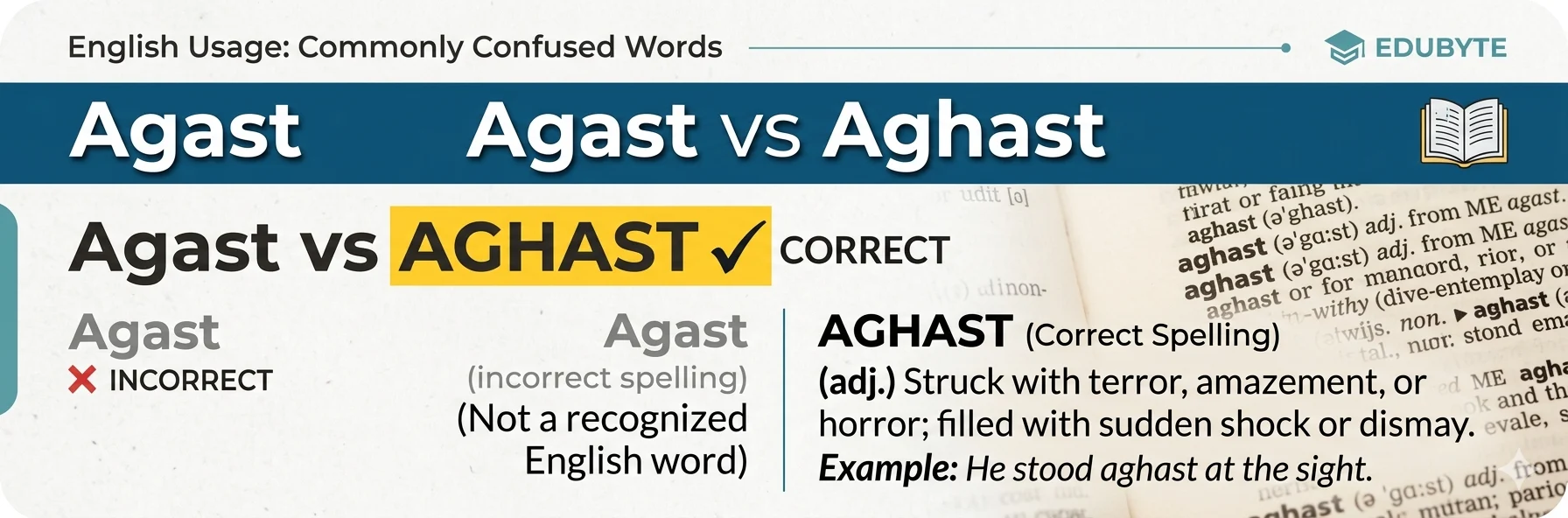
Agast or Aghast
The correct spelling is aghast.
The word agast is simply a misspelling.
Aghast Meaning
Aghast means:
very shocked, horrified, or extremely surprised.
People feel aghast when something shocking or unexpected happens.
Simple Definition
Aghast = shocked or horrified
Example Sentences
Here are some aghast in a sentence examples:
- She was aghast when she saw the damage to her car.
- I was aghast at the price of the concert ticket.
- The teacher looked aghast after hearing the student’s rude comment.
- Everyone stood aghast after the sudden announcement.
Many learners search “Agast or aghast meaning” because they hear the word but are unsure of the spelling.
Aghast Synonym
Common aghast synonym words include:
- shocked
- horrified
- stunned
- appalled
- speechless
- amazed
- terrified
Aghast Antonyms
Common aghast antonyms include:
- calm
- relaxed
- unsurprised
- pleased
- comfortable
The Origin of Aghast
The word aghast has an interesting history in the English language.
It comes from Old English and has roots in early Germanic languages.
Old English Root
The word comes from the Old English verb:
“gæstan”
Meaning:
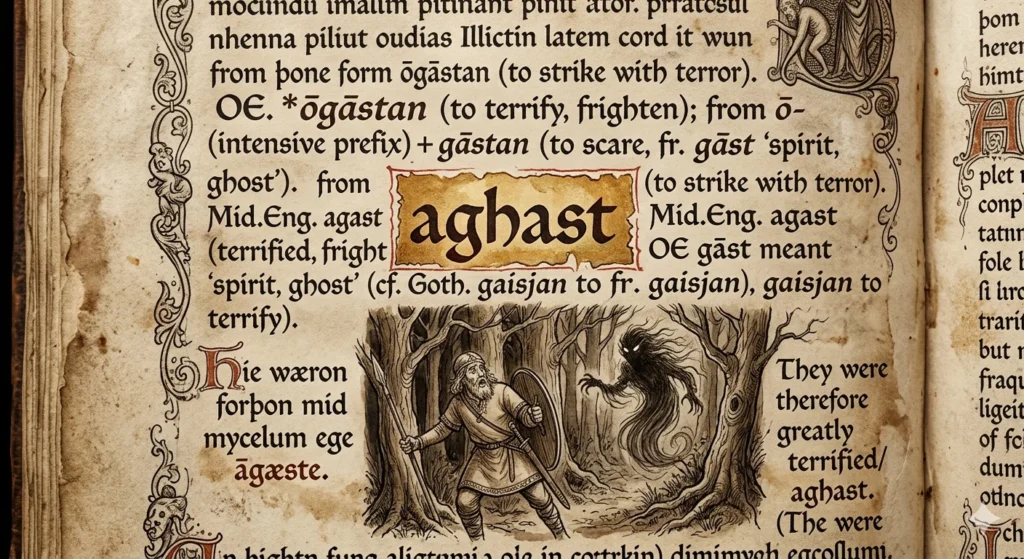
- to frighten
- to terrify
- to scare
Over time, the word developed into aghast, which describes the feeling of being shocked or horrified.
Historical Meaning
Originally, the word described someone who looked frightened or terrified.
Later, the meaning expanded to include shock and disbelief.
Why People Write “Agast”
The confusion between agast or aghast happens because:
- The “gh” sound is silent.
- Many English words drop silent letters in modern spelling.
- People write the word based on pronunciation.
This leads to searches like:
- What does agast mean?
- What does agasp mean?
- What does Arghast mean?
However:
| Word | Status |
|---|---|
| Agast | Incorrect spelling |
| Agasp | Typo |
| Arghast | Incorrect |
| Aghast | Correct English word |
British English vs American English Spelling
Many English words have different spellings in British English and American English.
Examples include:
| British English | American English |
|---|---|
| Colour | Color |
| Favourite | Favorite |
| Centre | Center |
| Theatre | Theater |
However, aghast does not change spelling.
Both British and American English use the same form.
Spelling Comparison Table
| Word | British English | American English | Correct? |
|---|---|---|---|
| Aghast | Aghast | Aghast | ✔ Correct |
| Agast | Incorrect | Incorrect | ✘ Wrong |
| Agasp | Incorrect | Incorrect | ✘ Wrong |
| Arghast | Incorrect | Incorrect | ✘ Wrong |
Key Rule
If you are asking “Agast or aghast in English?”
The answer is simple:
Always write “aghast.”
Which Spelling Should You Use?
If you want correct English writing, always use aghast.
For American Audience
Use aghast.
Example:
Many Americans were aghast at the shocking news.
For British Audience
Use aghast.
Example:
The audience was aghast at the sudden announcement.
For International English
Use aghast.
It is accepted worldwide in:
- journalism
- books
- academic writing
- social media
- business communication
Simple Rule
❌ agast
✔ aghast
Common Mistakes with Aghast
Many learners make small mistakes with this word.
Here are the most common ones.
Mistake : Writing “Agast”
Wrong:
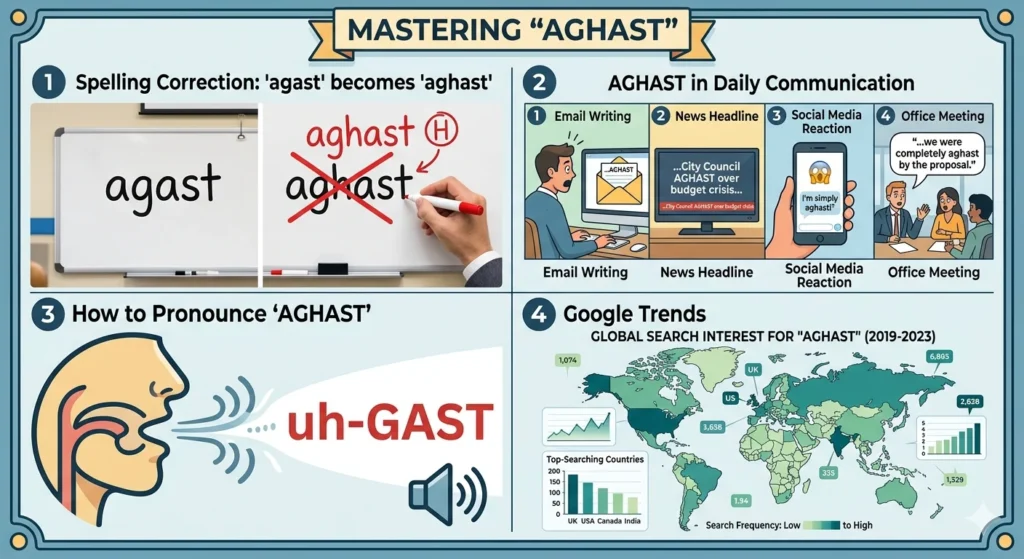
I was agast at the news.
Correct:
I was aghast at the news.
Mistake : Writing “Agasp”
This word appears in typing errors.
It has no meaning in English.
Mistake : Writing “Arghast”
This is another incorrect spelling.
Mistake : Using the Word Incorrectly
Wrong:
I was aghast happy.
Correct:
I was aghast at the terrible news.
Correct Grammar Pattern
Most common pattern:
Aghast + at/by + situation
Examples:
- She was aghast at the accident.
- He was aghast by the decision.
Aghast in Everyday Examples
The word appears in many everyday situations.
Here are some agast or aghast examples in different contexts.
Emails
Example:
I was aghast when I saw the mistake in the report.
News Writing
Example:
Citizens were aghast after the sudden tax increase.
Social Media
Example:
I’m honestly aghast at what just happened in that episode.
Workplace Communication
Example:
The manager was aghast at the poor results.
Aghast in a Sentence
- She looked aghast when the door suddenly opened.
- I was aghast at the shocking headline.
- The audience sat aghast during the dramatic moment.
- They were aghast by the unexpected decision.
Aghast Pronunciation
Many learners search for “aghast pronunciation.”
Pronunciation
uh-GAST
Phonetic Form
/əˈɡæst/
How to Say It
Break the word into two parts:
uh + gast
Examples:
- She sounded aghast when she heard the news.
- I was aghast at the shocking story.
Aghast in French
If you translate aghast into French, the closest word is:
consterné
Example:
English:
She was aghast.
French:
Elle était consternée.
Other possible translations include:
- choqué
- horrifié
Aghast – Google Trends & Usage Data
Search data shows that many users look for spelling clarification.
Popular searches include:

- Agast or aghast meaning
- Agast or aghast in English
- Aghast pronunciation
- Aghast synonym
- Aghast in a sentence
Countries Where the Word Is Frequently Searched
The word appears in search trends in:
- United States
- United Kingdom
- Canada
- Australia
- India
- Pakistan
Where the Word Is Commonly Used
The word appears in:
- journalism
- storytelling
- novels
- movie reviews
- social media reactions
People often use it to express strong emotional shock.
Comparison Table – Word Variations
| Word | Meaning | Correct Usage |
|---|---|---|
| Aghast | Shocked or horrified | ✔ Correct |
| Agast | Misspelling | ✘ Incorrect |
| Agasp | Typo | ✘ Incorrect |
| Arghast | Not a real word | ✘ Incorrect |
FAQs
What does agast mean?
The word agast has no official meaning. It is simply a misspelling of aghast.
What is an agast?
There is no English word agast. The correct word is aghast, meaning shocked or horrified.
What does agasp mean?
Agasp is a typing error and not a real English word.
What does Arghast mean?
Arghast is not a standard English word. It is an incorrect spelling of aghast.
What is the correct spelling: agast or aghast?
The correct spelling is aghast.
What is an aghast synonym?
Common synonyms include:
- shocked
- horrified
- stunned
- appalled
- speechless
Can aghast be used in formal writing?
Yes. The word is common in journalism, academic writing, and literature.
Conclusion
The confusion between agast or aghast is very common, especially among English learners and writers who hear the word before seeing it written. Because the “gh” letters are silent, many people assume the spelling should be agast, but that form is incorrect.
The correct spelling is aghast, and it means extremely shocked, horrified, or surprised. It is a powerful word used to describe strong emotional reactions to unexpected events. You will often see it in news articles, novels, emails, and everyday conversations.
It is important to remember that both British English and American English use the same spelling: aghast. There are no regional spelling differences for this word.
Other spellings like agasp and arghast are simply typing mistakes or misunderstandings. They are not recognized English words.
If you want clear and professional English writing, the rule is simple:
Always write “aghast.” Never write “agast.”
Understanding the correct spelling and meaning will help you communicate more clearly and avoid common mistakes in English writing.

“L.P. Hartley brings classic idioms to life on LearnIdom.com, helping readers explore language with wit, clarity, and timeless insight.”