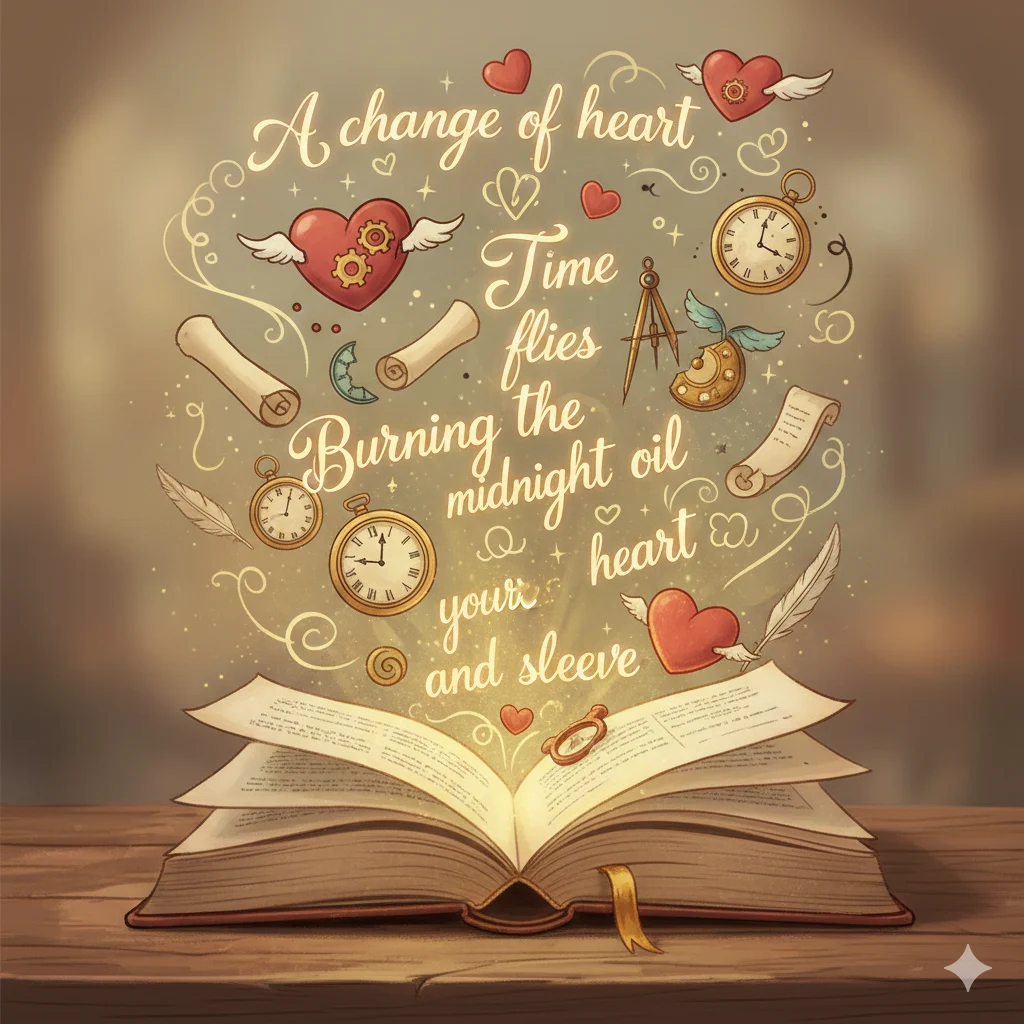
Poetry often feels magical because it says more than the words themselves—and that magic frequently comes from idioms in poetry. Imagine reading a poem where the poet says their “heart is on their sleeve.” You instantly feel the emotion without long explanations. That’s the beauty of idioms. They compress life experiences, emotions, and cultural wisdom into a few powerful words.
For learners, idioms in poetry can seem confusing at first because their meanings aren’t literal. But once you understand them, poems become clearer, richer, and more enjoyable. I still remember struggling with a poem in school until I realized an idiom was being used—suddenly, the entire stanza made sense.
In this guide, you’ll explore 20 famous idioms commonly used in poetry, broken down with simple meanings, examples, and usage tips to help you read, write, and enjoy poetry with confidence.
Heart of Stone
Word-by-word Meaning
Heart = Dil
Stone = Pathar
→ Dil jo pathar ka ho
Idiomatic / Figurative Meaning
A person who has no sympathy or emotional softness; someone who does not feel pity.
Example Sentences
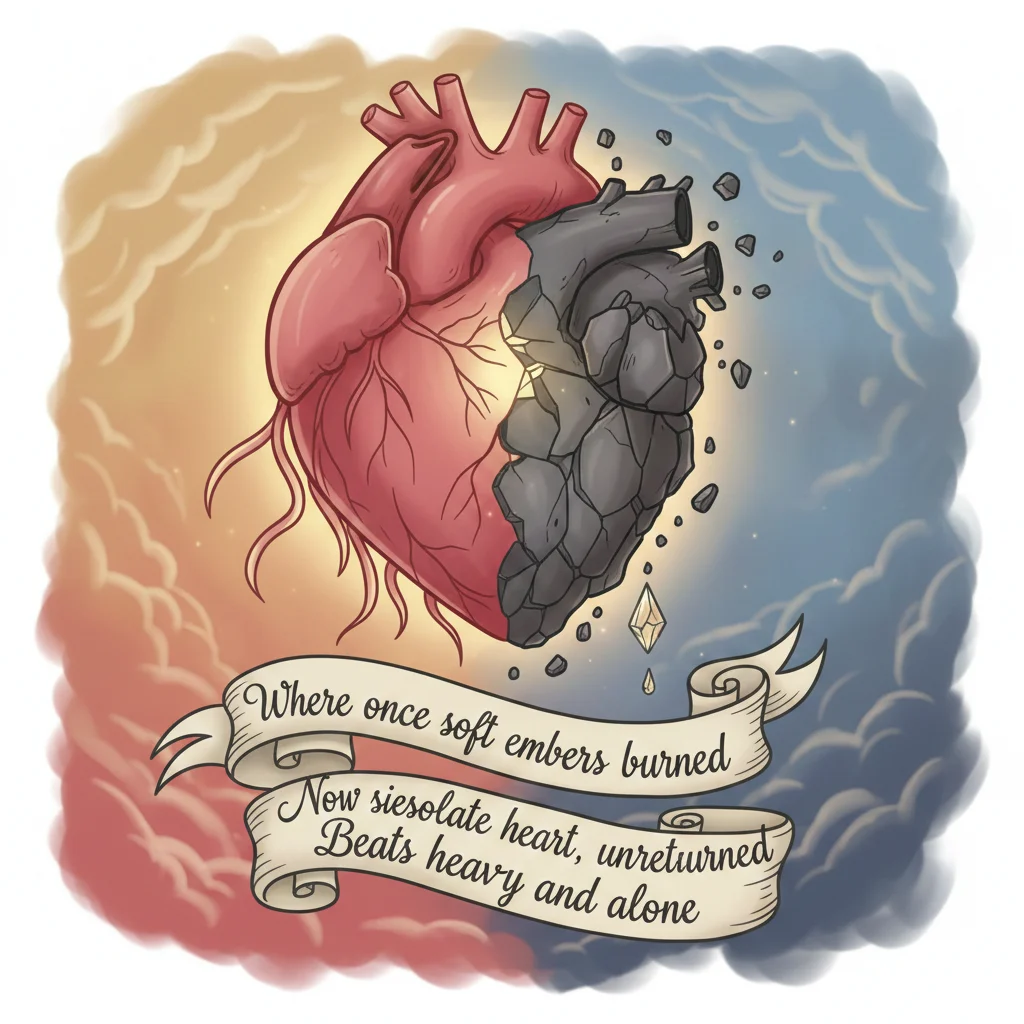
- The poet describes the king as a man with a heart of stone.
- Her tears could not melt his heart of stone.
Common Error
❌ Using it for physical strength
✔️ It describes emotional coldness
Usage Note
Widely used in emotional and tragic poetry to show cruelty or lack of love.
Break the Ice
Word-by-word Meaning
Break = Torna
Ice = Baraf
Idiomatic / Figurative Meaning
To remove tension and start communication, especially in an awkward situation.
Example Sentences

- Her smile broke the ice between two strangers.
- The poem begins with a line that breaks the ice of silence.
Common Error
❌ Using it literally in poetry
✔️ Always refers to social or emotional situations
Usage Note
Perfect for poems about first meetings, new relationships, or fresh starts.
A Storm in a Teacup
Word-by-word Meaning
Storm = Toofan
Teacup = Chai ka cup
Idiomatic / Figurative Meaning
Making a big issue out of a very small problem.
Example Sentences

- Their argument was only a storm in a teacup.
- The poet mocks the fight as a storm in a teacup.
Common Error
❌ Using it for serious danger
✔️ It refers to unnecessary drama
Usage Note
Often used in ironic or satirical poetry.
Time Flies
Word-by-word Meaning
Time = Waqt
Flies = Udta hai
Idiomatic / Figurative Meaning
Time passes very quickly.
Example Sentences

- Time flies when lovers meet.
- In happiness and sorrow, time flies silently.
Common Error
❌ Mixing it with physical flying imagery
✔️ It refers to the speed of passing time
Usage Note
Common in reflective, nostalgic, and romantic poetry.
Light at the End of the Tunnel
Word-by-word Meaning
Light = Roshni
Tunnel = Surang
Idiomatic / Figurative Meaning
Hope after a long period of difficulty.
Example Sentences
- After endless pain, she saw light at the end of the tunnel.
- The poem ends with light at the tunnel’s end.

Common Error
❌ Using it for short problems
✔️ Best for long struggles
Usage Note
Very powerful in motivational and inspirational poetry.
Wear Your Heart on Your Sleeve
Word-by-word Meaning
Wearing your heart openly on your clothing.
Idiomatic / Figurative Meaning
To show your emotions openly without hiding your feelings.
Example Sentences
- The poet wears his heart on his sleeve, revealing every pain.
- She wore her heart on her sleeve in every line of the poem.
Common Error
❌ Using it to describe physical clothing
✔️ It always refers to emotions
Usage Note
Common in romantic and emotional poetry to show honesty and vulnerability.
Cold Feet
Word-by-word Meaning
Feet becoming cold.
Idiomatic / Figurative Meaning
To suddenly feel afraid or nervous before doing something important.
Example Sentences
- He got cold feet before confessing his love.
- Cold feet stopped her from crossing the line of fate.
Common Error
❌ Using it for actual weather conditions
✔️ Use it for fear or hesitation
Usage Note
Effective in poems about doubt, fear, or last-minute decisions.
Burn the Midnight Oil
Word-by-word Meaning
Burning oil lamps at night.
Idiomatic / Figurative Meaning
To work or stay awake late into the night.
Example Sentences
- She burned the midnight oil to finish her lonely verses.
- Poets burn the midnight oil chasing perfect words.
Common Error
❌ Using it for fire imagery only
✔️ It means hard late-night effort
Usage Note
Often used in poems about struggle, ambition, or dedication.
Once in a Blue Moon
Word-by-word Meaning
A blue-colored moon.
Idiomatic / Figurative Meaning
Something that happens very rarely.
Example Sentences
- Once in a blue moon, happiness visits him.
- She smiles once in a blue moon now.
Common Error
❌ Using it for frequent events
✔️ It always means rare
Usage Note
Works well in nostalgic or melancholic poetry.
Piece of Cake
Word-by-word Meaning
A slice of cake.
Idiomatic / Figurative Meaning
Something very easy to do.
Example Sentences
- Winning her trust was no piece of cake.
- Writing poems was a piece of cake for him.
Common Error
❌ Taking it literally
✔️ Use it for ease or simplicity
Usage Note
Often used with contrast in poetry (easy vs difficult).
Hit Rock Bottom
Word-by-word Meaning
Striking the lowest rock.
Idiomatic / Figurative Meaning
To reach the worst point in life.
Example Sentences
- He hit rock bottom before finding hope.
- The poem begins where life hit rock bottom.
Common Error
❌ Using it for physical falling
✔️ It describes emotional or life struggles
Usage Note
Very powerful in dark, emotional, or recovery poetry.
Words Cut Like a Knife
Word-by-word Meaning
Words acting as a sharp knife.
Idiomatic / Figurative Meaning
Words that deeply hurt someone emotionally.
Example Sentences
- Her words cut like a knife through his soul.
- Poetry shows how words cut like knives.
Common Error
❌ Describing physical violence
✔️ Focus on emotional pain
Usage Note
Useful in poems about heartbreak, betrayal, or conflict.
Eyes Speak Louder Than Words
Word-by-word Meaning
Eyes talking louder than speech.
Idiomatic / Figurative Meaning
Emotions can be understood through expressions without words.
Example Sentences
- Her eyes spoke louder than her silence.
- In poetry, eyes speak louder than words.
Common Error
❌ Mixing with spoken dialogue
✔️ It highlights non-verbal emotion
Usage Note
Common in romantic and emotional poetry.
Lost in Thought
Word-by-word Meaning
Being lost inside thoughts.
Idiomatic / Figurative Meaning
Deeply absorbed in thinking.
Example Sentences
- Lost in thought, he forgot the world.
- The poet wandered, lost in thought.
Common Error
❌ Using it for physical loss
✔️ It refers to mental focus
Usage Note
Perfect for reflective and philosophical poems.
Carry the Weight of the World
Word-by-word Meaning
Carrying the entire world.
Idiomatic / Figurative Meaning
Feeling extreme responsibility or pressure.
Example Sentences
- He carried the weight of the world alone.
- Her poem reveals the weight she carried.
Common Error
❌ Taking it literally
✔️ It expresses emotional burden
Usage Note
Effective in poems about responsibility and sacrifice.
A Broken Heart
Word-by-word Meaning
A heart that is broken.
Idiomatic / Figurative Meaning
Deep emotional pain due to loss or love.
Example Sentences
- A broken heart still dreams.
- Poetry often rises from broken hearts.
Common Error
❌ Overusing clichés
✔️ Use creatively for impact
Usage Note
Classic idiom in love and sorrow poetry.
Fire in the Belly
Word-by-word Meaning
Fire inside the stomach.
Idiomatic / Figurative Meaning
Strong passion or determination.
Example Sentences
- Fire in her belly pushed her forward.
- The poet writes with fire in his belly.
Common Error
❌ Using it for anger only
✔️ It also means motivation
Usage Note
Great for motivational and revolutionary poetry.
Walking on Air
Word-by-word Meaning
Walking above the ground.
Idiomatic / Figurative Meaning
Feeling extremely happy.
Example Sentences
- He walked on air after her smile.
- Love made her walk on air.
Common Error
❌ Confusing it with pride
✔️ It means joy, not arrogance
Usage Note
Used in joyful, romantic poems.
Silence Speaks Volumes
Word-by-word Meaning
Silence speaking loudly.
Idiomatic / Figurative Meaning
Silence communicates strong feelings.
Example Sentences
- Their silence spoke volumes.
- In poetry, silence speaks volumes.
Common Error
❌ Treating silence as emptiness
✔️ It means meaningful quiet
Usage Note
Very effective in minimalist poetry.
Chasing Dreams
Word-by-word Meaning
Running after dreams.
Idiomatic / Figurative Meaning
Trying to achieve goals or ambitions.
Example Sentences
- She spent her life chasing dreams.
- The poem honors dream chasers.
Common Error
❌ Using it for sleep dreams
✔️ It refers to life goals
Usage Note
Ideal for inspirational and hopeful poetry.
Frequently Asked Questions (FAQs)
Q1: Why are idioms common in poetry?
Idioms add emotional depth, imagery, and cultural meaning in fewer words.
Q2: Are idioms hard for beginners to understand?
At first, yes—but learning meanings makes poetry much easier.
Q3: Can I use idioms in my own poems?
Absolutely! Just use them naturally and sparingly.
Q4: Do idioms change meaning in poetry?
Sometimes poets twist idioms creatively, but the core meaning remains.
Q5: Are idioms universal across cultures?
No, many idioms are culture-specific, especially in English poetry.
Conclusion
Understanding idioms in poetry opens a new door to emotional expression and deeper meaning. Start by spotting one idiom in every poem you read, then try using one in your own writing. With practice, poetry won’t feel confusing—it will feel alive. ✨
“Wilkie Collins brings classic idioms to life on LearnIdom.com, making language learning engaging, memorable, and full of literary charm.”