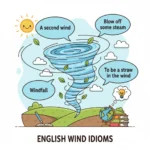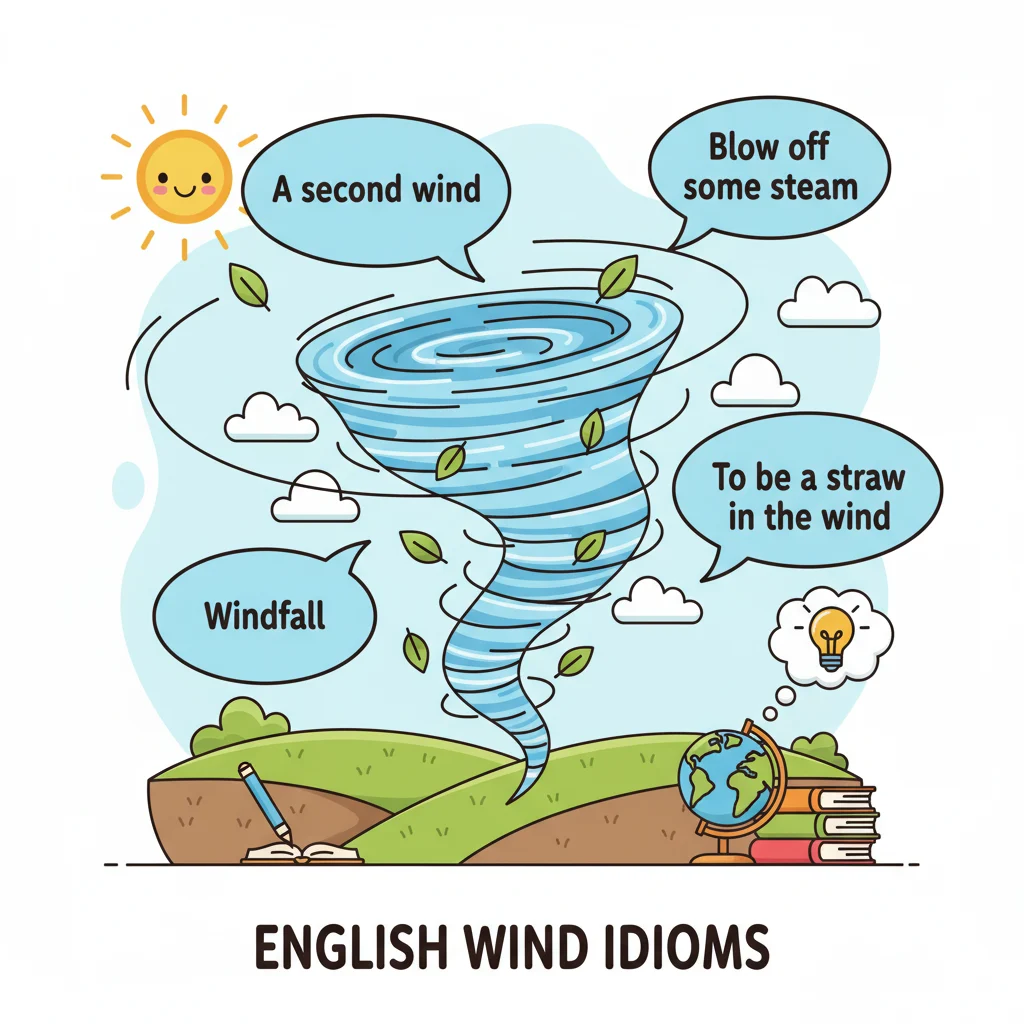
Wind idioms in English are creative expressions that use the idea of wind to describe change, speed, secrets, and risky decisions. Native speakers use these idioms every day in conversations, stories, and even news headlines.
For example, imagine your friend suddenly quitting a stable job to start a business. You might say, “He threw caution to the wind and followed his dream.” Instantly, the sentence becomes more vivid and expressive.
Idioms like these help English sound natural and engaging. In fact, dictionaries like Cambridge and Oxford explain that idioms are phrases whose meanings cannot be understood simply from the individual words.
In this article, you’ll learn 20 of the most famous wind idioms in English, including their word-by-word meanings, figurative meanings, examples, and common mistakes. By the end, you’ll confidently recognize and use these idioms in daily conversation and writing.
Table of Contents
- What Are Wind Idioms?
- 20 Famous Wind Idioms in English
- Quick Summary Table
- Tips to Learn Idioms Faster
- FAQs About Wind Idioms
- Conclusion
What Are Wind Idioms?
Wind idioms are figurative expressions that use the concept of wind to describe situations such as:
- Change
- Speed
- Secrets
- Risk
- Unpredictability
Because wind is powerful and unpredictable in nature, it has become a strong metaphor in the English language.
Throw Caution to the Wind
Word-by-Word Meaning
- Throw = discard
- Caution = carefulness
- Wind = air
Idiomatic Meaning
To take a risk without worrying about the consequences.
Example Sentences
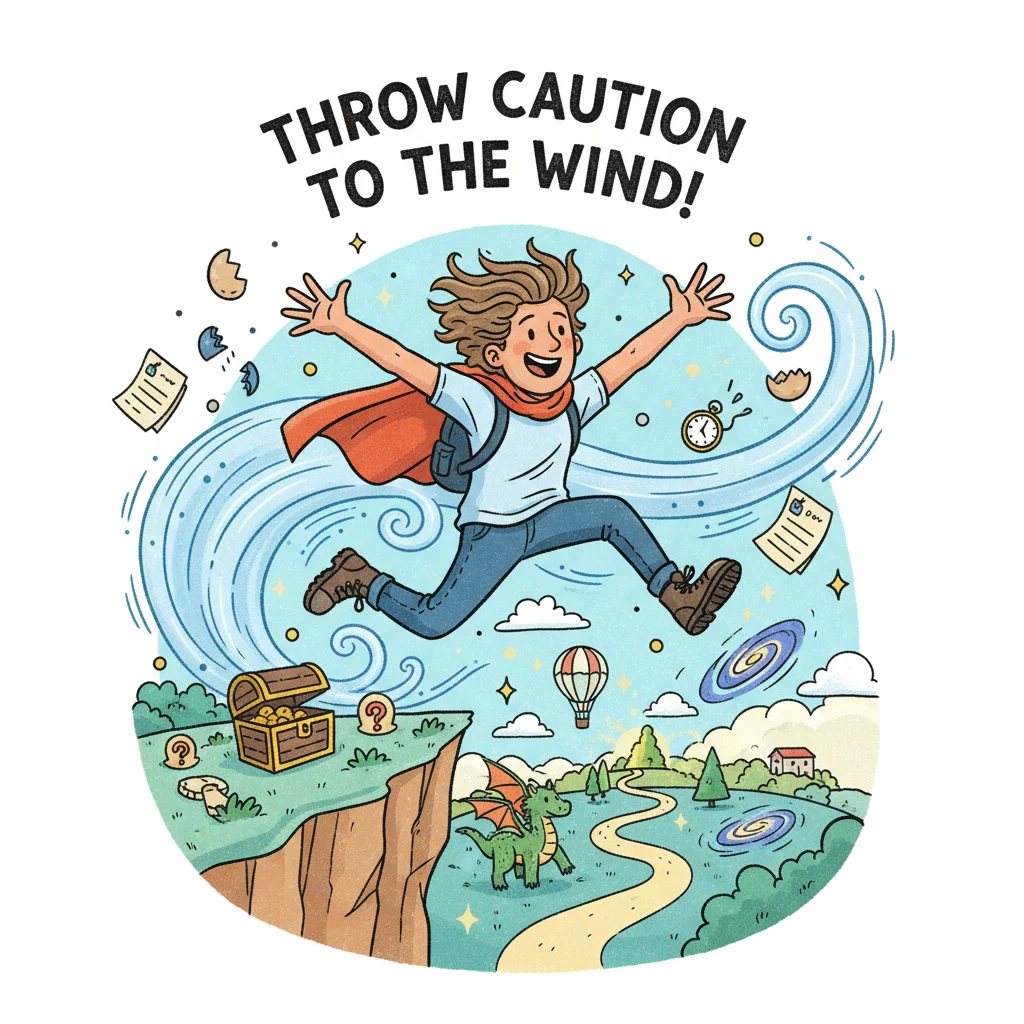
- She threw caution to the wind and started her own company.
- He threw caution to the wind and traveled the world alone.
Common Error
Using it when someone is still being careful.
Usage Note
Often used when someone makes a bold or risky decision.
Get Wind of Something
Word-by-Word Meaning
Get = receive
Wind = hint or signal
Idiomatic Meaning
To hear about something secret or hidden.
Example Sentences

- The manager got wind of the employees’ plan.
- Reporters got wind of the secret meeting.
Common Error
Using it for publicly announced news.
Usage Note
Used for discovering hidden information.
Gone with the Wind
Word-by-Word Meaning
Something carried away by the wind.
Idiomatic Meaning
Something that has disappeared completely.
Example Sentences

- My savings were gone with the wind after the bad investment.
- Their plans were gone with the wind when the storm hit.
Common Error
Using it for temporary loss.
Usage Note
Implies permanent disappearance.
Take the Wind out of Someone’s Sails
Word-by-Word Meaning
Wind pushing a ship’s sails.
Idiomatic Meaning
To suddenly reduce someone’s confidence.
Example Sentences

- His harsh comment took the wind out of her sails.
- The criticism took the wind out of the team’s sails.
Usage Note
Often used in emotional or motivational contexts.
Like the Wind
Word-by-Word Meaning
Moving as fast as wind.
Idiomatic Meaning
Very quickly.
Example Sentences

- The athlete ran like the wind.
- The motorcycle sped like the wind.
Common Error
Using it to describe slow movement.
Three Sheets to the Wind
Word-by-Word Meaning
A sailing term for loose ropes.
Idiomatic Meaning
Extremely drunk.
Example Sentences
- After the party he was three sheets to the wind.
Usage Note
Informal and humorous.
A Windfall
Word-by-Word Meaning
Fruit blown down by wind.
Idiomatic Meaning
Unexpected money or good fortune.
Example Sentences
- Winning the lottery was a financial windfall.
- The inheritance came as a pleasant windfall.
The Winds of Change
Word-by-Word Meaning
New winds arriving.
Idiomatic Meaning
Signs that major changes are happening.
Example Sentences
- Technology is bringing the winds of change to education.
Blow with the Wind
Word-by-Word Meaning
Moving wherever the wind blows.
Idiomatic Meaning
To easily change opinions.
Example Sentences
- Some politicians blow with the wind.
Know Which Way the Wind Blows
Word-by-Word Meaning
Understanding wind direction.
Idiomatic Meaning
To understand the situation before acting.
Example Sentences
- Smart leaders know which way the wind blows.
Sail Close to the Wind
Word-by-Word Meaning
A ship sailing near the wind.
Idiomatic Meaning
To behave dangerously close to breaking rules.
Example Sentences
- His business methods sail close to the wind.
In the Wind
Word-by-Word Meaning
Something carried by wind.
Idiomatic Meaning
Something about to happen.
Example Sentences
- Big changes are in the wind.
Scatter to the Winds
Word-by-Word Meaning
Wind spreading things everywhere.
Idiomatic Meaning
To disperse completely.
Example Sentences
- The crowd scattered to the winds.
Ride the Wind
Word-by-Word Meaning
Travel with the wind.
Idiomatic Meaning
To move quickly and freely.
Example Sentences
- The eagle seemed to ride the wind.
Spit in the Wind
Word-by-Word Meaning
Spitting against wind.
Idiomatic Meaning
Doing something useless.
Example Sentences
- Arguing with him is like spitting in the wind.
A Breath of Fresh Air
Word-by-Word Meaning
Fresh wind entering.
Idiomatic Meaning
Something refreshing or new.
Example Sentences
- Her ideas were a breath of fresh air.
Blow Hot and Cold
Word-by-Word Meaning
Changing wind temperature.
Idiomatic Meaning
To change opinions frequently.
Example Sentences
- He blows hot and cold about the project.
Run Like the Wind
Word-by-Word Meaning
Run as fast as wind.
Idiomatic Meaning
To run extremely fast.
Example Sentences
- The athlete ran like the wind.
The Wind Beneath My Wings
Word-by-Word Meaning
Wind helping a bird fly.
Idiomatic Meaning
Someone who supports and inspires another.
Example Sentences
- My parents are the wind beneath my wings.
Second Wind
Word-by-Word Meaning
A new burst of energy like fresh wind.
Idiomatic Meaning
New energy after being tired.
Example Sentences
- After resting briefly, she got her second wind.
Quick Summary Table
| Wind Idiom | Meaning |
|---|---|
| Throw caution to the wind | Take a big risk |
| Get wind of | Discover a secret |
| Windfall | Unexpected luck |
| Know which way the wind blows | Understand the situation |
| Second wind | New energy |
Tips to Learn Idioms Faster
To master wind idioms in English, try these strategies:
- Learn 3 idioms daily
- Write your own example sentences
- Watch English movies and listen for idioms
- Practice them in conversations
- Create flashcards for revision
You can also explore related topics like weather idioms, nature idioms, and common English idioms to expand your vocabulary.
FAQs About Wind Idioms
What are wind idioms in English?
Wind idioms are expressions that use the idea of wind metaphorically to describe situations like change, speed, secrets, or risk.
Why are wind idioms popular in English?
Wind represents movement and unpredictability, which makes it a powerful metaphor in storytelling and conversation.
Are wind idioms used in formal writing?
Most wind idioms are used in informal conversation, storytelling, and creative writing rather than formal academic texts.
How many idioms should I learn daily?
Learning 3–5 idioms per day with examples helps you remember them easily.
Are wind idioms important for English fluency?
Yes. Understanding idioms helps you speak more naturally and understand native speakers better.
Conclusion
Learning wind idioms in English is a fun and powerful way to improve your vocabulary and sound more natural in conversations. These expressions turn simple sentences into vivid and memorable ones.
For example, instead of saying “I took a big risk,” you can say “I threw caution to the wind.” That single idiom instantly adds color and personality to your speech.
Start practicing today. Pick 3–4 wind idioms, use them in daily conversations, and create your own example sentences. Over time, you’ll notice your English becoming more fluent, expressive, and confident.
Let the winds of learning guide your English journey!

“Elizabeth Bowen shares timeless idioms and language wisdom on LearnIdom.com, making learning phrases fun, easy, and unforgettable.”