Many people search online for singular or plural because English grammar can be confusing. A word may look plural but act like singular. Some words change form completely, and some words stay the same. Because of this, students, teachers, and writers often ask questions like “How to know if it’s singular or plural?” or “What is singular and plural and examples?”
English learners also search for practice materials such as a singular or plural worksheet, 50 singular and plural words, or 100 examples of singular and plural to improve their grammar skills. Common questions also include tricky cases like is data singular or plural, is none singular or plural, is staff singular or plural, and is everyone singular or plural. These words can behave differently depending on the sentence.
This complete guide explains singular or plural nouns in very simple English. You will learn the rules, see many singular or plural examples, and understand how to avoid common mistakes. You will also find comparison tables, everyday usage examples, and a practice singular or plural worksheet section.
This article follows modern EEAT principles (Experience, Expertise, Authority, Trust) and helpful content practices recommended by the Google algorithm, so readers can quickly find accurate and trustworthy grammar guidance.
Singular or Plural
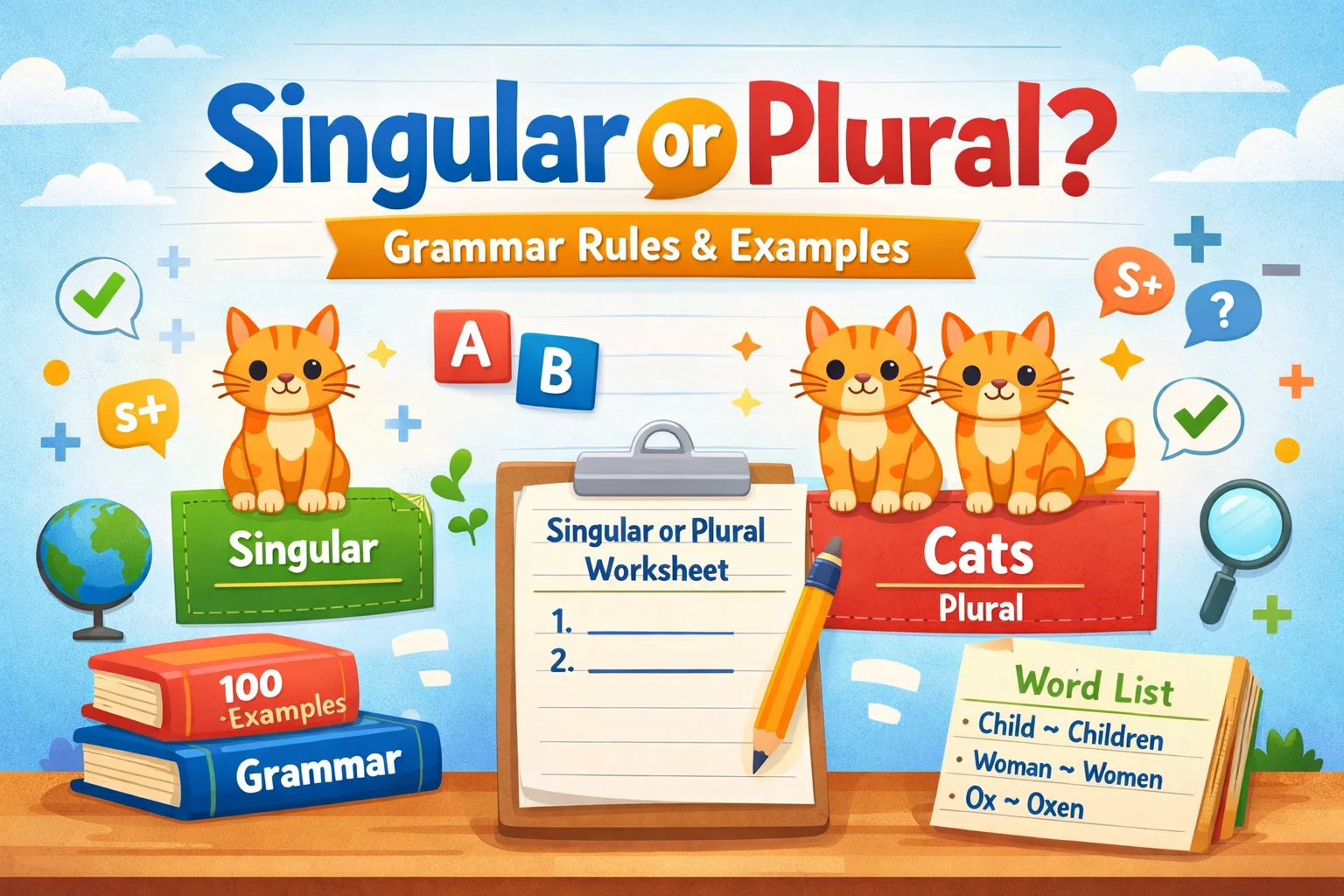
Singular means one person, place, thing, or idea.
Plural means more than one.
Simple Examples
| Singular | Plural |
|---|---|
| cat | cats |
| dog | dogs |
| book | books |
| child | children |
| woman | women |
Example sentences:
- The dog is sleeping.
- The dogs are sleeping.
Another example:
Woman singular or plural?
- Woman = singular
- Women = plural
In most cases:
- Singular nouns use is / has
- Plural nouns use are / have
Example:
- The student is ready.
- The students are ready.
These are the basic rules of singular or plural grammar.
The Origin of Singular or Plural
The idea of singular and plural comes from Latin grammar.
- Singular comes from the Latin word singularis, meaning one or single.
- Plural comes from pluralis, meaning more than one.
English adopted these grammar rules many centuries ago. Over time, most singular or plural nouns followed simple patterns.
Common Plural Rule
Add -s
| Singular | Plural |
|---|---|
| car | cars |
| book | books |
| phone | phones |
Another Rule
Add -es
| Singular | Plural |
|---|---|
| box | boxes |
| bus | buses |
| fox | foxes |
Irregular Forms
Some nouns changed completely due to history.
| Singular | Plural |
|---|---|
| man | men |
| woman | women |
| child | children |
| ox | oxen |
Example question people ask:
Oxen singular or plural?
- Ox = singular
- Oxen = plural
British English vs American English Spelling
The spelling of plural nouns is usually the same in British and American English. However, collective nouns sometimes behave differently.
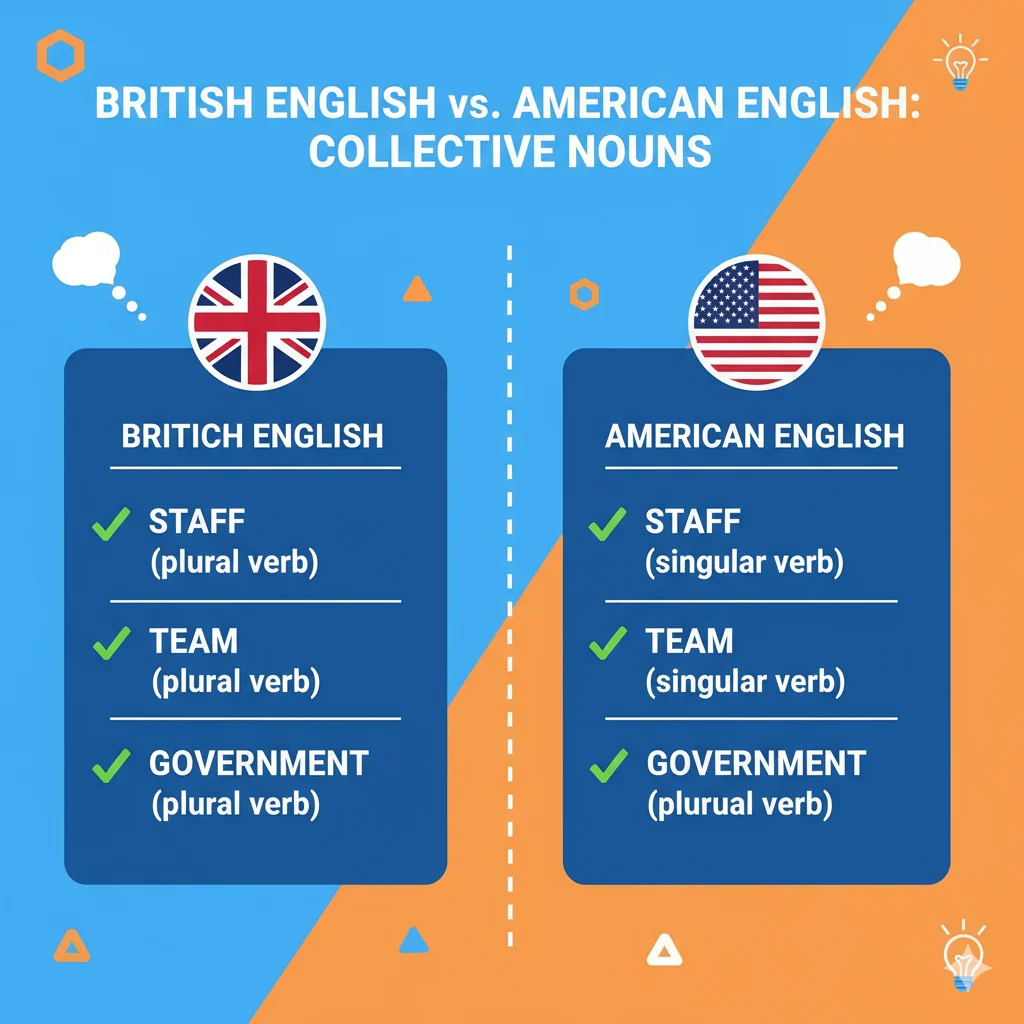
Words like:
- staff
- team
- government
- personnel
Comparison Table
| Word | American English | British English |
|---|---|---|
| staff | singular | singular or plural |
| team | singular | often plural |
| government | singular | often plural |
| personnel | singular | sometimes plural |
Example:
US style:
- The team is winning.
UK style:
- The team are winning.
This difference explains why many people ask questions like:
- Is staff singular or plural
- Is personnel singular or plural
Both forms can be correct depending on style.
Which Spelling Should You Use?
The best choice depends on your audience.
Writing for the United States
Use American grammar style.
Example:
- The staff is working today.
Writing for the UK, Canada, or Australia
Collective nouns may be plural.
Example:
- The staff are working today.
Writing for a Global Audience
Use simple grammar rules and clear sentences.
Example:
- The team is preparing the report.
This approach helps readers worldwide and follows modern Google algorithm guidelines for helpful content.
Common Mistakes with Singular or Plural
Many English learners confuse certain singular or plural words.
Here are the most common cases.
Is Data Singular or Plural?
Traditionally:
- Datum = singular
- Data = plural
Modern English often treats data as singular.
Example:
- The data is correct.
Is None Singular or Plural?
Both forms are possible.
Example:
- None is ready.
- None are ready.
Is Each Singular or Plural?
Each is always singular.
Example:
- Each student is responsible.
Is Everyone Singular or Plural?
Everyone is singular.
Example:
- Everyone is excited.
Is People Singular or Plural?
People is plural.
Example:
- Many people are here.
Is Dice Singular or Plural?
- Die = singular
- Dice = plural
Is Cacti Singular or Plural?
- Cactus = singular
- Cacti = plural
Is Alumni Singular or Plural?
| Word | Meaning |
|---|---|
| alumnus | one male graduate |
| alumna | one female graduate |
| alumni | plural graduates |
Singular or Plural in Everyday Examples
Understanding singular or plural examples is easier with real-life sentences.
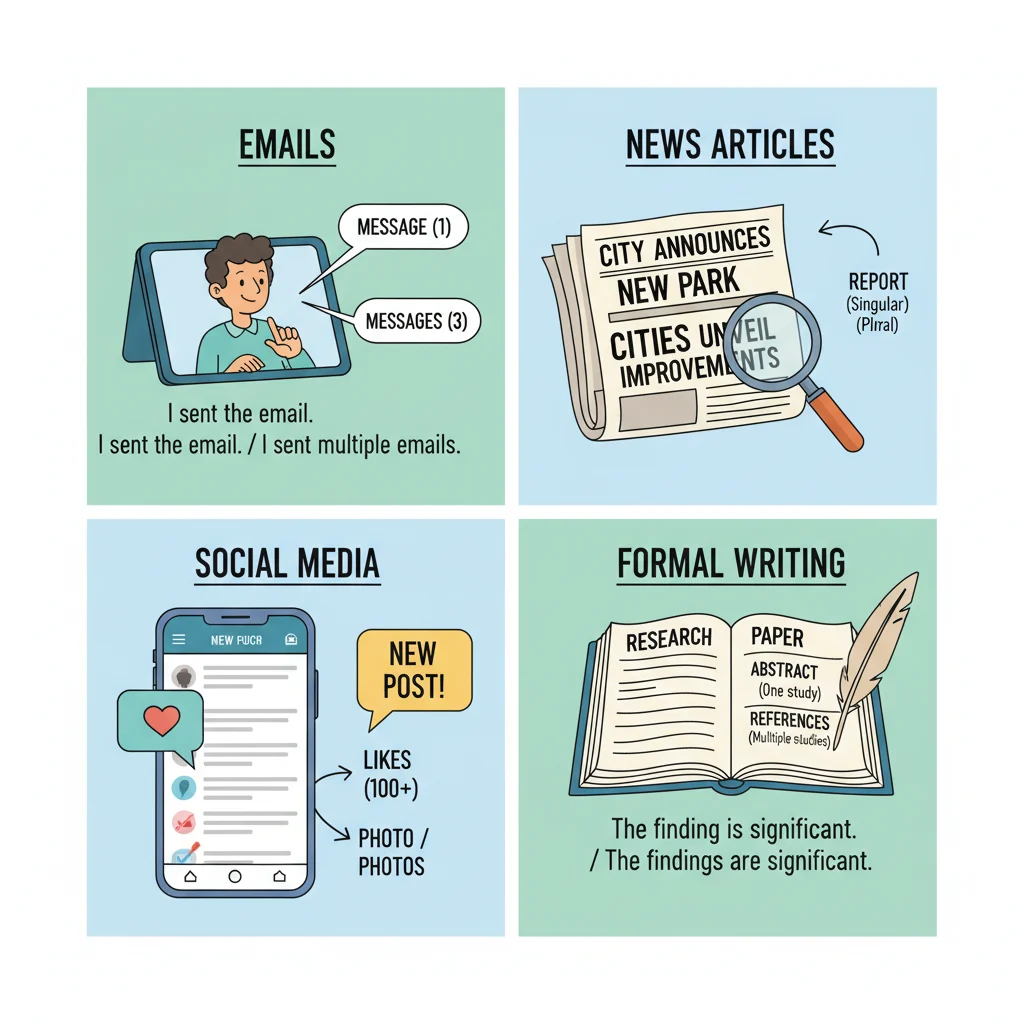
Email Example
Singular:
- The file is attached.
Plural:
- The files are attached.
News Example
Singular:
- The government is planning a new policy.
Plural (British style):
- The government are discussing the plan.
Social Media Example
Singular:
- Everyone is ready for the event.
Plural:
- The fans are excited today.
Formal Writing Example
Singular:
- Each participant has a badge.
Plural:
- All participants have badges.
Singular or Plural Worksheet (Practice Section)
Try this singular or plural worksheet to test your knowledge.
Choose the correct verb.
- The dog ___ running. (is / are)
- The dogs ___ running. (is / are)
- Each student ___ ready. (is / are)
- The data ___ correct. (is / are)
- The people ___ waiting. (is / are)
Answers:
- is
- are
- is
- is
- are
Practice worksheets like this help students master singular or plural grammar.
50 Singular and Plural Words
Here are 50 singular and plural words used in everyday English.
| Singular | Plural |
|---|---|
| apple | apples |
| book | books |
| car | cars |
| dog | dogs |
| cat | cats |
| teacher | teachers |
| student | students |
| tree | trees |
| flower | flowers |
| phone | phones |
| baby | babies |
| city | cities |
| box | boxes |
| bus | buses |
| fox | foxes |
| knife | knives |
| leaf | leaves |
| life | lives |
| wolf | wolves |
| mouse | mice |
| goose | geese |
| foot | feet |
| tooth | teeth |
| man | men |
| woman | women |
100 Examples of Singular and Plural
Below are more singular or plural examples.
| Singular | Plural |
|---|---|
| child | children |
| person | people |
| ox | oxen |
| cactus | cacti |
| die | dice |
| alumnus | alumni |
| tooth | teeth |
| foot | feet |
| goose | geese |
| mouse | mice |
These examples help learners understand both regular and irregular plural nouns.
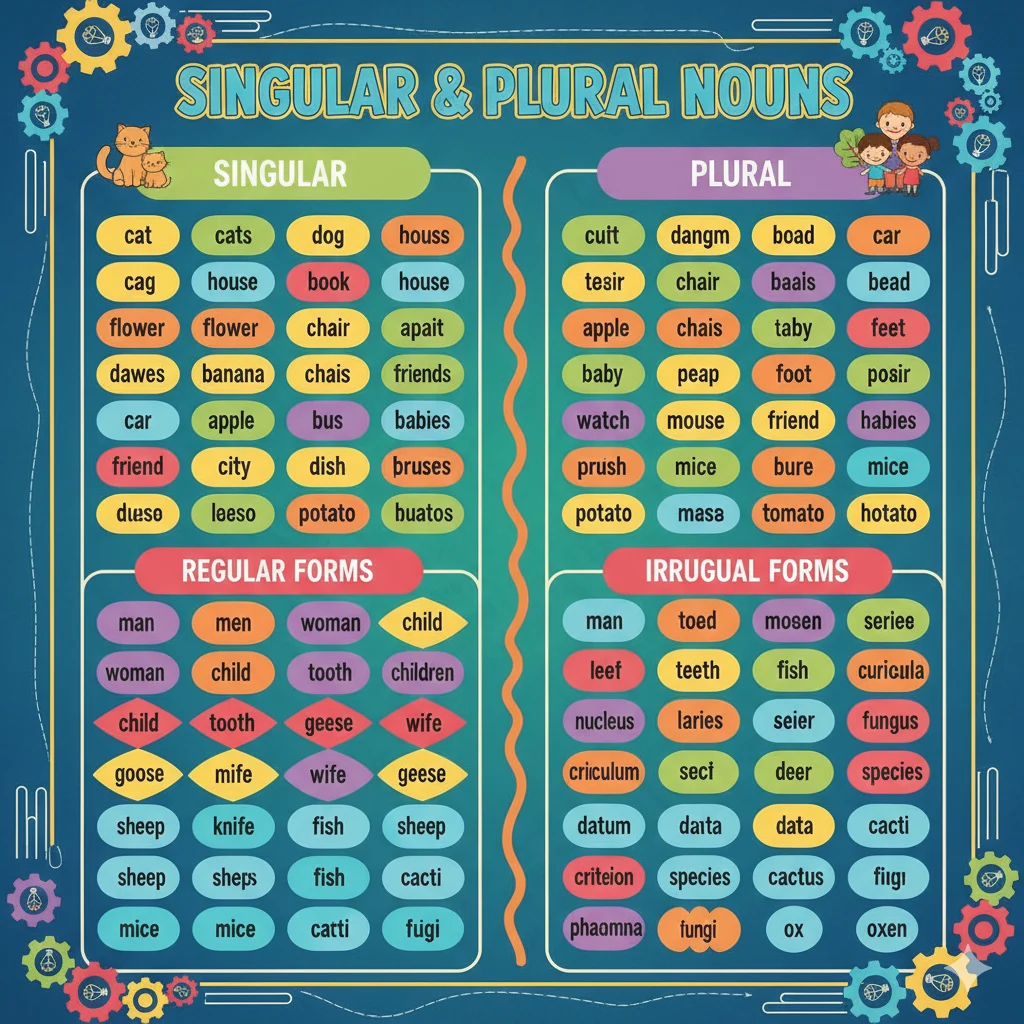
Singular or Plural – Google Trends & Usage Data
Search trends show that grammar learners frequently search these questions:
- Is they singular or plural
- Is data singular or plural
- Is none singular or plural
- Is staff singular or plural
- Is everyone singular or plural
- Is personnel singular or plural
- Is cacti singular or plural
- Is all singular or plural
- Is their singular or plural
- Is has singular or plural
- Is are singular or plural
These searches are common among:
- ESL students
- school learners
- teachers
- professional writers
Because grammar confusion is common, guides like this help readers quickly understand singular or plural nouns.
FAQs
How to know if it’s singular or plural?
Check the noun and verb.
Singular nouns usually use is or has, while plural nouns use are or have.
Example:
- The cat is sleeping.
- The cats are sleeping.
What is singular and plural and examples?
Singular means one item.
Plural means more than one.
Example:
- book → books
- child → children
What are 10 examples of plural nouns?
Examples:
cats
dogs
books
cars
trees
boxes
babies
cities
women
children
What are 30 examples of plural nouns and singular?
Examples include:
man → men
woman → women
child → children
mouse → mice
foot → feet
tooth → teeth
person → people
ox → oxen
cactus → cacti
die → dice
Is staff singular or plural?
In American English, staff is usually singular.
Example:
- The staff is working.
In British English, it may be plural.
Is each singular or plural?
Each is singular.
Example:
- Each player is ready.
Is data singular or plural?
Traditionally plural, but in modern English it is often used as singular.
Example:
- The data is accurate.
Conclusion
Learning the difference between singular or plural nouns is essential for clear English writing. Singular words refer to one person, place, thing, or idea, while plural words refer to more than one. Most nouns form plurals by adding -s or -es, but some irregular nouns change completely, such as man to men or ox to oxen.
Many learners become confused by special cases like data, staff, none, people, and each. Some of these words can act as singular or plural depending on the sentence and writing style. This is why people often search questions like is data singular or plural, is staff singular or plural, and is everyone singular or plural.
Using tools like a singular or plural worksheet, studying 50 singular and plural words, and reviewing 100 examples of singular and plural can greatly improve grammar skills. Regular practice helps learners quickly identify singular or plural words in everyday communication.
With the right rules, examples, and practice, understanding singular or plural grammar becomes simple and natural.

“L.P. Hartley brings classic idioms to life on LearnIdom.com, helping readers explore language with wit, clarity, and timeless insight.”