Many people search online for “noun or pronoun” because they want to understand the difference between these two important parts of speech. Students, English learners, bloggers, and teachers often ask questions like “Is I a noun or pronoun?”, “Is he a noun or pronoun?”, or “Is me a noun or pronoun?”. These questions show that many learners feel confused about how nouns and pronouns work in real sentences.
A noun is a word that names a person, place, thing, or idea. A pronoun is a word used instead of a noun. Understanding noun or pronoun in English helps people write clear sentences and avoid repetition. Without pronouns, writing would sound strange and repetitive.
People also search for noun or pronoun examples, noun or pronoun list, and noun and pronoun examples with answers to learn quickly. This guide explains everything in simple English. You will learn the meaning, types, examples, common mistakes, and real-life usage. We will also explain questions like what describes a noun or pronoun, what part of speech describes a noun or pronoun, and what are noun and pronoun examples.
By the end of this article, you will clearly understand noun vs pronoun, how to use them, and how to avoid common grammar mistakes.
Noun or Pronoun
A noun is a word that names a person, place, thing, or idea.
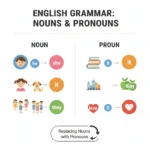
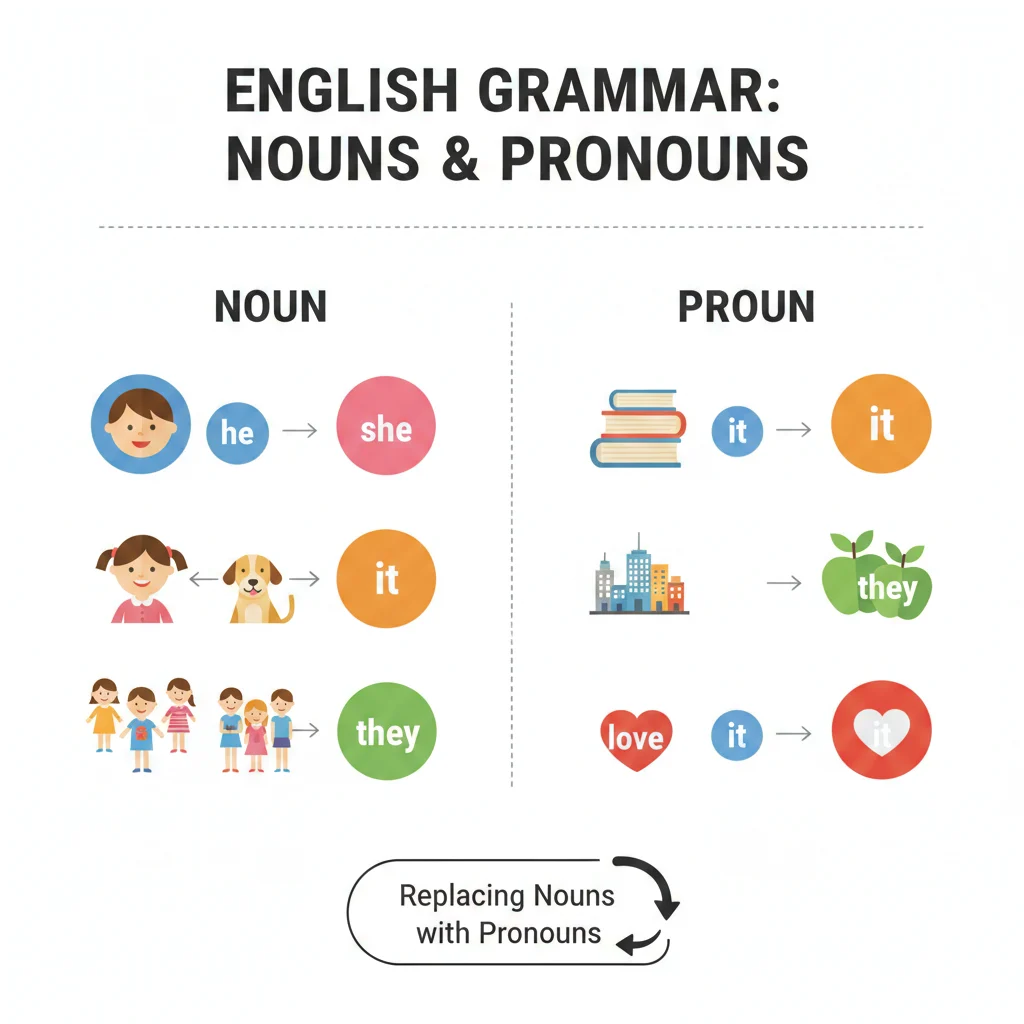
A pronoun is a word that replaces a noun in a sentence.
Simple Examples
Noun Examples
- Ali is a teacher.
- The book is interesting.
- Pakistan is a country.
Pronoun Examples
- He is a teacher.
- It is interesting.
- They live in Pakistan.
So if someone asks what is a noun or pronoun, the answer is simple:
| Word Type | Meaning | Example |
|---|---|---|
| Noun | Names a person, place, thing, or idea | boy, city, book |
| Pronoun | Replaces a noun | he, she, they |
Noun and Pronoun Examples with Answers
| Sentence | Noun | Pronoun |
|---|---|---|
| Ali loves football | Ali, football | — |
| He plays daily | — | He |
| The dog is hungry | dog | — |
| It wants food | — | It |
Quick Pronoun Questions
Many learners ask these questions:
- They noun or pronoun? → Pronoun
- His noun or pronoun? → Pronoun
- Is my noun or pronoun? → Pronoun
- Is I a noun or pronoun? → Pronoun
- I is a noun or pronoun? → Pronoun
- Is he a noun or pronoun? → Pronoun
- Is she a noun or pronoun? → Pronoun
- Is who a noun or pronoun? → Pronoun
- Is me a noun or pronoun? → Pronoun
- Is it a noun or pronoun? → Pronoun
- Is your a noun or pronoun? → Pronoun
- Is a name a noun or pronoun? → Noun
The Origin of Noun or Pronoun
The word noun comes from the Latin word “nomen”, which means name. That is why nouns are words that name people, places, things, or ideas.
The word pronoun comes from two Latin words:
- Pro = for
- Noun = name
So a pronoun literally means “a word used instead of a noun.”
Example:
Without pronoun:
Ali said Ali will visit Ali’s office tomorrow.
With pronoun:
Ali said he will visit his office tomorrow.
Pronouns help sentences sound natural and less repetitive.
British English vs American English Spelling
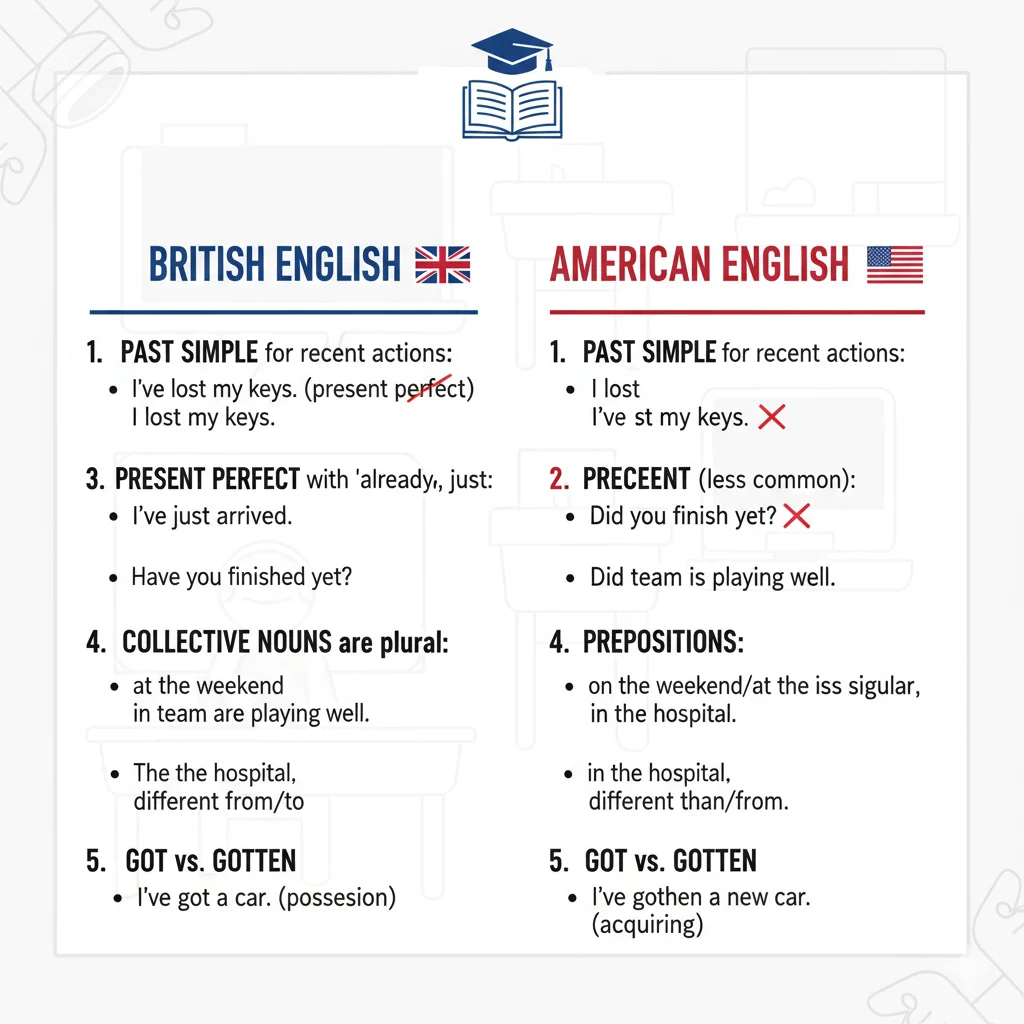
For the words noun and pronoun, the spelling is the same in both British and American English. However, teaching styles may be slightly different.
| Feature | British English | American English |
|---|---|---|
| Spelling | noun, pronoun | noun, pronoun |
| Teaching style | traditional grammar focus | practical examples |
| Example sentence | She has got a car | She has a car |
The grammar rules for noun or pronoun in English remain the same worldwide.
Which Spelling Should You Use?
Since noun and pronoun have the same spelling globally, you do not need to worry about spelling differences.
However, your writing style can change depending on your audience.
If your audience is in the United States
Use clear examples and simple grammar explanations.
If your audience is in the UK or Commonwealth countries
More formal grammar explanations may be common.
If your audience is global
Use simple English and clear examples. This works best for students and ESL learners.
What Describes a Noun or Pronoun?
A very common grammar question is:
What describes a noun or pronoun?
The answer is an adjective.
An adjective is a word that describes a noun or pronoun.
Example:
- The happy child smiled.
- She is smart.
In grammar, we can say:
- An adjective describes a noun or pronoun
- It modifies a noun or pronoun
- It adds extra information
Examples
| Sentence | Noun/Pronoun | Word that describes it |
|---|---|---|
| The big house is beautiful | house | big |
| She is kind | she | kind |
| The blue car is fast | car | blue |
Prepositional Phrase Modifying a Noun or Pronoun
Sometimes a prepositional phrase can also describe a noun.
Example:
The boy in the red shirt is my friend.
Here the phrase in the red shirt modifies a noun.
Difference Between Noun and Pronoun
| Feature | Noun | Pronoun |
|---|---|---|
| Meaning | Names a person, place, thing, idea | Replaces a noun |
| Examples | Ali, city, book | he, she, they |
| Purpose | Introduces subject | Avoids repetition |
| Example sentence | Ali is happy | He is happy |
Noun or Pronoun List
What Are 10 Types of Nouns?
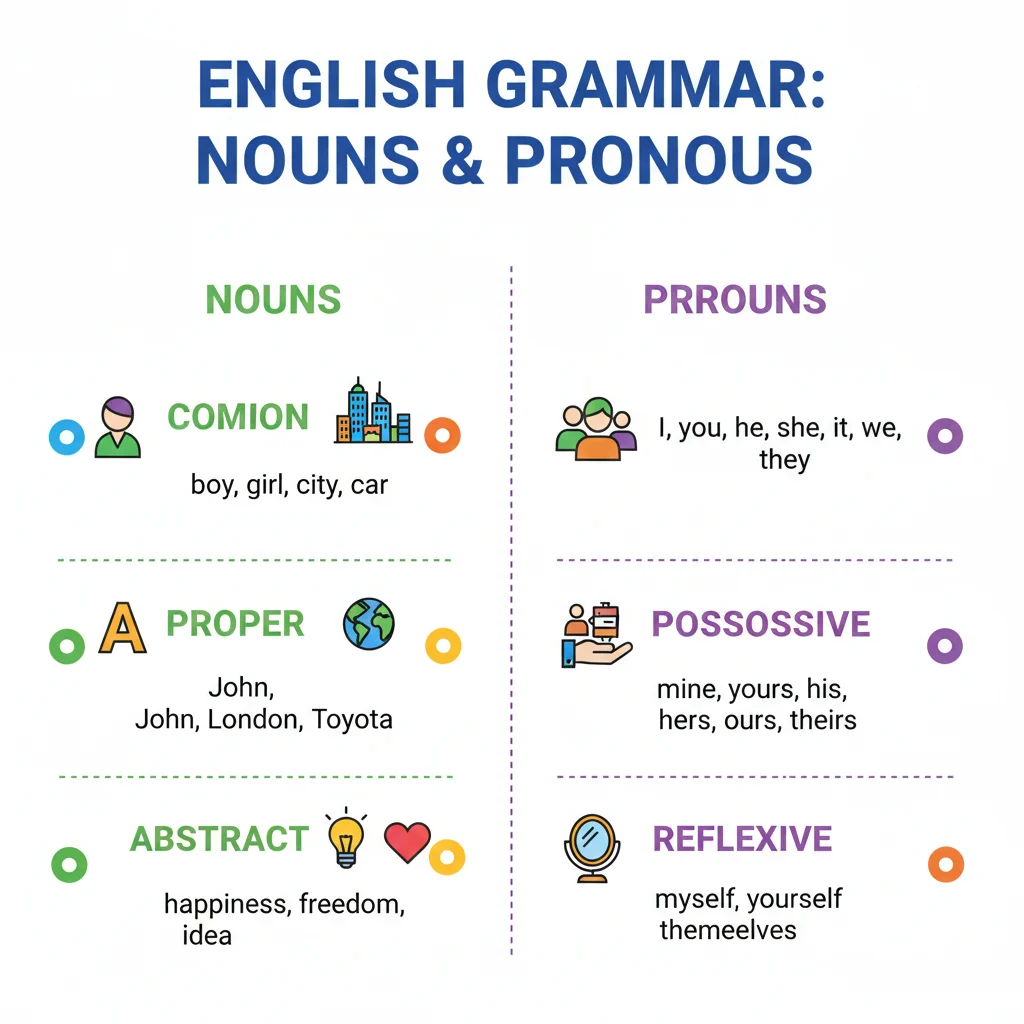
- Proper noun
- Common noun
- Abstract noun
- Concrete noun
- Collective noun
- Countable noun
- Uncountable noun
- Compound noun
- Possessive noun
- Singular and plural noun
What Are 10 Pronouns?
- I
- You
- He
- She
- It
- We
- They
- Me
- Him
- Them
What Are the 4 Types of Words?
In beginner grammar lessons, students often start with four important word types:
- Nouns
- Pronouns
- Verbs
- Adjectives
Each word type has a different job in a sentence.
Common Mistakes with Noun or Pronoun
Many English learners make simple grammar mistakes.
1 Repeating nouns too much
❌ Ali said Ali will help Ali’s brother.
✅ Ali said he will help his brother.
2 Wrong pronoun form
❌ Me went to school.
✅ I went to school.
3 Missing noun reference
❌ They are coming tomorrow.
Readers may ask who are they?
Always introduce the noun first.
4 Using wrong possessive pronouns
❌ This book is my.
✅ This book is mine.
Noun or Pronoun in Everyday Examples
Understanding noun or pronoun in English helps in daily life.
Email Example
Hello Sara,
I received your message. It was very helpful.
News Example
The president gave a speech. He discussed economic policy.
Social Media Example
My phone is slow. It needs an update.
Formal Writing Example
The company released a report. It shows strong growth.
Noun or Pronoun – Google Trends & Usage Data
Search data shows that noun or pronoun is a popular grammar topic.
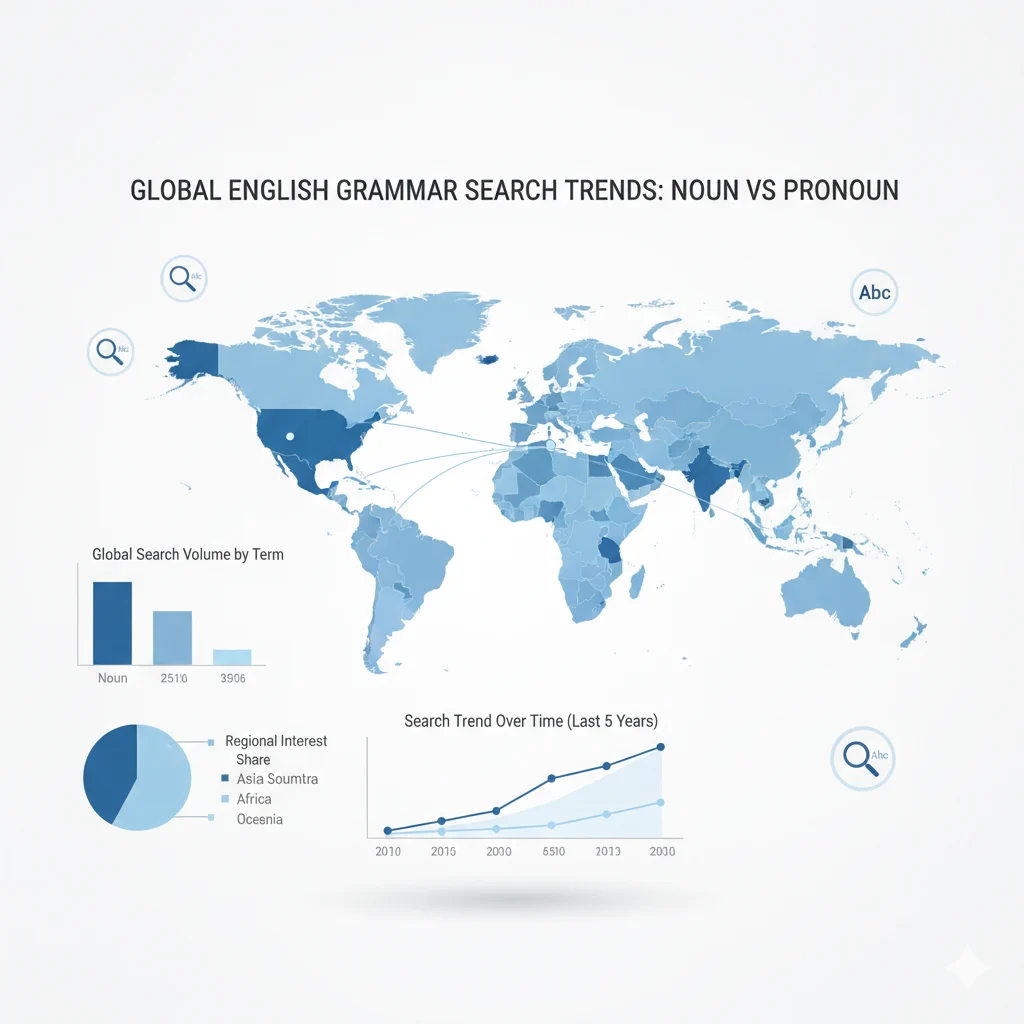
Many people search for:
- noun or pronoun examples
- noun and pronoun examples with answers
- what are 10 pronouns
- what are 10 types of nouns
- difference between noun and pronoun
Countries where this topic is highly searched include:
- India
- Pakistan
- Philippines
- United States
- United Kingdom
Students and ESL learners search these terms while studying English grammar.
FAQs
What are noun and pronoun examples?
Noun examples: teacher, city, book
Pronoun examples: he, she, they, it.
Is I a noun or pronoun?
I is a pronoun. It replaces a person’s name in a sentence.
Is he a noun or pronoun?
He is a pronoun used for a male person.
Is a name a noun or pronoun?
A name is a noun, specifically a proper noun.
Is me a noun or pronoun?
Me is a pronoun used as an object in a sentence.
Example: She called me.
What part of speech describes a noun or pronoun?
An adjective describes or modifies a noun or pronoun.
What describes a noun or pronoun?
An adjective or adjective phrase describes a noun or pronoun.
Conclusion
Understanding noun or pronoun is one of the most important steps in learning English grammar. A noun is a word that names a person, place, thing, or idea. A pronoun is a word that replaces that noun to make sentences shorter and easier to understand.
For example, instead of repeating a name many times, we can use pronouns like he, she, they, or it. This helps writing sound natural and clear. Without pronouns, sentences would feel repetitive and difficult to read.
Many learners ask questions like “Is I a noun or pronoun?”, “Is he a noun or pronoun?”, or “What describes a noun or pronoun?”. The answers become simple when you understand the basic grammar rules. Pronouns replace nouns, and adjectives describe or modify nouns or pronouns.
Practicing noun or pronoun examples, reviewing a noun or pronoun list, and studying noun and pronoun examples with answers can improve grammar skills quickly.
If you want to write clear English in emails, school work, blogs, or professional documents, always remember this simple rule: nouns name things and pronouns replace them. Mastering this concept will make your English writing stronger and easier to understand.

“Rose Macaulay shares the charm of idioms on LearnIdom.com, making language learning delightful, insightful, and full of wit for every reader.”