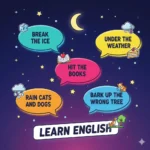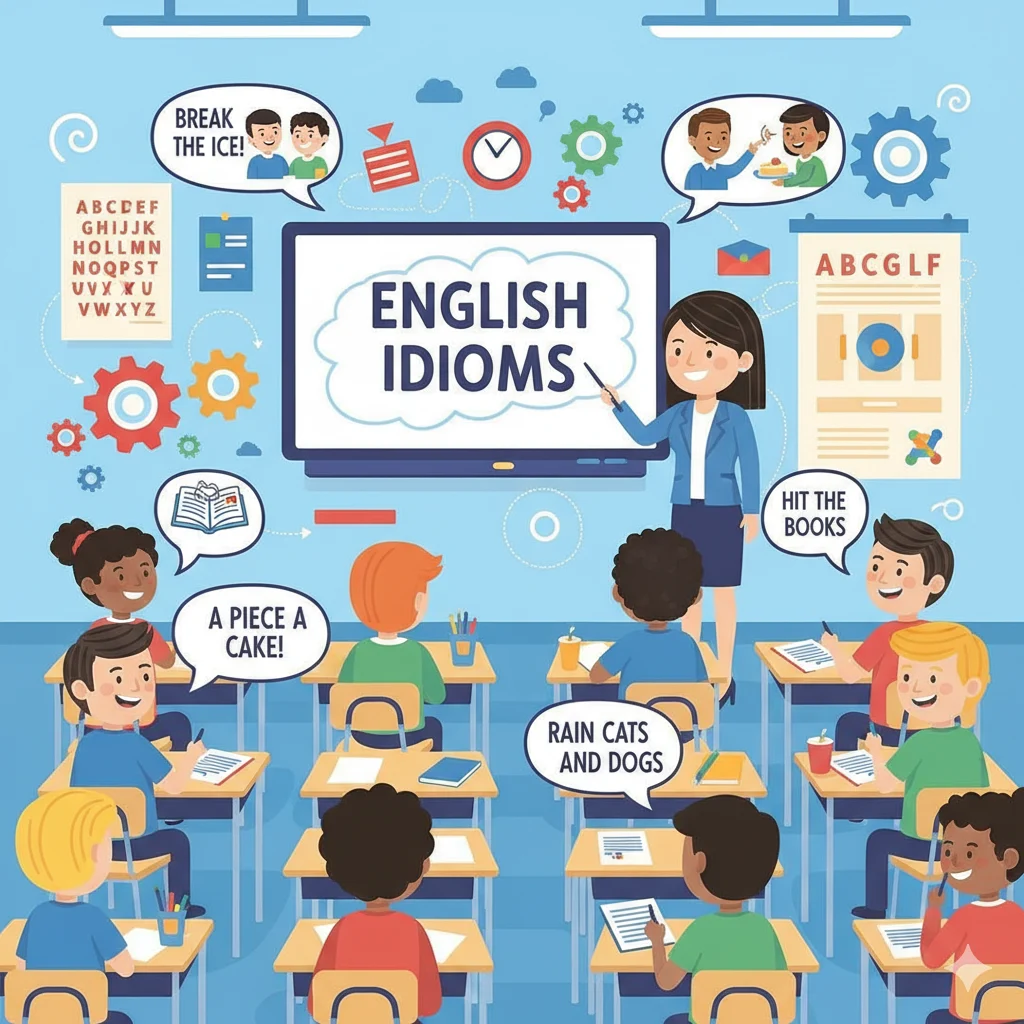
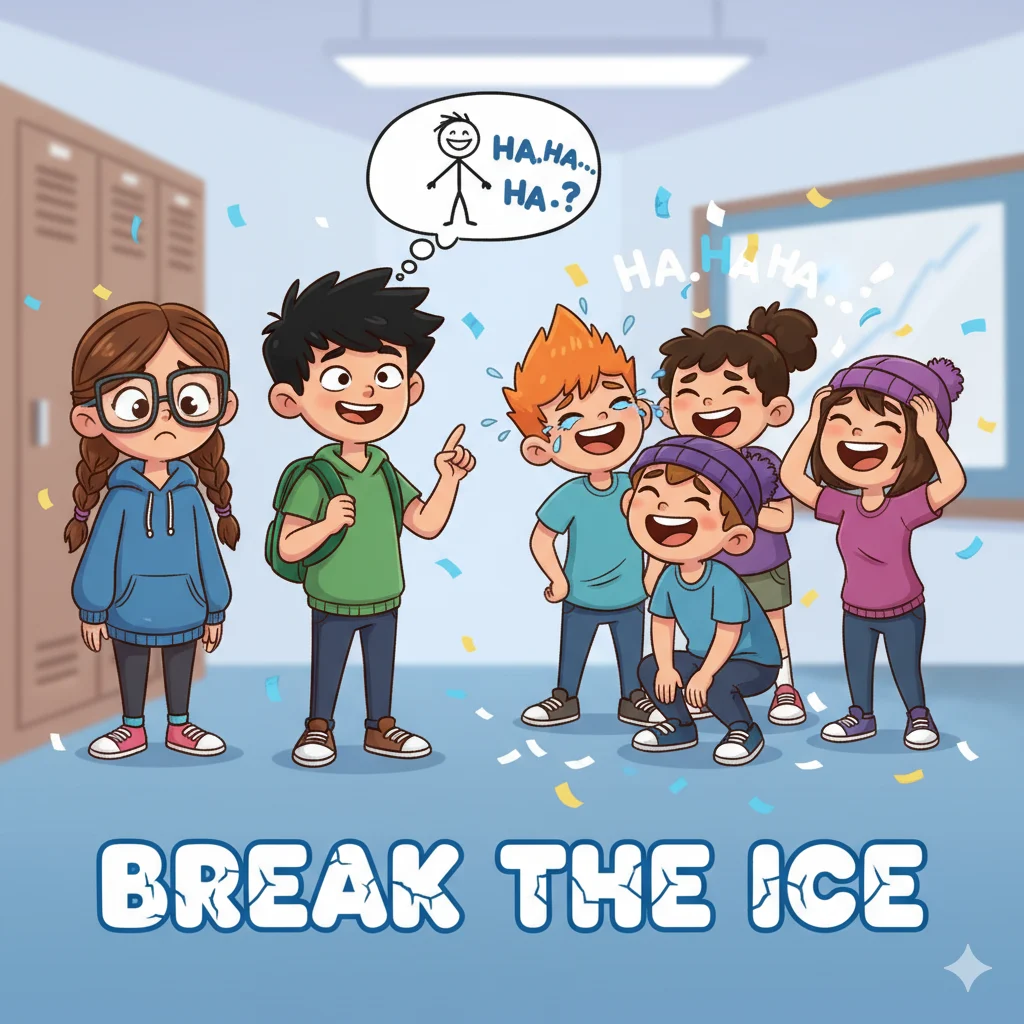
English conversations become more lively and natural when you use idioms with illustrations and meanings. Idioms are expressions whose meanings are different from the literal meanings of the words. For example, if someone says “break the ice,” they are not talking about actual ice—it means starting a conversation in a friendly way.
Imagine meeting new classmates on the first day of school. Everyone feels shy until someone cracks a joke and suddenly everyone starts talking. That person just “broke the ice.” Learning such expressions helps you understand movies, books, and real-life conversations more easily.
In this guide, you will learn famous idioms with illustrations and meanings, along with simple explanations, examples, common mistakes, and usage tips. These idioms are commonly used in everyday English and will help you sound more fluent and confident.
Break the Ice
Word-by-Word Meaning
- Break = to separate into pieces
- Ice = frozen water
Idiomatic Meaning
To start a conversation and make people feel comfortable in a new or awkward situation.
Example Sentences
- The teacher told a joke to break the ice on the first day of class.
- Playing a small game helped everyone break the ice at the meeting.
Common Error
❌ Using it for physical ice.
✔ It refers to social situations, not real ice.
Usage Note
Often used in meetings, interviews, and first-time gatherings.
Hit the Nail on the Head
Word-by-Word Meaning
- Hit = strike
- Nail = metal pin used in wood
- Head = top of the nail
Idiomatic Meaning
To say something exactly correct.
Example Sentences
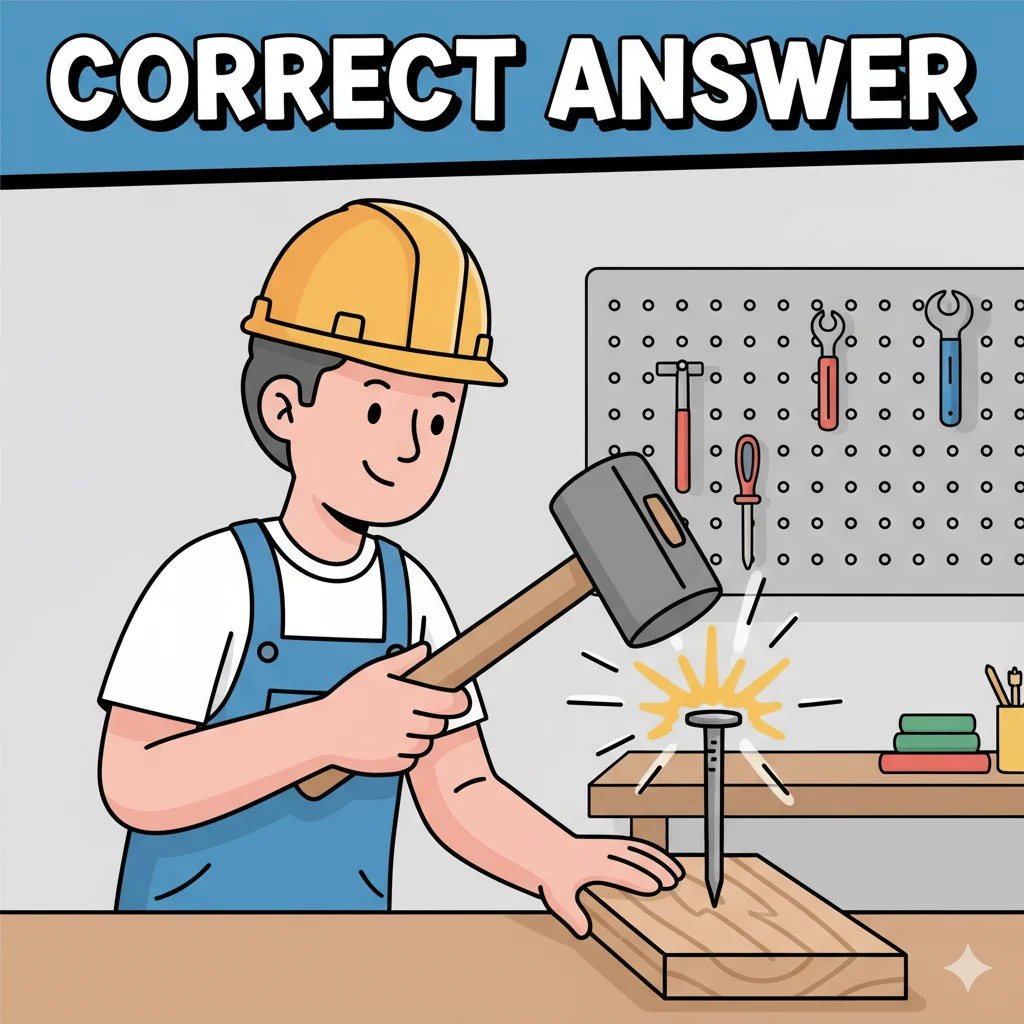
- Sara hit the nail on the head when she explained the problem.
- Your answer really hit the nail on the head.
Common Error
❌ Using it for physical hitting.
✔ It refers to accuracy in ideas or statements.
Usage Note
Used when someone gives the perfect explanation.
Once in a Blue Moon
Word-by-Word Meaning
- Once = one time
- Blue moon = rare lunar event
Idiomatic Meaning
Something that happens very rarely.
Example Sentences

- I eat fast food once in a blue moon.
- We visit that village once in a blue moon.
Common Error
❌ Thinking it means monthly.
✔ It means very rarely.
Usage Note
Common in casual conversation.
A Piece of Cake
Word-by-Word Meaning
- Piece = part
- Cake = sweet dessert
Idiomatic Meaning
Something very easy to do.
Example Sentences

- The math test was a piece of cake.
- Cooking this recipe is a piece of cake.
Common Error
❌ Using it literally when talking about dessert.
Usage Note
Commonly used by students after easy exams.
Spill the Beans
Word-by-Word Meaning
- Spill = drop
- Beans = small seeds
Idiomatic Meaning
To reveal a secret.
Example Sentences
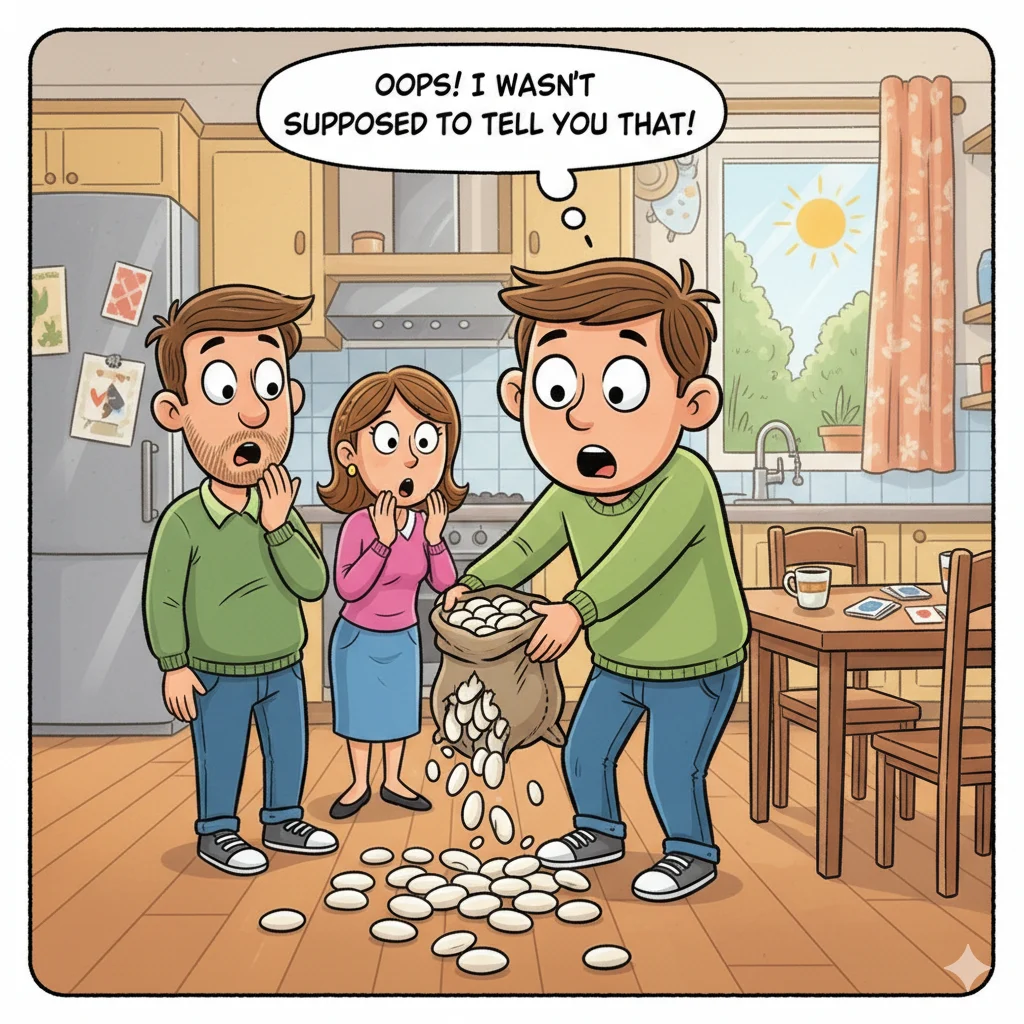
- He accidentally spilled the beans about the surprise party.
- Don’t spill the beans before her birthday.
Common Error
❌ Using it for food accidents.
Usage Note
Used when someone reveals information too early.
Bite the Bullet
Word-by-Word Meaning
- Bite = use teeth
- Bullet = small metal projectile
Idiomatic Meaning
To accept something difficult or unpleasant.
Example Sentences
- I had to bite the bullet and finish the hard project.
- She bit the bullet and apologized.
Common Error
❌ Thinking it means aggression.
Usage Note
Used when facing unavoidable situations.
Let the Cat Out of the Bag
Word-by-Word Meaning
- Cat = animal
- Bag = container
Idiomatic Meaning
To accidentally reveal a secret.
Example Sentences
- John let the cat out of the bag about the wedding.
- Someone already let the cat out of the bag.
Common Error
❌ Using it for animals literally.
Usage Note
Similar meaning to spill the beans.
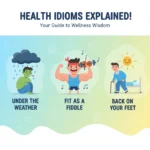
Under the Weather
Word-by-Word Meaning
- Under = below
- Weather = climate
Idiomatic Meaning
Feeling sick or unwell.
Example Sentences
- I feel under the weather today.
- She skipped school because she was under the weather.
Common Error
❌ Using it for climate conditions.
Usage Note
Common in casual conversation.
Cost an Arm and a Leg
Word-by-Word Meaning
- Arm = body part
- Leg = body part
Idiomatic Meaning
Something extremely expensive.
Example Sentences
- That phone cost an arm and a leg.
- The hotel costs an arm and a leg.
Common Error
❌ Thinking about physical injury.
Usage Note
Used when discussing high prices.
Burn the Midnight Oil
Word-by-Word Meaning
- Burn = light
- Midnight = late night
- Oil = fuel
Idiomatic Meaning
To work or study late at night.
Example Sentences
- Students burn the midnight oil during exams.
- She burned the midnight oil to finish her project.
Usage Note
Often used in academic or work contexts.
The Ball Is in Your Court
Word-by-Word Meaning
- Ball = sports object
- Court = playing area
Idiomatic Meaning
It is your turn to take action or make a decision.
Example Sentences
- I’ve done my part; now the ball is in your court.
- The company offered a deal, so the ball is in our court.
Usage Note
Common in negotiations.
Kill Two Birds with One Stone
Word-by-Word Meaning
- Kill = destroy
- Birds = animals
- Stone = rock
Idiomatic Meaning
Achieve two goals with one action.
Example Sentences
- Walking to work helps me exercise and save money—killing two birds with one stone.
Usage Note
Sometimes replaced with softer phrases like “achieve two things at once.”
A Blessing in Disguise
Word-by-Word Meaning
- Blessing = good thing
- Disguise = hidden form
Idiomatic Meaning
Something that seems bad but turns out good.
Example Sentences
- Losing that job was a blessing in disguise.
Usage Note
Used when outcomes become positive later.
Actions Speak Louder Than Words
Word-by-Word Meaning
Actions = things people do
Words = things people say
Idiomatic Meaning
What people do is more important than what they say.
Example Sentences
- Instead of promises, remember that actions speak louder than words.
Beat Around the Bush
Word-by-Word Meaning
Beat = hit
Bush = plant
Idiomatic Meaning
Avoid saying something directly.
Example Sentences
- Stop beating around the bush and tell me the truth.
Pull Someone’s Leg
Word-by-Word Meaning
Pull = drag
Leg = limb
Idiomatic Meaning
To joke or tease someone.
Example Sentences
- Relax, I’m just pulling your leg.
Miss the Boat
Word-by-Word Meaning
Miss = fail to catch
Boat = water transport
Idiomatic Meaning
Miss an opportunity.
Example Sentences
- I missed the boat on buying that cheap laptop.
Hit the Sack
Word-by-Word Meaning
Hit = go to
Sack = bag
Idiomatic Meaning
To go to bed.
Example Sentences
- I’m tired; I’m going to hit the sack.
On Cloud Nine
Word-by-Word Meaning
Cloud = sky formation
Nine = number
Idiomatic Meaning
Extremely happy.
Example Sentences
- She was on cloud nine after winning the competition.
Through Thick and Thin
Word-by-Word Meaning
Thick = difficult
Thin = easy
Idiomatic Meaning
Supporting someone in both good and bad times.
Example Sentences
- True friends stay together through thick and thin.
FAQs About Idioms
What are idioms in English?
Idioms are expressions whose meanings are different from the literal meanings of the words.
Why should learners study idioms?
Idioms help learners understand native conversations, movies, and books more easily.
How can I remember idioms easily?
Use illustrations, stories, and daily practice to remember idioms better.
Are idioms used in formal writing?
Some idioms are suitable for casual conversation, while others can be used in semi-formal writing.
How many idioms should I learn daily?
Learning 2–3 idioms per day is a great strategy for steady improvement.
Conclusion
Learning idioms with illustrations and meanings is one of the best ways to make your English sound natural and expressive. Instead of speaking in plain sentences, idioms allow you to communicate ideas in a colorful and memorable way.
Start practicing these idioms in your daily conversations, writing, or classroom discussions. Try making your own sentences and even drawing small illustrations to remember them better.
With regular practice, you’ll soon notice that understanding movies, books, and conversations becomes much easier—and your English will sound far more fluent and confident.

“Elizabeth Bowen shares timeless idioms and language wisdom on LearnIdom.com, making learning phrases fun, easy, and unforgettable.”