Learning idioms in English can feel confusing at first. Imagine hearing someone say “break a leg” before an exam or performance — they definitely don’t want you to get hurt! That’s the beauty of idioms.
Idioms are phrases whose meanings are different from the literal meanings of the words. They are everywhere in everyday conversations, movies, and even professional communication. When I first started learning English, understanding idioms made conversations feel much more natural and fun.
In this guide, you’ll learn most famous idioms in English, their word-by-word meaning, real meaning, example sentences, common mistakes, and usage tips. By the end, you’ll be able to understand and confidently use these idioms in daily conversation.
What Are Idioms in English?
Idioms are expressions where the meaning cannot be understood from the individual words alone.
For example:
| Idiom | Literal Meaning | Actual Meaning |
|---|---|---|
| Break a leg | Hurt your leg | Good luck |
| Hit the sack | Hit a bag | Go to sleep |
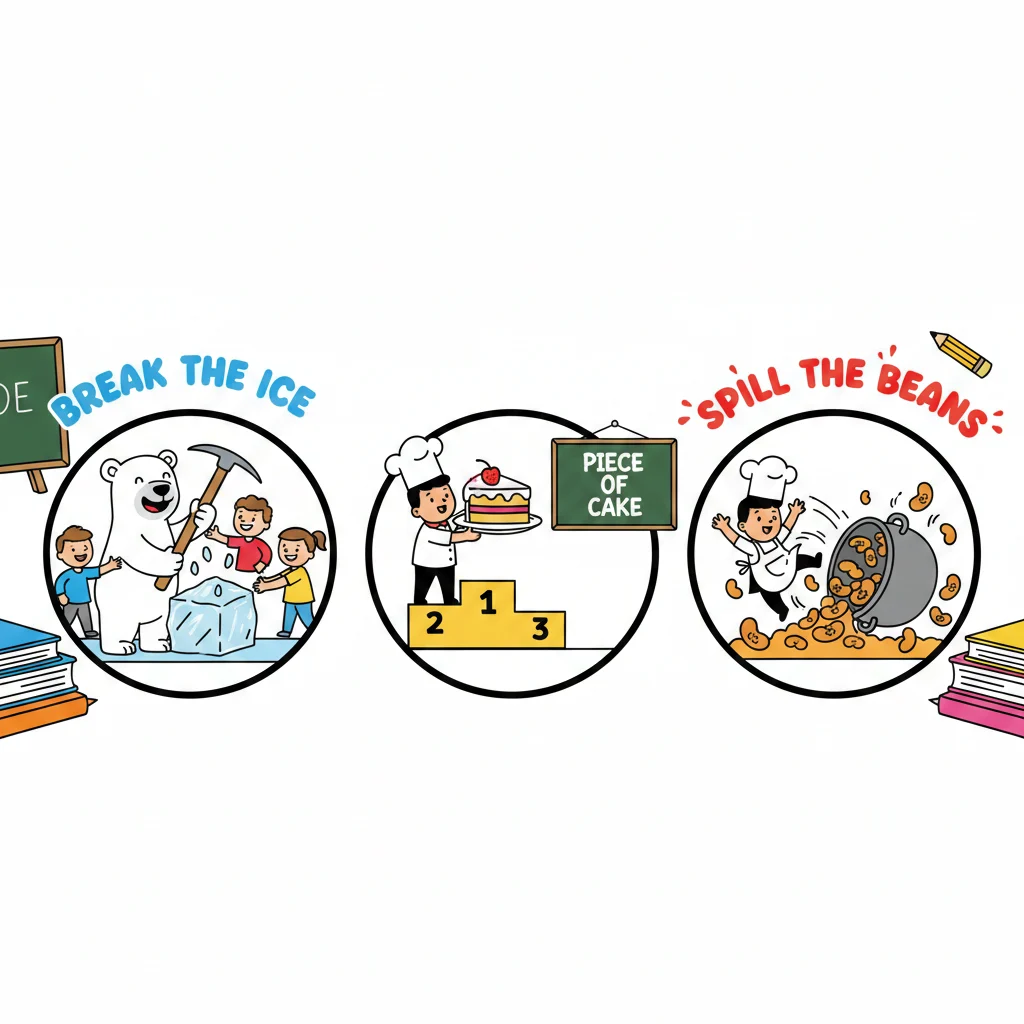
| Spill the beans | Drop beans | Reveal a secret |
Using idioms correctly makes your English sound more fluent, natural, and expressive.
Break the Ice
Word-by-Word Meaning
Break = destroy
Ice = frozen water
Idiomatic Meaning
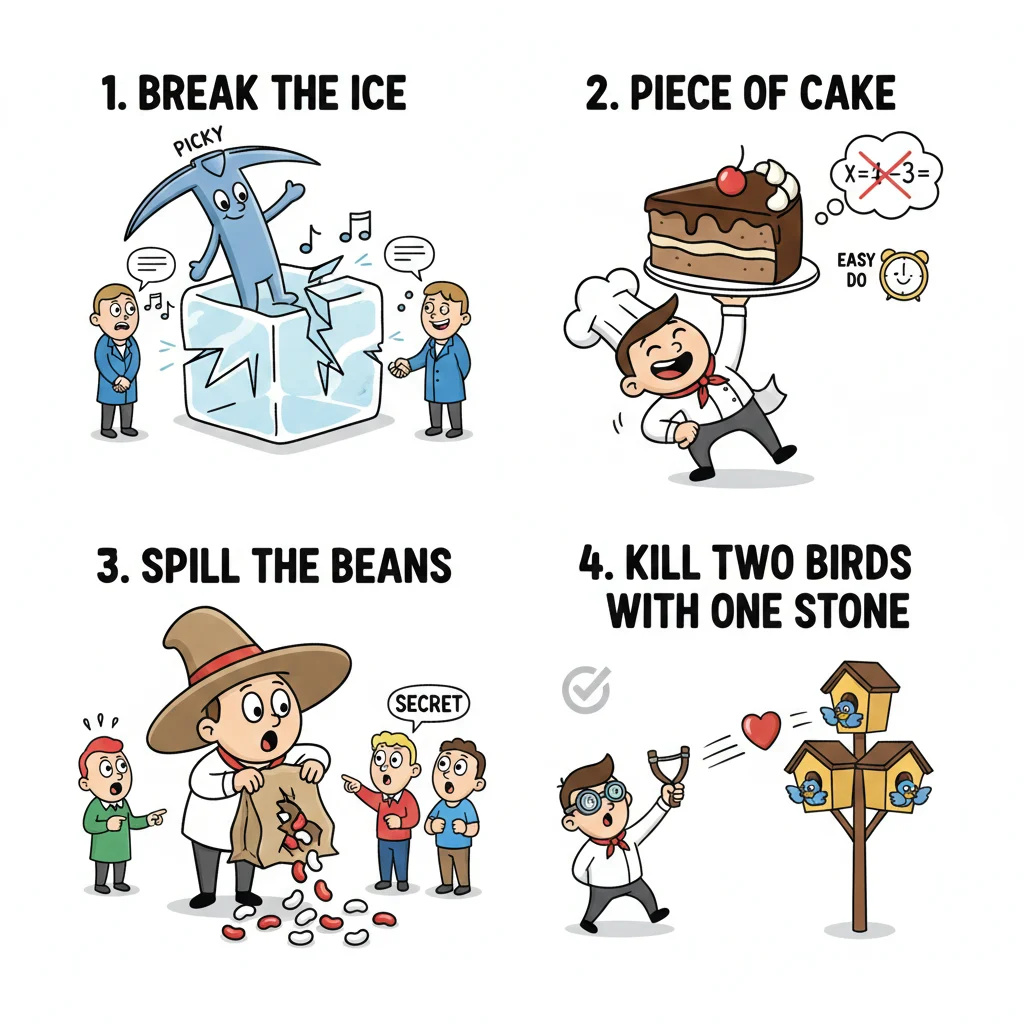
To start a conversation and remove awkwardness.
Example Sentences
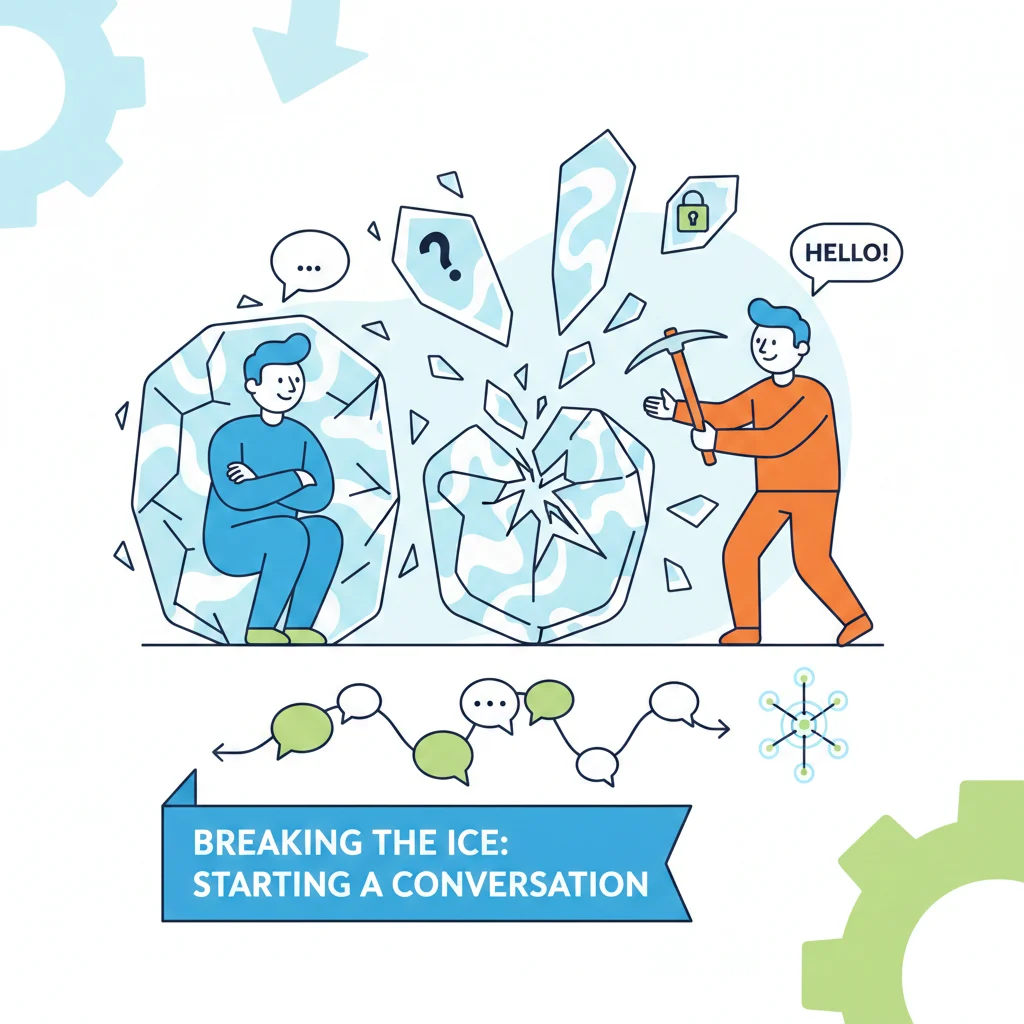
- The teacher told a joke to break the ice on the first day of class.
- I introduced myself to everyone to break the ice.
Common Error
❌ Breaking the ice conversation
✔ Break the ice
Usage Note
Commonly used in meetings, social events, and introductions.
Piece of Cake
Word-by-Word Meaning
Piece = part
Cake = dessert
Idiomatic Meaning
Something very easy to do.
Example Sentences
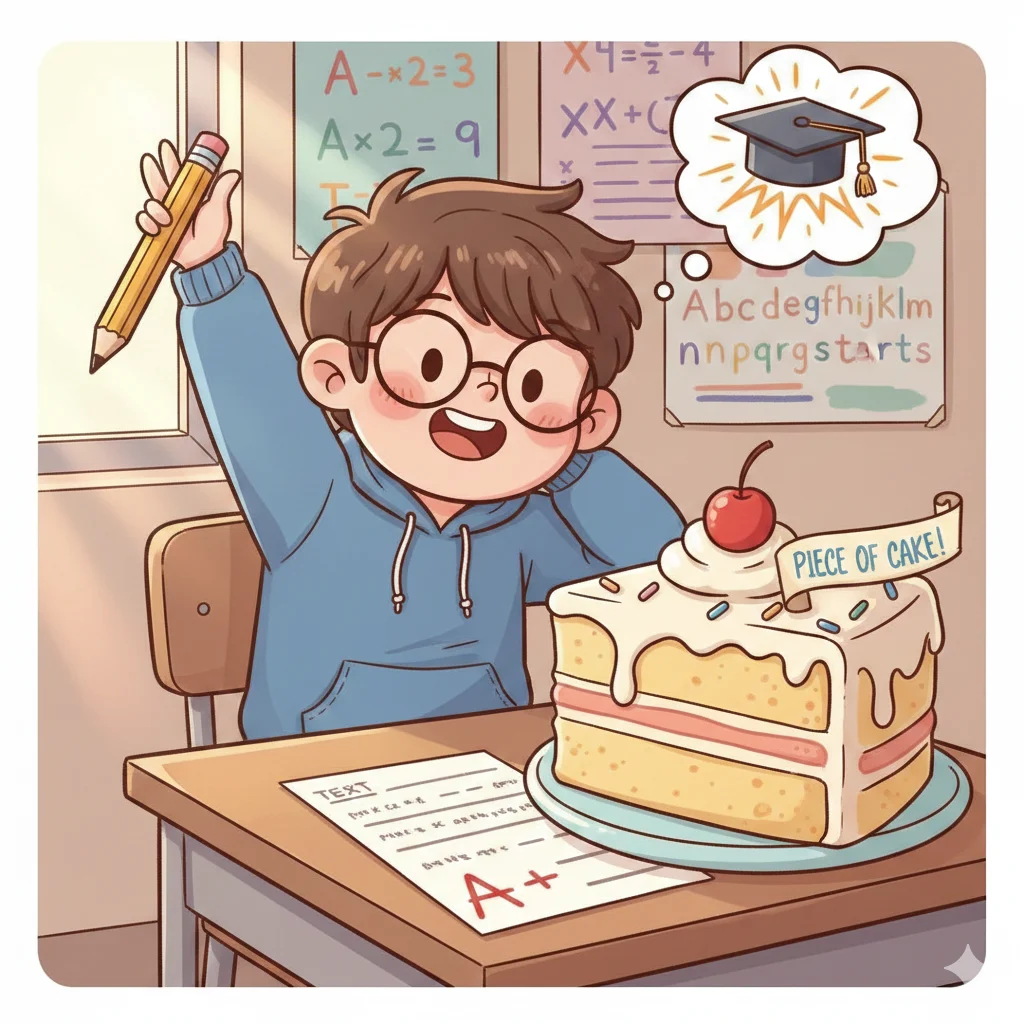
- The exam was a piece of cake.
- Cooking this recipe is a piece of cake.
Common Error
❌ A cake piece
✔ Piece of cake
Usage Note
Used mostly in informal conversations.
Hit the Sack
Word-by-Word Meaning
Hit = strike
Sack = bag
Idiomatic Meaning
To go to sleep.
Example Sentences
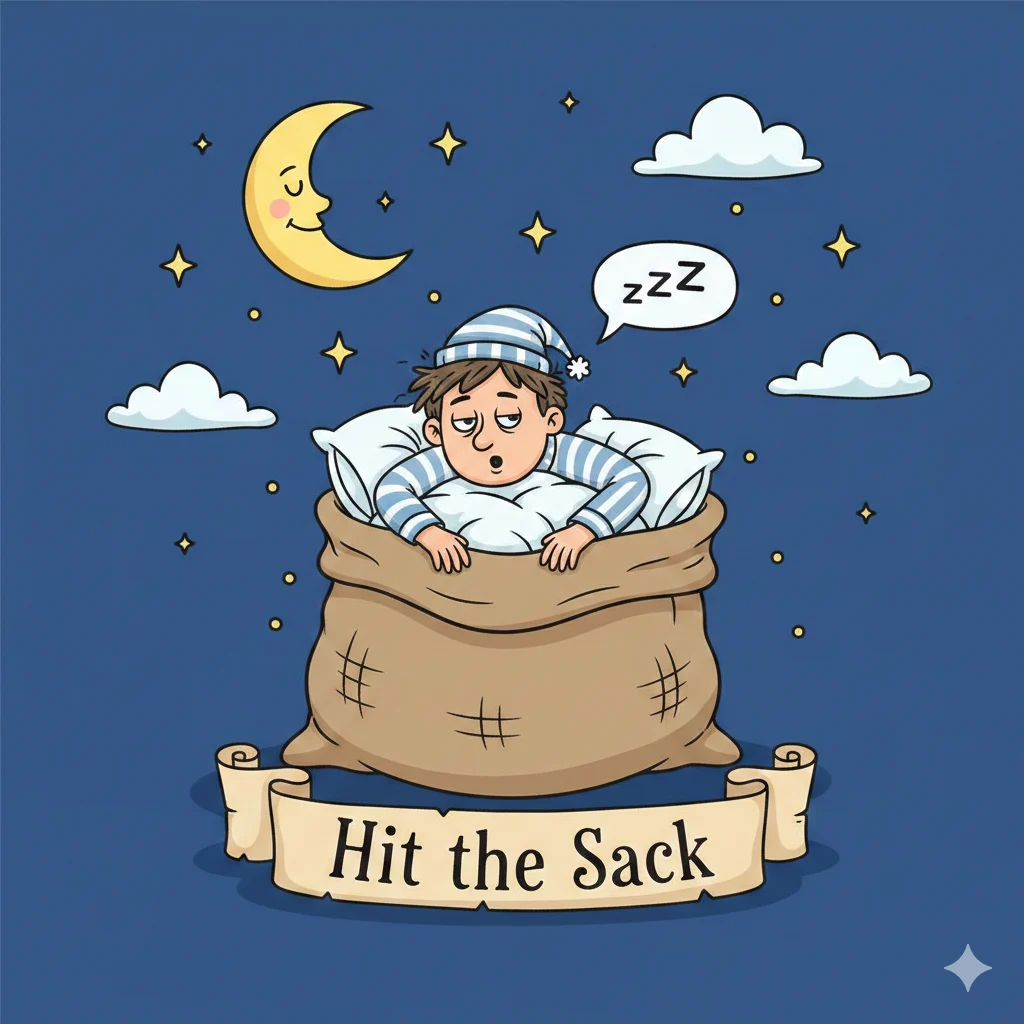
- I’m really tired. I’m going to hit the sack.
- After studying all night, he finally hit the sack.
Common Error
❌ Hit the bag
✔ Hit the sack
Usage Note
Casual expression used with friends or family.
Spill the Beans
Word-by-Word Meaning
Spill = drop
Beans = small seeds
Idiomatic Meaning
To reveal a secret.
Example Sentences
- She accidentally spilled the beans about the surprise party.
- Don’t spill the beans about the project yet.
Common Error
❌ Spill beans
✔ Spill the beans
Usage Note
Often used when secrets are revealed unintentionally.
Once in a Blue Moon
Word-by-Word Meaning
Once = one time
Blue moon = rare moon event
Idiomatic Meaning
Something that happens very rarely.
Example Sentences

- I eat fast food once in a blue moon.
- He visits us once in a blue moon.
Common Error
❌ One in blue moon
✔ Once in a blue moon
Usage Note
Used to describe rare situations.
Cost an Arm and a Leg
Word-by-Word Meaning
Arm = body part
Leg = body part
Idiomatic Meaning
Very expensive.
Example Sentences
- That phone costs an arm and a leg.
- The concert tickets cost an arm and a leg.
Common Error
❌ Cost arm and leg
✔ Cost an arm and a leg
Usage Note
Common in casual conversations about money.
Under the Weather
Word-by-Word Meaning
Under = below
Weather = climate
Idiomatic Meaning
Feeling sick.
Example Sentences
- I’m feeling under the weather today.
- She stayed home because she was under the weather.
Common Error
❌ Under weather
✔ Under the weather
Usage Note
Polite way to say someone feels ill.
Bite the Bullet
Word-by-Word Meaning
Bite = use teeth
Bullet = ammunition
Idiomatic Meaning
To face a difficult situation bravely.
Example Sentences
- I decided to bite the bullet and start studying.
- He bit the bullet and apologized.
Common Error
❌ Bite bullet
✔ Bite the bullet
Usage Note
Often used when accepting something unpleasant.
Let the Cat Out of the Bag
Word-by-Word Meaning
Let = allow
Cat = animal
Bag = container
Idiomatic Meaning
Reveal a secret accidentally.
Example Sentences
- He let the cat out of the bag about the wedding.
- Someone let the cat out of the bag before the announcement.
Common Error
❌ Let cat out bag
✔ Let the cat out of the bag
Usage Note
Very common idiom in storytelling.
A Blessing in Disguise
Word-by-Word Meaning
Blessing = good thing
Disguise = hidden form
Idiomatic Meaning
Something that seems bad but is actually good.
Example Sentences
- Losing that job was a blessing in disguise.
- The rain turned out to be a blessing in disguise.
Common Error
❌ Blessing disguise
✔ A blessing in disguise
Usage Note
Used when something unexpectedly positive happens.
Kill Two Birds with One Stone
Word-by-Word Meaning
Kill = eliminate
Two birds = two animals
One stone = one object
Idiomatic Meaning
Solve two problems at once.
Example Sentences
- Walking to work helps me exercise and save money — kill two birds with one stone.
- Studying vocabulary while watching movies kills two birds with one stone.
Common Error
❌ Kill two birds one stone
✔ Kill two birds with one stone
Usage Note
Very common productivity idiom.
The Ball Is in Your Court
Word-by-Word Meaning
Ball = sports ball
Court = playing field
Idiomatic Meaning
It’s your decision or responsibility now.
Example Sentences
- I’ve done my part; the ball is in your court.
- We sent the proposal. Now the ball is in their court.
Common Error
❌ Ball in your side
✔ Ball in your court
Usage Note
Often used in professional communication.
Burn the Midnight Oil
Word-by-Word Meaning
Burn = use fire
Midnight oil = oil lamp
Idiomatic Meaning
Work late into the night.
Example Sentences
- She burned the midnight oil to finish the report.
- Students often burn the midnight oil before exams.
Common Error
❌ Burn midnight oil
✔ Burn the midnight oil
Usage Note
Common in academic contexts.
Kick the Bucket
Word-by-Word Meaning
Kick = hit with foot
Bucket = container
Idiomatic Meaning
To die.
Example Sentences
- The old man kicked the bucket peacefully.
- That joke about someone kicking the bucket shocked everyone.
Common Error
❌ Kick bucket
✔ Kick the bucket
Usage Note
Informal and sometimes humorous.
Hit the Nail on the Head
Word-by-Word Meaning
Hit = strike
Nail = metal pin
Head = top part
Idiomatic Meaning
Say something exactly correct.
Example Sentences
- You hit the nail on the head with that explanation.
- Her comment hit the nail on the head.
Common Error
❌ Hit nail on head
✔ Hit the nail on the head
Usage Note
Used to praise accurate observations.
Add Fuel to the Fire
Word-by-Word Meaning
Add = put
Fuel = material for burning
Fire = flames
Idiomatic Meaning
Make a bad situation worse.
Example Sentences
- His rude comment added fuel to the fire.
- Complaining only adds fuel to the fire.
Common Error
❌ Add fuel fire
✔ Add fuel to the fire
Usage Note
Used in conflict situations.
A Storm in a Teacup
Word-by-Word Meaning
Storm = strong wind/rain
Teacup = small cup
Idiomatic Meaning
Making a big issue out of something small.
Example Sentences
- Their argument was just a storm in a teacup.
- People are turning this into a storm in a teacup.
Common Error
❌ Storm in cup
✔ Storm in a teacup
Usage Note
More common in British English.
On Cloud Nine
Word-by-Word Meaning
Cloud = sky cloud
Nine = number
Idiomatic Meaning
Extremely happy.
Example Sentences
- She was on cloud nine after getting the job.
- Winning the competition put him on cloud nine.
Common Error
❌ In cloud nine
✔ On cloud nine
Usage Note
Used for excitement or joy.
Pull Someone’s Leg
Word-by-Word Meaning
Pull = drag
Leg = body part
Idiomatic Meaning
To joke or tease someone.
Example Sentences
- Relax, I’m just pulling your leg.
- He was pulling her leg about the story.
Common Error
❌ Pull leg
✔ Pull someone’s leg
Usage Note
Friendly joking context.
Cut Corners
Word-by-Word Meaning
Cut = shorten
Corners = edges
Idiomatic Meaning
Do something cheaply or quickly by ignoring quality.
Example Sentences
- Don’t cut corners when building a house.
- The company cut corners to save money.
Common Error
❌ Cut the corner
✔ Cut corners
Usage Note
Often used in business or work contexts.
Quick Summary Table
| Idiom | Meaning |
|---|---|
| Break the ice | Start conversation |
| Piece of cake | Very easy |
| Hit the sack | Go to sleep |
| Spill the beans | Reveal secret |
| Once in a blue moon | Very rarely |
FAQs About Idioms in English
What are idioms in English?
Idioms are phrases where the meaning is different from the literal meaning of the words.
Why are idioms important in English?
They help you sound more natural and fluent in everyday conversations.
How can I learn idioms quickly?
Practice them in sentences, watch movies, and use them in daily conversation.
Are idioms used in formal English?
Some idioms are informal, but many are used in professional communication.
How many idioms exist in English?
There are thousands of idioms, but learning the most common ones is enough for everyday communication.
Conclusion
Learning idioms in English can completely transform the way you understand conversations, movies, and even workplace communication. At first, they might feel confusing, but once you start using them, they make your English sound more natural and expressive.
Start by practicing just 2–3 idioms each day. Try using them in conversations with friends, writing short sentences, or even thinking in English. Over time, these phrases will become part of your natural vocabulary.
Remember: Fluent English isn’t only about grammar — it’s about understanding expressions like idioms.

“L.P. Hartley brings classic idioms to life on LearnIdom.com, helping readers explore language with wit, clarity, and timeless insight.”